Ten homemade cleaners are worth making. Each recipe below gives the quantities, where it's safe, where it isn't and how long it keeps.
Quick answer: Warm water with a few drops of dishwashing liquid cleans most surfaces. For a spray, mix 60 mL of liquid castile soap into 1 litre of water. Scrub with a bicarb cream, lift limescale from shower glass with equal parts white vinegar and warm water, and soak toilet scale with citric acid. Keep acids off stone, grout, chrome and laminate, and never mix recipes. Each mixes in a minute.
Homemade cleaning recipes: what to mix and where to use it
Mix each recipe in a clean bottle or jar marked with what's inside and the date, and test a hidden spot first.
Safety Never mix cleaning products. Victoria’s Better Health Channel: “Do not mix bleach with ammonia, acids or other cleaners – this can release hazardous chlorine or chloramine fumes.” Ventilate the room during and after use. Wear gloves and eye protection. Follow the label's dilution and contact time. In an emergency call 000. For poisoning advice call the Poisons Information Centre on 13 11 26 — 24 hours, anywhere in Australia.
Recipe | Mix | Use it on | Keep it off | Keeps |
|---|---|---|---|---|
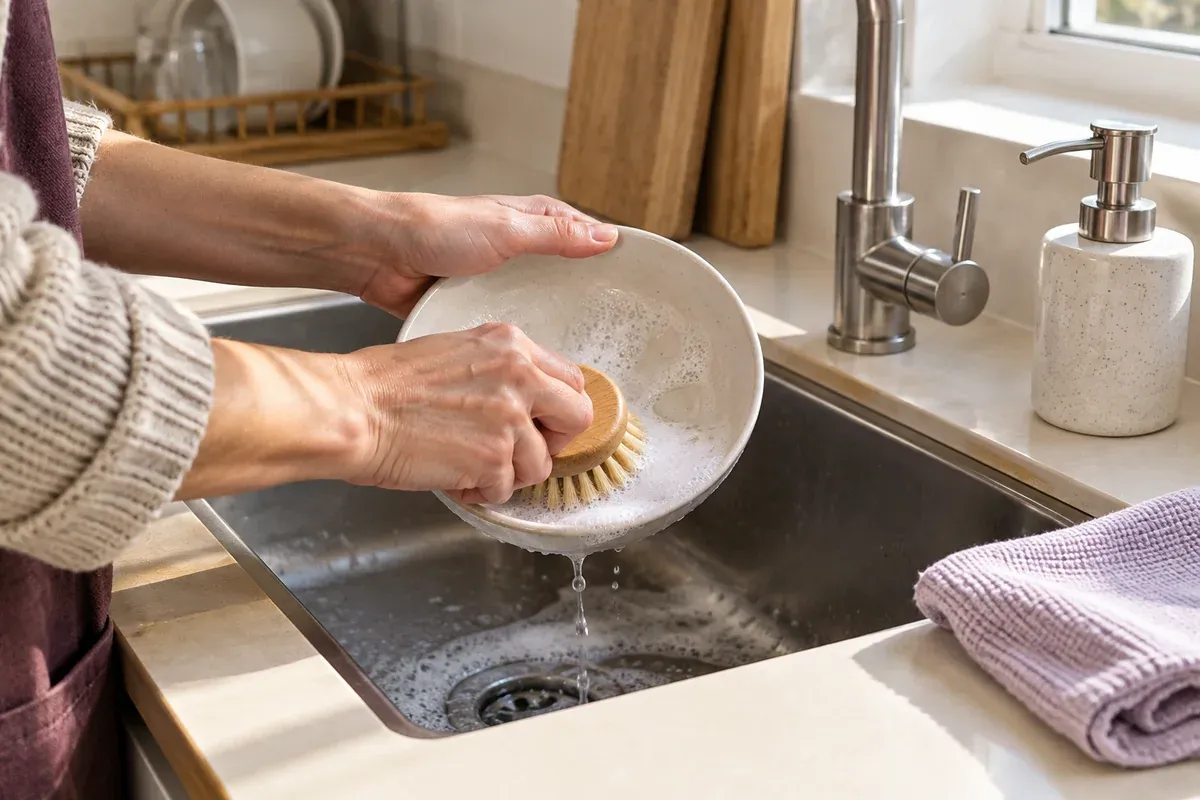
Soapy water (the baseline) | A few drops of dishwashing liquid in a sink or bucket of warm water | Everyday dirt on benchtops, sealed tiles, painted walls, chrome taps and stainless steel (wipe along the grain); wring the cloth well, then dry | Coated timber floors (see the floor wash below) | Mix fresh |
Homemade all-purpose cleaning spray | 60 mL liquid castile soap in 1 litre of water (steps below) | Sealed hard surfaces: benchtops, sinks, sealed tiles, appliance fronts | Natural stone and coated timber floors; never add vinegar or lemon | About 2 weeks |
Glass and window spray | 1 part white vinegar to 10 parts water (100 mL in 1 litre) | Windows (no squeegee on a Low-E coating) and glass tabletops; wipe dry with a lint-free cloth (Viridian) | Mirrors: acid can damage the silvering, so use a few drops of methylated spirits (flammable) on a damp cloth and keep the edges dry. Stone sills and grout | Mix fresh |
Shower-glass limescale mix | Equal parts white vinegar and warm water, plus a squirt of dishwashing liquid for soap scum | Uncoated shower glass: wipe it on with a cloth, leave 10–15 minutes, wipe, rinse and squeegee (shower glass guide); limescale on a steel-enamel bath, rinsed well | Cement grout, natural stone, chrome and plated fittings, laminate and coated glass; wiping on, not spraying, keeps it off the grout | Mix fresh |
Scouring cream | ½ cup (125 mL) bicarb soda stirred with 2 tablespoons (40 mL) liquid castile soap and a splash of water until creamy | Stubborn marks on ceramic basins and toilet bowls, rubbed gently and rinsed; bare stainless-steel sinks, along the polish lines | Chrome and plated taps, acrylic and enamel baths, engineered stone, coated appliance doors and oven door glass | About 2 weeks in a lidded jar |
Grout paste | 3 parts bicarb soda to 1 part warm water, stirred thick | Discoloured cement grout, with a stiff narrow brush, then rinse (grout guide) | Don't add vinegar or lemon: acid corrodes cement grout | Mix fresh |
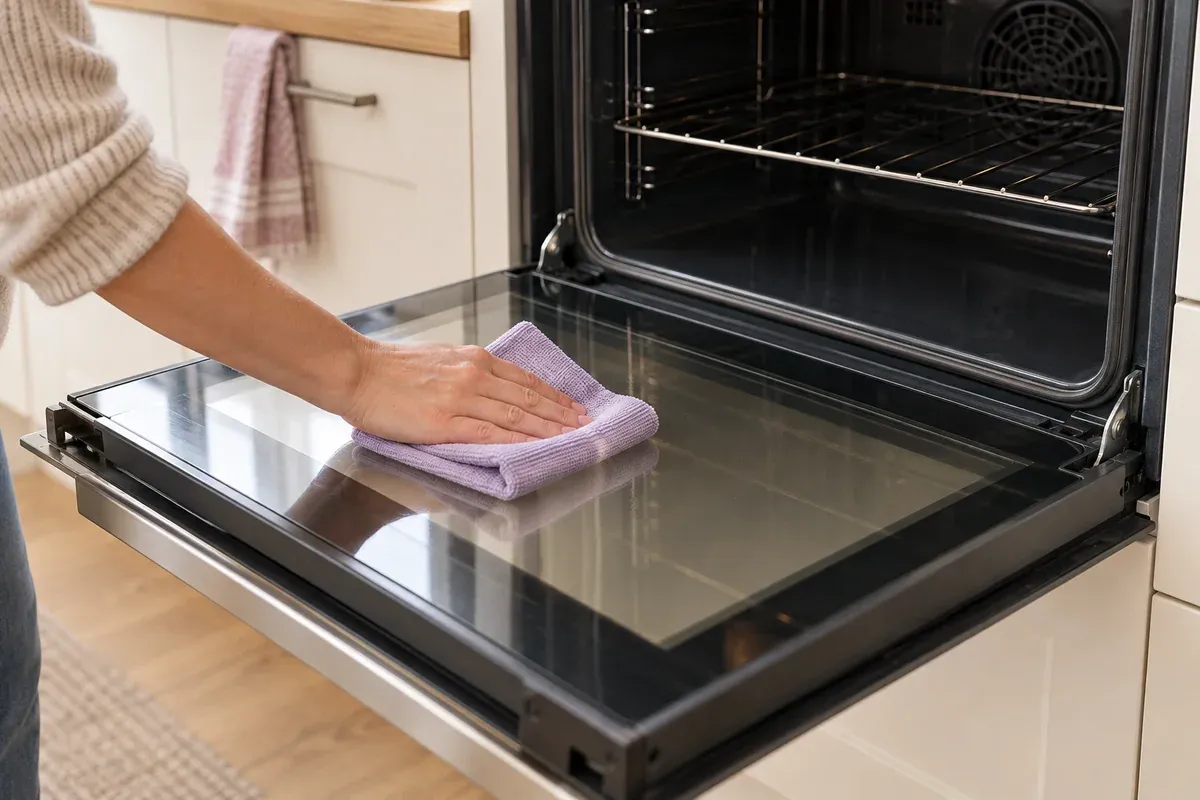
Oven paste | Several heaped tablespoons of bicarb soda with a little water | A cold, plain enamel oven interior: spread it on, leave a few hours or overnight, then wipe out with a damp microfibre cloth until no white film is left (CHOICE, Feb 2024) | Door glass, heating elements, rough catalytic liners, and pyrolytic ovens (run the cleaning cycle). Skip the vinegar spray-on step | Mix fresh |
Toilet bowl limescale soak | ¼ cup (60 mL) citric acid powder dissolved in 1 cup (250 mL) warm water (Bosisto's), or 1 cup of white vinegar | Scale in a ceramic toilet bowl: pour it in, leave at least 30 minutes (vinegar overnight), brush and flush | Never with a bleach cleaner, or while a bleach block sits in the cistern; wipe splashes off stone floors and chrome | Mix fresh |
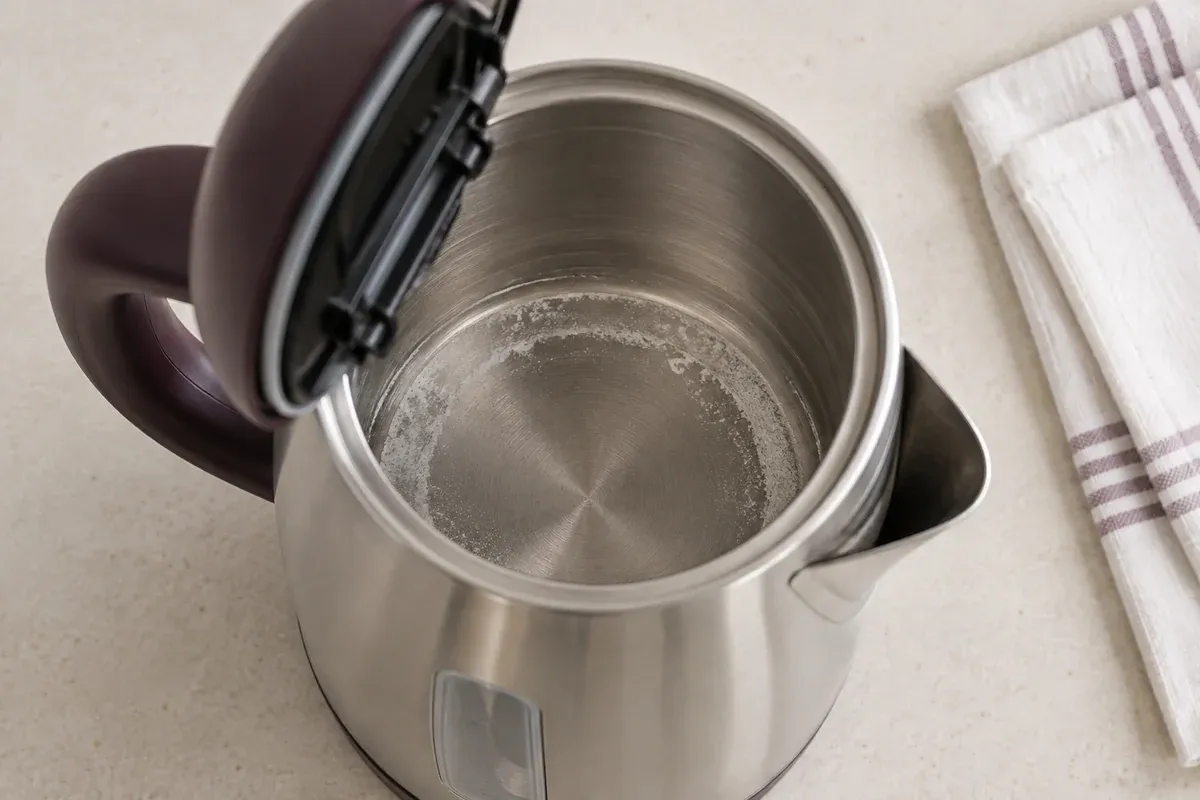
Kettle descaler | 25 g citric acid added to 500 mL of just-boiled water in the kettle | Scale inside a kettle: leave 15 minutes, empty, then rinse five or six times (Tefal's method; more in the kettle guide) | Coffee machines, which have their own descaling programme | Mix fresh |
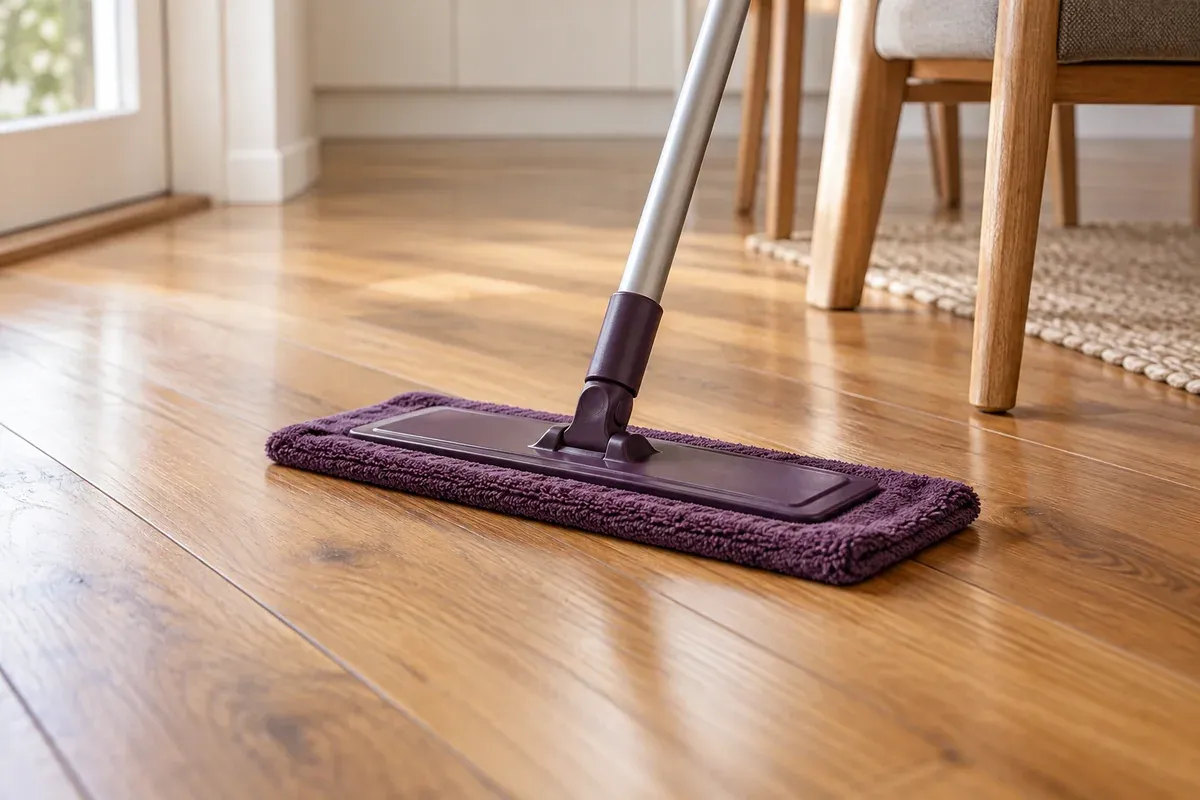
Floor wash | A few drops of dishwashing liquid or pH-neutral floor cleaner in a bucket of warm water | Glazed ceramic and porcelain tiles, with a well-wrung mop | Stone, coated timber and laminate each need their own method (below) | Mix fresh |
Done looks like a surface that dries with no smears, film or white residue; if it streaks, wipe again with a cloth dampened in plain water. If a mark survives two rounds, stop rather than strengthening or combining recipes: shower glass that stays cloudy when wet is etched, and a stubborn stain on stone or laminate needs a product made for that surface.
Homemade all-purpose cleaning spray, step by step
Dr. Bronner's dilution guide gives 60 mL of its liquid castile soap per litre of water; other brands print their own ratio. Measure in millilitres: an Australian tablespoon holds 20 mL, but the US tablespoon in many online recipes holds about 15 mL.
- Pour 1 litre of water into a clean spray bottle, then add 60 mL of castile soap (or 250 mL and 15 mL for a small bottle). Leave out essential oils, vinegar and lemon juice.
- Spray lightly, wipe the dirt away with a clean damp cloth, then dry the surface; there's no waiting time. It's done when the surface dries without smears. If it streaks, you used too much, so wipe again with a fresh damp cloth.
- Use it within about two weeks and make small batches: Dr. Bronner's says diluting the soap also dilutes its preservative.
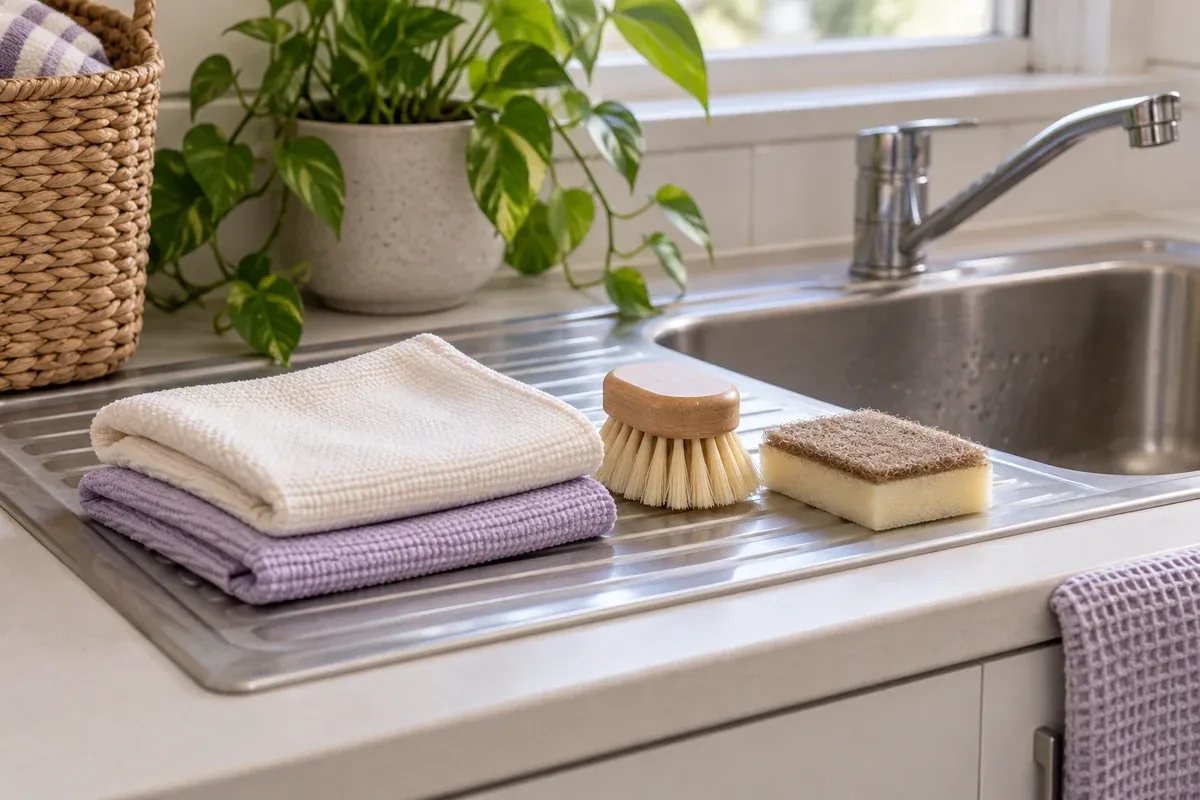
Floor wash by floor type
- Glazed ceramic and porcelain tiles: a few drops of pH-neutral floor cleaner or dishwashing liquid in a bucket of warm water, on a well-wrung mop. Beaumont Tiles warns that regular acidic or alkaline cleaners wear the glaze.
- Natural stone: a neutral stone cleaner or a little dishwashing liquid in warm water, then rinse and dry. No vinegar, lemon or scouring powder, even on granite (Natural Stone Institute).
- Coated timber: a neutral pH wood-floor cleaner on a mop wrung until just damp, and no steam mop. The Australasian Timber Flooring Association warns that vinegar, methylated spirits and even detergent may damage some coatings. How to Clean and Polish Timber Floors shows how to tell your finish.
- Laminate and hybrid: vacuum or dry-mop first, then a microfibre pad wrung out thoroughly, using water sparingly. Quick-Step's Australian distributor rules out steam mops on its standard laminate ranges.
- Not sure what it is: vacuum, then a mop wrung almost dry with plain warm water, tried in a corner first.
What never goes in a homemade mix

A homemade recipe is not a disinfectant claim. Use the full guide’s material restrictions and suitable labelled products where disinfection is required.
Read the illustration as text
- Check the material
- Acids, abrasives and excess water can damage finishes.
- Check the formulation
- Follow a suitable product’s directions; do not combine cleaners.
- Label and store safely
- Keep containers identified and away from children, pets and food.
“Natural” does not establish safety or disinfection.
- Vinegar and bicarb together. They cancel each other out; the FAQ below explains why.
- Castile soap with vinegar or lemon. The acid breaks the soap down into oily curds. Use them one after the other, and only on a surface that tolerates vinegar.
- Hydrogen peroxide with vinegar. Together they form peracetic acid, an irritant to eyes, skin and airways.
- Bleach with any acid. Bleach mixed with vinegar, lemon juice, citric acid or a limescale remover releases toxic chlorine gas.
- Rubbing alcohol or peroxide at all. Alcohol is flammable and, used repeatedly, can swell and harden some rubber and plastics; even household-strength peroxide can irritate eyes, skin and the gut. Keep peroxide in its own bottle.
Why acids and bicarb stay off some surfaces
Acids dull or etch marble, limestone and travertine, and stone specialists advise against them even on granite; a sealer doesn't change that. Laminex rules out vinegar on its laminate, and acid corrodes cement grout.
Bicarb is a mild abrasive: hansgrohe advises against baking soda on its taps, and Caroma rules out pastes and powders on its acrylic baths. Washing machines and dishwashers have their own cleaning programmes, and Bosch and Miele both warn against vinegar in theirs.
Homemade cleaner FAQs
Do bicarb and vinegar actually clean?
Separately, yes: vinegar dissolves limescale, and bicarb is a gentle scrub. Mixed, they cancel each other out, and chemist Nathan Kilah calls the bubbling “essentially a visual ‘placebo’”. Use one, rinse, then the other if a job needs both.
Is homemade cleaner safe around kids and pets?
Treat it like any cleaner: keep bottles marked with what's inside, out of reach of children and pets, away from food and never in a drink bottle. Leave essential oils out. WA Health warns that as little as 2 mL of eucalyptus oil can seriously poison an infant, and tea tree and eucalyptus oils can poison cats and dogs (the Animal Poisons Helpline is on 1300 869 738). If someone swallows a cleaner, call 13 11 26 for poisons advice, 24 hours.
What is the best homemade cleaning solution?
Warm water with a few drops of dishwashing liquid: it lifts everyday dirt from almost any hard surface, with none of the surface limits of the acid and bicarb recipes.
Do homemade cleaners disinfect?
No. In a 2020 laboratory study, acetic acid at the strength used for cleaning had no disinfecting effect. When illness calls for it, clean first, then use a product sold as a disinfectant for that surface and leave it wet for its stated contact time. How to Sanitise and Disinfect Your Home explains when that's worth doing.
To hand over the regular wipe-downs of benchtops, bathrooms and floors, see what a standard house clean includes; it doesn't mix or test homemade recipes for you.
Last reviewed 23 September 2026 · Update history
Sources
- Better Health Channel, Mould removal at home: never mix bleach with acids or ammonia.
- Dr. Bronner's, Dilutions cheat sheet for castile soap; Dr. Bronner's, GIY soft scrub; Lisa Bronner, A word of caution about vinegar and castile soap: ratios, shelf life, curdling.
- Viridian Glass, Tips to maintain and care for glass in your home: glass spray and mirrors.
- CHOICE, How to clean your oven (updated February 2024): bicarb paste, not on door glass.
- Bosisto's, How to clean a toilet naturally; Tefal, kettle instructions for use: citric-acid soaks.
- Caroma, Bathroom cleaning tips; Natural Stone Institute, Care and cleaning; Laminex, Care and maintenance: which surfaces take abrasives or acids (all current as of September 2026).
- ATFA, Floor care and maintenance; Beaumont Tiles, How to clean porcelain and ceramic tiles; Premium Floors, Laminate maintenance: floor washes.
- Nathan Kilah, The Conversation (March 2024): vinegar and bicarb neutralise.
- Zinn and Bockmühl, BMC Microbiology (2020): household vinegar doesn't disinfect.
- HealthyWA, Essential oils; Animal Poisons Helpline, Essential oils and pets.
Related Reading
- How to Clean an Oven, Racks and Glass
- How to Clean Stainless Steel Without Streaks
- How to Remove Carpet Stains — Every Type of Spill
Put this task in a wider home-care plan
Our Healthy Home guide connects dust, damp, airflow, products and everyday maintenance. Use the free room-by-room checklist to record one task and any follow-up, keeping cleaning separate from building or health concerns.
Change log
Who wrote and edited this article, when its sources were checked, and what changed.
View all historyHide earlier history
Earlier entries record what was published at the time. Later corrections take precedence.
- Edited by
- Huy Hoang
23 September 2026: How to Make Natural Cleaning Products now gives 10 recipes with quantities, safe and no-go surfaces and how long each keeps, including a glass spray, scouring cream, oven paste, citric-acid toilet soak and a floor wash for each floor type. Mirrors now get a few drops of methylated spirits on a cloth instead of vinegar, which can damage the silvering.
- Edited by
- Huy Hoang
Correction, 20 September 2026: Removed claims that five pantry ingredients replace most cleaners, blanket child-safety assurances and a homemade alcohol carpet spray, and corrected how the vinegar research and a laundry-whitening test were described.