Most of your home only needs cleaning. Sanitising and disinfecting are for particular events, like raw meat on the bench or a gastro bug, and they only work when the product stays on long enough.
Quick answer: For everyday mess, detergent and water are enough. After raw meat, wash the board and bench in hot soapy water and dry them. After vomit or diarrhoea, clean with hot water and detergent, then wipe tiles, vinyl and the toilet with fresh bleach solution (about 25 mL of 4% bleach per litre of cold water) and leave it wet for 10 minutes. Allow 15–20 minutes plus that wait.
Clean, sanitise or disinfect? Start with what happened
Cleaning removes dirt and most germs; sanitising and disinfecting reduce or kill what's left. The US CDC keeps disinfecting for when someone is sick or at higher risk of getting sick. Find the row that matches what happened:
What happened | What to do |
|---|---|
Everyday crumbs, sticky benches, fingerprints | Clean with detergent and water, then dry. |
Raw meat or chicken juices on a board, knife or bench | Wash in hot soapy water, rinse and dry before the next food. A food-contact sanitiser is an optional extra; rinse it off if the pack says to. |
Someone at home has gastro or weakened immunity | Clean, then disinfect what they touch: bleach solution on ceramic and plastic, a disinfectant that claims norovirus on metal. |
Vomit or diarrhoea | Follow the clean-up steps below. |
Not sure what the surface is made of | Detergent and water, then dry. Keep bleach off it. |
How to clean up after vomiting or gastro
Many everyday sanitisers have very little effect on norovirus, a common cause of gastro. These steps follow NSW Health's norovirus fact sheet, with the bleach strength Health Victoria uses for vomit clean-up.
Safety Never mix cleaning products. Victoria’s Better Health Channel: “Do not mix bleach with ammonia, acids or other cleaners – this can release hazardous chlorine or chloramine fumes.” Ventilate the room during and after use. Wear gloves and eye protection. Follow the label's dilution and contact time. In an emergency call 000. For poisoning advice call the Poisons Information Centre on 13 11 26 — 24 hours, anywhere in Australia.
- Put on gloves, and a mask if you have one. Open a window.
- Lift solid matter with paper towel, seal it in a plastic bag and bin it.
- Wash the area straight away with hot water and detergent. Bleach needs a clean surface to work.
- Mix fresh bleach solution: about 25 mL of plain, unscented household bleach in 1 litre of cold water, or 125 mL (half a cup) in 5 litres. That's the 1,000 ppm strength in Health Victoria's gastro outbreak guide for bleach that says 4% available chlorine on the bottle; at 2%, use twice as much. Add bleach to water, never water to bleach.
- Wipe it on with a cloth, not a spray bottle, over tiles, vinyl, the toilet and other hard, non-porous surfaces. Leave it wet for 10 minutes, then rinse and dry. Keep it off stainless steel, chrome taps, acrylic baths, stone and fabric; on metal, use a disinfectant that claims norovirus instead.
- For vomit or faecal contamination on carpet or upholstery, keep people away from the affected area and obtain material-specific infection-control advice. An ordinary detergent clean or a stain disappearing does not establish disinfection; hot-water extraction is not automatically equivalent to a validated steam treatment.
- Wash soiled clothes and bedding straight away in the hottest water the care label allows.
- Bin the gloves and disposable cloths, then wash your hands with soap for at least 20 seconds.
Follow the complete public-health and product instructions for the incident, including cleaning, disinfection where required, and drying. Appearance and absence of odour are not proof of decontamination. Do not repeatedly wet contaminated upholstery to chase a smell; seek appropriate advice. Follow the illness guidance on food preparation and return to normal activities.
How long a disinfectant needs to stay wet

This is a process reminder, not a universal dilution or contact time. For illness or bodily-fluid contamination, use the current health guidance linked in the article.
Read the illustration as text
- Clean first
- Remove visible soil with a suitable cleaning method.
- Use the right product
- Match the labelled use, organism claim and surface.
- Complete its directions
- Keep wet for the specified time; rinse or dry as directed.
Cleaning and disinfection are different steps.
The waiting does the work. Dettol Multipurpose Wipes Lemon Burst 300s, for example, need the surface wet for at least five minutes, then air-dried, with food-contact surfaces rinsed afterwards; other products list other times. Set a timer once the surface is wet. Wiping it dry early cuts the contact time short.
Read the pack for what it claims to kill, the surfaces it suits, any dilution, the contact time and whether to rinse. A disinfectant that claims to kill viruses must be listed with the TGA; a plain "sanitiser" isn't the product for illness. Surface disinfectant is never for hands, skin or pets.
Check the surface before the product
A disinfecting claim doesn't make a product safe for every material:
- Natural stone benchtops: neutral cleaner or mild dishwashing liquid; no vinegar, lemon or acidic cleaners, which etch stone.
- Laminate: mild detergent; no vinegar.
- Stainless-steel sinks and benches: no chlorine bleach, which can stain and pit the steel. See How to Clean Stainless Steel Without Streaks.
- Chrome and plated taps: warm water, mild dishwashing liquid and a soft cloth. See How to Clean Chrome Taps (and Why Not Vinegar).
- Phones, remotes and keyboards: only the wipes their maker names. Check your manual or the maker's support page; search the brand, model and "cleaning" to find it. For the routine before any wipe, see How to Clean a Keyboard and How to Clean Headphones and Earbuds.
Vinegar, bleach, wipes or tea tree: what actually disinfects
Method | Verdict | Why |
|---|---|---|
Detergent and hot water | Works, and comes first | It lifts most germs off with the dirt; disinfectant can't work through grime. |
Plain bleach, freshly diluted | Works on hard, non-porous surfaces | The gastro standard: about 25 mL of 4% bleach per litre, wet for 10 minutes. Not on metal, stone, acrylic or fabric. |
Disinfectant wipes and sprays | Work at their full contact time | For gastro, use bleach or a product that claims norovirus. |
White vinegar | Don't rely on it | At cleaning strength it had no meaningful disinfecting effect in a 2020 laboratory study, and it etches stone and cement grout. |
Tea tree, eucalyptus and other essential oils | Don't use them to disinfect | Scent, not disinfection, and poisonous if swallowed: 2 mL of eucalyptus oil can seriously poison an infant (HealthyWA). |
Microwaving a sponge | Not enough | USDA's food-safety service says it may reduce some bacteria but won't stop a sponge spreading germs. Replace sponges often, or use a brush: see How to Wash Dishes by Hand Properly. |
Kitchen: finish the food-preparation job
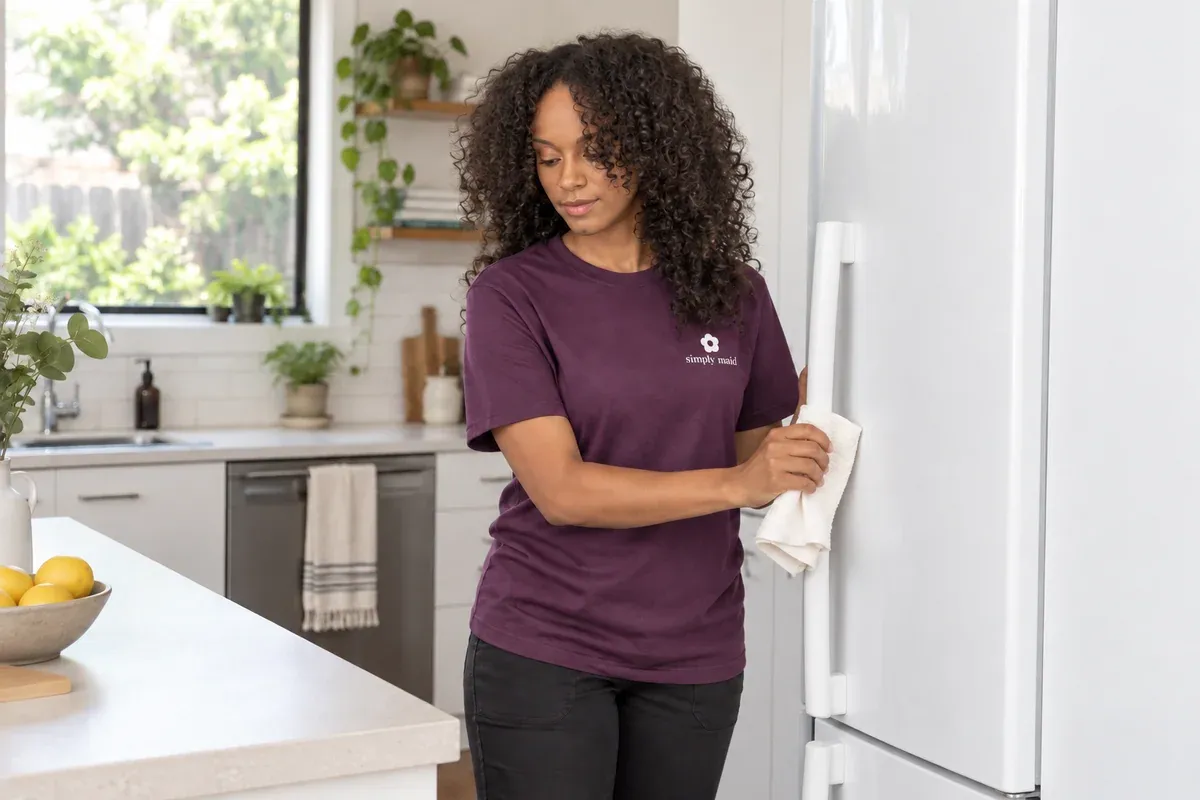
Use a separate board and knife for raw meat, or wash them in hot soapy water and dry them before switching foods, as the NSW Food Authority advises. Wipe and dry the benches each time you prepare food, plus the tap, fridge handle and cupboard pulls you touched between ingredients.
- Wash your hands with soap for at least 20 seconds before preparing food and after raw meat, rubbish or pets.
- Use a separate cloth for the sink, and wash a tea towel after it mops up a spill.
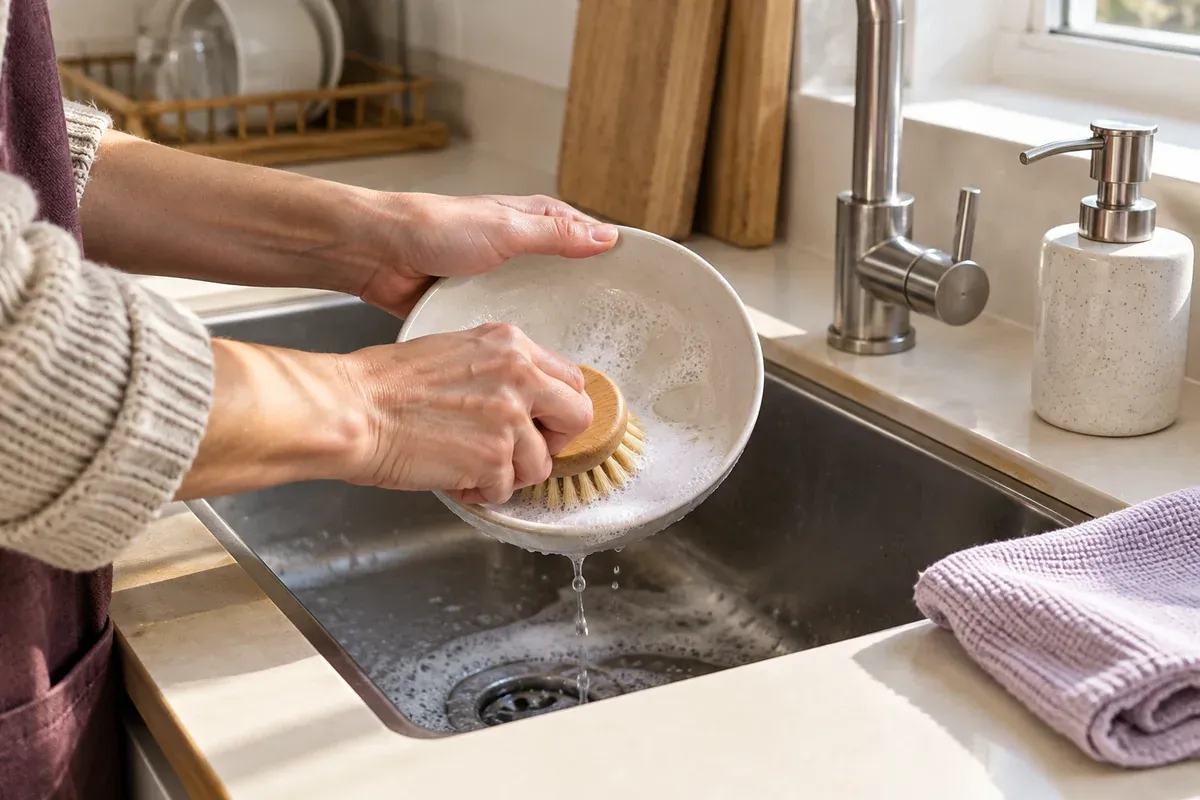
- After each use, rinse sponges, scourers and dish brushes in hot water and wring them out (or run them through a hot dishwasher wash), then let them dry. Throw out any that stay soiled.
Bathroom: separate the toilet tools and dry the towels
Keep toilet cloths and brushes in their own labelled container, away from kitchen tools, so nobody grabs the wrong one.
Clean the basin, seat and flush button with detergent, and disinfect them when someone is ill. Keep toilet-bowl cleaner in the bowl, off taps and towel rails.
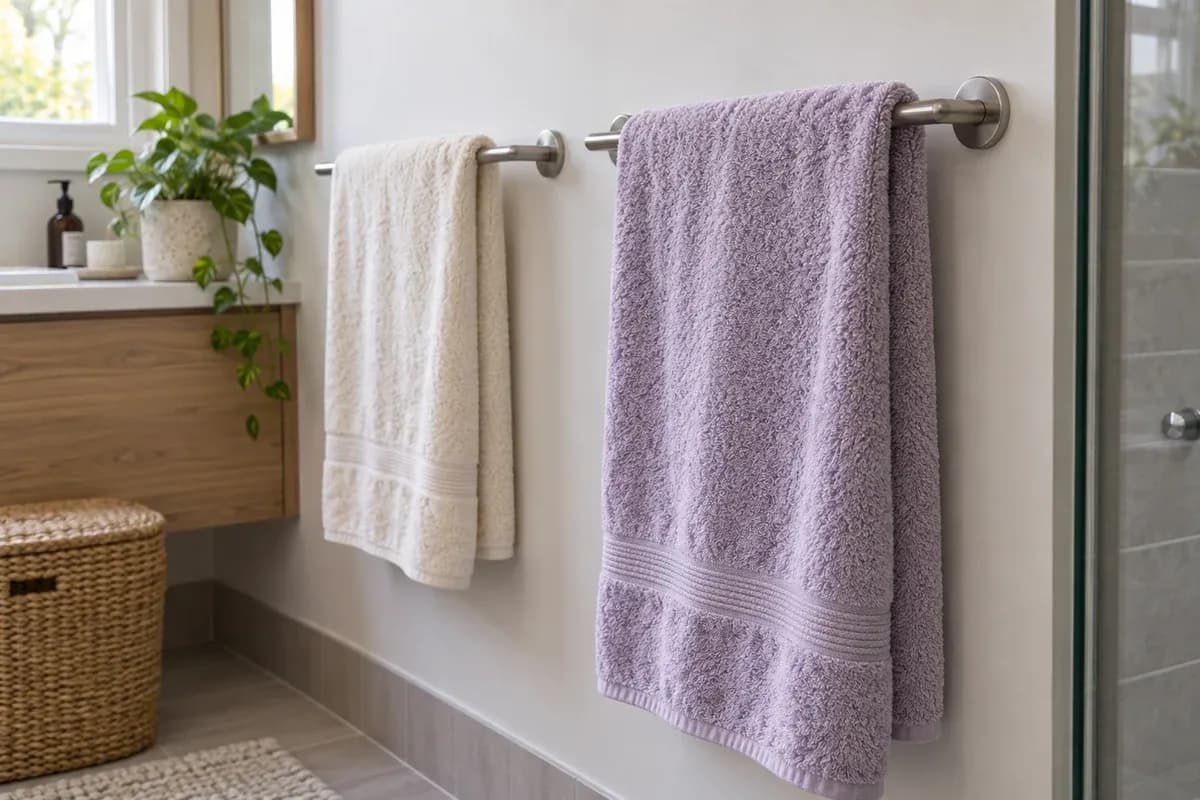
Wash bath and hand towels at least weekly, more often when someone is ill or the house is humid, and hang them spread out on a rail so they dry between uses.
High-touch spots to add when someone is ill
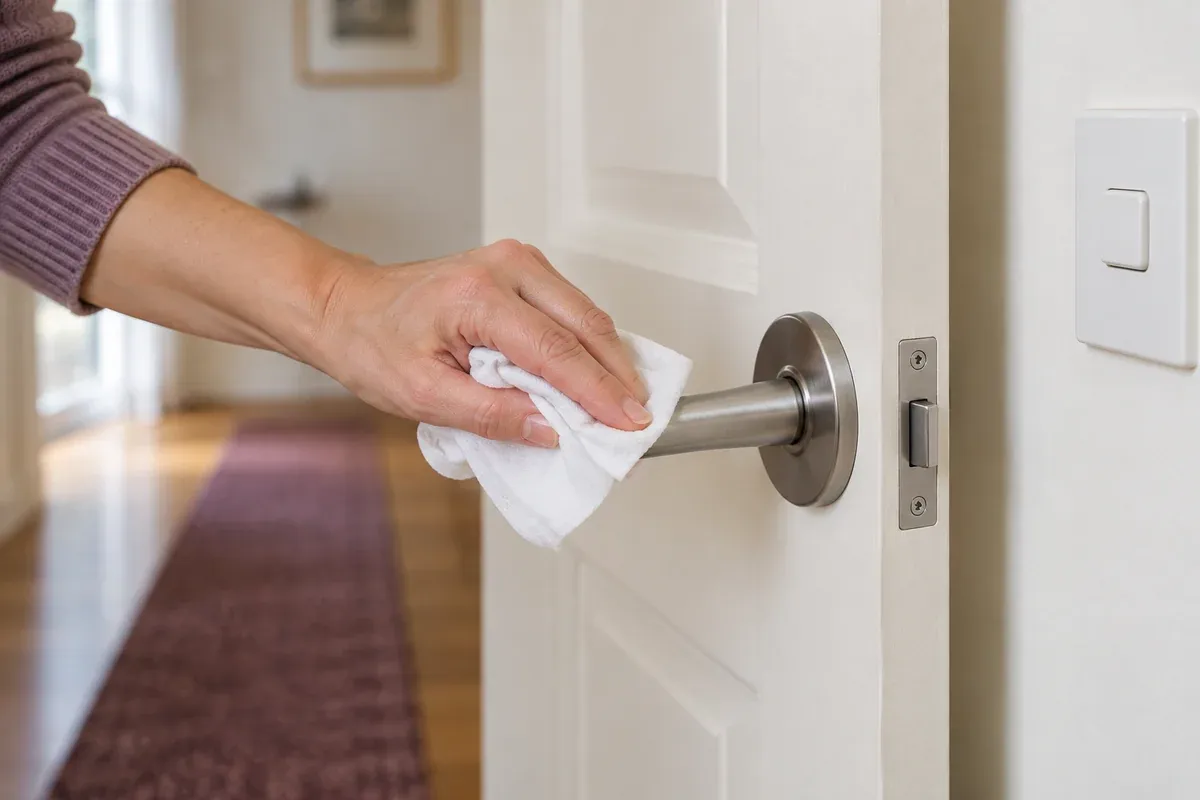
Hands carry germs from room to room through the same few surfaces. Clean these regularly, and while someone has gastro, disinfect them after cleaning, using a well-wrung cloth: bleach solution on plastic and ceramic, a disinfectant that claims norovirus on metal.
- Door handles, light switches and stair rails
- Fridge, microwave and cupboard handles
- Taps, the toilet seat and the flush button
- Remotes and phones, with the wipe their maker names
Laundry and bedding: hot wash, then dry completely
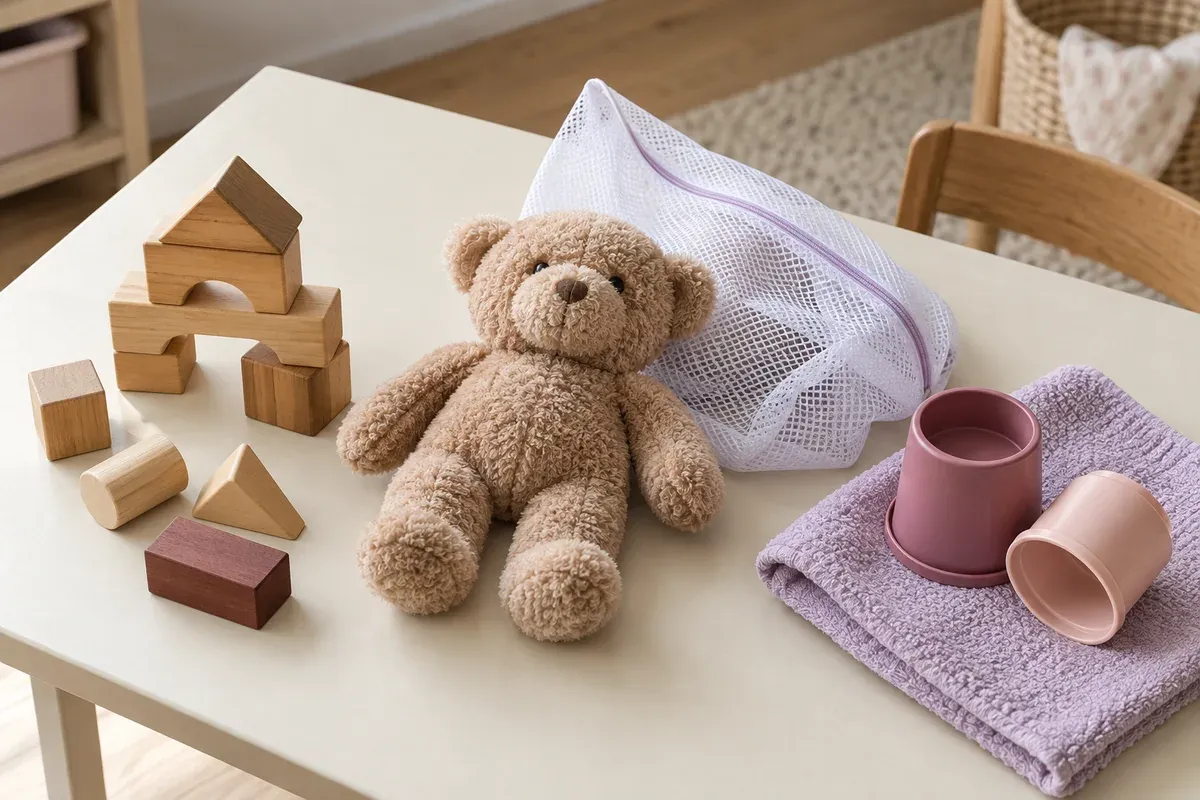
Wash sheets, towels and soiled clothes with detergent at the hottest temperature their care label allows, then dry them completely. When someone is ill, wash their laundry promptly, wipe out the hamper and wash your hands after handling it. Pillows vary by filling: see How to Wash Pillows by Filling, Step by Step.
For a dust-mite allergy, ASCIA recommends washing bedding weekly above 60°C, or a mite-killing laundry product for fabrics that can't take the heat.
When it's more than a household clean-up
If vomit or faecal contamination has reached mattress filling, upholstery or deep carpet, seek appropriate specialist advice before further wetting or use. Simply Maid’s standard and deep house cleans do not include biohazard remediation. Its separate carpet and eligible fabric upholstery or mattress services also require suitability checks and are not a promise to remediate infectious contamination. For illness advice, contact your GP or healthdirect on 1800 022 222.
Common questions
Is the kitchen the germiest room?
Yes, in the best-known survey. In NSF International's 2011 study of 22 US homes, the kitchen had the most germs: the dish sponge or rag ranked first of 30 items and the kitchen sink second, ahead of anything in the bathroom. It's a small sample, but the lesson holds: wet tools need rinsing, wringing and drying after each use.
Do floors need daily disinfection?
No. Damp-mop with a cleaner that suits the floor. Disinfect only where someone was sick, using the gastro steps above; bleach solution suits tiles and vinyl, not timber or stone.
Last reviewed 23 September 2026 · Update history
Sources
- NSW Health, Norovirus fact sheet: gastro clean-up at home.
- Health Victoria, Gastroenteritis outbreak guide, appendices 1A and 1B: 1,000 ppm bleach dilutions.
- Better Health Channel, Mould removal at home: the never-mix warning.
- US CDC, When and how to clean and disinfect your home: contact time, high-touch surfaces, laundry.
- TGA, Regulation of cleaners and disinfectants: which products must be listed.
- Dettol Australia, Multipurpose Wipes Lemon Burst 300s product page (September 2026): an example contact time.
- NSW Food Authority, Cleaning and hygiene: kitchen hygiene.
- USDA FSIS, How do I clean my kitchen sponge?: microwaving.
- BMC Microbiology (2020), acetic acid study: vinegar.
- HealthyWA, Essential oils: poisoning risk.
- NSF International, 2011 Household Germ Study: germiest items.
- ASCIA, Allergen minimisation: dust-mite bedding.
- Cleveland Clinic, How often to wash a bath towel: towel frequency.
Related reading
Change log
Who wrote and edited this article, when its sources were checked, and what changed.
Current version
What changed
23 September 2026: How to Sanitise and Disinfect Your Home: the germiest-room answer now matches the NSF study it cites (the kitchen, with the dish sponge first and the sink second), the gastro clean-up gives Health Victoria's bleach strength with a worked mix for 4% bleach, and new sections cover high-touch spots, laundry and which popular methods actually disinfect.
View all historyHide earlier history
Earlier entries record what was published at the time. Later corrections take precedence.
- Edited by
- Huy Hoang
Correction, 20 September 2026: we corrected the NSF sponge figures and removed a two-minute microwave sponge method, blanket wash temperatures, a mattress-sanitising claim and fixed disinfection schedules.