A plain enamel oven comes clean with bicarb paste and a night's wait. Self-cleaning pyrolytic and catalytic ovens need their own method, so work out which one you have first.
Quick answer: Turn the oven off at the wall, let it cool and take out the racks. Spread a paste of bicarb soda and water over the greasy enamel, keeping it off the elements and door glass, leave it overnight, then wipe out with a damp cloth: about 30–45 minutes hands-on. Pyrolytic ovens run their clean cycle instead; rough catalytic panels never get paste or oven cleaner.
Which oven do you have?

Identify the model before applying a cleaner. Keep products off restricted surfaces, seals and elements; do not transfer a manual-cleaning recipe to self-cleaning liners.
Read the illustration as text
- Plain enamel
- Use the cleaning method specified for the smooth lining.
- Catalytic panels
- Rough liners have different care from the surrounding enamel.
- Pyrolytic or steam programme
- Follow the model’s preparation, cycle and cooling instructions.
One oven can contain surfaces with different rules.
Oven | How to tell | How to clean it | Time |
|---|---|---|---|
Plain enamel | Smooth, glossy walls; no self-clean setting | Bicarb paste; oven cleaner as a last resort | 30–45 min hands-on, plus overnight |
Catalytic liners | Rough, matt, often speckled side, back or fan panels | Heat, or a soapy soak for heavy soil; no paste, cream cleanser or oven cleaner | About 1 hour at 250 °C |
Pyrolytic | A pyrolytic or "Pyro" setting; the door locks during it | Its clean cycle; no cleaners or sprays inside | 1.5–2.5 hours, plus cooling |
Steam clean | A water tank or steam setting | That programme's steps; never a handheld steam cleaner | Varies |
Not sure | Model number on the plate inside the door frame | Warm soapy water on smooth surfaces until you've looked up the brand, model and "manual" | 10–15 min |
How to clean an oven naturally, without chemicals
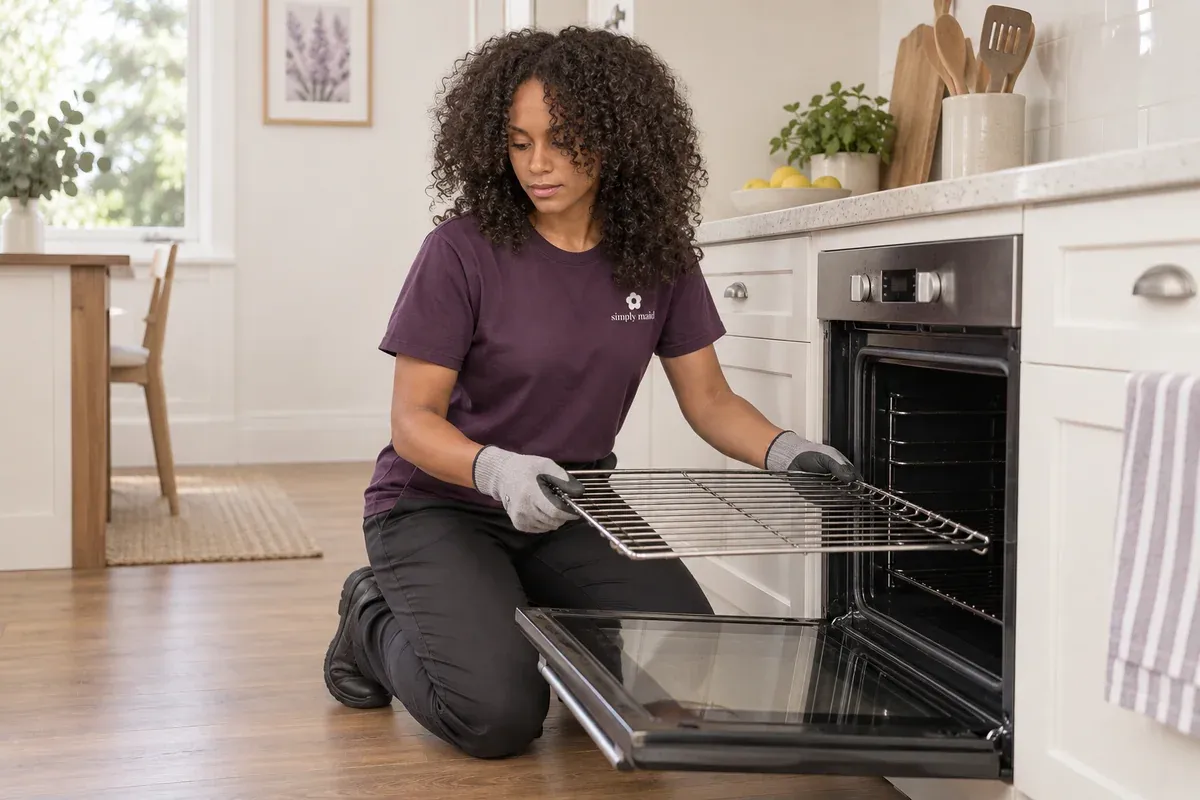
Bicarb soda and water, with no oven cleaner, is the default for plain enamel, including the smooth floor and door of an oven with catalytic side panels. You need several heaped tablespoons of bicarb soda, water, gloves, a cloth and a nylon scourer; it's also in How to Make Natural Cleaning Products: 10 Homemade Recipes.
- Turn the oven off at the wall or isolating switch and let it cool. Take out the racks, trays and side racks and start them soaking.
- Brush out loose crumbs. Mix the bicarb with a little water into a spreadable paste and put on gloves.
- Spread it over the greasy walls, floor and inside of the door frame, keeping it off the elements, fan, door glass, seals and any rough panels.
- Leave it a few hours, or overnight for heavy grease.
- Wipe out with a damp cloth, rinsing it often. Work stubborn spots with a nylon scourer, never steel wool, until no white film is left in the corners.
- You're done when the enamel feels smooth, not tacky, and the cloth comes away clean. Paste any brown patches once more before moving on.
If bicarb isn't enough: oven cleaner
Oven cleaner is the last resort, for plain enamel in an oven with no self-clean feature. CHOICE warns caustic types can cause deep burns or even blindness.
Safety Never mix cleaning products. Victoria’s Better Health Channel: “Do not mix bleach with ammonia, acids or other cleaners – this can release hazardous chlorine or chloramine fumes.” Ventilate the room during and after use. Wear gloves and eye protection. Follow the label's dilution and contact time. In an emergency call 000. For poisoning advice call the Poisons Information Centre on 13 11 26 — 24 hours, anywhere in Australia.
- Check the can suits your oven. Cold-oven sprays such as Mr Muscle Odourless need an oven that hasn't been heated for at least 24 hours and rule out self-cleaning ovens.
- Put on thick rubber gloves, safety glasses and long sleeves, open a window and keep children and pets away.
- Lay newspaper under the door. Spray from about 20 cm, back and sides first, the door last, keeping it off catalytic panels, elements and seals.
- Leave it for the time on the can, then wipe out with a damp sponge, rinsing often, until no residue is left. Air the oven before cooking.
- If it smokes next time, switch off, let it cool and wipe out what's left; never run it hot to burn residue off. For a fire, keep the door closed, turn off the heat if safe and call 000.
How to clean oven glass
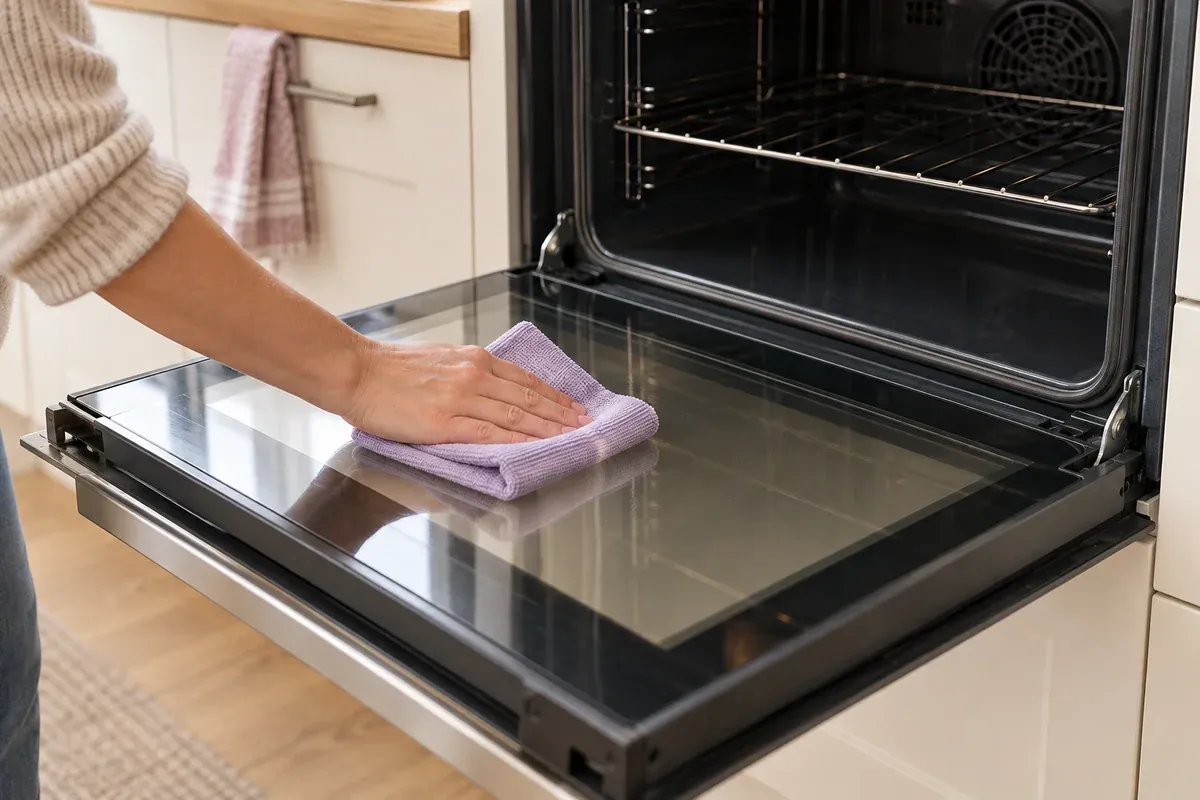
Clean the inside of the door glass only when it's cool; cold water on hot glass can crack it. Lay a cloth soaked in hot soapy water on the glass for a few minutes to soften the brown film, then wipe with a microfibre cloth and dry. For stubborn marks, Westinghouse allows oven cleaner on its door glass.
Keep bicarb, harsh abrasives and metal scrapers off the glass: CHOICE says bicarb can be abrasive, and Westinghouse warns scratches may lead to the glass shattering. Replace chipped or cracked glass before using the oven.
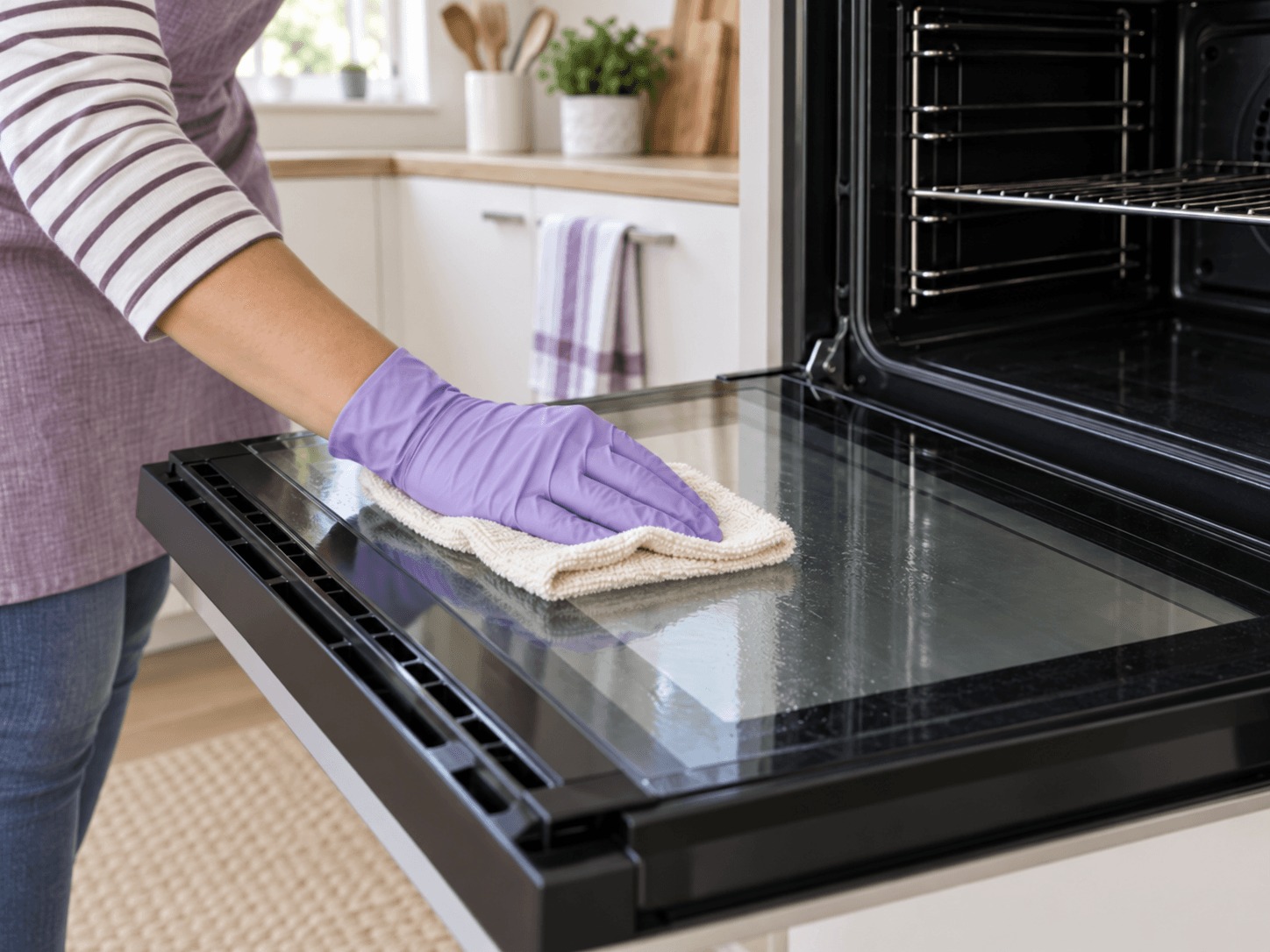
Streaks between the panes need the door off, so only if your manual shows how: Westinghouse's has you lift the door off at about 45°, lay it on a blanket and hand-wash each pane in warm soapy water. Otherwise call the maker's service line.
How to clean oven racks and trays
Soak lightly greasy racks and trays in hot water with dishwashing liquid. For heavy grease, CHOICE's method is warm water with enzyme washing powder for no more than an hour, then a scourer sponge, a rinse and 10 minutes in the oven at 100 °C to dry. Too big for the sink? Use the laundry tub, or the bath lined with an old towel.
Wipe telescopic runners with a soapy cloth instead: soaking dissolves the grease they run on. Cake tins and loose trays follow How to Clean Baking Tools Without Damaging Them.
Self-cleaning ovens: pyrolytic and catalytic
How to run a pyrolytic cycle
CHOICE says a pyrolytic oven heats to about 500 °C, turning food residue to ash. It's the best way to clean a pyrolytic oven, and Westinghouse's manual sets out how:
- With the oven cold, take out every shelf, tray and side rack.
- Wipe up large spills and clean the floor and inner door glass with warm soapy water. No oven cleaner, acids or sprays.
- Never run non-stick trays or tins through it: the heat damages the coating and releases poisonous gas.
- Open a window, keep the vent above the door clear, and move pets away, especially birds and reptiles.
- Choose light (about 1.5 hours) or normal (about 2.5 hours), plus cooling. The door locks near 300 °C until it cools; don't switch the power off mid-cycle.
- Once cool, wipe out the ash with a damp cloth.
Westinghouse suggests a normal cycle about every 2–3 months, and a light one as often as every second or third roast.
How to clean catalytic liners
The rough panels absorb spatters and burn them off, which works less well if you mostly bake at around 180 °C. For light soil, run the empty oven at 250 °C for about an hour. For heavy soil, take the panels out, soak them in warm soapy water for at least 2 hours and wipe with a soft cloth. Powders, cream cleansers, caustic oven cleaner and scourers ruin the coating.
Popular oven hacks: which work?
Hack | Verdict | Why |
|---|---|---|
Bicarb and vinegar paste | Bicarb works; skip the vinegar | The fizz is the two neutralising each other |
Dishwasher tablet rubbed on the glass | Skip it | A hard block risks the scratches that can lead to shattering, and Finish lists serious eye irritation |
Overnight bath soak with dishwasher tablets | Works, but there's better | An hour in enzyme washing powder does the job |
Heating the oven to burn off cleaner | Don't | It smokes; wipe it out cold |
Foil on the oven floor | Don't | Westinghouse rules it out |
Keep the next clean easy
Wipe spills once the oven is cool enough to touch, and put a tray under anything likely to bubble over. Fat built up around elements and fans can catch fire, so plan a full clean every 1–3 months depending on how much you roast. The rest of the room is in How to Clean Your Kitchen, Step by Step.
When to get help
Call the maker's service team for cracked glass, a door that won't seal or lock, electrical faults or smoke that keeps coming back. A Simply Maid deep clean or end of lease clean includes the inside of the oven (racks, glass and interior), and an inside oven clean can be added to a standard clean: see oven cleaning prices. We don't repair or service appliances.
For a Sydney home, the deep-cleaning service includes inside oven cleaning alongside the rest of the booked home clean. Compare Sydney deep-cleaning prices and check the inclusions before choosing your clean; oven-only visits are not offered.
Deciding whether to clean the oven yourself or book help? The oven cleaning cost guide explains the difference between adding oven cleaning to a home clean and arranging an oven-only specialist. Compare the complete service and total before choosing.
Frequently asked questions
How do I clean the outside of the oven door?
Many stainless-look doors have a fingerprint-resistant finish that Westinghouse says takes warm water and a mild detergent only: no stainless steel cleaners, abrasives or harsh solvents. Wipe along the grain and dry, as in How to Clean Stainless Steel Without Streaks.
Last reviewed 24 September 2026 · Update history
Sources
- CHOICE, How to clean your oven (updated 28 February 2024): bicarb paste, glass, racks, oven-cleaner safety.
- Westinghouse, Electric built-in ovens user manual: enamel, glass, door finish, catalytic liners (pages 28–29).
- Westinghouse, Pyrolytic oven user manual: preparation, times, pets (pages 24–25, 48).
- SC Johnson Professional, Mr Muscle Odourless Oven Cleaner: the cold-oven rule and spraying order.
- Reckitt, Finish Powerball Classic Tabs safety data sheet: serious eye irritation.
- The Conversation, Vinegar and baking soda: a cleaning hack or just a bunch of fizz?: why they neutralise.
- SA Metropolitan Fire Service, Extinguishing a fire: oven fires.
- Simply Maid, Oven cleaning prices: what an inside oven clean covers and costs.
Related reading
Change log
Who wrote and edited this article, when its sources were checked, and what changed.
View all historyHide earlier history
Earlier entries record what was published at the time. Later corrections take precedence.
- Edited by
- Huy Hoang
24 September 2026: How to Clean an Oven: bicarb paste left overnight is now the step-by-step default for plain enamel ovens, with oven cleaner as a last resort and a table to tell enamel, catalytic and pyrolytic ovens apart. New sections cover racks, door glass and running a pyrolytic cycle, with verdicts on popular hacks such as dishwasher tablets on the glass.