
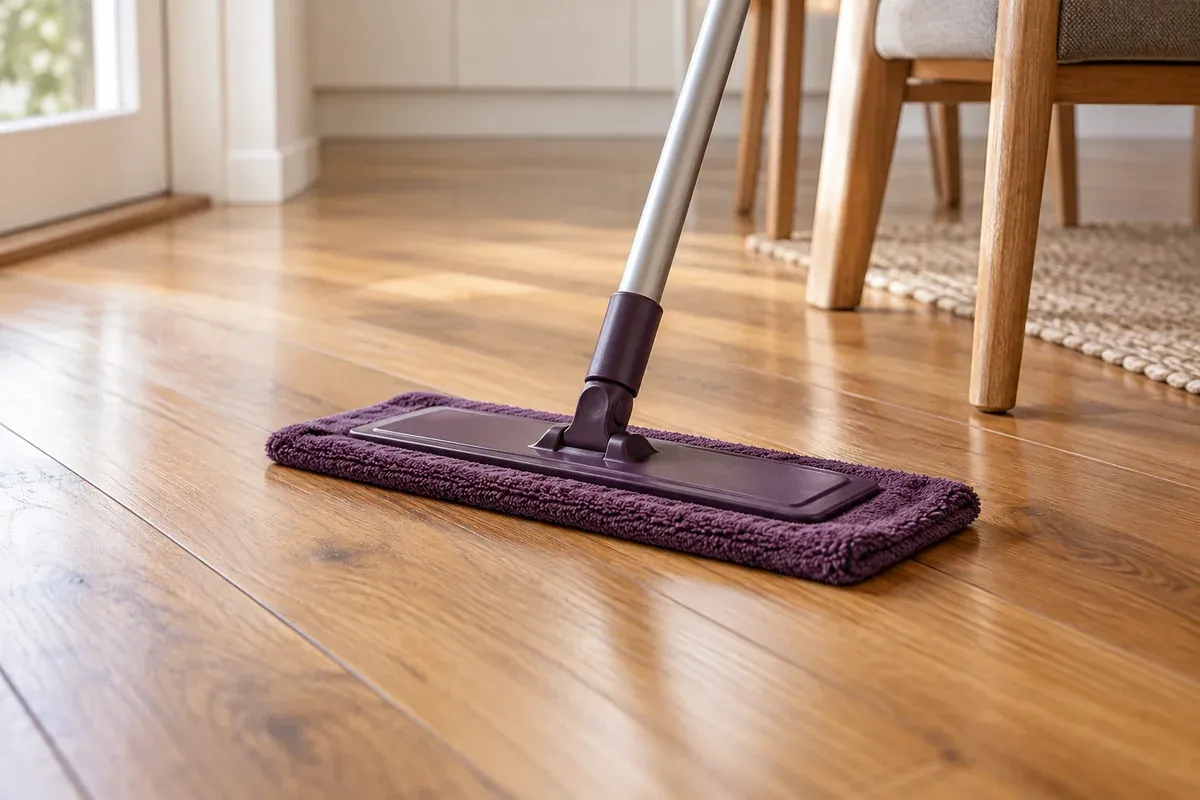
Check the finish first
Before following any cleaning or buffing method below, identify your coating and check its current care instructions. Our timber floor care guide helps you choose the right starting point. For penetrating oils or hardwax oils, read oiled timber floor care. In particular, Livos Australia's oil-care guidance advises against microfibre and steam on its oil finishes; a general hardwood routine is not suitable for every coating.
Most timber floor care is dry: grit is what scratches a finish, so it comes off first, and water goes on sparingly. A floor that looks dull usually needs cleaning or a maintenance coat; one worn through to bare timber needs a floor sanding contractor.
Quick answer: To clean timber floors, vacuum or dust-mop, then damp-mop with a pH-neutral timber floor cleaner and dry the floor. To bring the shine back to a dull polyurethane finish, clean it, let it dry and apply one or two thin coats of a maintenance coating made for coated timber, such as Bona Timber Floor Refresher. Avoid vinegar, steam mops and all-purpose cleaners. In Australia, getting floors “polished” usually means sanding and recoating them: a job for a floor sanding contractor, not a cleaning product.
Cleaning, Buffing or “Polishing”: Which Do You Need?

Check the floor and finish records. Oiled, waxed and polyurethane finishes need different products; floor restoration is outside a household cleaning service.
Read the illustration as text
- Cleaning
- Remove grit and grime using care suitable for the finish.
- Refreshing
- Use a compatible maintenance treatment only on a suitable sound coating.
- Sanding and recoating
- Worn-through or damaged finishes need specialist assessment.
Cleaning cannot put a worn coating back.
The words get used loosely, so it helps to know which job you are looking at before you buy anything.
- Cleaning: removing grit and grime with a vacuum, dust mop and damp mop. Every timber floor needs it, and it is the only part of floor care a house cleaner does.
- Refreshing or buffing: bringing back the sheen of a sound polyurethane coating, with a dry microfibre pad or a maintenance coat applied over a clean floor. It suits dull, lightly scratched finishes, not bare or worn-through timber.
- Sanding and recoating: what most Australians mean by “floor polishing”. The old coating is sanded back and a new polyurethane or oil finish goes on. That is specialist work for a floor sanding contractor.
Bona, which makes both floor coatings and cleaning products, calls timber floor polishing “a misconstrued term”: people asking for polished floors usually want them sanded and given a new coating (Bona, “Polished” vs “Coated” Timber Floors).
How to Tell What Finish Your Hardwood Floors Have
Before you reach for any cleaning product, it pays to know what type of finish your floors have. Using the wrong method on the wrong finish can cause lasting damage.
Timber floors can carry several kinds of finish. The Australian Timber Flooring Association groups them as penetrating oils and hardwax oils, curing oils and alkyds, oil-modified urethanes, and solvent- or water-based polyurethanes. Polyurethanes form a hard film on the surface; with penetrating oils, ATFA notes, routine maintenance may be higher.
Not sure which you have? Try this simple test:
- Find an inconspicuous spot — behind a door or under a piece of furniture.
- Place a few drops of water on the surface.
- Wait one minute, then check.
If the water beads and stays on the surface, your floor has a surface-sealed finish — on modern floors, this is almost certainly polyurethane. If the water soaks in or leaves a white mark, you likely have an oil, wax, or unfinished surface that needs gentler treatment.
According to the Australian Timber Flooring Association (ATFA), timber floors vary in ease of maintenance depending on the coating used — so getting this right from the start saves you time and costly mistakes.
This guide focuses on polyurethane-finished floors, including most pre-finished engineered boards. If your floor is oiled or waxed, use the cleaner and maintenance product the finish maker specifies: a polyurethane refresher isn't for it.
Laminate, hybrid and vinyl planks can look like timber but aren't cleaned like it, so check the product name or your purchase paperwork first. We don't have a guide for those floors yet; follow the maker's care sheet.
What You'll Need
Gather these before you start. Everything is available at Bunnings or your local supermarket:
- Microfibre dust mop
- Vacuum cleaner with a bare-floor setting (no beater bar — it scratches)
- pH-neutral cleaner made for coated timber floors, such as Bona Timber Floor Cleaner
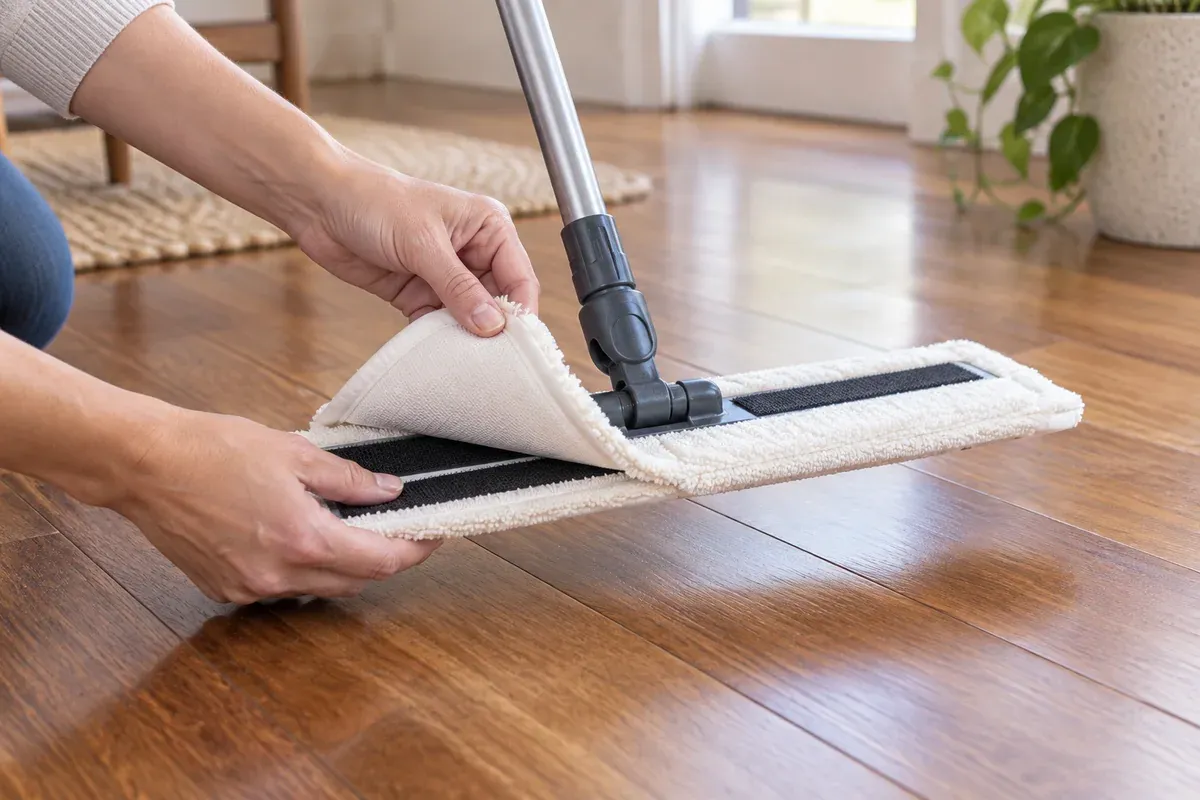
- Microfibre mop pad or a well-wrung flat mop
- Soft cloth for spot-cleaning spills
- A maintenance coating for coated timber for the restoring step, such as Bona Timber Floor Refresher (for polyurethane and pre-finished floors, not waxed or oiled timber)
Tip: Skip the bucket-and-string-mop approach. A flat microfibre mop gives you better control over how much moisture touches the floor — and that matters more than you'd think.
Step-by-Step: How to Clean Hardwood Floors
Step 1: Clear and Dust
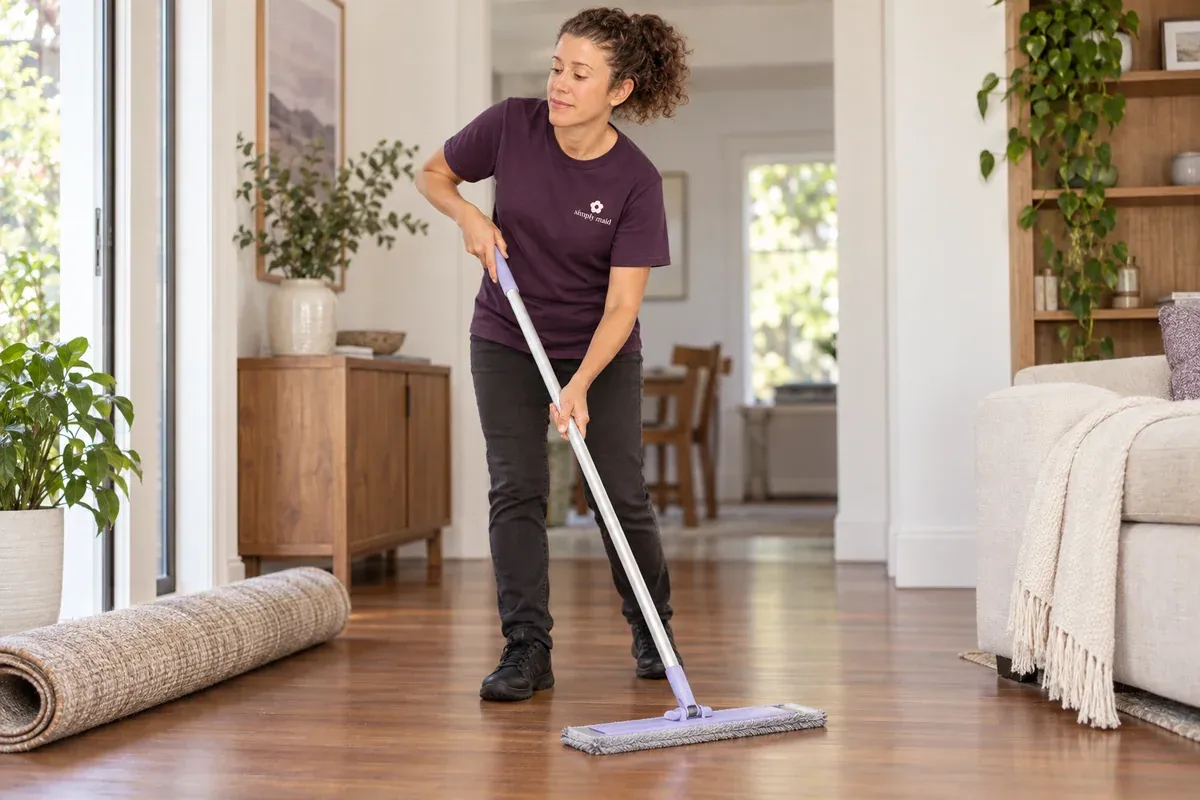
Remove rugs, pet bowls, and anything sitting on the floor. Then dust mop or vacuum the entire area using the bare-floor setting (no spinning brush head).
This step removes grit, sand, and fine dust that act like sandpaper underfoot. In Australian homes — especially near the coast or in sandy suburbs — this daily habit alone prevents most surface scratches.
The National Wood Flooring Association (NWFA) recommends that "routine cleaning involves sweeping, dust mopping, or vacuuming" as the foundation of all hardwood floor care.
Step 2: Spot-Clean Sticky Patches
Check for sticky spots, dried spills, or scuff marks. For sticky residue, dampen a soft cloth with your timber floor cleaner and gently rub. For scuff marks, a tennis ball on the end of a broom handle works surprisingly well — rub it lightly over the mark.
Don't scrape with metal or hard plastic. A plastic spatula is fine for dried-on grime, but anything harder can gouge the polyurethane.
Step 3: Damp-Mop with a pH-Neutral Cleaner
Spray your timber floor cleaner directly onto a small section of floor (about 1–2 square metres at a time), then mop with a barely damp microfibre pad. Work in the direction of the wood grain.
The key word here is damp, not wet. Your mop should feel like a wrung-out cloth, not a dripping sponge. The NWFA says: “Clean spills immediately with a dry or slightly damp cloth. Don’t use wet mops or steam mops, which will damage the finish and the wood over long periods of time.” Standing water can also seep into gaps and worn spots between boards.
For mop care and a comparison of different floor materials, use our floor-mopping guide. Keep following the care instructions for your particular timber finish.
Work your way across the room, section by section. There's no need to rinse — a good pH-neutral cleaner leaves no residue.
Step 4: Dry the Floor
Go over the floor once more with a dry microfibre pad to pick up any remaining moisture. This is especially important in humid climates. CB Timber Floors (Melbourne) advises maintaining indoor humidity between 40–60% to prevent boards from shrinking or expanding — something worth keeping in mind during Brisbane summers or Melbourne winters.
What NOT to Use on Hardwood Floors
This section might save your floors. Some of the most popular "cleaning tips" online are actually the worst things you can do to polyurethane finishes.
Safety Never mix cleaning products. Victoria’s Better Health Channel: “Do not mix bleach with ammonia, acids or other cleaners – this can release hazardous chlorine or chloramine fumes.” Ventilate the room during and after use. Wear gloves and eye protection. Follow the label's dilution and contact time. In an emergency call 000. For poisoning advice call the Poisons Information Centre on 13 11 26 — 24 hours, anywhere in Australia.
Vinegar
It's one of the most recommended DIY cleaners online — and one of the worst for hardwood floors. As Brett Miller, VP of Technical Standards at the NWFA, warns: "Using vinegar and water to clean hardwood floors may seem harmless, but over time, it can erode the finish and void manufacturer warranties."
Vinegar's acidity gradually strips the polyurethane coating, leaving floors dull and unprotected.
Steam Mops
The NWFA puts steam mops with wet mops: they “will damage the finish and the wood over long periods of time.”
All-Purpose Cleaners
General-purpose sprays aren't made for timber finishes, and some leave a film. Skip anything with wax or silicone unless the floor's maker approves it, and use a cleaner labelled for coated timber floors.
Furniture Polish and Oil Soaps
The Australian Timber Flooring Association calls these the minimum care for any timber floor: regular sweeping, dust-catching mats at external doors, prompt cleaning of spills, occasional mopping with a recommended cleaning product, felt pads on chair legs and moving furniture, and no street shoes, leather soles or stilettos on the floor where possible.
Stick to a cleaner made for coated timber floors. Bona, Oates and Sabco all sell timber floor cleaners; check the label says it suits your finish.
How to Buff Hardwood Floors and Restore the Shine
Over time, even well-maintained floors lose their lustre. Light scratches, foot traffic patterns, and general wear create a dull, uneven look. That's where buffing comes in.
When to Buff
Signs your floors are ready for a buff, according to Mr Sander (Guild of Master Craftsmen, NWFA certified): loss of shine, uneven texture, and visible footprint marks that don't clean away.
As a general guide:
- A dry buff: when the floor looks flat after cleaning. Go over the clean, dry floor with a clean microfibre pad.
- A maintenance coat: when it still looks dull or lightly scratched after cleaning and buffing. Follow the product label for how often it can be reapplied.
- A professional screen and recoat: when traffic lanes have worn through the top coat but the timber underneath is undamaged. Mr Sander puts this at every one to two years in hallways and kitchens, and every three to five in living rooms and bedrooms.
- Sanding and recoating: when the coating has worn through to bare timber, or boards are deeply scratched or stained.
Restoring the Shine Yourself: Step by Step
- Clean the floor thoroughly using the method above. Any grit left behind will scratch during buffing.
- Buff the clean, dry floor with a dry microfibre pad, working with the grain. On a lightly dull floor this alone can lift the sheen.
- If it still looks dull, apply a thin coat of a maintenance coating made for your finish, such as Bona Timber Floor Refresher on polyurethane, with a microfibre applicator pad, working with the grain.
- Let it dry completely before walking on it or moving furniture back. Bona gives about two hours for its Refresher; follow the drying time on your own product’s label.
- Apply a second thin coat only if the label allows it and the sheen is still uneven. Thin coats are always better than thick.
A Quick Routine for Busy Weeks
You don't need to deep-clean your floors every week. Here's a simple schedule that keeps hardwood looking good without eating into your weekends:
Frequency | Task | Time |
|---|---|---|
Daily | Quick dust mop of high-traffic areas | 5 minutes |
Weekly | Damp-mop the whole floor | 15–20 minutes |
Monthly | Spot-check for scratches, clean under furniture | 20 minutes |
When it stays dull after cleaning | Dry buff, then a thin maintenance coat if needed | About 2 hours to dry (check the label) |
Frequently Asked Questions
Q: Can I use vinegar to clean hardwood floors?
No. Vinegar is acidic, and the NWFA's Brett Miller warns it can erode the finish over time. Use a pH-neutral cleaner made for coated timber floors instead.
Q: Will a steam mop damage my hardwood floors?
Yes. The NWFA says wet mops and steam mops “will damage the finish and the wood over long periods of time.” A barely damp microfibre mop is the safer choice.
Q: How often should I buff my hardwood floors?
Buff with a dry microfibre pad whenever a clean floor looks flat. A maintenance coat such as Bona Timber Floor Refresher is for when the floor still looks dull or lightly scratched after cleaning; follow its label for how often to reapply. A professional screen and recoat is a bigger job, typically every one to two years in busy hallways and three to five years in bedrooms, and worn-through or deeply scratched floors need sanding and recoating.
Q: What's the best cleaner for hardwood floors in Australia?
Use a pH-neutral cleaner made for coated timber floors, such as Bona Timber Floor Cleaner; Oates and Sabco also sell timber floor cleaners. Avoid anything with wax or silicone unless your floor's maker approves it, and check the floor maker’s care advice for oiled or waxed timber.
Q: Is polyurethane finish waterproof?
No — it's water-resistant, not waterproof. Polyurethane creates a strong barrier that repels water, but standing water or spills left too long can seep through seams and worn spots. Always wipe up spills promptly and never wet-mop with excess water.
Q: What does “timber floor polishing” mean in Australia?
Usually sanding the floor back and applying a new coating, which is a job for a floor sanding contractor. Day to day, a coated floor only needs cleaning, the odd dry buff and, when it dulls, a thin maintenance coat. If the finish has worn through to bare timber, cleaning and buffing won’t bring it back.
Related Reading
- How to Vacuum Properly (and Get More From Your Machine)
- How to Get Rid of Dust — and Stop It Coming Straight Back
- Timber Flooring Pros and Cons: Is It Worth It?
- How to Get Pet Urine Smell Out of Tiles, Grout and Carpet
- Common Cleaning Mistakes That Waste Your Time
Sources & References
- National Wood Flooring Association (NWFA) — Hardwood Floor Maintenance Guidelines. Routine cleaning; wet and steam mops.
- Brett Miller, VP of Technical Standards, NWFA — Vinegar and Hardwood Floors (quoted by Prudent Reviews). Vinegar and finishes.
- Australian Timber Flooring Association (ATFA) — Timber Floor Coatings are YOUR CHOICE. Coating types and minimum maintenance.
- Australian Timber Flooring Association (ATFA) — Consumer Information. Maintenance depends on the coating.
- CB Timber Floors (Melbourne) — Best Way to Clean Timber Floors in Australia. Indoor humidity.
- Mr Sander (UK) — How Often Should You Buff Your Hardwood Floors?. Buffing and recoat intervals.
- Bona Australia — “Polished” vs “Coated” Timber Floors. What Australians usually mean by floor polishing.
- Bona Australia — Bona Timber Floor Refresher. The maintenance coat, the floors it suits and its drying time.
Reviewed on 2 October 2026 against Bona Australia’s current product directions: the maintenance product and its drying time now match the manufacturer, buffing is separated from professional recoating, and the guide explains what “floor polishing” usually means.
If keeping on top of your floors feels like one thing too many, our friendly team is always here to help.
A Simply Maid standard clean vacuums and mops hard floors, timber included. Buffing machines, maintenance coats, sanding and recoating are specialist work we don’t offer.
If you are in Sydney, see house cleaning Sydney for prices and the suburbs we cover.
Thoughtful care for the spaces that matter most.
Protect the floor between cleans
Identify the timber's finish before choosing a product or buffing method: an oiled floor and a sealed coating can need different care. Follow the finish maker's instructions, and seek advice if you cannot identify it. Do not assume a polish or abrasive treatment is suitable for every timber floor.
- Use suitable entrance mats and remove accumulated grit from them.
- Keep floor-care tools clean so trapped debris is not dragged across the surface.
- Fit appropriate furniture pads, inspect them regularly and lift furniture rather than dragging it.
- Attend to spills promptly using the finish maker's method; do not leave standing water.
- Choose floor-protection products compatible with the finish, including the backing on rugs and mats.
- Review wear in busy areas and ask the installer or finish manufacturer about maintenance before attempting a restoration treatment.
For product instructions, see reading cleaning-product labels. The Healthy Home guide connects floor care with dust, fabrics and room routines. This is original Simply Maid guidance, not the former Healthy Interiors supplier's article or an endorsement of a particular finish.
Indoor humidity matters most for timber in Brisbane summers and Melbourne winters. If you are in Brisbane or in Melbourne, you can see what a regular visit covers on our house cleaning in Brisbane and house cleaning in Melbourne pages.
Change log
Who wrote and edited this article, when its sources were checked, and what changed.
