Streaks and fingerprints on stainless steel are grease and leftover detergent, so the fix is a gentler clean in the right order, not harder scrubbing. What changes by surface is how far you can go beyond that.
Quick answer: Wipe along the grain with a soft cloth wrung out in warm water and a few drops of dishwashing liquid, wipe again with a second cloth dampened in clean water, then dry straight away with a third: about 5 minutes a door. That suits every stainless surface, coated or bare. Keep bleach, steel wool and scourers off it, and save vinegar and cream cleansers for bare sinks and pans.
Watch: Clean stainless steel without streaks
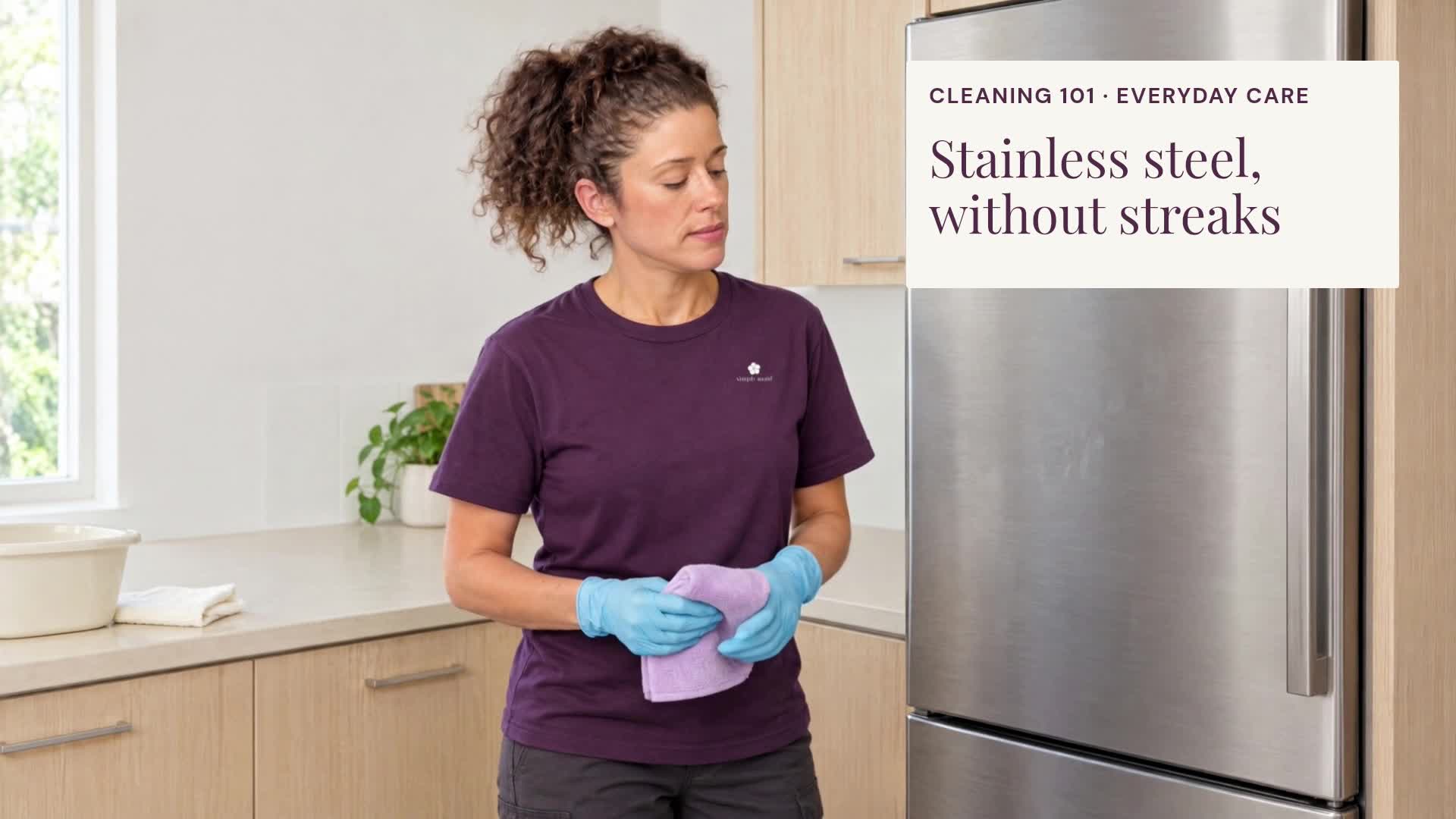
Read the video description
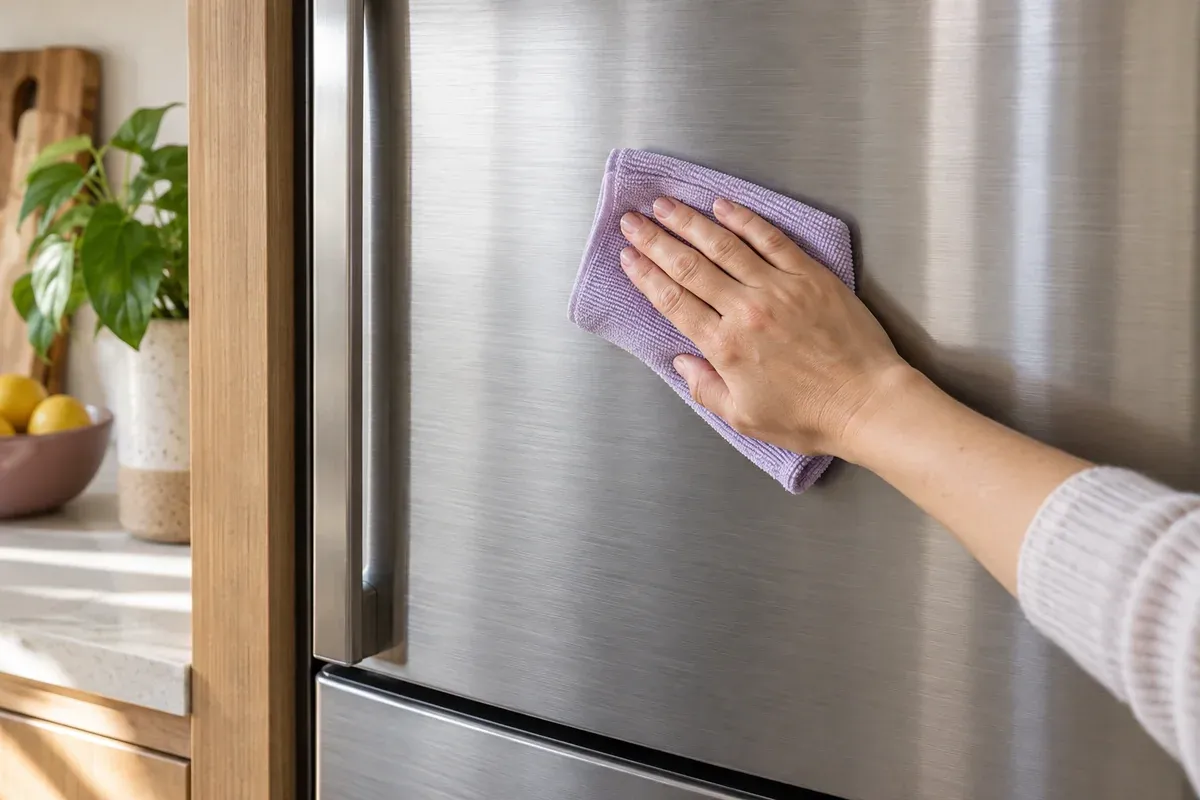
Fingerprints on the fridge? Here’s a gentle way to clean a stainless-steel door. Check the appliance care guide first, especially for coated finishes. Gather soft cloths, warm water and mild washing-up liquid, if permitted. Look for the fine brushed lines. This door’s grain runs sideways, so our wiping strokes will too. Use a little detergent in warm water. Dampen the washing cloth and wring it out. Keep water away from controls and openings. Wipe with light, even pressure along the grain. Overlap each pass, turning to a clean part of the cloth as it picks up dirt. Now use a separate cloth dampened with clean water. Wipe away the detergent residue, still following the grain. Dry straight away with a soft, lint-free cloth. If marks remain, check the manufacturer’s advice before trying anything stronger. Skip scourers and abrasive powders. A quick clean and dry helps prevent build-up. Simply Maid. A clean home. More room for life.
First, work out what you're cleaning
Surface | What it usually is | Beyond the three-cloth clean |
|---|---|---|
Fridge, dishwasher and oven doors | Often a fingerprint-resistant coating, or a stainless-look plastic or painted panel | Nothing stronger: Fisher & Paykel and Westinghouse allow warm water and mild detergent only, and rule out stainless steel cleaners, abrasives and solvents |
Sinks and laundry tubs | Bare brushed steel | Cream cleanser or bicarb paste along the grain; a diluted vinegar soak for limescale |
Pots and pans | Bare steel | A detergent or vinegar boil-up for burnt food; bicarb paste for heat tint |
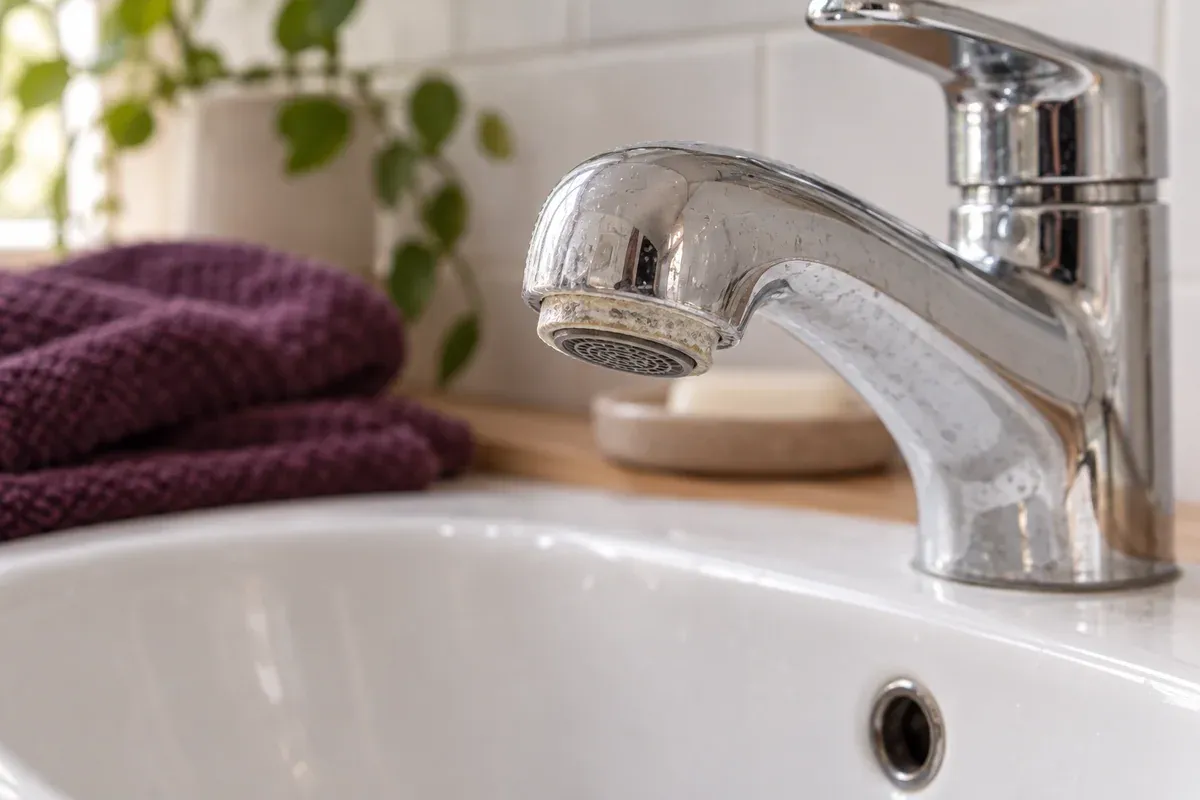
Taps and shower fittings | Usually chrome-plated brass, not stainless | |
Not sure | Treat it as coated | The three-cloth clean only; test anything else on a hidden spot first |
How to clean stainless steel appliances

This is an appliance-surface overview. Bare cookware and coated or stainless-look doors have different care requirements; keep moisture away from controls and openings.
Read the illustration as text
- Wash
- Use the permitted mild solution and wipe along the brushed grain.
- Rinse
- Use a fresh damp cloth to lift detergent residue.
- Dry
- Follow the grain again with a soft, dry cloth.
Check the coating before choosing anything stronger.
You need warm water, dishwashing liquid and three soft cloths (microfibre or clean cotton tea towels): one to wash, one to rinse and one to dry. Allow about 5 minutes a fridge door.
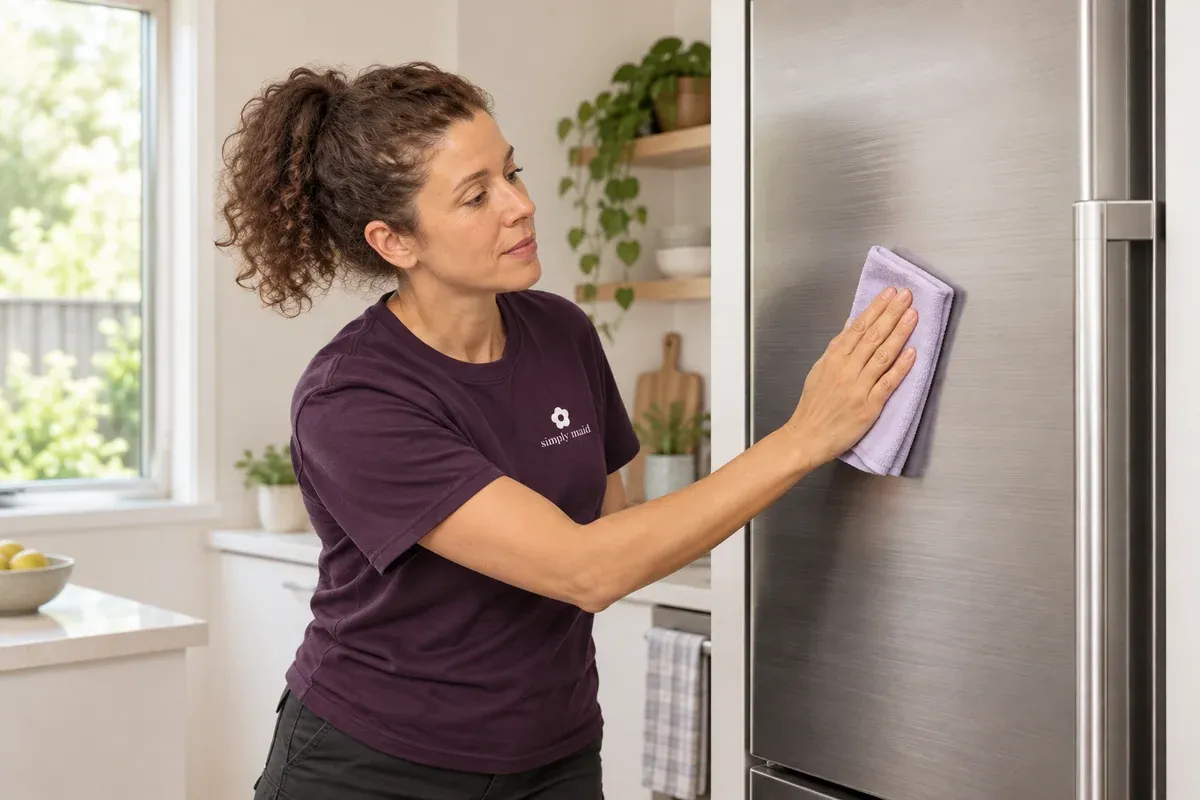
- Find the grain, the fine lines brushed into the steel. Look before you wipe, because it runs sideways on some doors and up and down on others; the ASSDA's rule is to "always rub stainless steel in the same direction as the grain".
- Wring the first cloth out in warm water with a few drops of dishwashing liquid until it's damp, not dripping. Keep water off control panels, vents and the seams around handles.
- Wipe along the grain with light, even pressure, turning the cloth to a clean section as it picks up grease.
- Wipe the whole surface again with the second cloth dampened in clean water. This lifts the detergent film that dries as a streak, and it's the step most people skip.
- Dry straight away with the third cloth, still along the grain.
You're done when the steel has an even sheen and no smears when you look at it side-on in daylight.
If it still looks streaky
A haze that comes back after every clean is unrinsed detergent, an old layer of polish or oil, or a greasy cloth spreading the last clean around. Use fresh cloths and repeat the rinse and dry once. If the mark is a dull patch, a peel or a scratch rather than a smear, stop: photograph it dry, note the model number and ask the maker what the finish is before anything else touches it.
How to remove water spots and limescale
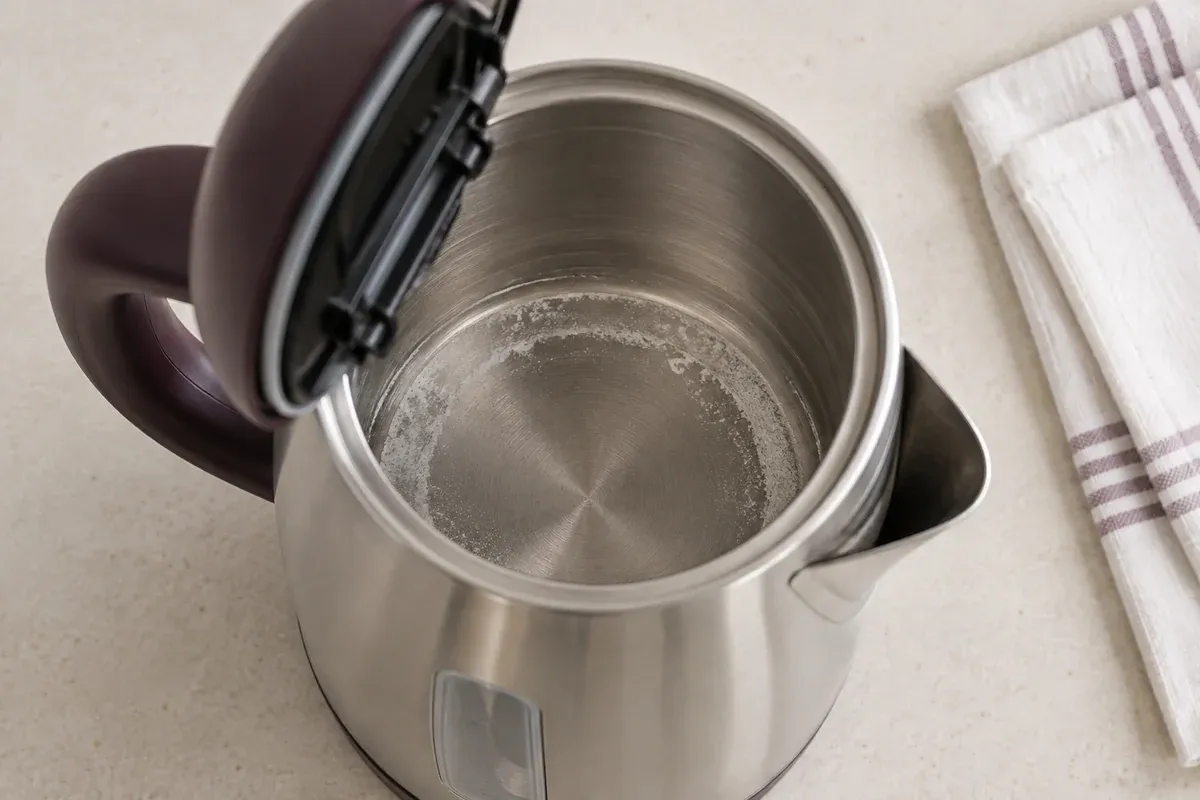
Chalky white spots are minerals left behind when droplets dry, common around sinks in hard-water areas. On a coated door, a damp cloth and a thorough dry is as far as you go. On bare steel, the ASSDA loosens heavy limescale with hot water and 25% vinegar, which is 1 part white vinegar to 3 parts hot water.
Safety Never mix cleaning products. Victoria’s Better Health Channel: “Do not mix bleach with ammonia, acids or other cleaners – this can release hazardous chlorine or chloramine fumes.” Ventilate the room during and after use. Wear gloves and eye protection. Follow the label's dilution and contact time. In an emergency call 000. For poisoning advice call the Poisons Information Centre on 13 11 26 — 24 hours, anywhere in Australia.
- Soak the item in the mix, or lay a cloth soaked in it over the scale, until the scale softens.
- Rinse with a little baking powder dissolved in water to neutralise the acid, then with clean water.
- Dry along the grain.
Limescale on glass, tiles and taps is covered in Hard Water in Australia: Signs and Limescale.
How to clean a stainless steel sink
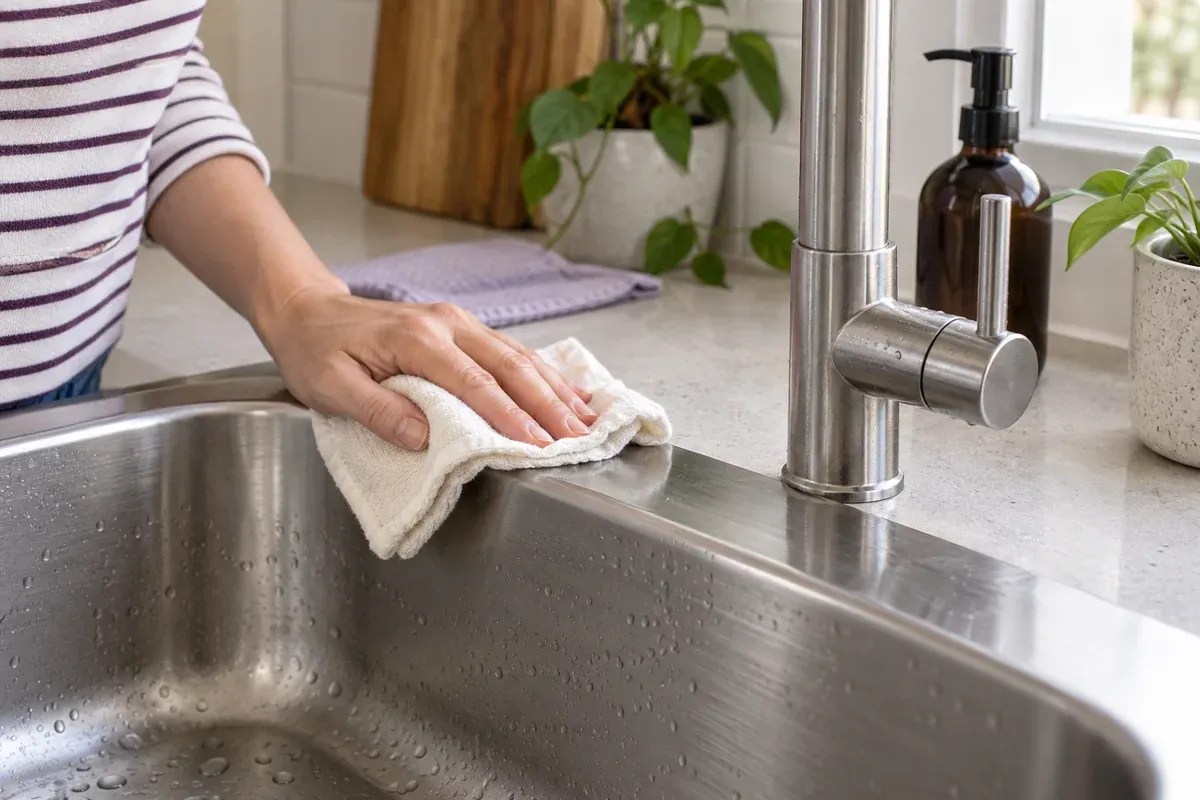
Wash the bowl with the three-cloth routine. For heavier soiling or light stains, Caroma allows the mildest household cream cleanser or a paste of bicarb soda and water, rubbed as softly as possible with a soft cloth, fine nylon pad or soft brush in long strokes along the polish lines, never in circles. Rinse, then dry the bowl and rim. Keep the cleanser inside the bowl, because the benchtop, sealant and tap around it may not tolerate it. Light scratches can be softened with a fine flexible sanding pad moved in straight lines along the grain; never try that on an appliance door.
How to clean a stainless steel pan
Wash it in hot soapy water with a nylon brush, cloth or sponge, then dry it; the full routine is in How to Wash Dishes by Hand Properly. For anything more, let the pan cool first, because cold water in a hot pan can warp it. SCANPAN's stainless steel guide covers the rest:
- Burnt-on food: part-fill the pan with cold water and detergent, or 3 parts water to 1 part vinegar, and bring it to the boil over medium heat until the food lifts. Let it cool, rinse and wash as normal. The BSSA's gentler version is a hot detergent soak and a nylon brush.
- Rainbow or bluey-brown streaks (heat tint): harmless. Rub gently with a paste of 2 tablespoons of bicarb soda and water on a soft cloth.
- Tiny pits: salt added to cold water can pit the steel, so add it once the water is boiling.
- Never: steel wool, harsh powders or oven cleaner.
Does stainless steel rust? Removing rust spots
It can. Stainless steel resists rust but isn't rust-proof, and most orange spots on a sink or pan are fragments of ordinary steel from steel wool, scourers or carbon-steel items left on it wet. Rub the spot gently with a cream cleanser on a soft damp cloth. If it stays, an oxalic- or phosphoric-acid cleaner works on bare steel. These are strong acids, so wear gloves and eye protection, rub along the grain, rinse, then rinse again with baking powder in water and dry. Deep pitting or scratches can sometimes be professionally re-polished, so ask before you write a sink off.
How to polish stainless steel
After the three-cloth clean, buff along the grain with a dry microfibre cloth; that's the only polish a coated door needs. On bare steel, the ASSDA says a light rub of olive or baby oil gives longer protection on high-traffic areas: a few drops on a soft cloth, then buff off the excess. Keep oils and polishes off coated doors.
Vinegar, olive oil, WD-40 and other hacks: what works
Hack | Verdict | Why |
|---|---|---|
Vinegar spray | Bare steel limescale only, diluted and rinsed | It isn't an everyday cleaner, and Whirlpool lists vinegar-based cleaners among what not to use on fingerprint-resistant finishes |
Olive or baby oil | Works on bare steel; skip it on coated doors | A light protective film; coated doors are detergent-only |
WD-40 or other solvents | Don't | Fisher & Paykel says solvents damage its doors |
Stainless steel cleaner spray | Bare steel only | Fisher & Paykel says these cleaners damage its coated doors |
Bleach, disinfectant or hydrochloric-acid tile cleaner | Don't | The BSSA says bleach causes staining and pitting; Caroma rules out disinfectants and says hydrochloric acid leads to pitting and cracking |
Magic eraser or scourers on doors; steel wool anywhere | Don't | Abrasives damage coated doors, and steel wool leaves fragments that rust |
Bar Keepers Friend | Works on bare pans and sinks | Oxalic acid with a fine abrasive: rub along the grain and rinse within a minute. Keep it off appliance doors |
How often to clean stainless steel
Wipe splashes off the rangehood and cooktop surrounds while they're fresh, and dry the sink after the last wash-up of the day. Give appliance doors the three-cloth clean when fingerprints build up: weekly in a busy kitchen, every few weeks in a quiet one. Inside the oven is a separate job: How to Clean an Oven, Racks and Glass.
Wiping down the outside of appliances is part of a Simply Maid standard clean. We don't re-polish scratched steel or repair damaged finishes.
Frequently asked questions
How do I clean a black stainless steel fridge?
Black stainless is a coating over the steel, so it gets the three-cloth clean and nothing stronger. Whirlpool lists abrasives, ammonia, vinegar-based, citrus-based and oven cleaners among what not to use on it.
How do I clean a stainless steel water bottle?
Wash it with hot soapy water and a bottle brush, rinse, and dry it open and upside down. For tea or coffee stains, the ASSDA's fix is a soak in boiling water with baking powder, then a rinse.
Can I disinfect stainless steel?
Usually there's no need: detergent and water clean it, and Caroma rules out disinfectants on its stainless sinkware. If a food-preparation bench must be disinfected, use a product whose label says it suits stainless steel, leave it for its full contact time, then rinse and dry. Never use chlorine bleach.
Last reviewed 24 September 2026 · Update history
Sources and references
- Australian Stainless Steel Development Association, Cleaning your indoor stainless steel: grain, drying, the vinegar soak and rinse, oil, stains, rust marks and steel wool.
- British Stainless Steel Association, Cleaning methods for stainless steel: burnt-on food, rust from carbon steel, bleach.
- Fisher & Paykel, ActiveSmart refrigerator user guide: detergent only on stainless doors.
- Westinghouse, Electric built-in ovens user manual: fingerprint-resistant stainless, detergent only (page 28).
- Whirlpool, How to clean and care for stainless steel surfaces: the US do-not list for coated and black stainless.
- Caroma, Clark warranty and care booklet: sinkware cleaning, sanding pads and the chloride, disinfectant and hydrochloric-acid warnings (page 13).
- SCANPAN, Stainless steel user guide: burnt food, heat tint, salt pitting.
- Bar Keepers Friend, Cleanser: oxalic acid, rinse within a minute.
Related reading
Change log
Who wrote and edited this article, when its sources were checked, and what changed.
Current version
What changed
24 September 2026: How to Clean Stainless Steel: the three-cloth method is now numbered steps with a time, and new sections cover stainless steel pans, sinks, polishing and rust spots. A new table gives verdicts on vinegar, olive oil, WD-40, bleach and Bar Keepers Friend.
Corrections
View all historyHide earlier history
Earlier entries record what was published at the time. Later corrections take precedence.
- Edited by
- Huy Hoang
20 September 2026: restored the three-cloth wash, rinse and dry method and the surface-by-surface guidance from the stainless steel associations, an Australian appliance manual and a cookware guide; added the mandatory safety box; kept the earlier removal of universal vinegar times, solvent and abrasive recommendations and the cookware-method-on-appliances error.