The cloudy film on shower glass is soap scum, limescale or both, and a mild acid given time to work lifts it without hard scrubbing.
Quick answer: Mix equal parts white vinegar and warm water with a squirt of dishwashing liquid, wipe it onto the glass with a cloth and leave it 10–15 minutes. Wipe with a soft sponge, rinse and squeegee dry: about 5–10 minutes' work plus the wait. Keep the mix off grout, stone, taps and frames. Coated glass gets dishwashing liquid and water. Squeegee after every shower to stop the film coming back.
Which method suits your glass?
Your glass | Default method | Avoid |
|---|---|---|
Plain glass (most screens) | The vinegar mix below, left 10–15 minutes | Scourers, blades, powder cleaners |
Coated "easy-clean" glass | EnduroShield's care sheet: weekly, a microfibre cloth dampened with white vinegar and a drop of dishwashing liquid, then rinse and dry. For light build-up, undiluted white vinegar left a few minutes, then wiped off. Other coatings: follow the installer's care sheet | Abrasives (including toothpaste and polishes), bleach and anything containing sodium hydroxide |
Not sure | Treat it as coated: water that beads into round drops and runs off suggests a coating. Start with dishwashing liquid; ask the installer before using vinegar | Anything abrasive |
How to clean shower glass
You'll need white vinegar, dishwashing liquid, a bowl, two cloths, a sponge with a soft side, a squeegee and rubber gloves.
Safety Never mix cleaning products. Victoria’s Better Health Channel: “Do not mix bleach with ammonia, acids or other cleaners – this can release hazardous chlorine or chloramine fumes.” Ventilate the room during and after use. Wear gloves and eye protection. Follow the label's dilution and contact time. In an emergency call 000. For poisoning advice call the Poisons Information Centre on 13 11 26 — 24 hours, anywhere in Australia.
- Mix. Combine 250 mL white vinegar, 250 mL warm water and a squirt of dishwashing liquid in the bowl. The detergent cuts the greasy soap film; the vinegar dissolves the mineral scale. For routine cleaning, Viridian's simple solution is weaker: 1 part vinegar to 10 parts water.
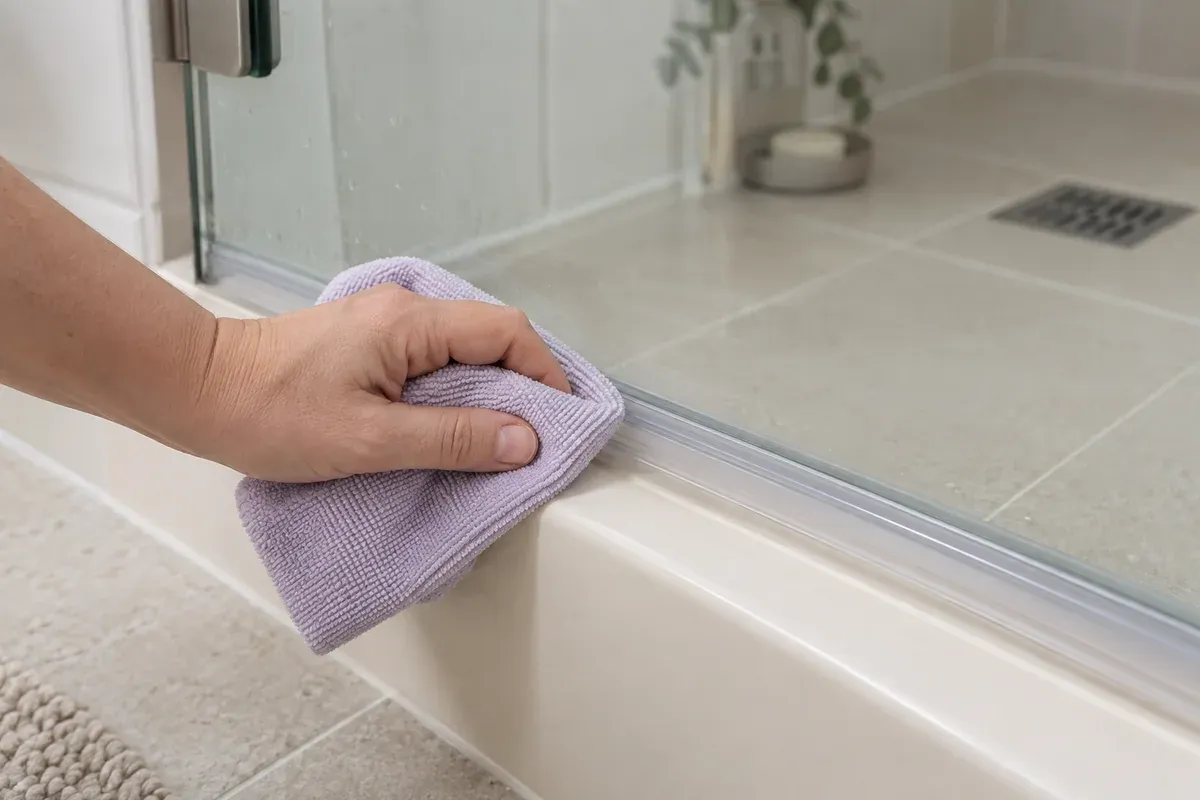
- Wipe it on with a cloth, top to bottom. Do both sides if the outside is filmy. Don't spray the whole panel: whatever runs down lands on the grout, tiles, taps and frame. Near the bottom rail, hinges and frame, go slowly and wipe any drips off with a damp cloth.
- Wait 10–15 minutes. This wait does the work. On thick patches, press a paper towel soaked in the mix onto the glass so it stays wet.
- Wipe with the soft side of a sponge or a microfibre cloth, in overlapping passes. No scourers, steel wool or scrapers.
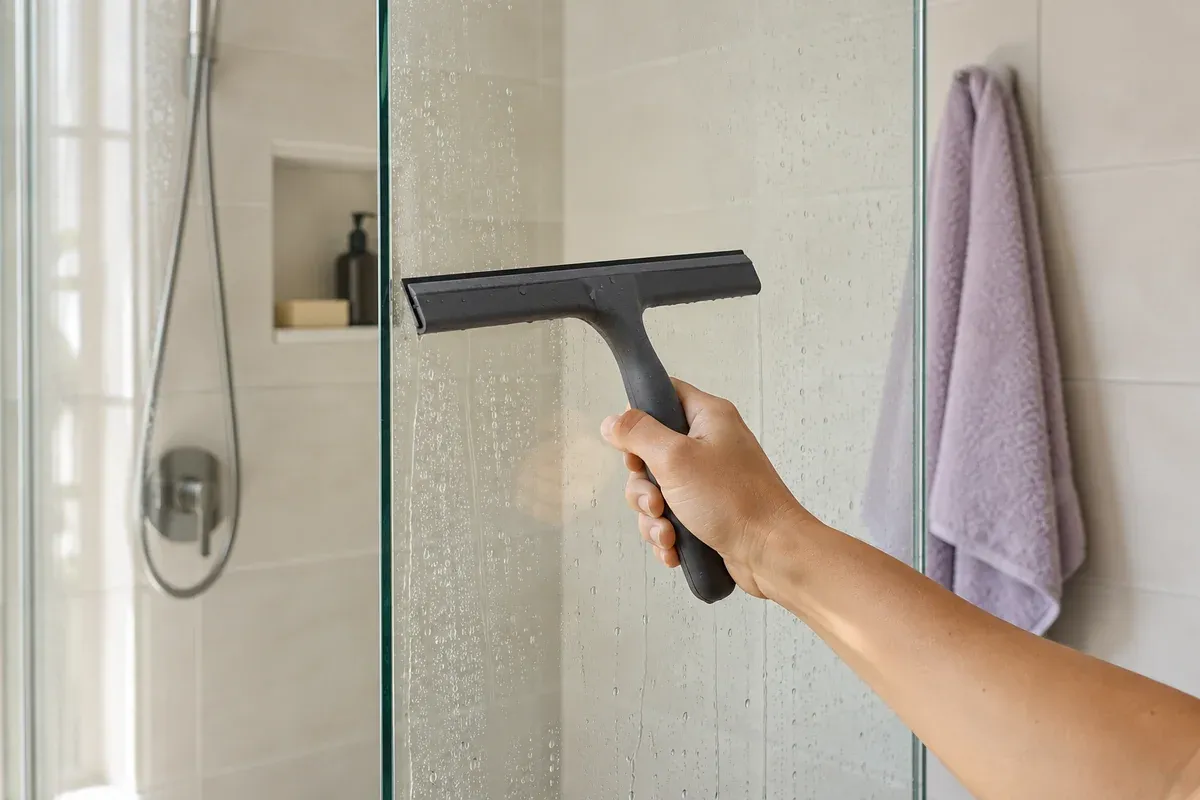
- Rinse with warm water, then squeegee dry from the top down, finishing at the seal where water pools.
Done looks like glass that dries clear, with no white haze or greasy patches. If a haze is left, repeat the treatment once or twice: heavy build-up comes off in layers, not with more pressure.
How to get hard water stains off shower glass
Hard-water stains are white spots and crusty patches of limescale, left when water dries on the glass. Use the same mix, give the worst patches the full 15 minutes under a soaked paper towel, and repeat rather than scrubbing harder.
The wet test. If the glass still looks cloudy, wet the dry patch. If it turns clear while wet and clouds again as it dries, scale is still on the surface and another round will shift it. If it stays cloudy when wet, the glass itself is etched, and no cleaner fixes that: the options are a glass restoration service or a new panel.
Scale that returns within days usually means hard water. Most capitals have soft to moderate water, about 57 mg/L in Sydney, under 40 mg/L in Melbourne and Darwin, 90–134 mg/L in Adelaide and 118 mg/L in Brisbane, and it's inland and bore supplies that run hard. Hard Water in Australia: Signs and Limescale has the figure for your city.
How to remove soap scum from shower glass
Soap scum is the grey, slightly greasy film that forms when bar soap reacts with the calcium and magnesium in water. Limescale is whiter and crusty. The vinegar mix handles both, because its dishwashing liquid lifts the soap and the vinegar dissolves the minerals. Switching from bar soap to liquid body wash means much less scum forms in the first place.
How to clean shower glass without scratching it
Shower screens are usually toughened safety glass. Viridian's glass cleaning guide says blades can drag fine particles across toughened glass and scratch it, and it rules out scouring pads, steel wool, abrasive or powder cleaners, and cleaners containing hydrofluoric or phosphoric acid. Here's how the popular methods compare.
Method | Verdict | Why |
|---|---|---|
Vinegar mix with dishwashing liquid | Works: the default | Dissolves scale and lifts soap film with no abrasion |
Dishwashing liquid alone | Works on soap scum, not scale | Fine for a weekly wipe; scale needs the acid |
Bicarb soda paste | Skip on glass | A powder abrasive; keep it for grout |
Vinegar and bicarb together | Don't | They neutralise each other: the fizz is mostly water, salt and carbon dioxide (Dr Nathan Kilah, University of Tasmania) |
Magic eraser (melamine sponge) | Skip on plain glass | It cleans by fine abrasion, and Viridian rules out abrasives on glass. EnduroShield allows a damp one only on its own coated glass, for heavy build-up |
Razor blade or metal scraper | Don't | It can scratch toughened glass, and Viridian's warranty excludes blade damage |
Bleach or mould spray | Don't | No effect on scale, and bleach must never meet the vinegar |
Heavy-duty limescale remover | Read the ingredients | No hydrofluoric or phosphoric acid on glass, and keep it off grout and chrome |
Around the glass: frames, tiles, taps and seals

Follow the glass, coating and adjoining material instructions. Do not spray a whole enclosure with an acid treatment or mix it with mould sprays.
Read the illustration as text
- Glass and its coating
- Check the screen’s care sheet before treating soap film or scale.
- Frame and fittings
- Keep incompatible glass treatments off plated and painted parts.
- Grout and nearby stone
- Protect joints and acid-sensitive surfaces from runoff.
Choose the method for everything it can touch.
- Chrome taps and fittings: warm soapy water on a soft cloth, then dry; no vinegar. See How to Clean Chrome Taps (and Why Not Vinegar).
- Matte black, coloured or aluminium frames: warm soapy water or a soft dry cloth. Reece's tapware care guide says of coloured and powder-coated finishes, "Avoid vinegar as this can damage the plating."
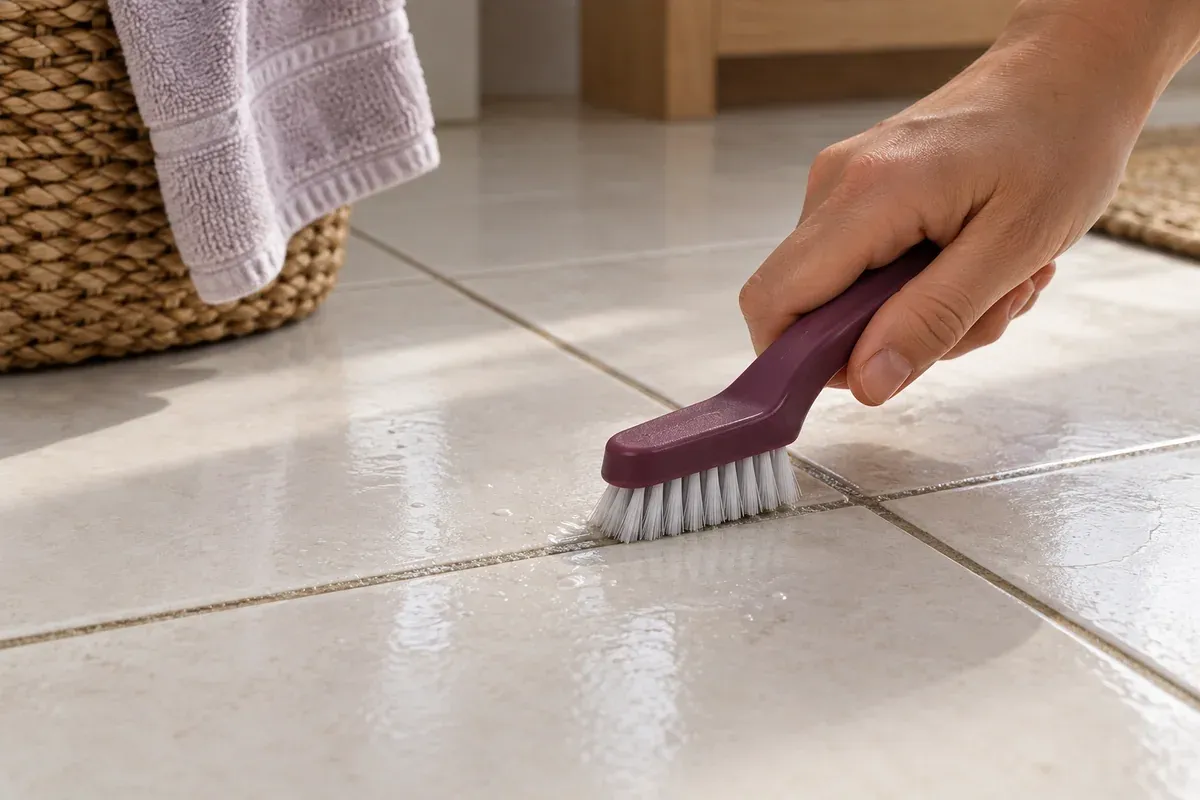
- Glazed tiles: for scale, dab the vinegar mix onto the tile face with a cloth and keep it out of the grout lines, then rinse. The full method is in How to Clean Bathroom and Shower Tiles.
- Cement grout: no vinegar or other acid, which corrodes it; use a bicarb paste instead (How to Clean Grout — and Keep It Looking Clean).
- Marble, limestone or travertine: a neutral stone cleaner or mild dishwashing liquid only, because acid etches the stone.
- The rubber seal: wipe it each week; if it's gone black, see How to Get Rid of Shower Mould and Mildew.
The 30-second habit that keeps it clear
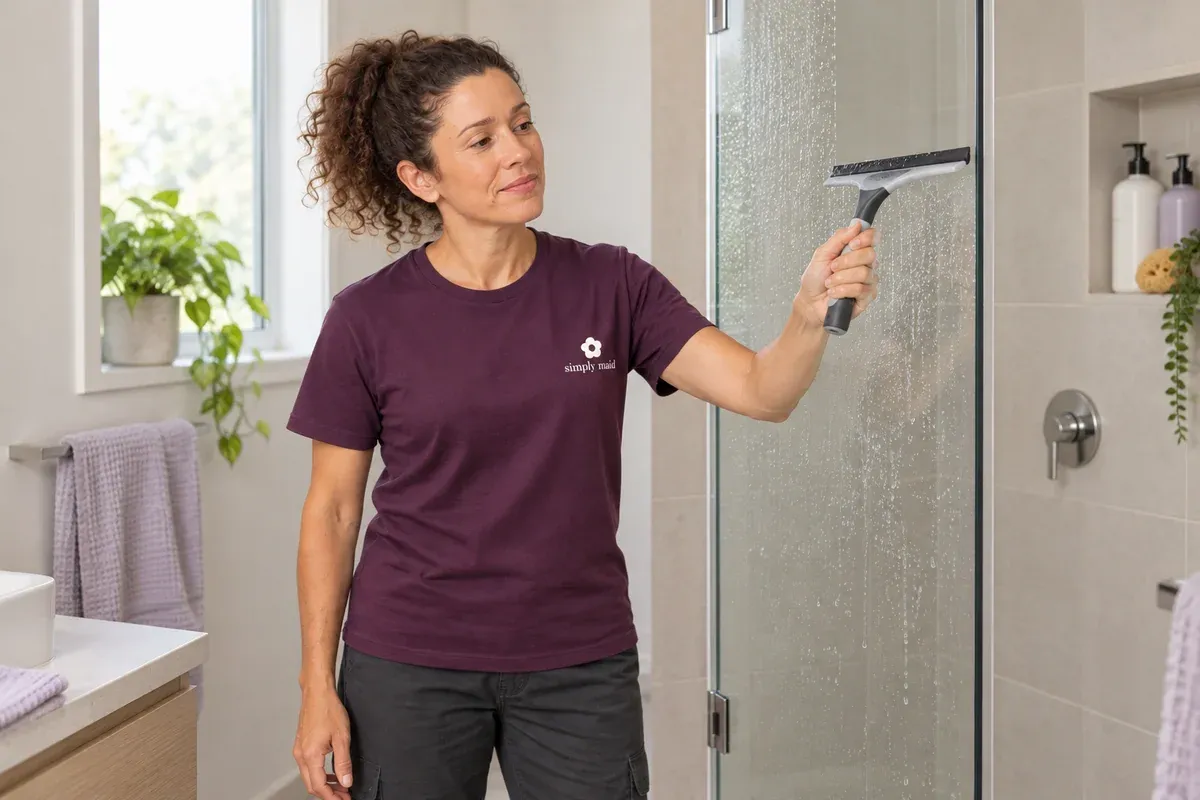
Squeegee the glass after every shower. It takes about 30 seconds and takes the water off before its minerals and soap can dry on.
- Keep the squeegee in the shower on a hook at eye height, so it gets used.
- Work top to bottom in overlapping strokes, finishing at the seal.
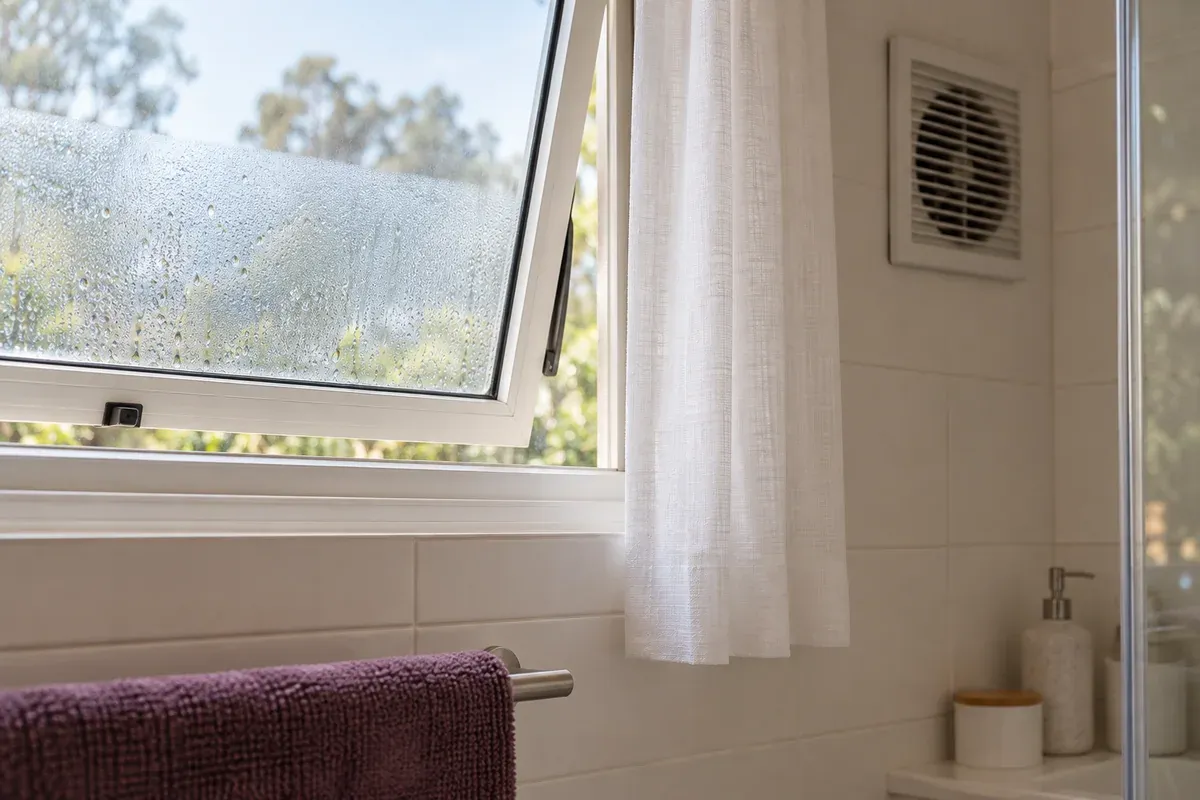
- Leave the screen door open and run the exhaust fan during the shower and until the condensation clears, at least 10 minutes, so the frame and tracks dry too.
A water-repellent coating such as EnduroShield, applied by a glass company or from a DIY kit, makes water run off faster. You still need the squeegee; there's just less left behind.
When to get help
Etched glass needs a glazier or glass restoration service, not more cleaning. A Simply Maid standard clean cleans the shower and removes soap scum and water marks; a deep clean also removes hard-water scale from the shower screen and tiles. We don't restore or replace glass.
Frequently asked questions
Why is my shower glass streaky after cleaning?
Usually leftover detergent, or the mix drying before you wiped it. Rinse with plain water and squeegee straight away, and don't clean glass in direct sun or while it's hot: Viridian notes the sun dries the solution too fast and leaves streaks.
How often should I clean shower glass?
Squeegee after every shower, wipe with dishwashing liquid and water about once a week, and use the vinegar treatment only when a haze starts to show.
Last reviewed 24 September 2026 · Update history
Sources & References
- Viridian, Glass Cleaning Guide (PDF, 2024): no blades, scourers or abrasive cleaners on glass; no hydrofluoric or phosphoric acid cleaners.
- EnduroShield, Easy Clean Coatings Care Instructions (PDF, 2025): care of coated shower glass.
- Reece, Bathroom and Kitchen Product Care Guide (PDF): vinegar can damage coloured tapware finishes.
- Dr Nathan Kilah, The Conversation, Vinegar and baking soda: a cleaning hack or just a bunch of fizz?: why the two neutralise.
Related Reading
How quickly marks come back depends on your supply: Melbourne's water is among the softest of the capitals, and Adelaide's runs at 90–134 mg/L. If you are in Melbourne or in Adelaide, you can see what a regular visit covers on our house cleaning in Melbourne and house cleaning in Adelaide pages.
Change log
Who wrote and edited this article, when its sources were checked, and what changed.
View all historyHide earlier history
Earlier entries record what was published at the time. Later corrections take precedence.
- Edited by
- Huy Hoang
24 September 2026: How to Clean Shower Glass: the vinegar mix is now wiped onto the glass with a cloth instead of sprayed across the panel, and the step that put undiluted vinegar on tiles was removed, because it ran onto cement grout. It also gives corrected hard-water figures by city, adds a method for coated glass and drops dated product picks.
- Edited by
- Huy Hoang
Correction, 22 September 2026: removed a bacteria-count figure taken from a news report, removed the promise that the film "will not come back", qualified the shower-filter suggestion, and aligned the chrome tapware advice with our manufacturer-based chrome guide.