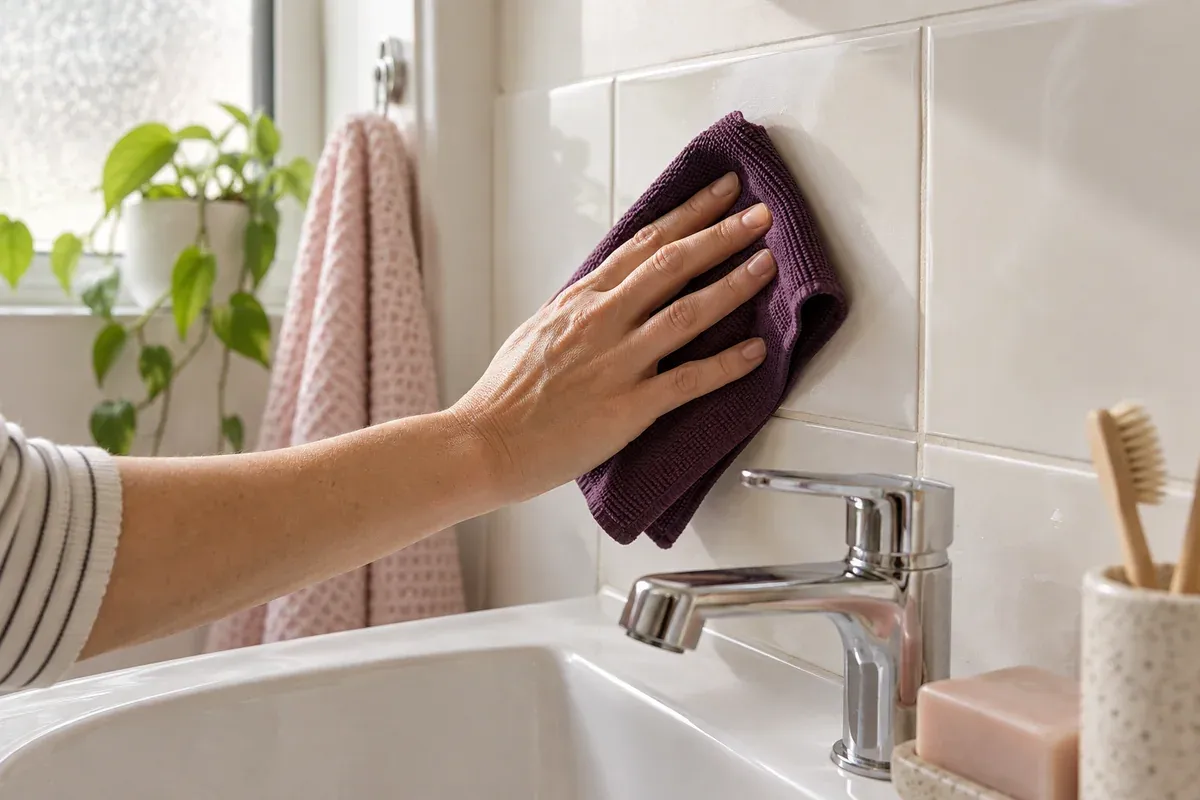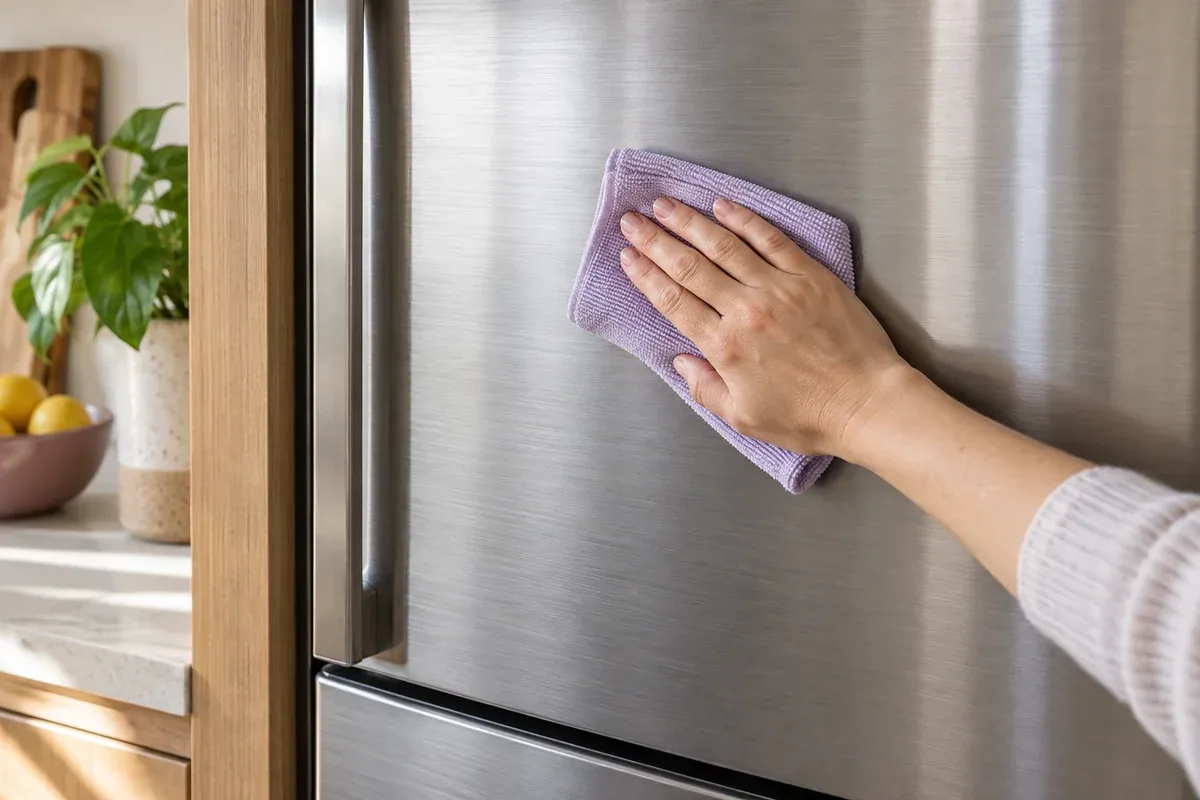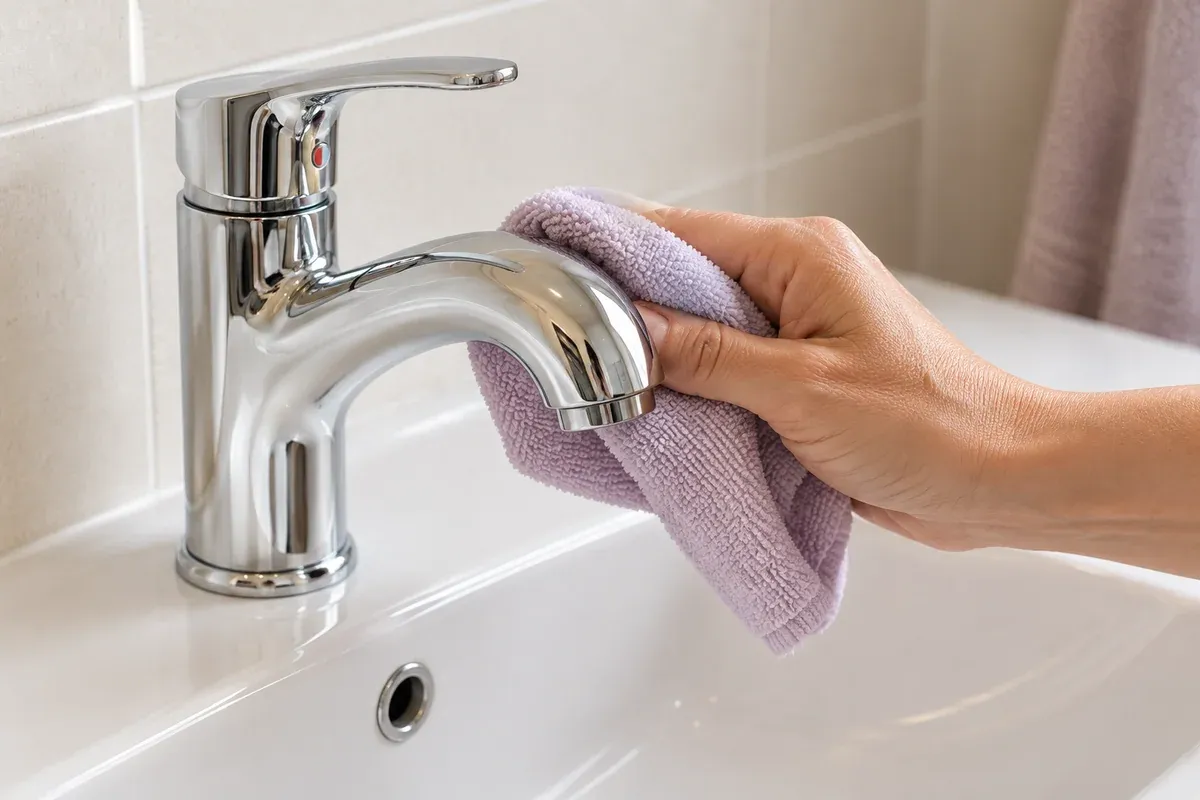
Chrome on taps is a very thin layer of plating over nickel, so the routine that keeps it shining is gentle: soapy water, a soft cloth and a dry.
Quick answer: Wipe chrome taps with warm water and a little dishwashing liquid on a soft cotton cloth, rinse with a clean damp cloth and dry: about 2 minutes a tap. Skip vinegar, bicarb and scourers, which damage the plating. For limescale that stays, hold a cloth dampened with citric-acid bathroom descaler on it for 5–10 minutes at most, then rinse and dry (not on Phoenix or GROHE taps).
Watch: Clean chrome taps gently
Read the video description
Water spots on the taps? Let’s clean everyday marks gently, without damaging the chrome. Check the tap maker’s care instructions. For routine cleaning, use soft cotton cloths and warm, mildly soapy water where permitted. Dampen your washing cloth and squeeze out the excess. Put cleaner on the cloth, rather than spraying into the tap’s gaps. Wipe the handle, spout and body with light pressure. Use a clean fold around the base. Remove the soap with clean water and a fresh cloth. Pay attention to the base and underneath the spout, where residue can linger. Dry with another soft cloth. This removes the water before it leaves fresh spots. Keep the touch light on plated finishes. For stubborn limescale, use only the maker’s approved method. Avoid vinegar, bicarb and foil unless specifically permitted. Peeling or persistent rust needs professional advice. Dry after use to help reduce build-up. Simply Maid. More room for life.
Will vinegar damage chrome taps?
Yes, it can, so leave it in the pantry. Vinegar is acetic acid, and the big tap makers sold in Australia rule it out. Phoenix lists "household vinegar" and "cleaning agents containing acetic acid" among cleaners that "will scratch and damage the surface". GROHE says to avoid cleaners containing "vinegar, or acetic acid". hansgrohe warns that vinegar-based cleaners, used frequently, "will damage the metal (even with the most high-quality finish)". Diluting it or wiping it off quickly doesn't turn it into an approved method. Even HANSA, which allows a vinegar soak for its shower heads, says "for the general cleaning of chrome surfaces, neutral cleaning agents are usually a better choice."
Decorative chrome is "measured in millionths of an inch" (Finishing.com), so once acid or an abrasive wears through to the nickel, no cleaning brings the shine back.
What's that mark? Water marks, limescale or damaged chrome
What you see | What it is | What to do |
|---|---|---|
Spots or smears that wipe away with a damp, soapy cloth | Water marks and soap film | The routine clean below, then dry |
White, crusty or rough rings that stay after a soapy wipe, often at the spout tip and base | Limescale | The descaling steps below |
Dull, cloudy or pitted patches, peeling, or rust-brown spots that don't change when cleaned | Worn or damaged plating | Stop cleaning it and see "Can you restore dull or rusty chrome taps?" |
How to clean chrome taps and bathroom fittings

Follow the fitting maker’s instructions for cloths and descaling. Cleaning cannot restore missing plating; do not assume a universal acid treatment.
Read the illustration as text
- Dampen the cloth
- Use a permitted mild cleaner on the cloth, not sprayed into gaps.
- Wipe the fitting
- Work gently around the handle, spout and base.
- Remove residue and dry
- Use a fresh damp cloth, then a soft dry cloth.
Stop if the plating is peeling or persistently pitted.
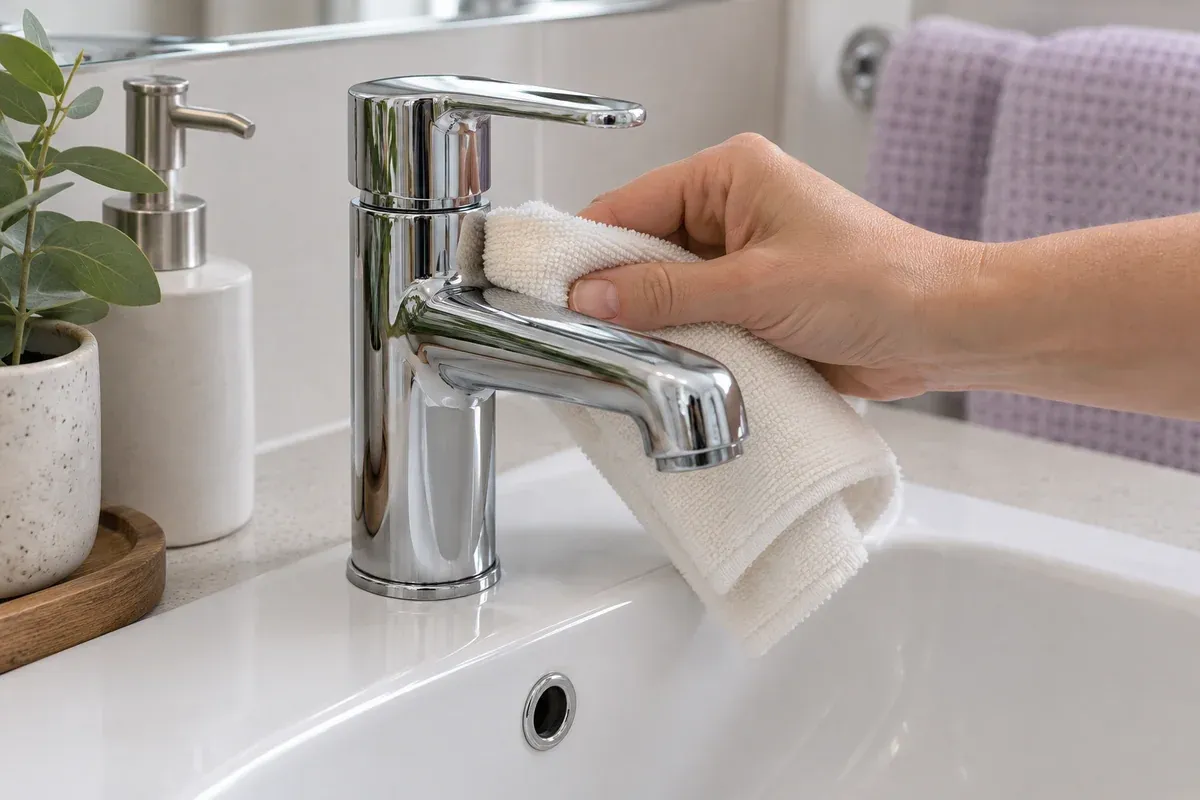
You'll need two soft cotton cloths and a bowl of warm water with a few drops of dishwashing liquid. hansgrohe rules out microfibre on its fittings; the other makers just say a soft cloth.
- Dampen one cloth in the soapy water and wring it out. Put the cleaner on the cloth, never onto the tap, so it can't run into gaps you can't rinse.
- Wipe the handle, spout and body with light pressure, in one direction rather than circles, as the Caroma and Methven care guide asks.
- Wipe again with the cloth rinsed in clean water, including under the spout and around the base, where residue collects.
- Dry straight away with the second cloth. GROHE calls drying after use the easiest way to prevent limescale building up.
Done looks like chrome that dries with no streaks, spots or white edges. Reece suggests the soapy wipe weekly; a quick dry after each use does most of the work in between.
How to remove limescale from chrome taps
The default for chrome, brand unknown, is the same as for a chrome shower head: a bathroom descaler that lists citric acid on the pack, used at the pack's strength. hansgrohe allows a mild citric-acid cleaner for a maximum of 10 minutes.
Safety Never mix cleaning products. Victoria’s Better Health Channel: “Do not mix bleach with ammonia, acids or other cleaners – this can release hazardous chlorine or chloramine fumes.” Ventilate the room during and after use. Wear gloves and eye protection. Follow the label's dilution and contact time. In an emergency call 000. For poisoning advice call the Poisons Information Centre on 13 11 26 — 24 hours, anywhere in Australia.
- Put on gloves and dampen a soft cotton cloth with the descaler. Never spray it onto the tap.
- Hold or wrap the cloth on the scale and set a timer for 5–10 minutes. Take it off when the timer goes, even if some scale is left.
- Wipe with a cloth rinsed in clean water twice, so no descaler stays in the joins, then dry.
- Repeat once if needed rather than leaving it on longer.
Two brands differ. Phoenix rules out limescale removers and acidic cleaners altogether, so on Phoenix taps stick to soapy water and drying. GROHE names its own GrohClean. The brand is usually printed on the handle or base; if it isn't, the box or receipt will say, and a search for the brand and model plus "care" finds its instructions.
What not to clean chrome with
Product or hack | Verdict | Why |
|---|---|---|
Warm water and dishwashing liquid | Works: the default | It's the routine the tap makers' own care pages describe |
Vinegar | Don't | Phoenix, GROHE and hansgrohe rule it out (see above) |
Lemon or lime juice | Don't | Phoenix excludes citrus-based cleaners |
Bicarb soda paste | Don't | hansgrohe names baking soda among the agents it doesn't recommend |
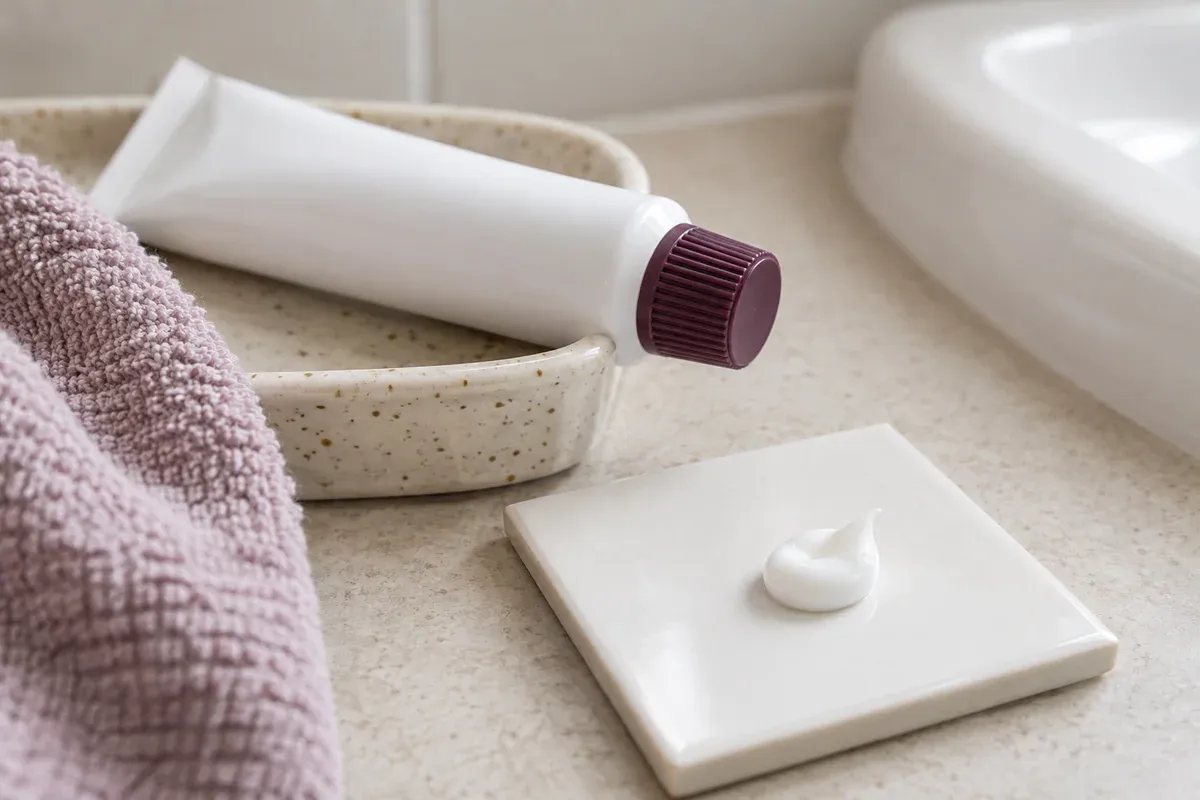
Toothpaste | Don't | It's an abrasive, and the tap makers exclude abrasive cleaners (Toothpaste Cleaning Hacks: Which Work and Which Damage) |
Cream cleansers, scourers, steel wool, magic erasers | Don't | Caroma: abrasive cleaners "will scratch the surface" |
Multi-purpose or "bathroom" sprays | Skip | Reece warns they "can corrode your tapware", naming Ajax, Bam and Windex |
Bleach, chlorine- or ammonium-based cleaners and mould sprays | Don't | Reece and hansgrohe rule them out. Rinse off any splash straight away |
Furniture polish or wax | Skip | The Caroma and Methven guide says wax-based furniture cream builds up deposits |
Foil and cola for rust | Don't | Cola's phosphoric acid is on hansgrohe's banned list, and foil is an abrasive metal pad |
Can you restore dull or rusty chrome taps?
Not by cleaning. If dullness is only film, the routine clean and a dry bring the shine back. If the plating is pitted, peeling or showing rust spots, stop using anything abrasive or acidic, photograph it and contact the maker, the retailer or a plumber. Check the warranty first: Methven's excludes damage from harsh or abrasive cleaners and rusting from hard water. Plating that has worn through to the base metal needs professional replating or a new fitting.
Keep chrome shining
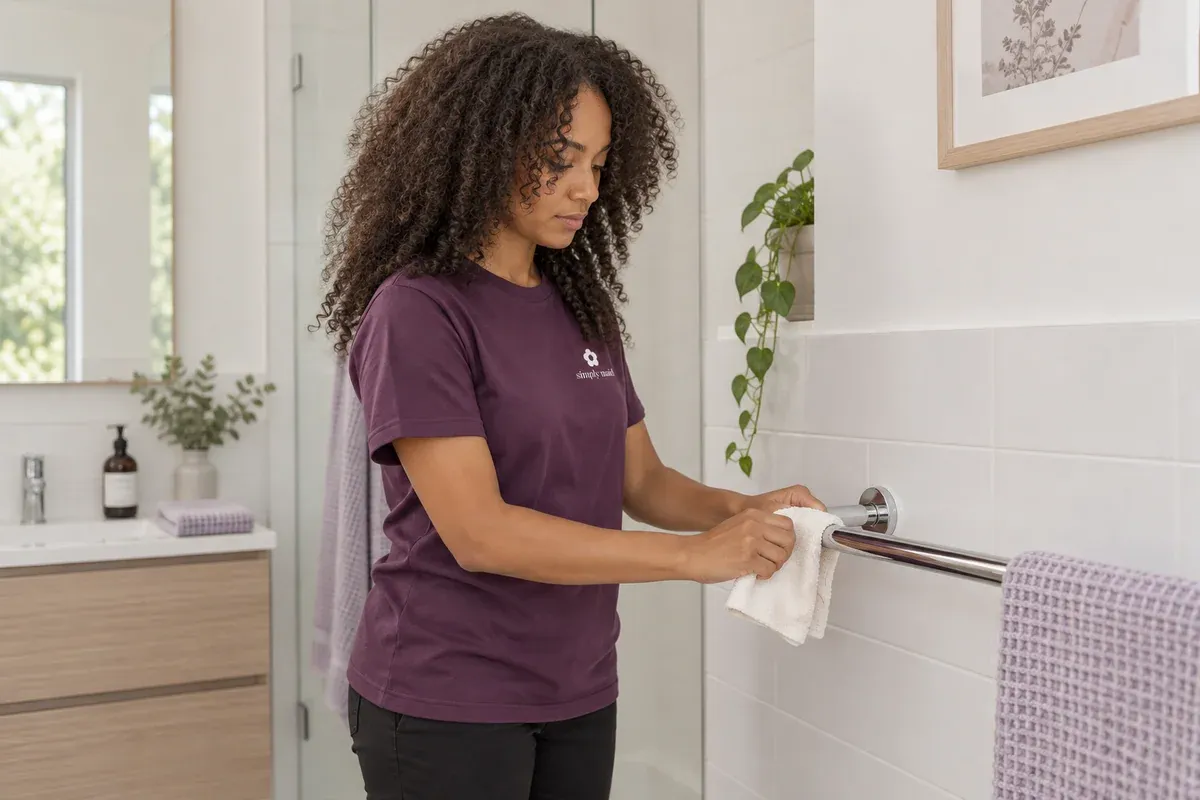
- Dry the taps after use, so water can't dry into spots. Reece's care guide says not to let water sit on tapware.
- Keep bathroom sprays and bleach away, or rinse and dry the tap if they splash it.
- Watch the water. Limescale returns faster where water is hard: see Hard Water in Australia: Signs and Limescale.
Brushed, matte black, gold and other coloured finishes need even more care: wipe brushed finishes along the grain, and use only warm soapy water or a soft dry cloth, because Reece says vinegar "can damage the plating" on coloured finishes. Shower heads are covered brand by brand in How to Clean a Shower Head: Is Vinegar Safe?
A Simply Maid standard clean includes the taps; we don't replate or repair fittings.
Frequently asked questions
Is WD-40 good for cleaning chrome taps?
No. It's a solvent-based spray, and Phoenix and GROHE both rule out solvents on their tapware. It also leaves an oily film on a surface you touch and drink from. Use warm soapy water and dry.
What's the best chrome cleaner for bathroom fittings?
Warm water with a few drops of dishwashing liquid, then a dry cotton cloth. A dedicated chrome cleaner is only worth buying if your tap maker names one, such as GrohClean for GROHE.
Last reviewed 24 September 2026 · Update history
Sources & References
- Phoenix Tapware, Warranty and product care: mild detergent and water; no vinegar, acetic acid, citrus, limescale removers or solvents.
- GROHE Australia, Care instructions: soap and a damp cloth, then dry; no vinegar, acids or solvents; GrohClean for limescale.
- hansgrohe Australia, How to descale and clean taps: no baking soda or vinegar-based cleaners.
- hansgrohe Australia, Cleaning and care FAQ: mild citric-acid cleaner, 10 minutes at most.
- hansgrohe, Care and cleaning guide (PDF): soft cotton cloth; no microfibre, bleach or phosphoric acid.
- GWA (Caroma, Dorf, Methven), Product Warranty and Care (PDF): warm soapy water, one direction, no abrasives or wax cream.
- Methven, Standard warranty card (PDF): excludes harsh cleaners and hard-water rusting.
- Reece, Bathroom and Kitchen Product Care Guide (PDF): weekly soapy wipe; no multi-purpose sprays, bleach or vinegar on coloured finishes.
- HANSA, How to clean your shower head: neutral cleaners for chrome surfaces.
- Finishing.com, Chrome plating FAQ: how thin decorative chrome is.
Related Reading
Scale builds fastest where the water is hardest, which among the capitals means parts of Perth. If you are in Perth, you can see what a regular visit covers on our house cleaning in Perth page.
Change log
Who wrote and edited this article, when its sources were checked, and what changed.
Current version
What changed
24 September 2026: How to Clean Chrome Taps: for limescale on taps whose brand you don't know, the guide now gives a default (a citric-acid bathroom descaler on a cloth for 5–10 minutes, never longer, then rinse and dry), matching our shower head guide, with Phoenix and GROHE taps as the exceptions. It now answers whether vinegar damages chrome up front and adds verdicts on WD-40, toothpaste and bathroom sprays.
View all historyHide earlier history
Earlier entries record what was published at the time. Later corrections take precedence.
- Edited by
- Huy Hoang
22 September 2026: this guide previously recommended diluted vinegar, a bicarb paste, lemon juice and an aluminium-foil-and-cola rust method with a universal contact limit, and misquoted a plating source. Between them, the makers whose Australian care pages we checked (Caroma, Dorf, Methven, Phoenix, GROHE, hansgrohe, Reece) rule out vinegar (Phoenix, GROHE, hansgrohe), citrus cleaners (Phoenix), bicarb (hansgrohe) and abrasive or metal pads (all of them), and none describes any of the withdrawn methods. The guide now follows their care instructions and matches the video above.