Shower mould and mildew grow wherever a surface stays wet, so clean off what you can see and fix what keeps it damp. For mould on a ceiling or painted wall, use How to Remove Mould from Ceilings and Walls.
Quick answer: Address the moisture source and assess whether the work is suitable for you. Follow the material’s care instructions and the selected product’s full label. A patch’s size alone does not establish that DIY removal is appropriate. Get help for recurring, hidden or extensive contamination.
Shower mould and mildew: which cleaner for which surface
A shower corner mixes tiles, grout, silicone and chrome, so start with detergent everywhere and check every surface the cleaner or its runoff will touch.
Surface | What to use | Watch out for |
|---|---|---|
Glazed tiles, shower glass and hard plastic | Detergent and water with a brush or cloth. If mould stays, the bleach mix in step 5. | Keep runoff off the fittings, stone and acrylic below. |
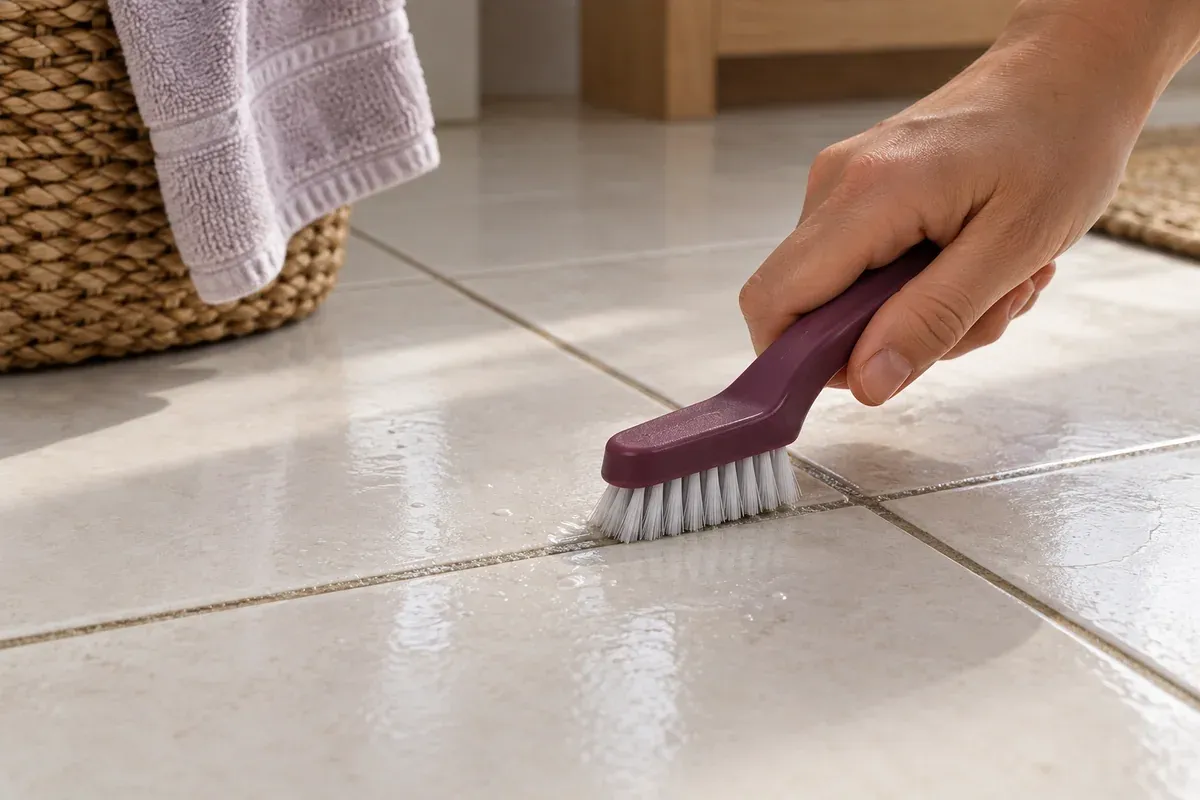
Cement grout | Detergent, or a bicarb paste with a stiff, narrow brush. For black mould, the bleach mix. | No vinegar, lemon or other acids: they damage cement grout. Test bleach on a hidden joint if the grout is coloured. More in how to clean grout. |
Silicone sealant | Wipe surface mould off as for tiles. | Black spots inside the silicone won't clean out: cut out the old bead and re-seal once the joint is completely dry. |
Natural stone (marble, limestone, travertine) | A pH-neutral stone cleaner. | No vinegar or other acids. Ask the stone supplier before using bleach, which LATICRETE warns can damage some sealers. |
Taps, shower heads and metal trims | Warm water and a little dishwashing liquid on a soft cloth, then dry. | Keep bleach, vinegar and mould sprays off them, and rinse straight away if they're splashed. See how to clean chrome taps. |
Mirrors, acrylic baths and shower bases | Mild detergent on a soft cloth, then dry. | No bleach or mould spray. For acrylic, see our bathtub guide. |
Painted walls and ceilings | Use the paint maker’s approved cleaning method. “Washable” does not establish that the finish tolerates vinegar, bleach or a mould spray. | No stiff brushes or abrasives, and no bleach on flat or matt paint. Keep drips off grout, stone and chrome below. Full method: mould on ceilings and walls. |
Clothes, towels and washable fabrics | Wash separately and dry completely. | Check the care symbol's triangle before using any bleach. |
Mattresses, cardboard, paper, upholstery and carpet | Mouldy mattresses, cardboard and paper usually have to go. Upholstery and carpet may need professional cleaning or replacing. | A clean-looking surface doesn't mean the material underneath is clean. |
Not sure what it is | Warm water and detergent only, after a hidden-spot test. | Nothing stronger until you know the material. |
Vinegar, bleach or clove oil: what actually works
Method | Verdict | Why |
|---|---|---|
Warm water and detergent | Works: start here | A detergent must still suit the actual surface and coating; no cleaner is approved for every shower material. |
Bleach, 250 ml in 4 litres of water | Works: the step-up for tiles and grout | NSW Health lists diluted bleach for persistent mould. Its fact sheet does not specify a 10-minute contact time. Use a product expressly suitable for the surface and follow its complete directions; do not combine different recipes. |
White vinegar, 4 parts to 1 part water | Works on light mould, but not in the shower | NSW Health lists it. In a 2015 Adelaide lab test, household vinegar held back Penicillium chrysogenum but not Aspergillus fumigatus. Use it on painted walls, not in the shower (below). |
Clove oil | Don't | It isn't in NSW Health's or the Better Health Channel's advice. Mycologist Heike Neumeister-Kemp told the ABC it works on small areas but leaves an oily residue that mould eventually grows on. |
Tea tree oil | Not a substitute | It held back both moulds in the Adelaide test, but on lab dishes, not bathroom surfaces, and it leaves the same oily film. |
Methylated spirits or 70% alcohol | Don't bother | 70% ethanol had no visible effect on either mould in the same test. |
Bicarb soda paste | Works on grime, not black mould | A gentle scrub for discoloured grout; for black mould, use the bleach mix. |
Shop-bought mould spray | Works on the surfaces its label lists | If sodium hypochlorite is on the label, it's bleach: treat it that way. Selleys Rapid Mould Killer, for example: spot test, leave 2–3 minutes, rinse; not for fabric, mirror tiles, metal or older baths. |
Why we don't use vinegar in the shower. Whatever you wipe on runs down, and below most shower corners sit cement grout, stone or chrome, which acid damages. Detergent, then the bleach mix on tiles and grout, does the job without that runoff.
How to clean mould and mildew, step by step
Safety Never mix cleaning products. Victoria’s Better Health Channel: “Do not mix bleach with ammonia, acids or other cleaners – this can release hazardous chlorine or chloramine fumes.” Ventilate the room during and after use. Wear gloves and eye protection. Follow the label's dilution and contact time. In an emergency call 000. For poisoning advice call the Poisons Information Centre on 13 11 26 — 24 hours, anywhere in Australia.
- Find the water. Look for a leak, condensation or a room without a working fan, and arrange repairs. Don't put off an urgent leak while you try cleaners.
- Check it's a job for you. The patch is smaller than about 1 m by 1 m (the US EPA's rough guide of 10 square feet, not an Australian rule) and on a surface in the table. Children, pregnant people and anyone with weakened immunity or a chronic lung disease shouldn't clean it or be in the room (Better Health Channel). With asthma, ask someone without asthma to do it (Asthma Australia), or, if you must do it yourself, keep your asthma medication with you and follow your action plan at the first symptom.
- Set up. Open windows or run the exhaust fan, and keep other people and pets out. Wear rubber gloves, goggles, long sleeves and a disposable P2 (N95) mask. With a heart or lung condition, ask your doctor before wearing one: it can make breathing harder. Fill two buckets, one with your cleaning solution and one with clean water for rinsing cloths.
- Test. Try the cleaner on a hidden spot and let it dry before you judge the result.
- Detergent first, then bleach. Clean with a detergent permitted for the surface. For persistent mould, choose a labelled product suitable for every material it touches and follow its complete dilution, contact-time and rinsing directions. Do not mix it with another cleaner.
- Scrub while it's wet. Use a brush or microfibre cloth on tiles and grout, rinsing the cloth often in the clean-water bucket. Never dry-brush, sand or scrape dry mould, which flicks spores into the air, and never use an ordinary vacuum (only one with a HEPA filter). If you cough or your eyes sting, stop and get fresh air.
- Rinse and dry. Wipe over with clean water, then dry completely with a towel and airflow. Dead mould can still cause allergic reactions, so remove it rather than spraying and leaving it. Rinse before switching products.
- Clean up. Bag disposable cloths, and wash reusable cloths and the clothes you wore separately.
- Check back. Look again after a few days of normal use. If spots return or the area stays damp, the moisture needs investigating, not a stronger mix.
How long it takes: Allow time for the product’s specified contact period, removal and complete drying. There is no fixed duration for every shower corner. Done looks like: no visible growth, a surface that's dry to the touch and no musty smell.
Stop mould coming back

The article’s health guidance and product directions govern any treatment. Simply Maid’s routine bathroom cleaning does not include mould removal.
Read the illustration as text
- The affected surface
- Choose suitable assessment or removal advice for the material.
- The moisture conditions
- Address leaks, condensation and ineffective ventilation.
Repeated mould needs more than another wipe.
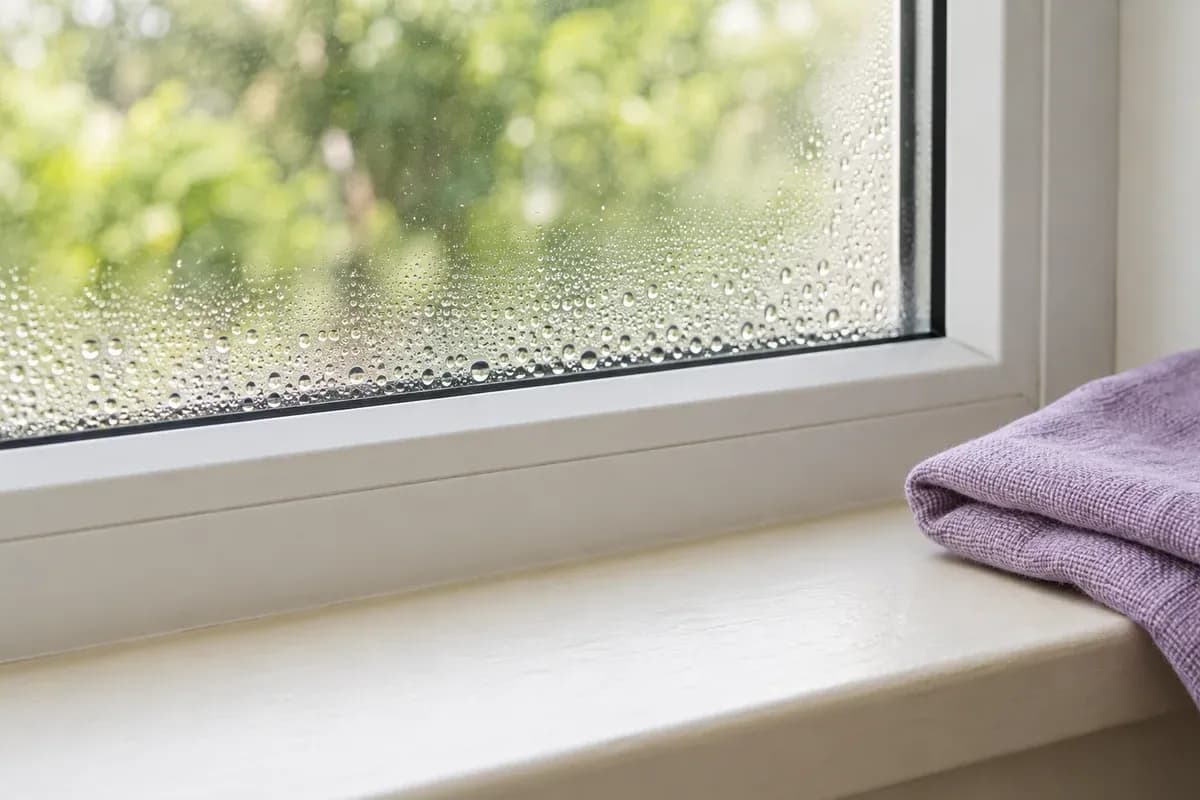
To keep surfaces dry:
- Fix leaking plumbing, roofs and other building faults, and keep gutters clear.
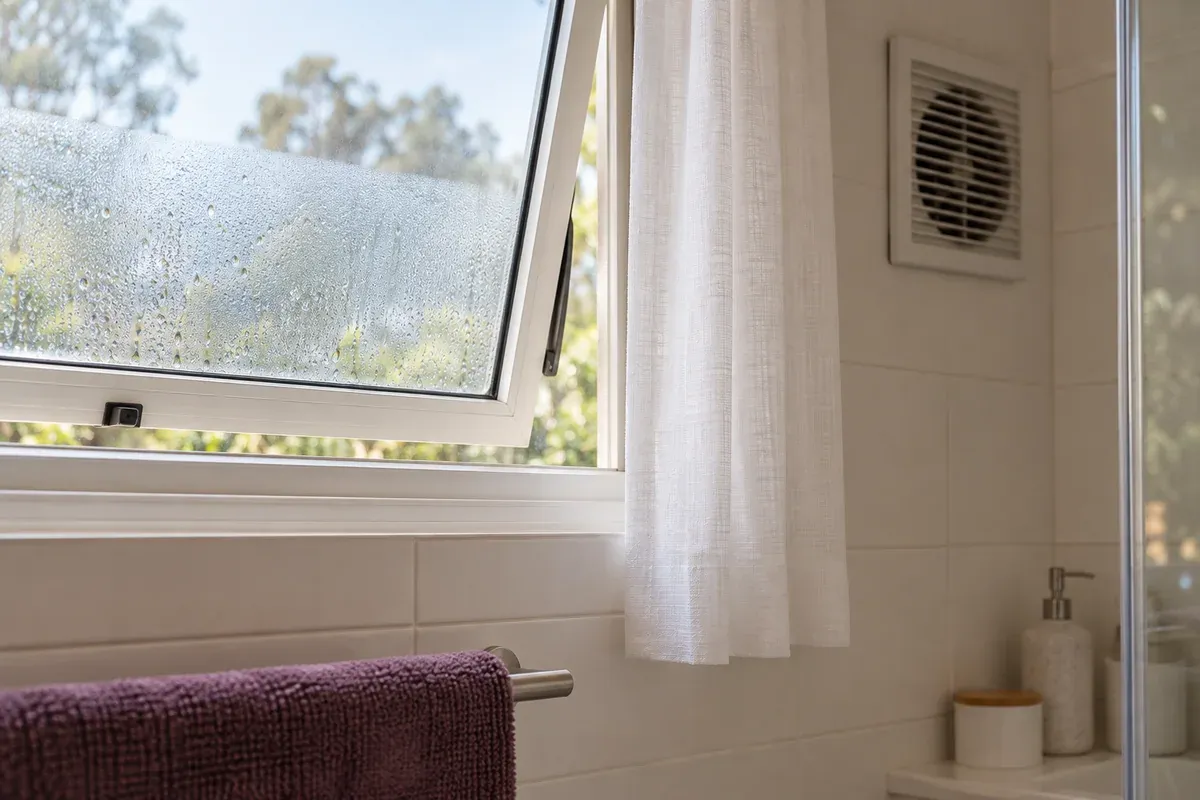
- Run the exhaust fan while you shower and until the condensation clears (at least 10 minutes), and when you cook.
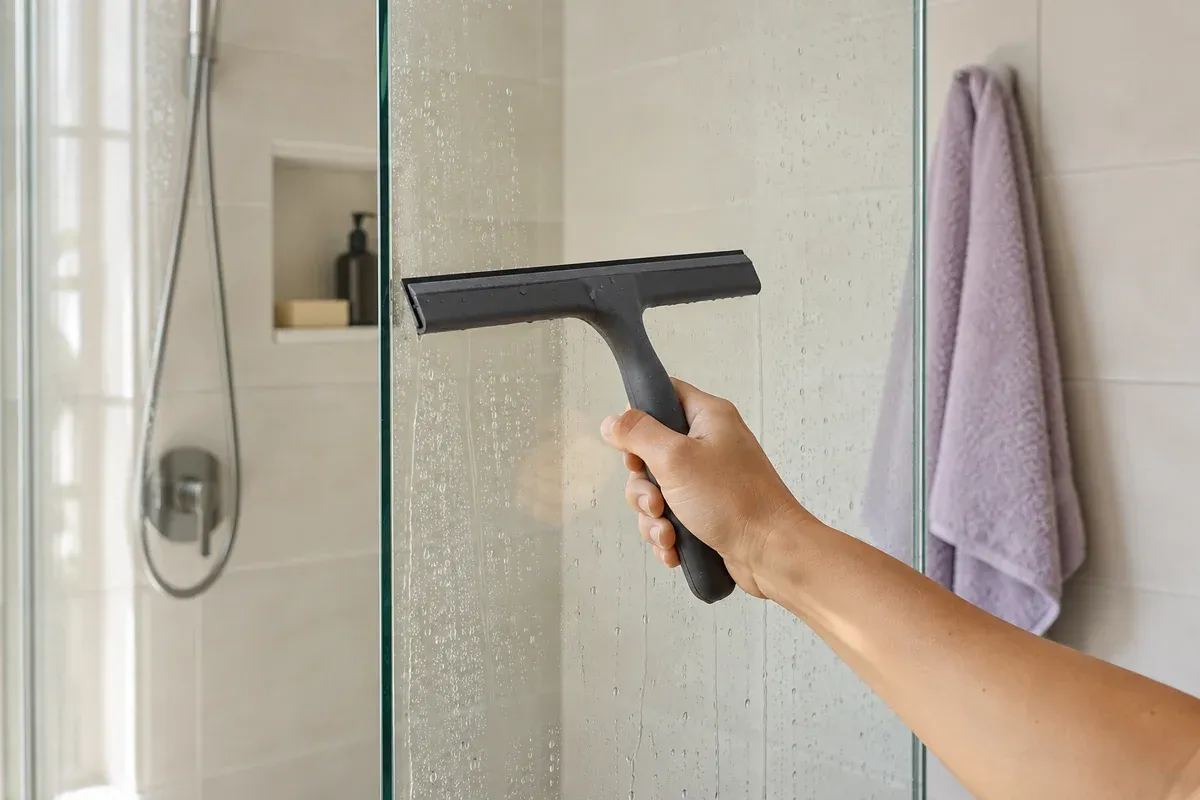
- Squeegee or towel-dry the shower screen after use, and wipe condensation off windows and sills in the morning; our shower glass guide shows how.
- Vent a vented clothes dryer outside and clean its lint filter after every load.
- Keep furniture a little away from external walls, and put clothes away only when they're fully dry.
- Keep the washing machine's door seal clean and run the maker's maintenance cycle.
A dehumidifier helps manage indoor moisture but doesn't stop water getting in. The US EPA suggests keeping indoor humidity below 60%, ideally 30–50%; a cheap humidity meter shows where you are. To make the fan-and-squeegee check a habit, add it to your week with the routine builder.
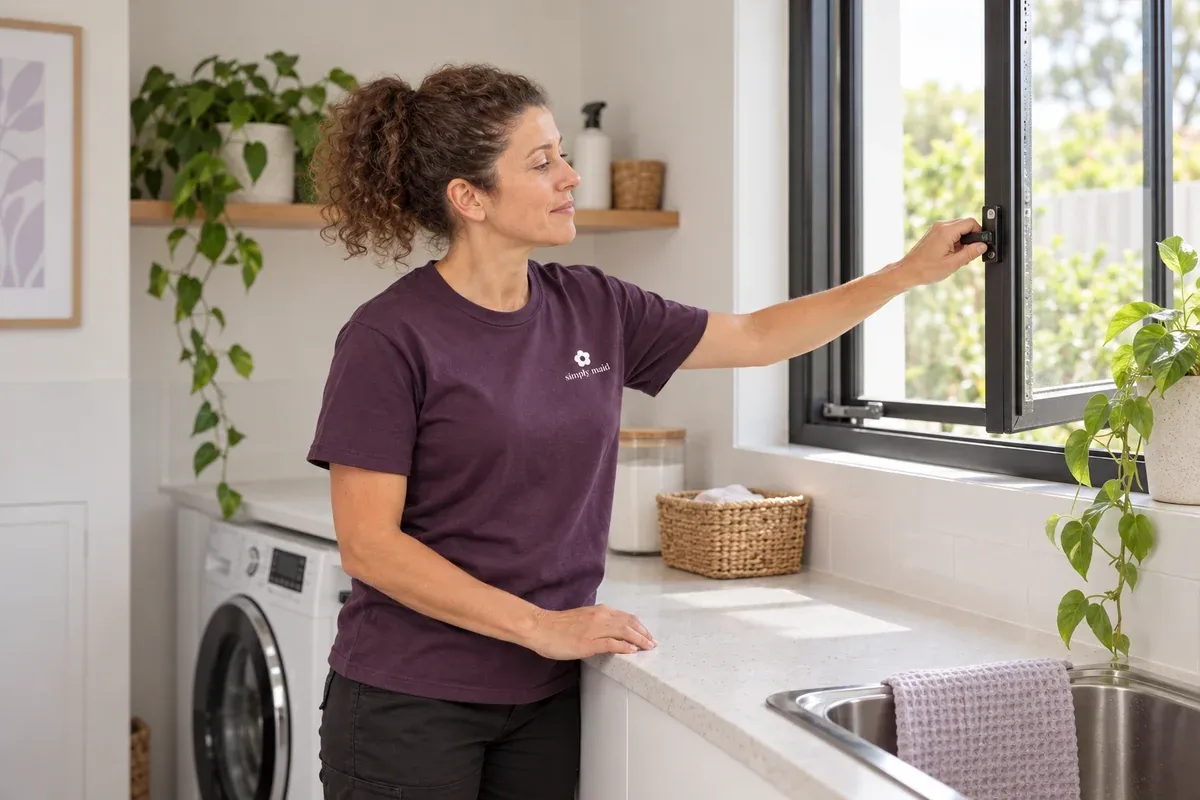
Mould in a rental property
Tell the landlord or agent in writing as soon as you notice mould or damp, with dated photos, and ask for the cause to be investigated.
In New South Wales, it depends on the cause. The landlord is responsible for mould from a defect they didn't repair in reasonable time, such as a faulty window, or from inadequate ventilation; a tenant may be responsible if moisture built up because they never opened windows or used fans. NSW Fair Trading (13 32 20) can help if you disagree.
In Victoria, Consumer Affairs Victoria treats mould or damp caused by the building structure that makes a home unsafe as an urgent repair; a renter may be responsible if they contributed, for example by not using the bathroom fan. Elsewhere, check with your state's tenancy authority or a tenants' advice service.
When to call a specialist
Call in a specialist, builder or plumber instead of cleaning it yourself when:
- The patch is bigger than about 1 m by 1 m, dense or keeps coming back.
- You can smell mould but can't find it, or suspect it inside walls, ceilings, floors or air-conditioning ducts. NSW Health suggests an occupational hygienist, who can test for a fee.
- Damp seems to rise through a wall: NSW Health suggests a building consultant to check the damp course.
- There's been contaminated flooding or major water damage. Don't open wall cavities or disturb old building materials.
- Wet carpet, plasterboard or furniture can't be dried within 24–48 hours (the US EPA's usual window to prevent growth), or materials are soft, swollen or crumbling.
- You can't reach the area safely.
Simply Maid doesn't remove mould: it's excluded from our cleans. Once the cause is fixed and the area is dry, our deep clean includes the exhaust fan cover and vents, and a regular clean keeps shower surfaces on track between your own wipe-downs.
Frequently asked questions
Is black shower mould more dangerous?
Not because it's black. You can't tell a mould's type or risk from its colour, and you don't need to: the US CDC says you don't need to know the type to clean it up, and it doesn't recommend testing. Some people react to any mould and others don't, so clean it the same way, fix the damp, and see your doctor about symptoms.
Can you get rid of mould permanently?
Not permanently by cleaning alone. CSIRO puts it plainly: a mould problem is always a moisture problem, and removing mould is only temporary until the moisture is fixed. That's why it keeps coming back in the same shower corner: stop the leak, run the fan until the room clears and dry the screen after each shower. Painting over it doesn't fix it either.
Last reviewed 23 September 2026 · Update history
Sources
- NSW Health, Mould fact sheet: detergent, vinegar and bleach dilutions.
- Better Health Channel (Victoria), Mould removal at home: who should stay away, protective gear, never mixing.
- Asthma Australia, Flooding and mould: asthma precautions.
- CSIRO, Dealing with mouldy houses (2020): moisture as the cause.
- Rogawansamy et al. (2015): vinegar, tea tree oil and ethanol on agar.
- ABC Everyday, mould removal methods (October 2022): a mycologist on clove oil.
- Clorox, Does bleach kill mold?: 10-minute stand time.
- Selleys, Rapid Mould Killer and How to replace old silicone: directions.
- LATICRETE, Care and maintenance of tile and stone installations: acids and sealers.
- US EPA, A Brief Guide to Mold, Moisture and Your Home: DIY size, humidity, drying time.
- US CDC, About mold: no testing needed.
- NSW Government, Mould in a rental property; Consumer Affairs Victoria, Pests, infestations and mould: renting.
Related Reading
Change log
Who wrote and edited this article, when its sources were checked, and what changed.
Current version
What changed
23 September 2026: How to Get Rid of Shower Mould and Mildew: added a verdict on vinegar, bleach, clove oil, tea tree oil, alcohol and mould sprays, a 10-minute contact time for the bleach mix, and a clearer rule for painted walls (vinegar after a spot test; bleach only on washable paint).
Correction, 23 September 2026: This guide now gives a specific method, detergent first and then NSW Health's 250 ml of bleach in 4 litres of water, and advises against diluted vinegar in showers, where it runs onto cement grout, stone and chrome that acid damages.
View all historyHide earlier history
Earlier entries record what was published at the time. Later corrections take precedence.
- Edited by
- Huy Hoang
Earlier corrections: 20 September 2026, removed unverified oil and chemical recipes and the claim that a deep clean covers mould treatment.