The ring around the waterline is body oil and soap residue, and warm water with detergent shifts it far more easily than elbow grease. What ruins a bath is the wrong product on a material that can't take it, so start by working out what yours is made of.
Quick Answer: Wipe the bath with warm water and detergent on a soft cloth, waterline first, then rinse and dry: about 10 minutes. For a ring or marks that stay, lay a detergent-soaked cloth on them for 20 minutes, then wipe again. For limescale on enamel, wipe on lukewarm 1:1 water and white vinegar, then rinse. On acrylic, dry the bath after use and skip bleach, powders and scourers.
Watch: Clean an acrylic bath gently
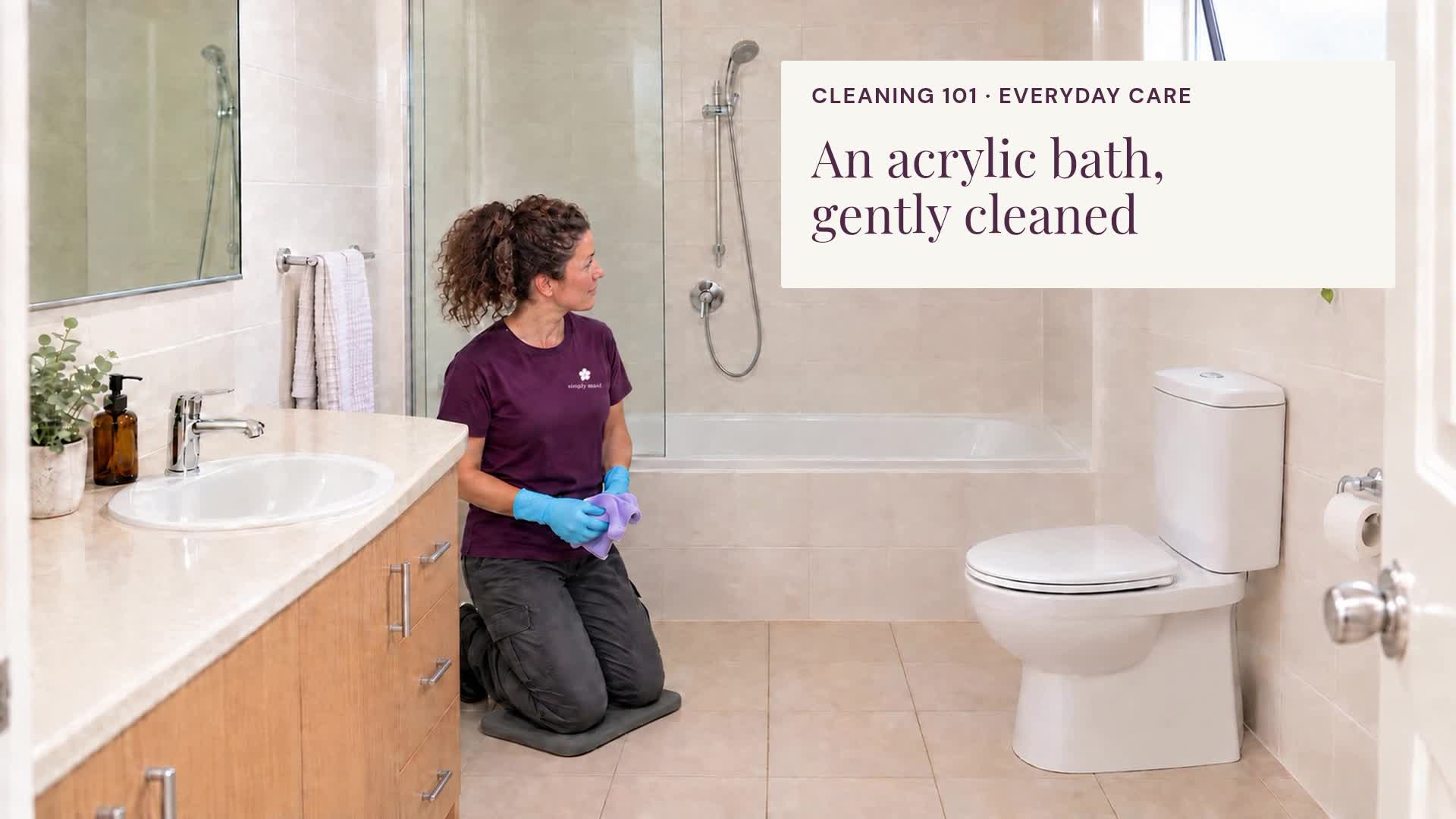
Read the video description
That ring around the bath is often soap and body oils. Here’s a gentle routine for an intact acrylic bath. Check the bath and coating instructions. Use warm water, a permitted liquid detergent and soft cloths. Keep powders and scouring pads away. Clear the bath, then rinse loose dirt away. Work from outside the tub, with secure footing and a dry floor. Use detergent as directed on a damp cloth. Wipe the waterline with light pressure, keeping the cloth wet so grit doesn’t drag. Work gently down the sides and across the base, using a clean fold as the cloth picks up residue. Rinse thoroughly around the waste and across the cleaned areas, removing all detergent so the surface isn't left slippery. Dry with a fresh soft cloth, and ask the maker about persistent marks or a damaged coating. After bathing, wipe the waterline before residue dries. Simply Maid. More room for life.
What your bath is made of, and what it can take
If your bath… | It's probably | Safe default |
|---|---|---|
Sounds slightly hollow when tapped, feels warm, flexes a little underfoot | Acrylic | Detergent on a soft cloth; no powders, pastes or scourers |
Feels cold and hard and rings when tapped (very heavy and solid if cast iron) | Enamel | Detergent; lukewarm 1:1 water and white vinegar for limescale |
Neither, or you can't tell | Not sure | Treat it as acrylic: detergent and a soak only |
What each bath can take for stubborn marks
Your bath | If a mark survives the soak | Keep off it |
|---|---|---|
Acrylic by Decina | A milky cream cleanser such as Jif on a damp soft cloth, light pressure, then rinse well; keep it off plated fittings | Powders, coarse abrasives |
Acrylic by Caroma | Brasso, for stubborn marks or fine scratches | Powders, pastes, cream cleaners, thinners, window cleaning sprays |
Enamelled steel (e.g. Kaldewei) | Soak again, then household detergent or a mild bathroom cleaner | Scouring pads, steel wool, coarse abrasives, washing powder, concentrated vinegar, strong acidic or chlorinated alkaline cleaners |
Solid surface or stone composite (matte, dense, usually freestanding) | Depends on the maker: RIHO allows an abrasive on its scratch-resistant solid surface | Acetone, strong acids, aggressive descalers |
Any other bath: acrylic by an unknown maker, enamelled cast iron, fibreglass | Repeat the detergent soak, and go no stronger until you know who made it | Powders, pastes, scourers, bleach, acids |
To find the maker, look for a brand on the bath or its apron panel, or in your renovation paperwork, then search the brand and model with "care". Decina's owner guide and Caroma's warranty and care booklet are both online.
How to clean a bathtub: the weekly method

Check the actual bath and coating instructions. Do not infer that an abrasive or descaler allowed by one maker is suitable for another bath.
Read the illustration as text
- Start at the waterline
- Use a permitted detergent and soft cloth with gentle pressure.
- Work down the sides
- Lift loosened residue without dragging grit across the finish.
- Rinse and dry
- Remove detergent, including around the waste, then dry the surface.
Keep your footing secure outside the tub.
About 10 minutes, no waiting, on any material. You need warm water, liquid household detergent, a soft cloth or sponge and a dry cloth. If your enamel bath has an easy-clean finish, Kaldewei says not to use microfibre cloths.
- Rinse with warm water. It softens the soap and body-oil film, so you wipe instead of scrub.
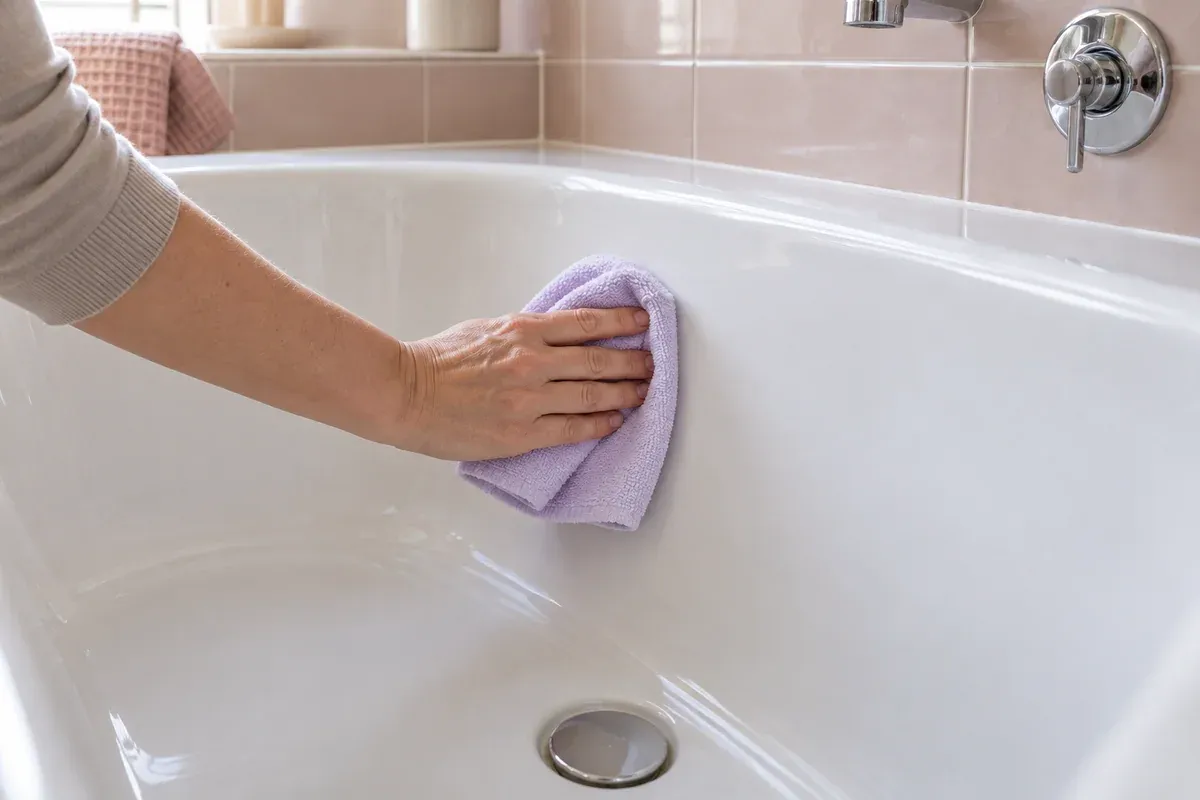
- Wipe the waterline first with detergent on a damp cloth: that's where the tidemark forms. Keep the cloth wet, because a dry cloth drags grit across the gloss.
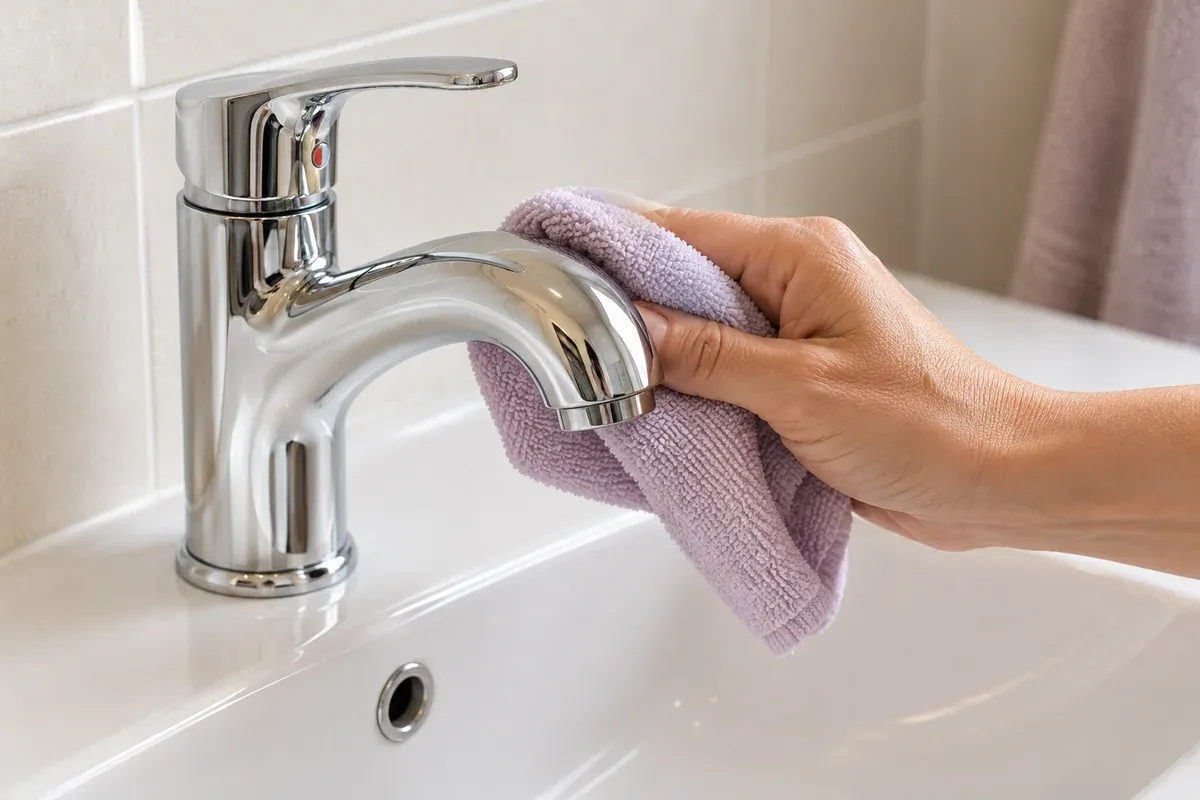
- Work down the sides to the base, then the taps and waste. Wipe the taps with warm soapy water only, then dry them (more in How to Clean Chrome Taps (and Why Not Vinegar)).
- Rinse thoroughly. Leftover detergent dulls the surface and leaves it slippery.
- Dry with a soft cloth. It's the best 30 seconds of the job, because scale forms where water evaporates.
Done when: the cloth glides over the waterline without a greasy drag, and the dry surface has no film or streaks.
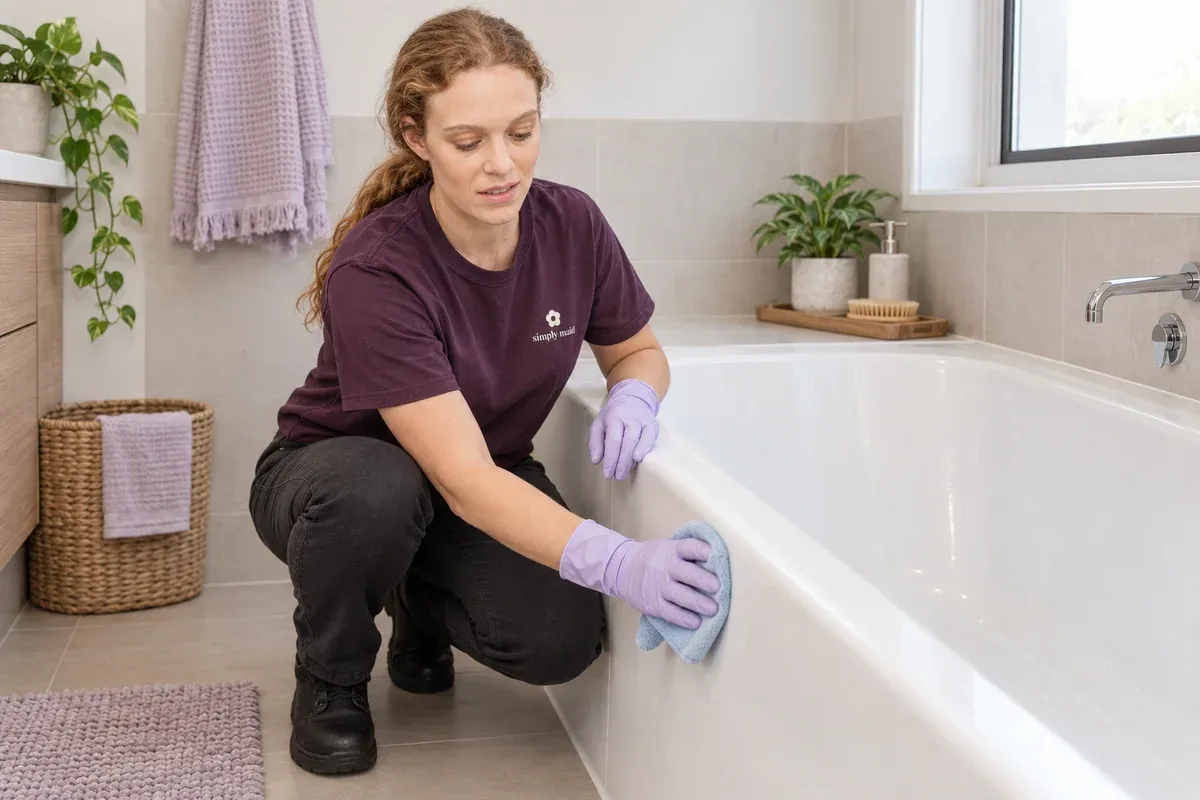
How to get a bath white again
- Soak it. Run enough warm water to cover the mark, add a good squirt of liquid detergent and leave it about 20 minutes. Kaldewei suggests soaking heavier stains before cleaning, and detergent suits every bath.
- Wipe, rinse and dry with a soft cloth.
- Still there? Use the stubborn-mark option for your bath in the table above, with light pressure, then rinse well.
Done when: the mark has gone. If two gentle rounds change nothing, it's probably damage rather than dirt (see When cleaning won't fix it).
Scratched rather than stained? If the bath is under warranty, ask the maker first. Otherwise Decina says a light scratch may polish out with Brasso, and deeper damage can be cut back with very fine wet-and-dry paper and plenty of water, or car cutting compound, then re-glossed with car polish. That's a repair, and easy to make worse.
How to remove limescale from a bath
Chalky white film around the waste and under the taps is limescale from hard water. How much you get depends on your supply: Hard Water in Australia: Signs and Limescale shows how to check yours and covers limescale on every other bathroom surface.
Safety Never mix cleaning products. Victoria’s Better Health Channel: “Do not mix bleach with ammonia, acids or other cleaners – this can release hazardous chlorine or chloramine fumes.” Ventilate the room during and after use. Wear gloves and eye protection. Follow the label's dilution and contact time. In an emergency call 000. For poisoning advice call the Poisons Information Centre on 13 11 26 — 24 hours, anywhere in Australia.
On enamel, Kaldewei's care guide allows a weak vinegar mix (about 5 minutes' work plus a short wait):
- Mix lukewarm water and white vinegar 1:1. Never use concentrated vinegar.
- Wipe it on with a cloth rather than spraying it, and keep it off chrome or coloured taps, the waste, cement grout and stone, which acid can damage (see How to Clean Grout — and Keep It Looking Clean).
- Leave it a few minutes, and don't let it dry.
- Wipe with a soft cloth, rinse thoroughly and dry.
Done when: the surface feels smooth and shows no chalky film once dry. If two rounds won't shift it, the deposit is probably older than a home method can fix. Skip strong commercial limescale removers unless your bath's maker approves them: Kaldewei rules out strong acidic cleaners.
On acrylic, drying the bath after every use is the best prevention. If scale does form, RIHO, an acrylic bath maker, allows a citric-acid-based cleaner on a soft cloth, rinsed off with cold water, while ruling out other acids. Decina and Caroma give no acid method, so on their baths stay with detergent and a soak. On solid surface or stone, use no vinegar or other acid unless the maker allows it.
Mould around the bath
On the bath itself, use a mild detergent, then dry the surface completely: that's the first option in NSW Health's mould advice. For mould on silicone or cement grout, its stronger option is 250 mL of bleach in 4 litres of water, with gloves and eye protection in a well-ventilated room; keep that mix off the bath, and never put vinegar on cement grout. Silicone that stays black after cleaning needs cutting out and replacing. Mould that keeps coming back is a moisture problem: run the exhaust fan when you bathe or shower, and see How to Get Rid of Shower Mould and Mildew.
Do you need to sanitise a bathtub?
Not in everyday use. A bath is rinsed and drained every time, and wiping the waterline and drying it is the hygiene step that matters. Vinegar, bicarb and home-made sprays are cleaners with no tested germ claim. After illness, clean with detergent first, then use a product labelled as a disinfectant that lists your bath's surface, and leave it wet for the contact time on the label. In Australia, a product that claims to kill viruses or fungi must be listed on the Australian Register of Therapeutic Goods (TGA). More in How to Sanitise and Disinfect Your Home.
Keeping it clean
- Wipe the waterline after each bath, while it's still wet. Ten seconds stops the tidemark setting.
- Start filling an acrylic bath with cold water, as Decina advises, so it adjusts to the heat gradually.
- Rinse after bath oils or conditioner. Kaldewei warns the oily film can make enamel slippery.
Our routine builder can fit the weekly bath clean into a printable schedule.
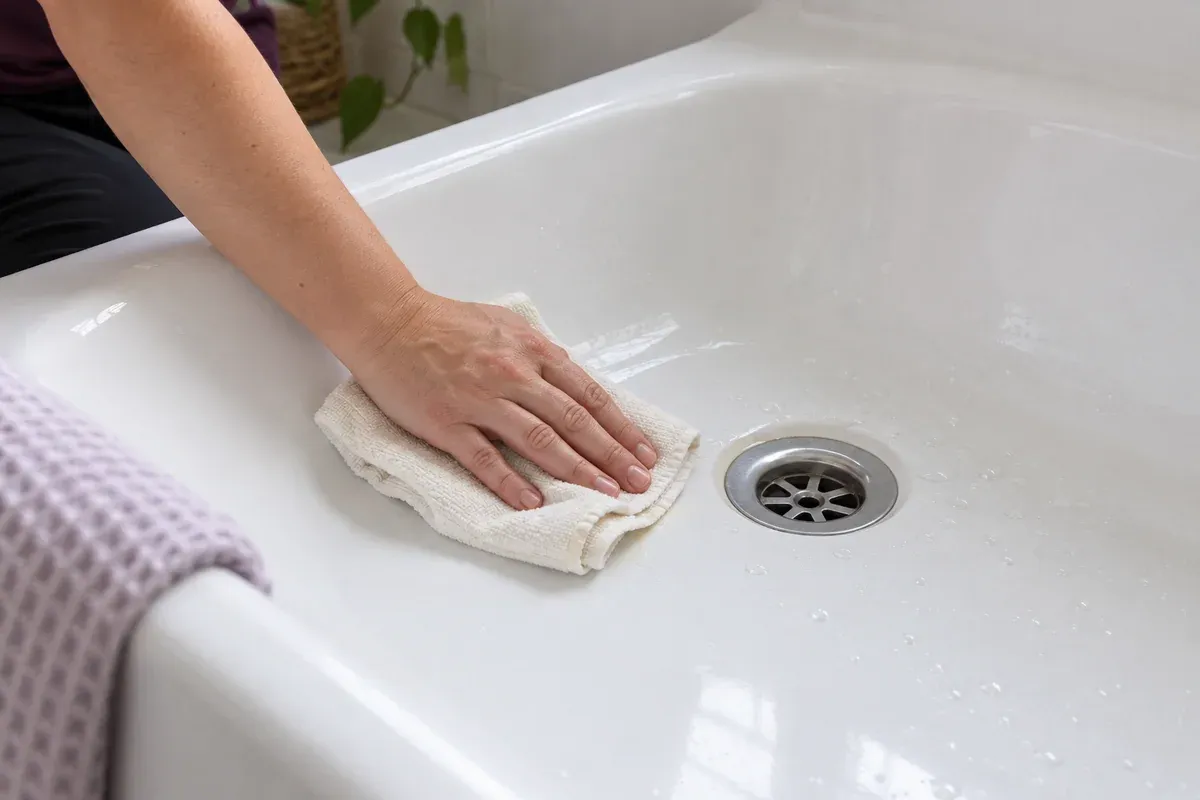
When cleaning won't fix it
- An evenly yellowed or crazed acrylic bath has a worn or damaged finish, not dirt. Ask the maker or a bath resurfacer about the options.
- Rust stains on enamel often mean a chip, with the steel or iron under it corroding. It needs a chip repair, not more cleaning.
- A resurfaced or coated bath follows the resurfacer's care instructions, not the original maker's.
A Simply Maid standard clean includes the bath, and a deep clean adds built-up scale on screens and tiles. We don't remove mould, or resurface, repair or re-gloss baths.
Moving out? Clean the bath, descale it if needed and dry it, then compare it with your entry condition report and photos. Check your state's tenancy authority for what your lease can require, and work through our End of Lease Cleaning Checklist — Room by Room.
Frequently Asked Questions
Q: How do I get rid of the ring around my bath?
The ring is body oil and soap residue that dried at the waterline. Lay a cloth soaked in warm water and detergent over it for about 20 minutes, then wipe, rinse and dry; to stop it coming back, wipe the waterline while it's still wet after each bath.
Q: Can I use bicarb, vinegar or a magic eraser on my bath?
Not together, and not bicarb or a magic eraser on acrylic. Bicarb and vinegar neutralise each other, so the fizz does no cleaning. Melamine sponges and bicarb pastes clean by fine abrasion: RIHO says abrasives "create fine scratches" on acrylic, and Caroma rules out powders and pastes. On enamel, Kaldewei rules out coarse abrasives and a detergent soak does the job, so skip bicarb unless your bath's maker suggests it. Vinegar has one job on a bath: 1:1 with lukewarm water for limescale on enamel.
Q: Why has my bath gone yellow?
Patchy yellow or brown near the waterline or where people sit is usually built-up body oil and soap, or colour from fake tan, hair dye or bath products: give it the detergent soak above, twice if needed. An even yellow across the whole bath that won't shift is a worn or damaged finish, not dirt (see When cleaning won't fix it).
Q: How do I clean spa bath jets?
Wiping the shell does nothing for the pipework. Decina's method for its spa baths is to fill with warm water, add a spa cleaner, "turn on the system and run for no more than two minutes", then empty and flush, and wipe plated fittings with warm soapy water so cleaner residue can't harm the plating. Check your own spa's manual first.
Last reviewed 23 September 2026 · Update history
Sources & References
- Decina Bathroomware, Owner Information Guide (PDF): acrylic care, stubborn marks, scratch repair and spa flushing.
- Caroma, Product Warranty & Care, Version 15, July 2025 (PDF): bath care and the products it rules out.
- Kaldewei, care and installation instructions for steel-enamel baths (PDF): enamel care, soaking and limescale.
- RIHO, How to clean your bathtub: what acrylic and solid-surface baths can take.
- NSW Health, Mould fact sheet: mould cleaning options and protective gear.
- Therapeutic Goods Administration, Regulation of cleaners and disinfectants.
- Nathan Kilah, University of Tasmania, Vinegar and baking soda: a cleaning hack or just a bunch of fizz? (The Conversation, 2024): why the two neutralise each other.
Related Reading
How fast chalky film returns depends on your supply; Adelaide's metropolitan water runs at 90–134 mg/L. If you are in Adelaide, you can see what a regular visit covers on our house cleaning in Adelaide page.
Change log
Who wrote and edited this article, when its sources were checked, and what changed.
Current version
What changed
23 September 2026: How to Clean a Bathtub: added a quick way to tell an acrylic bath from an enamel one, and answers on removing a bath ring, why a bath turns yellow, and why bicarb, vinegar-and-bicarb and magic erasers don't belong on most baths.
Correction, 23 September 2026: this guide said both Australian bath makers allow a mild cream cleanser on acrylic, but Caroma's care booklet rules out cream cleaners, powders and pastes, so stubborn-mark advice now follows each maker and the bicarb and peroxide pastes are gone. Vinegar descaling is now for enamel baths only, and mould on an acrylic bath gets detergent rather than a vinegar mix.
View all historyHide earlier history
Earlier entries record what was published at the time. Later corrections take precedence.
- Edited by
- Huy Hoang
Earlier corrections: 4 September 2026 — removed a rubbing-alcohol "sanitiser" method, an unsupported germ claim for vinegar, and a bacteria comparison from a commercial website.