Most mould on a painted ceiling or wall wipes off with warm, soapy water; the real work is fixing the damp so it doesn't come back. For shower tiles, grout, silicone, fabrics or mould in a rental, see How to Get Rid of Shower Mould and Mildew.
For ordinary dust, fingerprints or scuffs without suspected mould, use our guide to cleaning painted walls. The general cleaning method is separate from the mould guidance below.
Quick answer: To get mould off a ceiling or painted wall, open a window and wear gloves, eye protection and a P2 mask. Wipe gently with a wrung-out cloth in warm water and a little mild detergent. If marks stay, test 4 parts white vinegar to 1 part water on a hidden spot, then use it. Never dry-brush. Rinse, dry and fix the damp. Allow 20–30 minutes plus drying.
Check the surface first

Do not treat “washable paint” as approval for every chemical. Follow current health guidance and the coating maker’s instructions, and avoid unsafe overhead access.
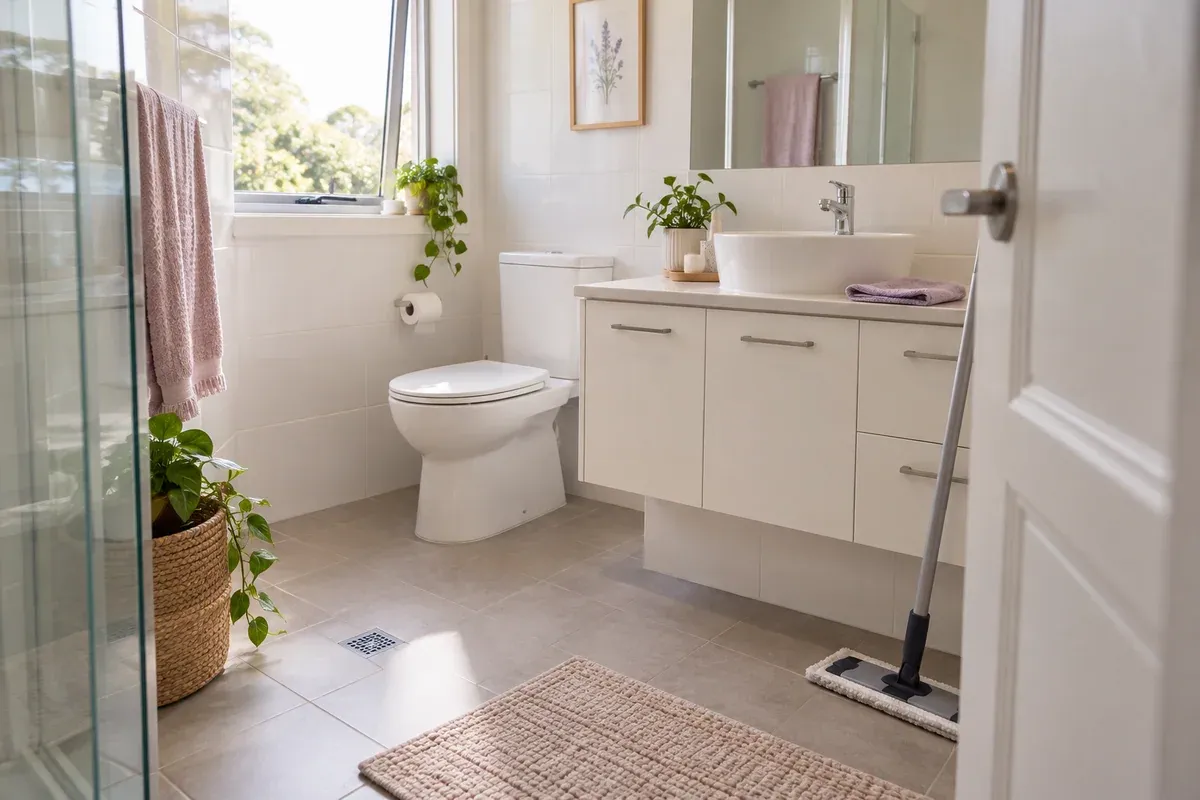
Read the illustration as text
- Surface and coating
- Identify the wall material and whether its finish is sound.
- Dampness and damage
- Recurring moisture, softness or peeling can need repair assessment.
- Reach and exposure
- Get appropriate help when access or contamination makes DIY unsuitable.
Painting over a patch does not resolve the cause.
Not sure what paint you have? Treat it as flat paint, or search the paint brand and product name plus "care".
What you find | What to do |
|---|---|
Flat or matt paint (common on ceilings) | Detergent and water with light pressure, then the vinegar mix if marks stay. No bleach: Dulux rules out stiff brushes, abrasives, solvents and harsh caustic products on flat finishes. |
Paint sold as washable | Use only a method permitted for this exact paint and product. “Washable” alone does not approve vinegar, bleach or a mould spray. |
Painted in the last week | Wait: Dulux says new paint takes around a full week to reach full washability. Mould showing through new paint was probably painted over. |
Wallpaper, bare plaster, unpainted board or ceiling tiles | Don't wet them: they soak up water, and the EPA says mouldy absorbent materials such as ceiling tiles may need replacing. |
Bubbling or peeling paint, soft or swollen board, water stains | A repair job, not a cleaning job. Find the leak or damp first; the board may need replacing. |
A patch bigger than about 1 m², or mould that keeps coming back | Get help (see below) rather than reaching for stronger products. About 1 m² is the US EPA's rough DIY limit, not an Australian rule. |
Clean a small patch, step by step
Keep children, pregnant people and anyone with weakened immunity or a chronic lung disease away from the work (Better Health Channel). With asthma, ask someone without asthma to do it (Asthma Australia); with a heart or lung condition, ask your doctor before wearing a P2 mask.
Safety Never mix cleaning products. Victoria’s Better Health Channel: “Do not mix bleach with ammonia, acids or other cleaners – this can release hazardous chlorine or chloramine fumes.” Ventilate the room during and after use. Wear gloves and eye protection. Follow the label's dilution and contact time. In an emergency call 000. For poisoning advice call the Poisons Information Centre on 13 11 26 — 24 hours, anywhere in Australia.
- Set up. Open a window, or run the exhaust fan if you're not cleaning around it. Put on rubber gloves, eye protection, covered clothing and a disposable P2 mask. Fill one bowl with warm water and a few drops of mild detergent, another with clean water, and have soft cloths and a towel ready.
- Test a hidden spot. Wipe a little cleaner behind a door or in a corner, let it dry, then check for colour on the cloth, softening, or a patch that looks shinier or duller. If the paint changes, stop.
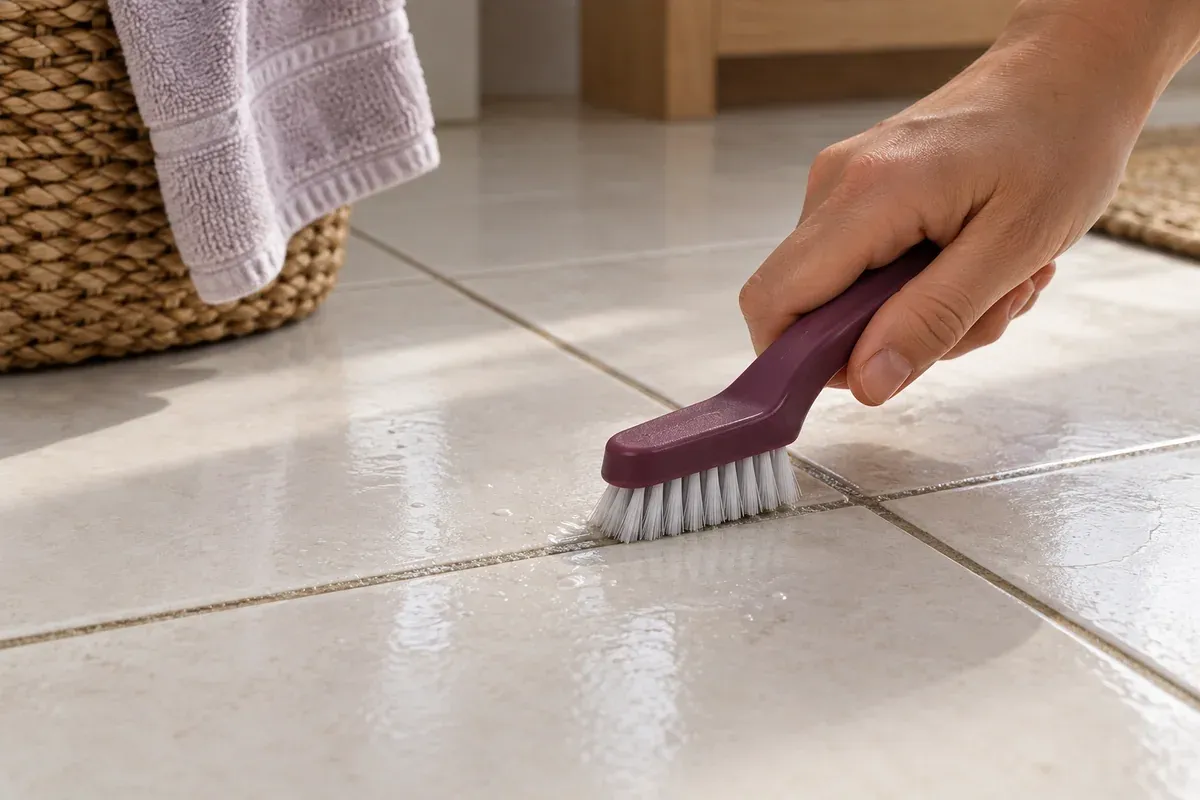
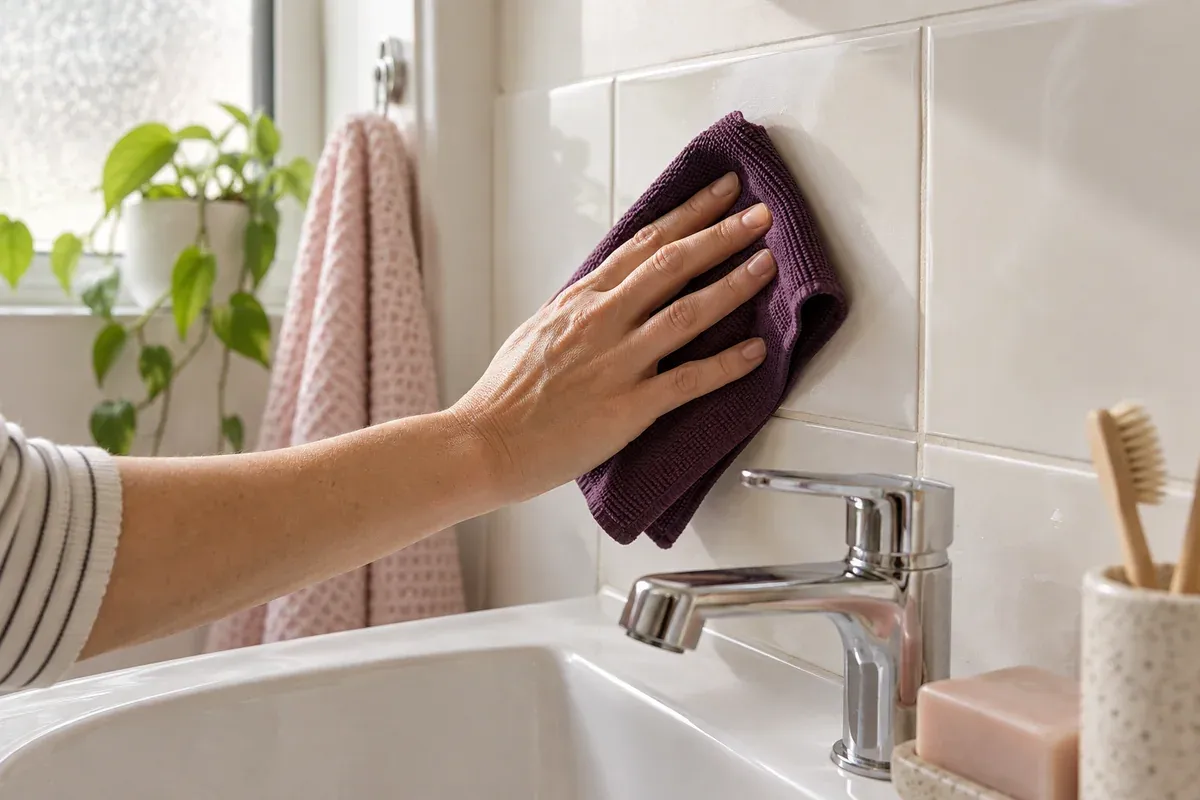
- Wipe, don't scrub. Wring the cloth until it's barely damp and wipe the mould gently, turning to a clean section as it gets dirty. Don't dry-brush, sand or scrape it, don't soak the wall, and skip melamine (magic eraser) sponges, which can polish flat paint.
- Step up only if marks remain. Follow the paint maker’s permitted method and the cleaner’s complete label. Washable paint is not automatically bleach-compatible. Do not combine a public-health dilution with another product’s timing, and protect all nearby materials from drips. Rinse or remove residue as directed before considering any different product. (how to clean grout); if you can't, stay with detergent.
- Rinse and dry. Remove residue as the chosen product directs and dry the surface completely. A remaining mark may be staining, damaged paint or unresolved contamination; do not diagnose it from appearance alone or keep scrubbing.
- Check again in a week or two. If mould returns, the moisture hasn't been fixed.
How to get mould off a ceiling safely
Use the same steps, with a few changes for working overhead:
- Put the cleaner on the cloth instead of spraying the ceiling, so nothing drips into your face.
- Use a stepladder, not a chair, on dry, firm, level ground, and keep three points of contact. Climb down and move it rather than lean too far, and have someone home (Better Health Channel).
- Switch off any light or exhaust fan near the patch and keep water away from it.
- Cover the bath, vanity or floor below before you start (step 4 explains why).
- If you can't reach the patch without stretching, or it covers much of the ceiling, get help.
Why does mould keep coming back on my bathroom ceiling?
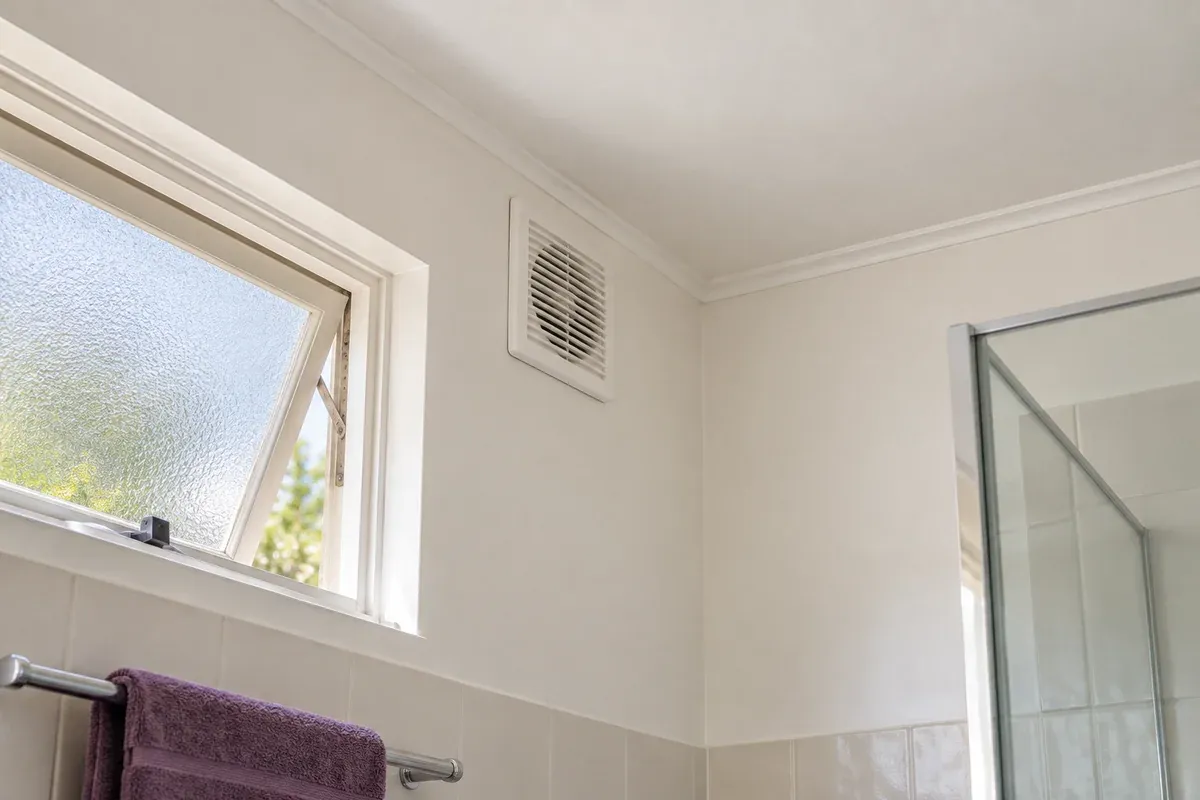
Because the ceiling keeps getting wet. CSIRO explains that mould grows where moist, warm air meets a cold surface, and shower steam rises straight to the ceiling. The usual causes: the fan isn't run long enough, the grille is clogged, or the fan vents into the roof space instead of outside, which CSIRO warns against. If you can't tell where your fan goes, ask an electrician to check.
Choosing a mould spray for painted surfaces
Most small patches don't need one. The active ingredient tells you the type:
Type | How to spot it | Suits |
|---|---|---|
Bleach-based | Sodium hypochlorite in the ingredients. Selleys Rapid Mould Killer: spot test, leave 2–3 minutes, rinse. | Only if both the exact paint and product instructions permit it; a hidden-area test does not override a prohibition. |
Bleach-free | Actives such as benzalkonium chloride. Wet & Forget Indoor: leave at least 10 minutes, wipe with a damp cloth. | Surfaces the label names (this one lists bathroom ceilings). On flat paint, spot test first. |
Clove or other oils | Oils in the ingredients. | Skip: an oily film can feed new mould. |
Stop it coming back
Cleaning only buys time until the moisture is fixed.
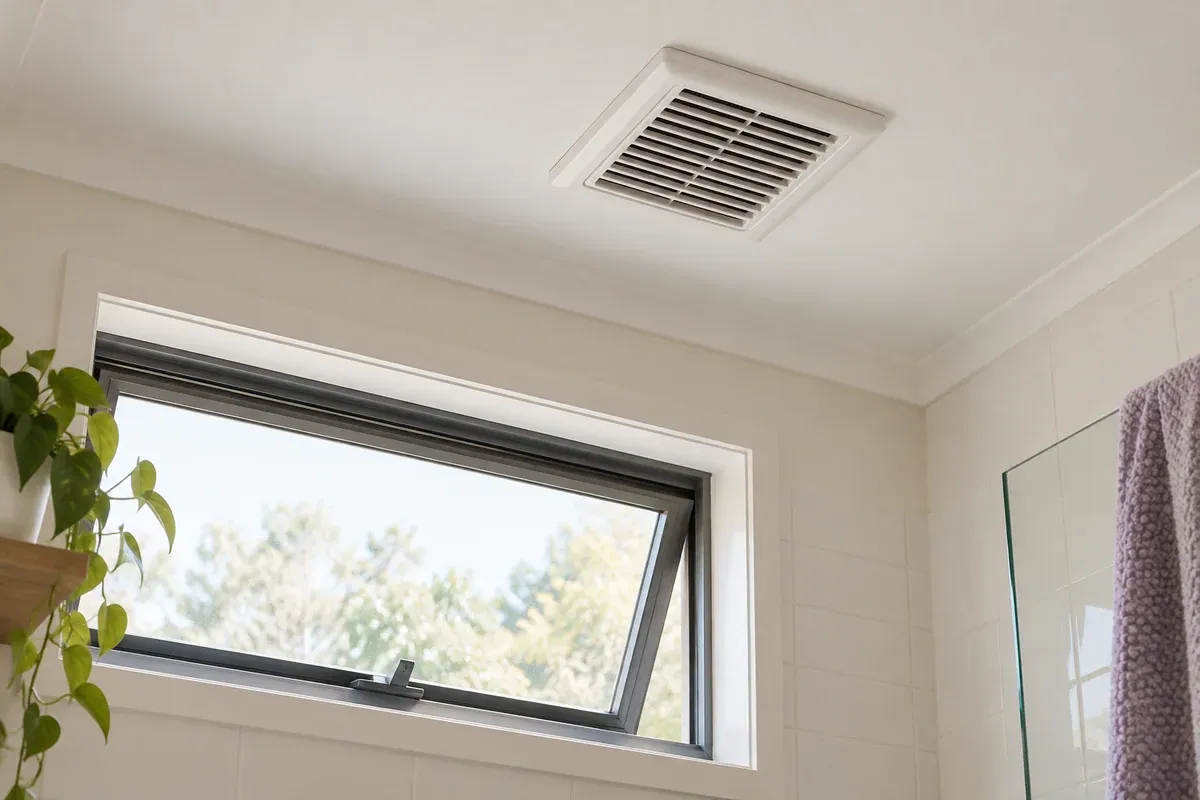
- Run the bathroom or kitchen fan while you shower or cook, and keep it going until the mirror and walls clear, at least 10 minutes.
- Clean the fan grille when dust builds up so it keeps pulling air; How to Clean a Bathroom Properly — The Full Order of Operations covers the monthly fan clean.
- Wipe condensation off windows and cold walls, and leave a small gap between furniture and outside walls so air can move.
- Fix leaks and blocked gutters promptly.
- Keep indoor humidity below 60%, ideally 30–50%, as the US EPA suggests. A humidity meter shows whether a room stays damp.
When to get help
Get a plumber or builder in if there's a leak, the board is soft or water-stained, or mould keeps returning after you've dried the room out. If mould shows up on walls or ceilings outside wet rooms such as the bathroom and laundry, CSIRO suggests a building inspector, because it can point to a construction problem.
Simply Maid doesn't do mould removal. Once the cause is fixed and the wall is dry, wall washing can be added per room to an end of lease clean if you're moving out.
Frequently asked questions
Can I paint over a cleaned patch?
Only once the damp is fixed and the surface is clean, dry and sound. Dulux Trade warns that paint alone won't kill mould: it keeps growing underneath and can make the paint bubble or flake. Its route: a mould remover, a sugar-soap wash, full air-drying, then a quality primer.
Does vinegar kill ceiling mould?
It removes light mould from paint, which is why NSW Health lists the 4 to 1 mix. In a 2015 Adelaide lab test it held back one common indoor mould but not another, so treat it as a cleaner, not a cure: it won't stop mould returning while the ceiling keeps getting wet. Compare it with bleach in How to Get Rid of Shower Mould and Mildew.
What about clove oil?
Skip it. It isn't part of NSW Health's or the Better Health Channel's mould advice, and mycologist Heike Neumeister-Kemp told the ABC that oils leave a residue mould eventually grows on. Full verdict: How to Get Rid of Shower Mould and Mildew.
Last reviewed 23 September 2026 · Update history
Sources
- NSW Health, Mould fact sheet: household dilutions, drying, testing.
- Better Health Channel, Mould removal at home and Ladder safety matters: who stays away; ladders.
- Asthma Australia, Flooding and mould: asthma.
- Dulux, How to care for Dulux paint and Dulux Trade, Tips for dealing with mould: washing, repainting.
- CSIRO, Dealing with mouldy houses (2020): condensation and fan venting.
- Selleys, Rapid Mould Killer and Wet & Forget, Indoor: label directions.
- ABC Everyday, mould removal methods (October 2022): clove oil.
- Rogawansamy et al. (2015): vinegar on two indoor moulds, on agar.
- Clorox, Does bleach kill mold?: 10-minute stand time.
- US EPA, A Brief Guide to Mold, Moisture and Your Home: DIY scope and humidity.
Related Reading
Change log
Who wrote and edited this article, when its sources were checked, and what changed.
View all historyHide earlier history
Earlier entries record what was published at the time. Later corrections take precedence.
- Edited by
- Huy Hoang
23 September 2026: How to Remove Mould from Ceilings and Walls: added why mould keeps coming back on bathroom ceilings, how to choose a mould spray for painted surfaces, answers on vinegar and clove oil, and a 10-minute contact time for the bleach mix on washable paint.
Correction, 23 September 2026: Added NSW Health's vinegar and bleach dilutions as a step-up after detergent, with a hidden-spot test, no bleach on flat paint, and a warning to keep vinegar drips off grout, stone and chrome in bathrooms.
- Edited by
- Huy Hoang
Earlier corrections: 20 September 2026, removed a one-hour vinegar soak, firm scrubbing, a leave-on bleach step and a fortnightly vinegar spray.