Quick Answer: Allow about 30–40 minutes, waits included. Work dry to wet, top to bottom: clear and dust, vacuum, spray the shower glass and clean the mirror while it works, then do the shower, tiles and bath. Squeeze gel under the toilet rim and clean the basin during its wait. Toilet last with its own cloth and brush, then mop towards the door.
How to clean a bathroom: the weekly order
Read the video description
Here's a practical order for a weekly bathroom clean. Clear the surfaces, ventilate, put on gloves, and remove dust and hair before wet cleaning. Check each surface maker's care guide. This Earth Choice spray is for compatible glass and glazed tiles. Keep it off stone and sensitive surfaces. Never mix cleaners. For built-up dirt, allow one to five minutes, as the label directs. While it works, clean the mirror with a damp glass cloth, then finish dry. Work down the shower walls and screen. Wipe away residue as directed. For the bath, follow its maker's care guide and use a soft, non-scratch cloth. Clean the basin and vanity with a product suitable for their materials. Wipe chrome with a damp, soft cloth, then dry. Leave the toilet until last, using a dedicated cloth and brush. Apply cleaner under the rim as labelled. This Earth Choice gel recommends ten to fifteen minutes for best results. Clean the outside from top to bottom. After the waiting time, brush the bowl and flush. Mop from the far corner towards the door, stepping back onto dry floor. Replace clean essentials and towels. Between cleans, dry the shower glass and keep the room ventilated. Simply Maid. More room for life.
What You'll Need
- Cloths: one for glass, one only for the toilet, a cotton cloth for chrome, and dry ones.
- A toilet brush, a squeegee and a stiff, narrow grout brush.
- Dishwashing liquid, a bathroom spray made for glass and tiles, a pH-neutral tile cleaner and toilet gel.
- A vacuum, a mop, rubber gloves and eye protection.
Which Cleaner for Which Surface
Surface | What to use | Keep off it |
|---|---|---|
Shower glass and glazed tiles | Warm soapy water, or a bathroom spray made for glass and tiles; squeegee after | Overspray onto grout, taps and aluminium frames |
Cement grout | pH-neutral tile cleaner and a nylon brush | Vinegar, lemon and acidic sprays, which corrode it |
Natural stone (marble, limestone, travertine) | pH-neutral stone cleaner or mild dishwashing liquid | Any acid, including bathroom sprays and toilet gel |
Acrylic bath or shower base | Mild liquid detergent on a soft cloth (How to Clean a Bathtub Without Damaging It identifies your bath) | Powders, pastes and melamine sponges |
Ceramic basin, toilet and laminate vanity | Warm soapy water on a soft cloth | Abrasives; vinegar on laminate; toilet gel outside the bowl |
Chrome taps and rails | Warm soapy water on a cotton cloth, then dry (How to Clean Chrome Taps (and Why Not Vinegar)) | Vinegar, citrus, scourers, and bathroom sprays even if the bottle lists chrome, which Reece says corrode tapware |
Not sure what it is | Warm soapy water, then dry | Anything acidic or abrasive |
For a fitting's own care advice, search its brand and model with the word "care".
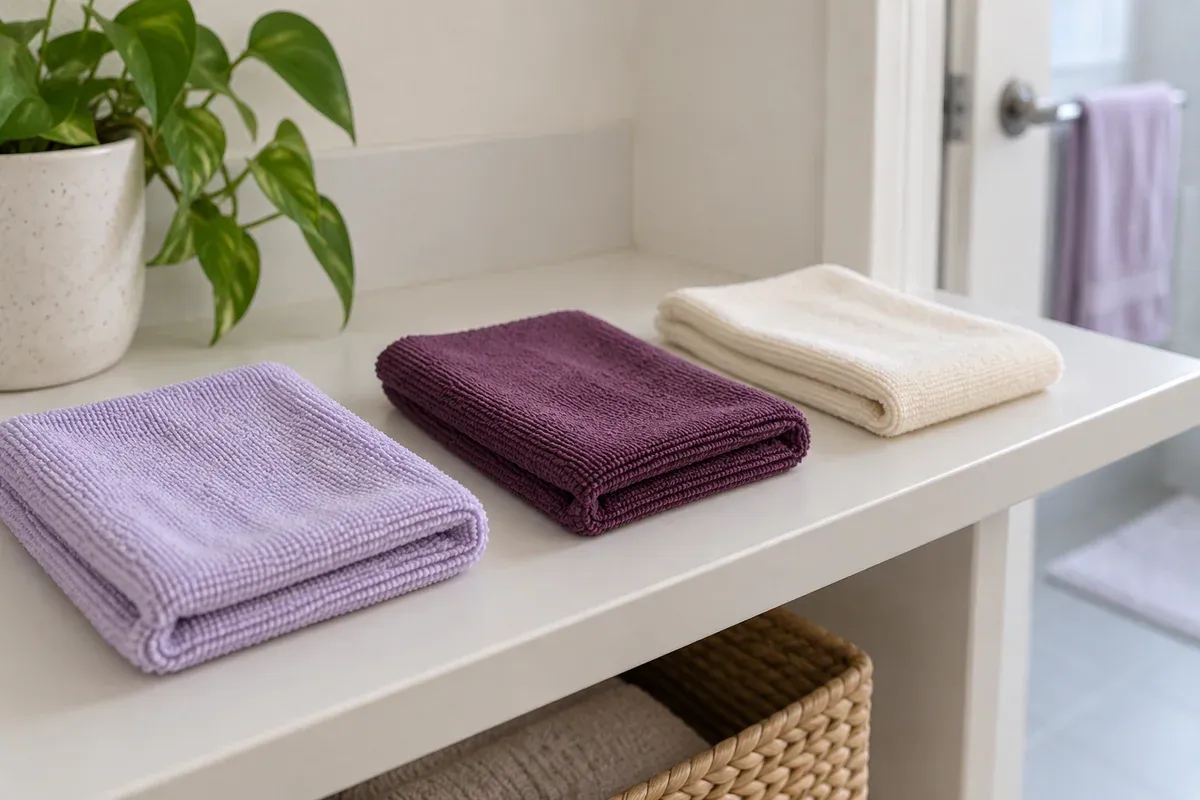
How to Clean a Bathroom, In Order

A sequence overview. Follow each surface’s care guide and the product label; never mix cleaners or carry a toilet cloth onto another surface.
Read the illustration as text
- Clear and dry-clean
- Remove belongings, dust and loose hair first.
- Clean surfaces downwards
- Mirror, shower, bath, basin and vanity; use suitable separate cloths.
- Toilet, then floor
- Use dedicated toilet tools, then mop towards the door.
Keep toilet tools separate from the rest of the room.
Do this every week. Build Your Cleaning Routine fits it into your week as a printable schedule.
Step 1: Clear and Dry-Clean
Move toiletries, towels, mats and the bin out, open a window and put on gloves. Dust shelves and ledges, then vacuum the dry floor.
Safety Never mix cleaning products. Victoria’s Better Health Channel: “Do not mix bleach with ammonia, acids or other cleaners – this can release hazardous chlorine or chloramine fumes.” Ventilate the room during and after use. Wear gloves and eye protection. Follow the label's dilution and contact time. In an emergency call 000. For poisoning advice call the Poisons Information Centre on 13 11 26 — 24 hours, anywhere in Australia.
Step 2: Spray the Shower Glass and Time It
Spray the shower glass only, not the whole room. Wipe everyday film straight off; for built-up grime, leave it 1–5 minutes (the stand time on the Earth Choice Bathroom & Shower spray in the video) and set a timer.
The spray in the video is for glass and glazed tile only. It contains lactic acid, so wipe off any that lands on the frame, grout or mixer; treat any lactic- or citric-acid spray the same way.
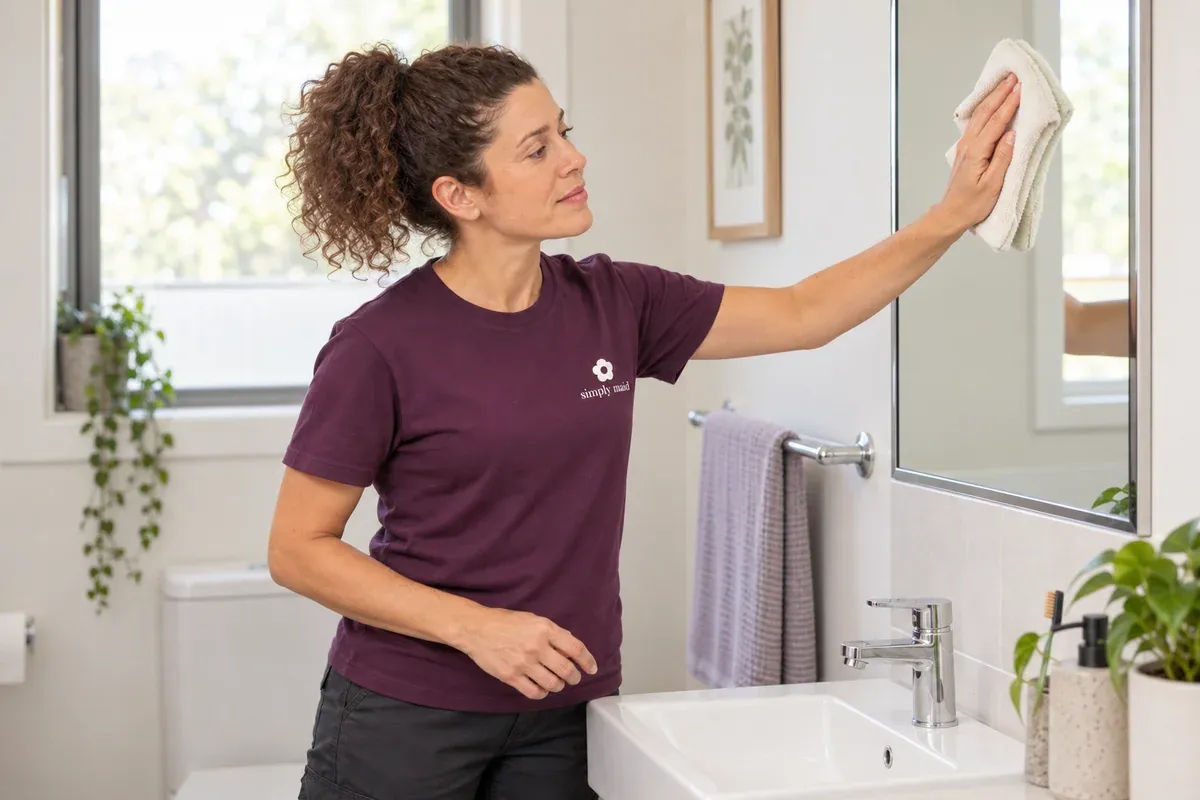
Step 3: Clean the Mirror
While the spray works, wipe the mirror with a damp glass cloth and buff it dry. Wipe door handles and towel rails, but never spray a light switch or power point.
Step 4: Clean the Shower, Tiles and Bath
Work down the tiled walls and screen, then the shower base, wiping off the spray as you go; warm soapy water or a pH-neutral tile cleaner does the tiles. Brush the grout lines along the joint.
Clean the bath with warm soapy water on a soft cloth, waterline first, working from outside the tub with steady footing. Rinse until no slippery film is left.
Glass still cloudy? The wet test in How to Clean Shower Glass (and Keep Soap Scum Off It) tells scale from etching. Squeegee the screen now, before the floor.
Step 5: Clean the Basin (Sink), Taps and Vanity
Timing tip: squeeze the toilet gel under the rim before you start here, so its wait runs while you clean the basin and vanity. Then wash your gloved hands.
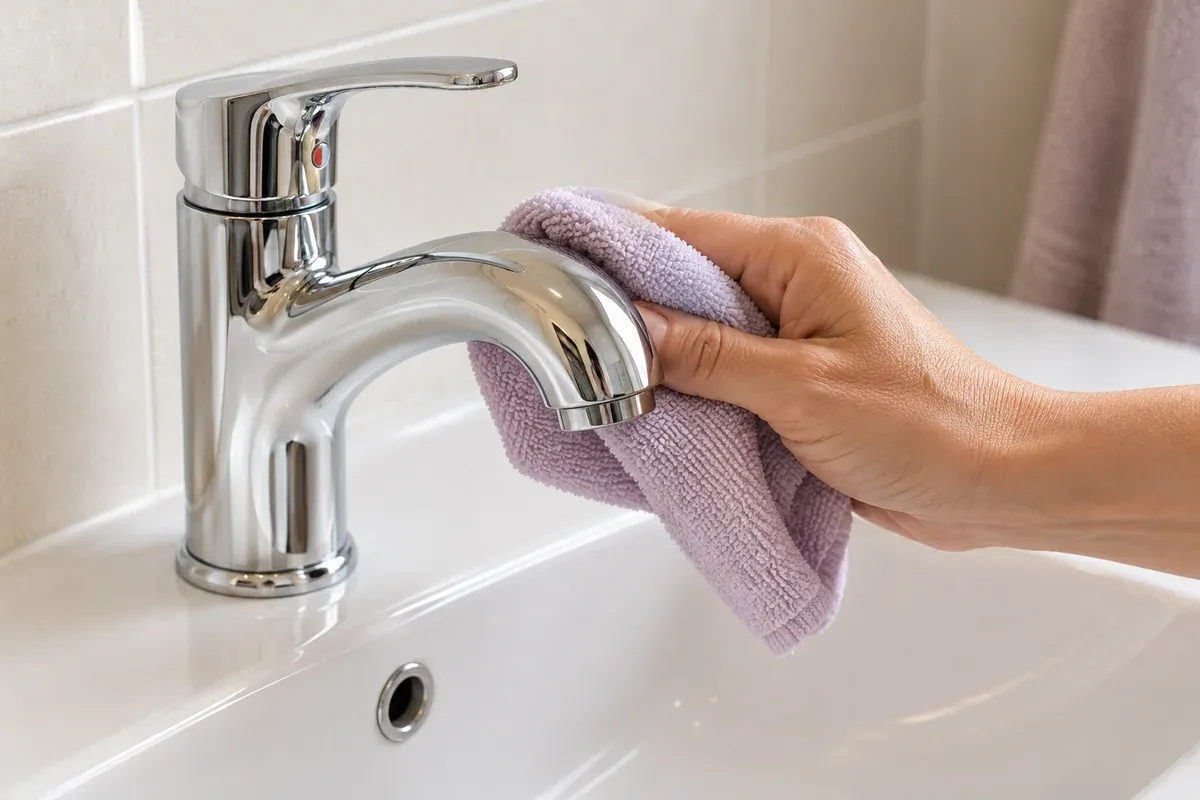
With a fresh cloth and warm soapy water, work from the taps and vanity top down to the basin, then the cupboard fronts. Dry as you go and buff the taps with the cotton cloth.
Step 6: Clean the Toilet Last
Switch to the toilet cloth and brush. Doing the toilet last means they never go back to another surface.
- If you haven't yet, squeeze the gel under the rim; wipe drips off stone at once. With a bleach block in the cistern, skip an acidic gel like the one in the video: bleach and acid release chlorine gas.
- Leave it 10–15 minutes, or at least 5 (the Earth Choice Toilet Gel times).
- Meanwhile, clean the outside from the cistern down to the seat, hinges and base.
- Brush the bowl and under the rim, flush, and let the brush drip dry over the bowl.
- Put the toilet cloths in the wash and wash your hands.
Step 7: Mop the Floor Towards the Door
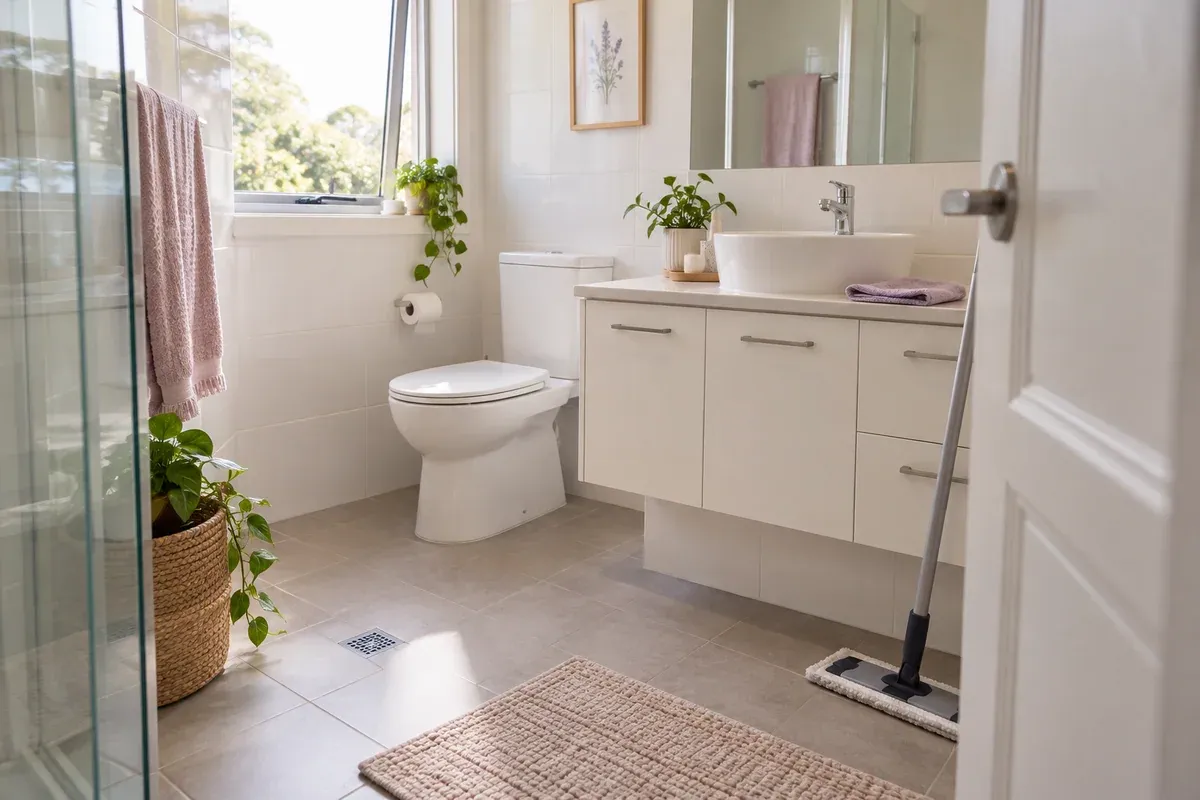
Mop with warm water and a little dishwashing liquid (a pH-neutral cleaner on stone), from the far corner towards the door, so you step back onto dry floor.
Once the floor is dry, put back the mats, towels and toiletries, and rinse and dry your cloths and mop.
Done looks like: the glass dries without streaks, the bath and shower base have no slippery film, there's no ring under the toilet rim, and the floor is dry before the mats go back.
The Monthly Deep Clean
- Grout: For grey cement grout, press in a bicarb soda paste, leave it 15 minutes, scrub along the joint and rinse; oxygen bleach lifts stains (test a hidden joint first). Reseal when water stops beading. See How to Clean Grout — and Keep It Looking Clean.
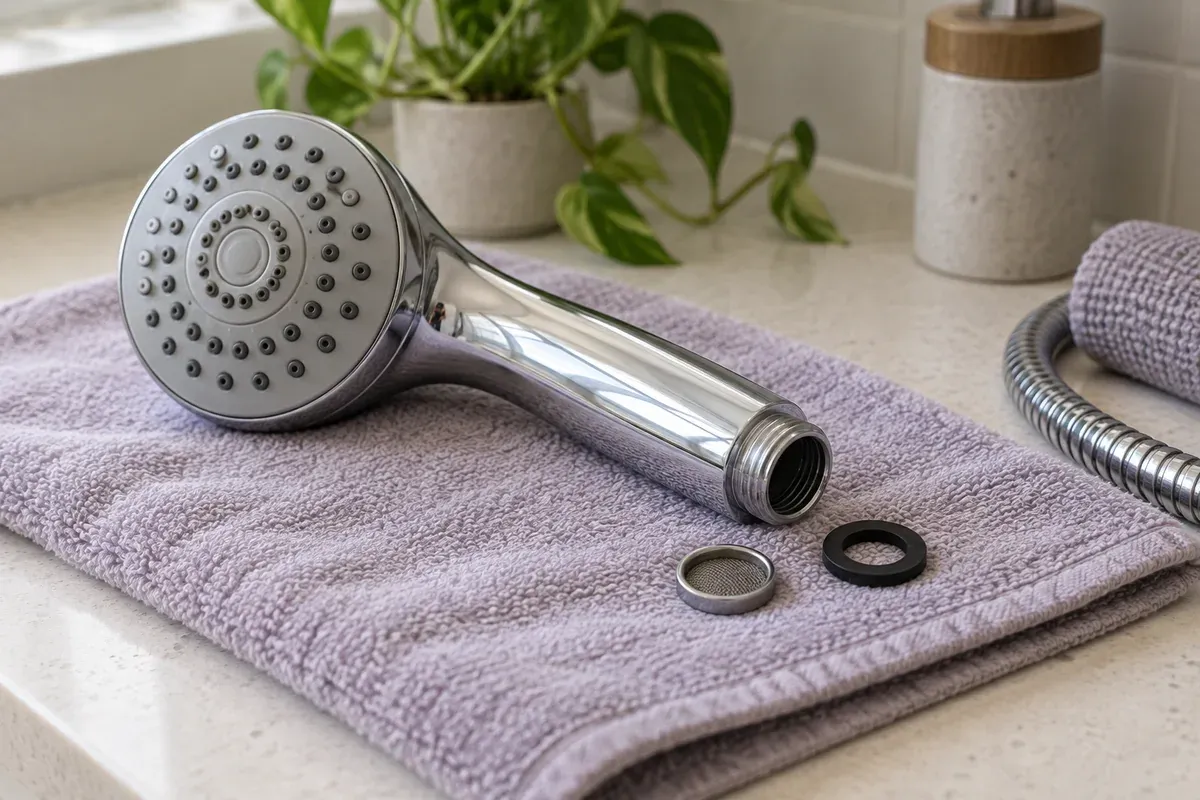
- Shower head: If the spray weakens, rub the nozzles with your fingertips, never a pin. Brands differ on descaling: see How to Clean a Shower Head: Is Vinegar Safe?.
- Drains: Pull hair from the strainer. Never pour drain cleaner over other products; a drain that stays slow needs a plumber.
- Exhaust fan: Switch it off, let any heat-lamp bulbs cool and vacuum the grille. Remove the cover only as your model's user guide shows, keep water off the electrics, and leave anything past the cover to an electrician.
Keeping a Bathroom Clean Between Cleans
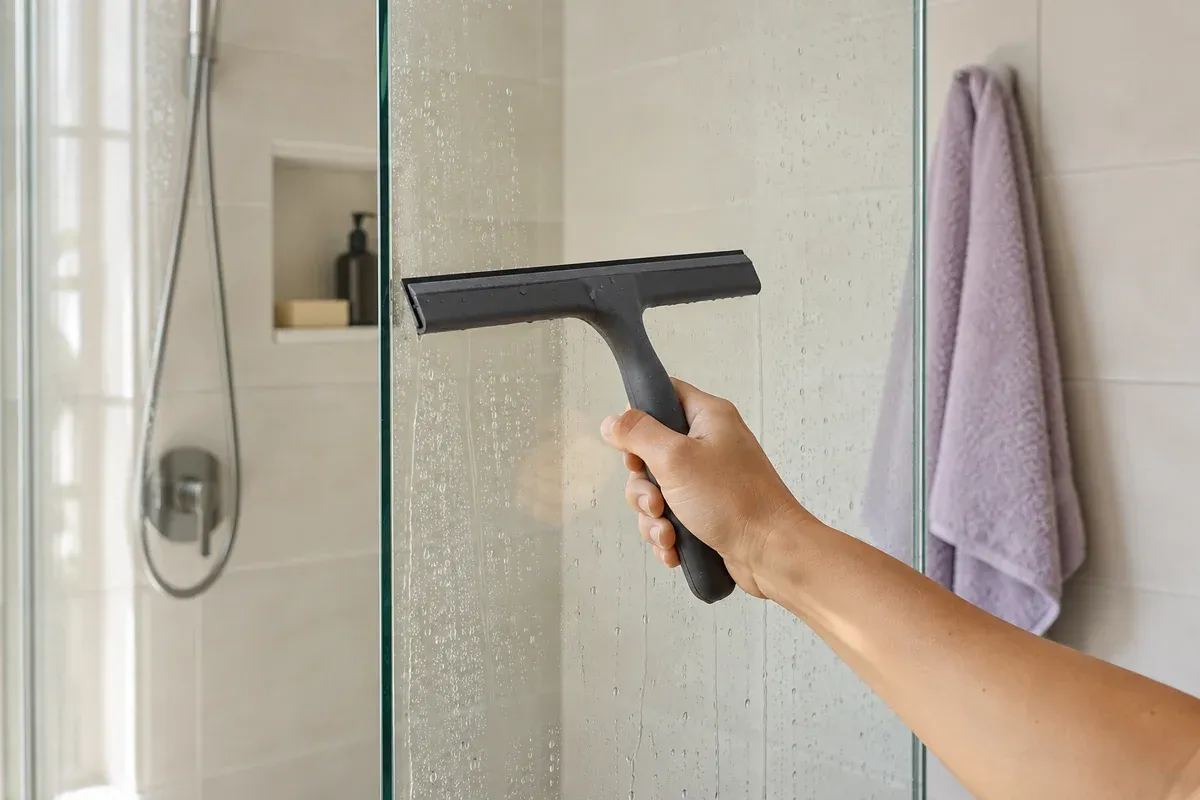
- Squeegee the glass after each shower and leave the screen door open to dry.
- Run the exhaust fan during the shower and until the mirror clears: at least 10 minutes.
- Wipe the bath's waterline after use to stop a tidemark.
- Fix leaks and ongoing condensation, because moisture lets mould return; if it has, see How to Get Rid of Shower Mould and Mildew.
For shortcuts, and a verdict on bicarb, vinegar and other hacks, see 13 Bathroom Cleaning Tips That Save Time.
When to Get Help
A leak is a plumber's job, lifting silicone needs cutting out and replacing, and mould that keeps coming back needs its moisture source found. If you'd rather hand the bathroom over:
- Standard clean: this weekly routine, covering the toilet, shower and bath, mirror, taps and floor.
- Deep clean: adds hard-water scale on the screen and tiles, and the exhaust fan cover and vents.
A deep clean also scrubs tile grout. Mould removal, regrouting and sealing aren't part of either. See our prices.
Planning a bathroom refresh as part of a whole-home clean in Sydney? Check the Sydney deep-cleaning inclusions and prices by home size before deciding which jobs to do yourself. Deep cleaning covers the listed surface-cleaning tasks; mould removal, regrouting and repairs need separate arrangements.
Frequently Asked Questions
Q: How long does it take to clean a bathroom?
About 30–40 minutes, waits included, because the spray and gel work while you do the mirror and basin. A quick clean of the mirror, basin, taps, toilet and floor takes 10–15 minutes; a grout scrub takes the full clean to about 45.
Q: Does this routine disinfect the bathroom?
No, and it doesn't need to. The US CDC says cleaning removes germs and dirt, and home disinfecting is usually only needed when someone is sick or at higher risk; How to Sanitise and Disinfect Your Home covers that.
Last reviewed 23 September 2026 · Update history
Sources & References
- Natures Organics, Earth Choice Bathroom & Shower spray and Toilet Gel: stand times, exclusions, no bleach.
- Reece product care guide: cleaners that corrode tapware.
- Caroma, Bathroom cleaning tips: basins, toilets and seats.
- Decina owner information guide: acrylic baths.
- Laminex care and maintenance: laminate tops.
- Natural Stone Institute, Stone care: stone cleaners.
- ARDEX Australia, Technical Bulletin TB186 (2024): acid corrodes cement grout.
- US CDC, Cleaning and disinfecting: when to disinfect.
- NCC 2022 Housing Provisions, Part 10.8: the 10-minute fan run-on.
- IXL Tastic user guide: switch off and cool before cleaning.
Related Reading
Change log
Who wrote and edited this article, when its sources were checked, and what changed.
Current version
What changed
23 September 2026: How to Clean a Bathroom now says how long the weekly clean takes (about 30–40 minutes, waits included) and makes clear the shower spray shown in the video is for glass and glazed tile only. The exhaust-fan clean moved to the monthly jobs.
Correction, 23 September 2026: The shower spray in the video contains lactic acid, so keep it off aluminium frames, cement grout and chrome tapware, and never use the acidic toilet gel alongside a bleach cistern block. For grey cement grout, use a bicarb soda paste.