Mould grows wherever something stays damp, so getting rid of it is two jobs: clean off what you can see, and stop the moisture that feeds it.
Quick answer: For a patch smaller than about 1 m², find and fix what's keeping it damp first. Open a window, wear gloves, eye protection and a P2 mask, and wipe the mould off with warm water and a little detergent, rinsing the cloth in a second bucket. Dry the surface completely. Wash mouldy fabrics on a hot cycle; throw out mouldy mattresses and cardboard. Allow 20–30 minutes plus drying.
Start with what's keeping it damp
Mould needs moisture to grow (NSW Health), so cleaning without finding the water only buys time. Look for:
- A leak in a roof, gutter or pipe: water stains, bubbling paint and soft board point to one. Get it fixed before you clean.
- Condensation: CSIRO explains that mould grows where moist, warm air meets a cold surface, such as a window, an outside wall or a bathroom ceiling.
- Still air: cupboards, corners, furniture against outside walls and mattresses on the floor.
Mould removal room by room
Where it is | What to do |
|---|---|
Shower, tiles, grout and silicone | |
Ceilings and painted walls | |
Wardrobes, cupboards and furniture | The default method below |
Clothes, bedding, shoes and leather | Wash fabrics hot; wipe leather (below) |
Window sills, frames and tracks | Detergent only on aluminium (below) |
Carpet, curtains and couches | Wash what's washable; carpet and upholstery usually need a professional (below) |
Mattresses | Replace it (below) |
Bathroom fan grille | |
Not sure what it is | Warm water and detergent only, after a hidden-spot test; replace anything soft with mould inside |
How to get rid of mould yourself, step by step
The default for a small patch on a hard surface: wardrobe walls, shelves, furniture and sills.
Safety Never mix cleaning products. Victoria’s Better Health Channel: “Do not mix bleach with ammonia, acids or other cleaners – this can release hazardous chlorine or chloramine fumes.” Ventilate the room during and after use. Wear gloves and eye protection. Follow the label's dilution and contact time. In an emergency call 000. For poisoning advice call the Poisons Information Centre on 13 11 26 — 24 hours, anywhere in Australia.
- Check it's a job for you. The patch is under about 1 m² (the rough guide experts gave CHOICE) and isn't from a flood. Children, pregnant people, people over 65 and anyone with weakened immunity, allergies, severe asthma or lung disease should stay away (NT Government). With a heart or lung condition, ask your doctor before wearing a P2 mask.
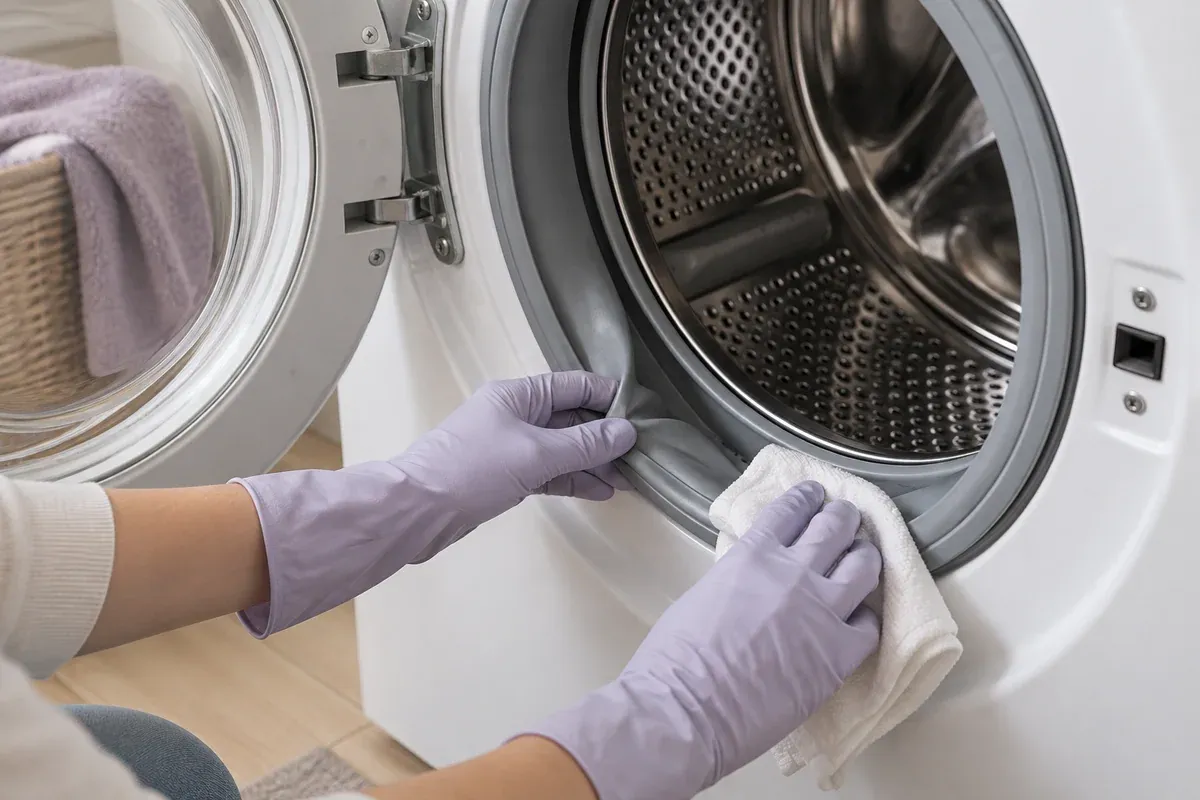
- Set up. Open windows and keep pets out. Wear rubber gloves, goggles, long sleeves and a disposable P2 mask (a paper dust mask usually doesn't filter spores). Fill one bucket with warm water and a few drops of dishwashing liquid, another with clean water.
- Wipe, don't brush. Wipe gently with a damp microfibre cloth, rinsing it often in the clean water. Never dry-brush or scrape dry mould, which throws spores into the air, and vacuum only with a HEPA-filter vacuum (Better Health Channel).
- Step up only if marks stay. On paint, use NSW Health's 4 parts white vinegar to 1 part water after a hidden-spot test. On glazed tile or glass, use NSW Health's 250 mL of bleach in 4 litres of water and leave it about 10 minutes (Clorox's stand time for its bleach mix). No bleach on aluminium, stainless steel or linoleum (NT Government), or on flat paint, where Dulux rules out harsh caustic cleaners; no vinegar on grout, stone or chrome. One product at a time, rinsing between.
- Rinse and dry. Wipe with clean water, towel it dry, and keep a window open or run a fan, heater or dehumidifier until it's completely dry.
- Clean up. Bag disposable cloths and the mask, and wash reusable cloths and your clothes on their own.
- Check back in a week or two. Mould that returns means the moisture isn't fixed.
Done looks like: no visible growth, no musty smell, and a surface that's dry to the touch.
Surface by surface
Wardrobes and cupboards
Empty it, clean the walls, shelves and rails with the default method, and leave the doors open until everything is dry. If the wall behind is an outside wall or backs onto a bathroom, suspect condensation or a leak. Soft, swollen or crumbling board can't be cleaned: replace it. Put clothes back only when they're completely dry.
Clothes, bedding, shoes and leather
- Clothes, bedding, curtains and soft toys: wash on a hot cycle (Better Health Channel), as hot as the care tag allows, and use bleach only if the tag's triangle symbol allows it. Dry completely. Things that have been mouldy for weeks may not come clean.
- Fabric that can't be machine-washed: have it professionally cleaned, or throw it out.
- Leather shoes and boots: outside, wipe with a cloth dampened in water, then let them dry naturally: R.M.Williams says never to use direct or forced heat, which harms leather. Condition once dry, and store where air can reach.
- Canvas shoes: wash them as in How to Clean Canvas Shoes (White and Coloured).
Window sills, frames and tracks
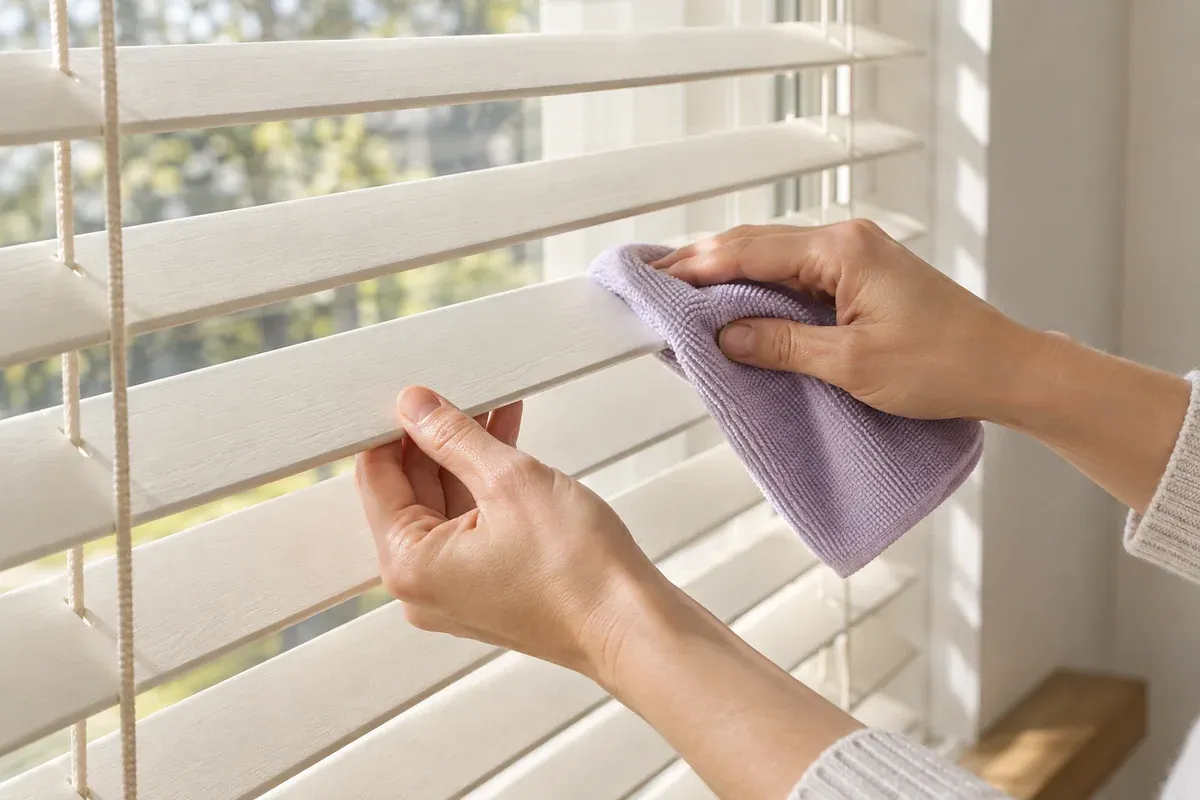
Condensation pools in sills and tracks. On aluminium, window maker AWS advises the mildest treatment first: warm water and detergent on a soft cloth, with an old soft toothbrush for corners. Wipe out the dirty water, dry the track and clear the small drainage (weep) slots. No bleach on aluminium, and no solvent cleaners on powder-coated frames (AWS). Painted timber sills take the painted-wall method. In cold weather, wipe condensation off the glass and sill each morning.
Carpet, curtains and couches
NSW Health says absorbent materials such as carpet may need professional cleaning or replacing once mould is in them. Don't scrub or soak the patch: dry the room with a fan or dehumidifier, vacuum only with a HEPA filter, and lift a corner to check the underlay. After water damage, carpet simply left to dry keeps mould spores in its fibres (CHOICE), so call a carpet restoration specialist. Wash removable covers and curtains hot; fixed upholstery needs a professional cleaner.
Mattresses
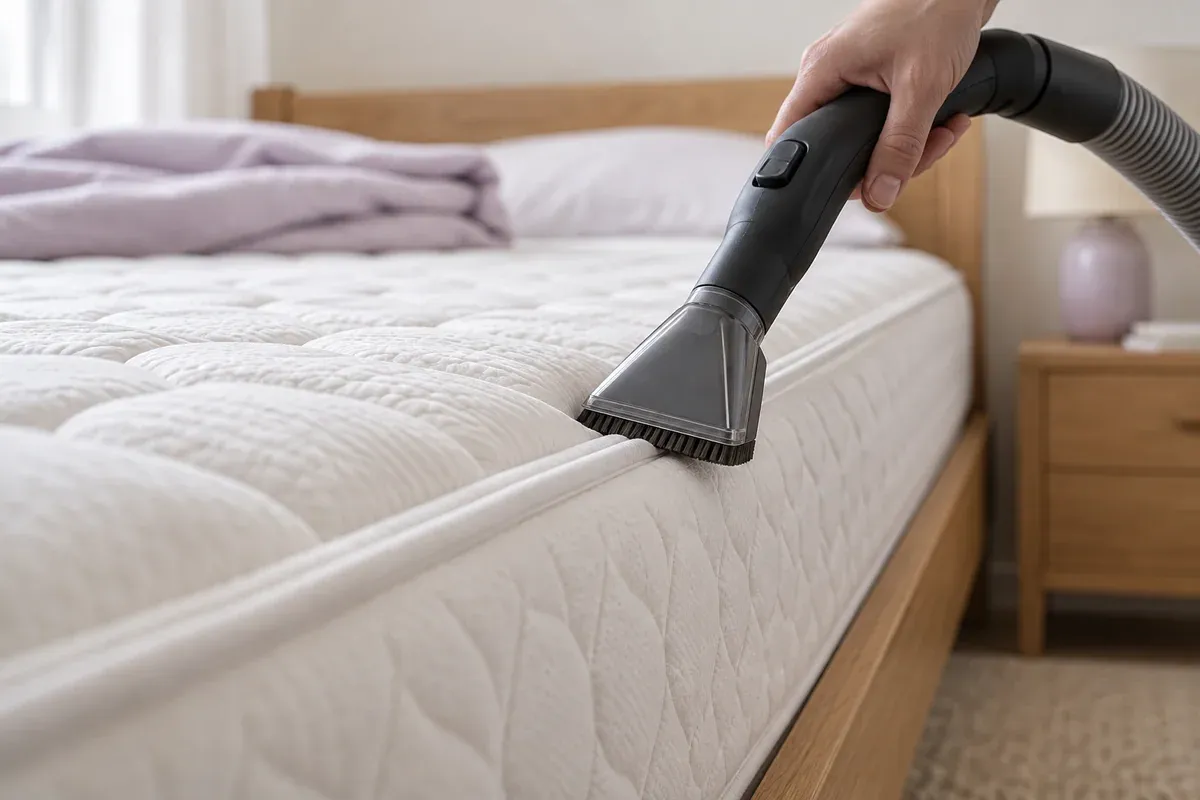
The Better Health Channel says to throw out mouldy items that can't be cleaned, including mattresses, and mould inside a mattress usually can't be cleaned out. Replace it, check the bed base and floor for damp, keep the new one off the floor, and never put sheets on a damp mattress. Routine care is in How to Clean a Mattress and Remove Stains.
Vinegar, bleach or clove oil: what kills mould?
Method | Verdict |
|---|---|
Warm water and detergent | Start here. NSW Health's first choice, and safe on almost every surface. |
White vinegar, 4 parts to 1 part water | Works on light mould on paint. Keep it off grout, stone, chrome and the shower. |
Bleach, 250 mL in 4 litres of water | Works on hard, non-porous surfaces like glazed tile. In porous materials it can whiten the stain while mould stays inside. |
Clove oil | Don't. Mycologist Heike Neumeister-Kemp told the ABC that anything containing oil leaves a residue mould eventually grows on. |
Sugar soap | A wall cleaner, not a mould treatment. It's for washing walls before repainting, once the damp is fixed. |
Bicarb soda | A gentle scrub for grime, not a mould treatment. |
For methylated spirits and the lab evidence on vinegar and tea tree oil, see How to Get Rid of Shower Mould and Mildew.
How to stop mould coming back
- Run the exhaust fan when you shower, cook or do the laundry, and after a shower until the mirror clears, at least 10 minutes. Check it vents outside: CSIRO warns against dumping moist air into the ceiling cavity.
- Open windows when the weather allows, and wipe condensation off windows and shower glass.
- Vent the clothes dryer outside and clean its lint filter after every load.
- In rooms that stay damp, use reverse-cycle air conditioning or a dehumidifier (Better Health Channel), and limit humidifiers and unflued gas heaters (NSW Health). A dehumidifier won't stop a leak.
In bedrooms
Move beds and wardrobes a little away from outside walls, keep mattresses off the floor, and air the room on dry days. Add a weekly sill wipe with the routine builder.
When it's not a DIY job
Call a professional when:
- It's bigger than about 1 m², dense or keeps coming back. The Better Health Channel says to consult a mould remediation professional for large areas of regrowth.
- There's been a flood. The NT Government says to assume a building is contaminated with mould if it was flooded for more than 2 days.
- You can smell it but can't find it, or suspect it in walls or air-conditioning ducts. NSW Health suggests an occupational hygienist, who can test for a fee.
- The building is the problem, such as soft board, rising damp or a leak. Call a plumber or builder.
- Someone feels unwell after mould exposure: see a doctor.
Renting? Tell your landlord or agent in writing as soon as you see mould or damp, with dated photos. In New South Wales, tenants must notify the landlord or agent as soon as possible, and who's responsible depends on the cause (NSW Government). Elsewhere, check with your state's tenancy authority.
Simply Maid doesn't remove mould: it's excluded from our cleans, as are carpet and upholstery restoration. Once the cause is fixed and the area is dry, a deep clean includes the exhaust fan cover.
Frequently asked questions
Is it safe to sleep in a room with mould?
Clean a small patch promptly and dry the room. Anyone in the groups in step 1, or anyone sensitive to mould, should sleep elsewhere until it's done, and a large patch needs assessing first.
Can you get rid of mould permanently?
Not permanently by cleaning alone. CSIRO puts it plainly: a mould problem is always a moisture problem, and removing mould is only temporary until the moisture is fixed. Painting over it doesn't fix it either: Dulux Trade warns that paint alone won't kill mould.
How do you get rid of black mould?
The same way. Black, green or white, the method doesn't change: fix the damp, start with detergent, use the same step-up and the same 1 m² limit.
Last reviewed 6 October 2026 · Update history
Sources & References
- NSW Health, Mould fact sheet: dilutions, carpet, ventilation.
- Better Health Channel, Mould removal at home: fabrics, mattresses, large areas.
- Better Health Channel, Mould and your health: prevention.
- NT Government, Mould growth and your health: who stays away, bleach on metals, floods.
- CHOICE, How to get rid of mould (May 2023): the 1 m² guide, wet carpet.
- CSIRO, Dealing with mouldy houses (2020): condensation, fan venting.
- AWS, Care and maintenance: aluminium windows and doors: frames and tracks.
- R.M.Williams, Everyday boot care: drying leather.
- ABC Everyday, Mould removal methods (October 2022): oils.
- Dulux, How to care for Dulux paint: flat paint.
- Dulux Trade, Tips for dealing with mould: painting over mould.
- Clorox, Does bleach kill mold?: stand time.
- NSW Government, Mould in a rental property: renting.