Blinds collect more dust than almost anything else in a house, because they are a horizontal surface repeated forty times in front of the one window that gets the most airflow. And they are almost never cleaned, because most people aren't sure what they can safely do to them.
That caution is well placed. The most-shared blind-cleaning advice on the internet — take them down and soak them in the bath — is correct for exactly one type of blind and destructive for three others.
So the first question isn't how. It's what are they made of.
Quick Answer: Dust all blinds fortnightly with a microfibre cloth or a vacuum brush attachment, working with the slats tilted one way and then the other. Aluminium venetians can be washed with warm soapy water. Timber venetians, roman blinds, fabric rollers and honeycomb blinds must not be soaked — damp-wipe or vacuum only. Honeycomb blinds should never be wet at all.
Start Here: Dust Before Anything Else

Follow the exact blind’s care instructions, especially for timber, fabric, bonded cells and powered mechanisms. Do not assume a bath soak or steam is suitable.
Read the illustration as text
- Tilt one way
- Dust gently from the top down with a suitable soft tool.
- Reverse the tilt
- Reach the other face without bending the slats.
- Check before wet cleaning
- Identify the material, coating and mechanism first.
A blind that can be dusted may not be washable.
Whatever type you have, the routine job is dust removal, and doing it regularly means the deep clean almost never becomes necessary.
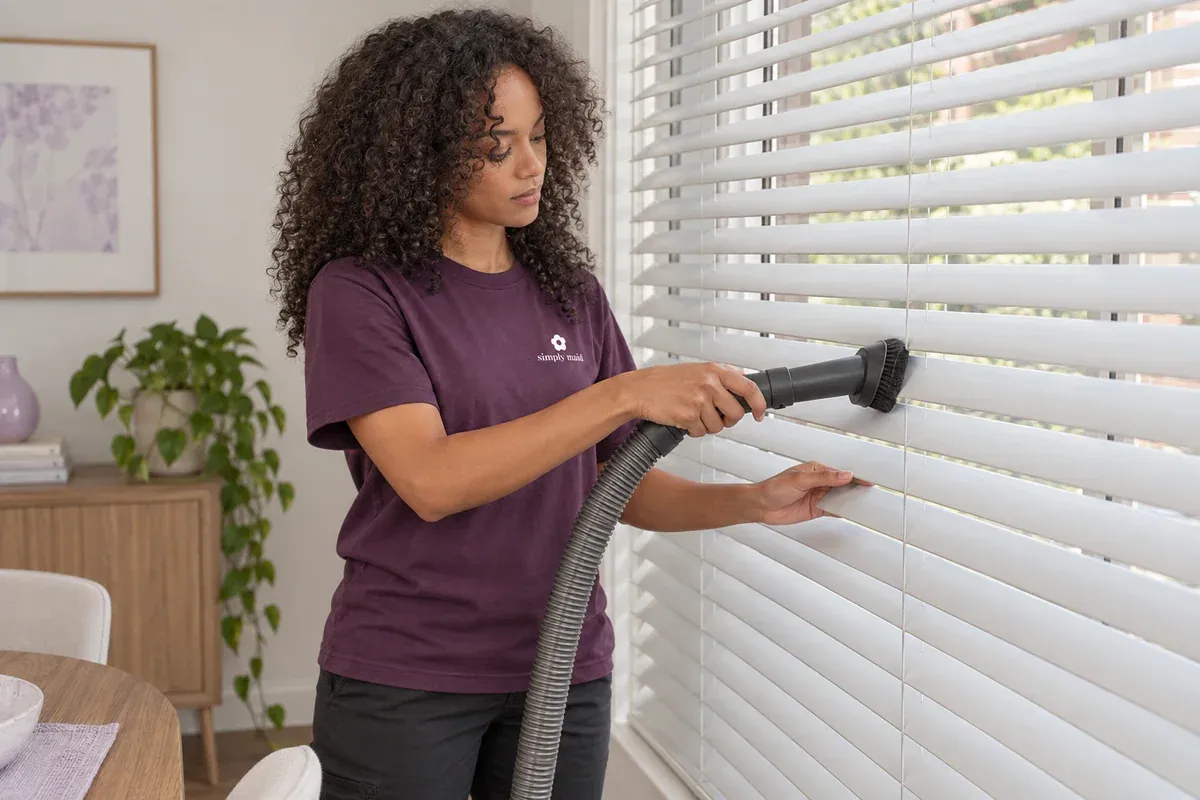
Vacuum brush attachments do this better than dusters, because a duster mostly relocates dust into the room. CHOICE Australia's vacuum guidance notes that a soft brush head is the appropriate tool for delicate surfaces — set the suction to its lowest setting so you're not pulling fabric or slats out of alignment.
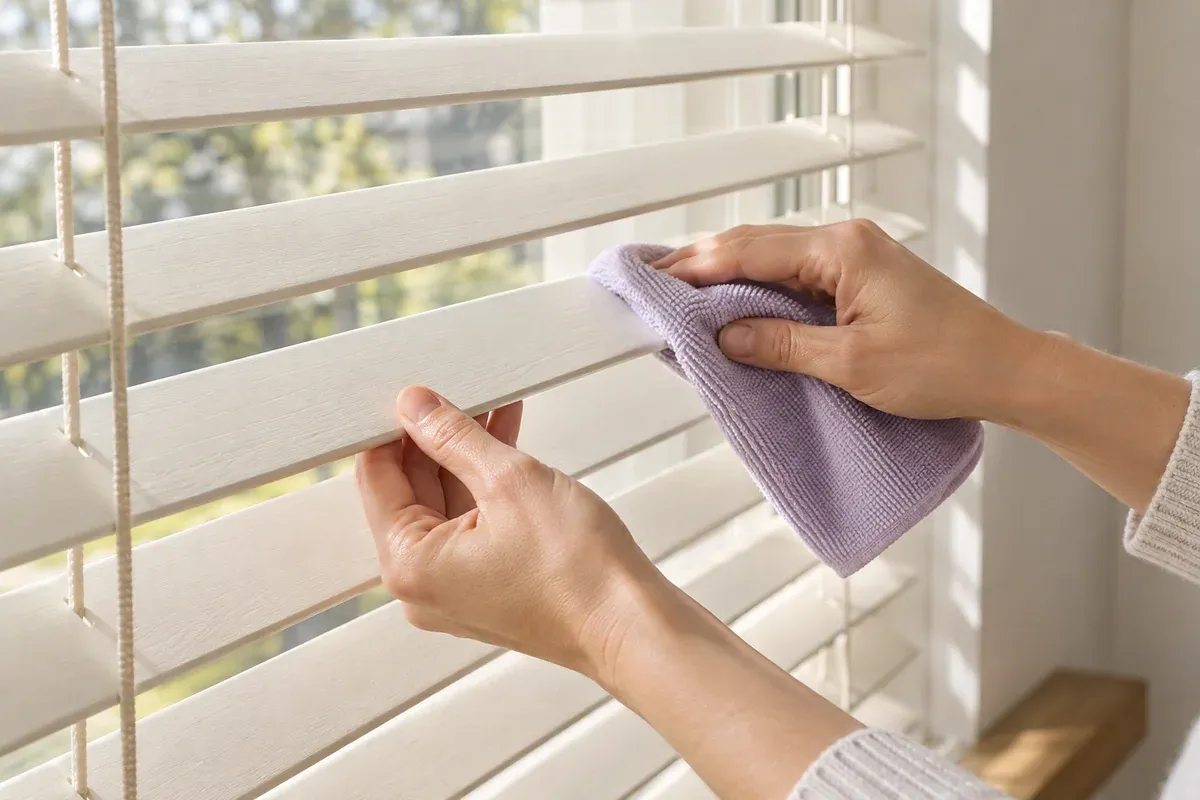
Work top to bottom. Tilt the slats one way and do the whole blind, then tilt them the other way and repeat — otherwise you clean one face and leave the other.
How often? Fortnightly is enough for most homes. Weekly if anyone in the house has asthma or dust allergy: Asthma Australia lists window furnishings among the surfaces where household dust accumulates and recommends regular removal rather than periodic deep cleaning.
Aluminium and Faux Timber Venetians
These are the forgiving ones. The slats are metal or PVC, both waterproof, and they tolerate a proper wash.
In place (recommended for most):
- Close the slats flat so they form a continuous surface.
- Wipe with a microfibre cloth wrung out in warm water with a drop of dish soap, working left to right along each slat.
- Flip the slats and do the other side.
- Dry with a second cloth — aluminium spots if it air-dries, and the cords hold damp.
A trick that halves the time: slide an old cotton sock over a pair of kitchen tongs, dampen it, and clamp each slat so both faces are wiped in one pass.
Taken down (for years of buildup):
Lay the blind flat on a towel in the bath or on a patio, wash with warm soapy water and a soft brush, rinse, and hang it over the shower rail or the clothesline to dry completely before rehanging. Never fold or bend the slats to fit — aluminium creases permanently and the crease shows for the life of the blind.
Timber Venetians and Plantation Shutters
Real timber and water are a bad combination. Soaking swells the slat, lifts the finish and can warp it into a permanent curve. There is no way back from that.
- Dust with a dry microfibre cloth, slat by slat, both faces.
- For marks, use a cloth barely damp — wrung out until it feels almost dry — and dry the slat immediately behind it with a second cloth.
- Once or twice a year, a timber-safe furniture cleaner or a very light application of timber conditioner keeps the finish from drying out.
- Never use vinegar, ammonia-based glass cleaner, or anything abrasive on a timber finish.
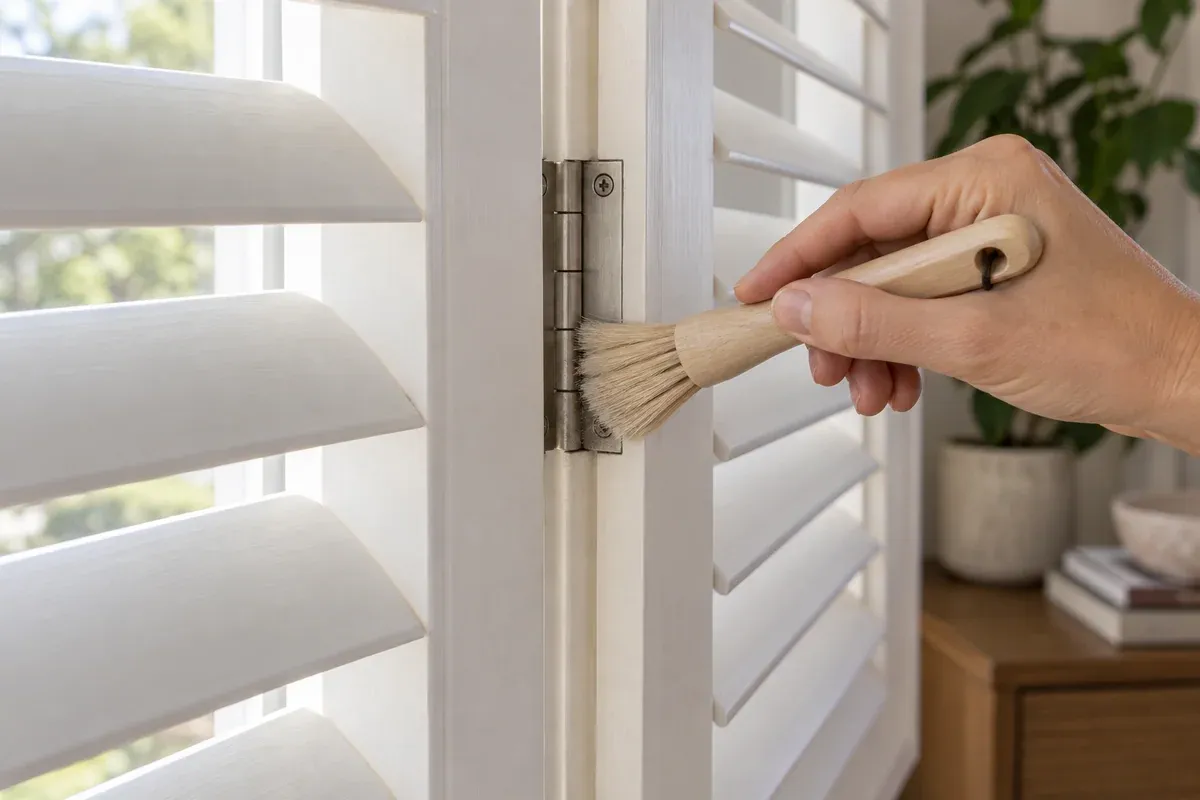
Plantation shutters follow the same rules, with one addition: work around the hinges and the tilt rod with a dry brush rather than a wet cloth, so water doesn't sit in the joinery.
Roller Blinds
The method depends on the fabric.
PVC-coated and blockout rollers (the common bedroom type, smooth and slightly plastic to the touch) can be wiped down. Unroll the blind fully, wipe from the top down with a damp soapy cloth, then wipe again with clean water and leave it fully unrolled until it is bone dry. Rolling up a damp blind is how you get a mildew line across it.
Fabric and sunscreen rollers (woven, you can see light and shape through them) should be vacuumed with the brush attachment and spot-cleaned only. Don't soak them — the fabric is stiffened with a coating that water dissolves, and a soaked blind comes back limp, shrunken, or both.
For a stain on either type, blot, don't rub. Work from the outside of the mark inwards so you don't spread the ring.
Roman and Fabric Blinds
Treat these as upholstery, not as window hardware.
- Vacuum with the upholstery attachment, lowest suction, working across the folds and then inside each fold where dust settles.
- Spot-clean marks with a barely damp cloth and a tiny amount of mild detergent, blotting rather than rubbing, and testing on a hidden section first.
- Leave fully extended to dry so the folds don't set damp.
Some roman blinds have removable covers that can be dry cleaned — check the care label stitched into the back or the manufacturer's tag. If there's no label, don't assume they're washable.
Vertical Blinds
Vertical vanes usually unclip from the runners at the top, which makes them the easiest fabric blind to clean properly.
- PVC vanes: unclip, lay flat, wash in warm soapy water, rinse, dry completely, re-clip. Keep them in order — vanes are often cut to slightly different lengths on an angled window.
- Fabric vanes: these are stiffened the same way sunscreen roller fabric is, so soaking ruins them. Vacuum in place with the brush attachment and spot-clean.
- Weights and chains: wipe the bottom weights and give the linking chain a wipe as well; they collect a surprising amount of grime at floor level.
Honeycomb and Cellular Blinds
The one hard rule in this article: do not get these wet.
The pleated cells that give a honeycomb blind its insulating value are held in shape by a bonded structure that moisture destroys. A wet cell collapses and stays collapsed.
- Vacuum on the lowest suction with the brush attachment held lightly against the face.
- For dust inside the cells, use a hairdryer on the cool setting, or a can of compressed air, directed through the blind from one side.
- For a mark, dab with a barely damp cloth, one small spot only, and let it dry immediately.
Anything beyond that is a job for the manufacturer's recommended cleaner, who will usually use ultrasonic cleaning rather than immersion.
Blinds in Bathrooms and Kitchens
These two rooms need a different rhythm.
Bathroom blinds live in condensation, and mould finds them. Wipe them down monthly rather than fortnightly, run the exhaust fan for twenty minutes after every shower, and treat any spotting early — Better Health Victoria recommends a diluted bleach solution on hard non-porous surfaces, which covers aluminium and PVC but not timber or fabric. Mould in a fabric blind generally means replacement.
Kitchen blinds collect airborne cooking grease, which then holds dust in a sticky film that dry dusting can't shift. Wash aluminium and PVC kitchen blinds with warm soapy water twice a year, and run the rangehood whenever you cook to reduce what lands there in the first place.
Frequently Asked Questions
Q: How do I clean blinds without taking them down?
Close the slats flat, wipe each one with a damp microfibre cloth working left to right, then tilt the slats the other way and repeat. A damp cotton sock over kitchen tongs lets you do both faces of a slat in one pass. For fabric blinds, use a vacuum brush attachment on low suction instead of a cloth.
Q: Can I wash blinds in the bath?
Aluminium and PVC venetians, yes — lay them flat on a towel, wash with warm soapy water, rinse, and dry completely before rehanging. Timber venetians, roman blinds, fabric rollers and honeycomb blinds, no. Water warps timber and destroys the stiffening in fabric blinds.
Q: What is the fastest way to dust venetian blinds?
A vacuum with a soft brush attachment on low suction, top to bottom, slats tilted one way and then the other. It's faster than wiping and it captures the dust rather than pushing it into the room.
Q: How do I clean mouldy blinds?
On aluminium or PVC, a diluted bleach solution, scrubbed and rinsed, with the room ventilated. On timber, wipe with a barely damp cloth and dry it immediately, then address the moisture. On fabric blinds, mould generally means the blind needs replacing — and either way, the underlying cause is ventilation.
Q: How often should blinds be cleaned?
Dust fortnightly, or weekly in a household with asthma or dust allergy. A deeper clean once or twice a year is enough for bedrooms and living areas; kitchens and bathrooms need it more often.
Q: Can I use a steam cleaner on blinds?
On aluminium and PVC venetians, cautiously — keep the nozzle moving and let them dry fully. Not on timber, honeycomb or any fabric blind, where the heat and moisture will do exactly the damage you're trying to avoid.
Related Reading
- How to Use a Vacuum Cleaner
- Top 10 Cleaning Mistakes That Are Wasting Your Time
- Spring Cleaning: Room-by-Room Checklists
- How to Remove Mould
- How to Clean and Buff Hardwood Floors Yourself
Sources & References
- CHOICE Australia, Chris Barnes, Senior Project Officer — How to Buy a Great Vacuum Cleaner. Referenced for the use of soft brush attachments and reduced suction on delicate surfaces.
- Asthma Australia — Dust and Asthma: How to Minimise Dust in the Home. Referenced for dust accumulation on window furnishings and the value of regular removal.
- Australasian Society of Clinical Immunology and Allergy (ASCIA) — Allergen Minimisation. Referenced for household allergen reduction in rooms used by people with asthma or allergy.
- Better Health Victoria, Victorian Government Department of Health — Mould Removal at Home. Referenced for treating mould on hard non-porous surfaces and for when a porous item should be discarded.
Blinds are the thing everyone means to get to. We get to them.
Your trusted partner in a calmer, cleaner home.
For fabric curtains, see our curtain-care guide for label checks, washing limits and questions to ask a specialist.