A dull saucepan, a marked window frame and a chalky outdoor chair can need quite different care. Start by identifying the surface you are cleaning: bare aluminium, an anodised finish, a non-stick coating or paint. A cleaner that suits one may damage another.
Quick answer: Let cookware cool, then wash it in warm water with dishwashing liquid and a soft sponge, rinse and dry. Hand-wash bare aluminium, because dishwasher detergent can dull it. Keep chlorine bleach and oven cleaner off aluminium. Check the finish before you use anything stronger: bare, anodised, non-stick and powder-coated aluminium each follow their own maker's instructions. Window frames and outdoor furniture get mild detergent, a soft sponge and a fresh-water rinse.
Identify the surface before choosing a cleaner

Identify the product before using acids, alkaline cleaners or abrasives. Cleaning cannot replace a missing coating or establish the safety of damaged cookware.
Read the illustration as text
- Bare cookware
- Confirm that the cooking surface is actually uncoated.
- Anodised frames
- Preserve the protective finish and follow its care instructions.
- Painted or powder-coated
- Clean the coating, not an imagined layer of bare metal.
Brightening bare metal is not a method for every finish.
Check the product name, model, label or purchase paperwork. Colour, shine and texture alone do not establish the finish. A pan can have an aluminium body but a different cooking surface; its base, interior and exterior may need different treatment. If you cannot identify the finish, ask the manufacturer before attempting to brighten it.
Surface | What to check |
|---|---|
Bare aluminium cookware or bakeware | Confirm that the surface is uncoated. Start with hand-washing; use a brightening method only if its own care guide permits it. |
Anodised or non-stick cookware | Check the interior and exterior separately. A hard-anodised body does not mean the cooking surface can be polished or scrubbed with an abrasive. |
Anodised window and door frames | Use the finish supplier’s approved neutral detergent and non-abrasive tools. Keep chemical cleaners off adjacent seals and glazing unless approved. |
Painted or powder-coated frames and furniture | Clean the coating. Do not treat it as exposed metal or try to polish through it. Check cushions, timber and other attached materials separately. |
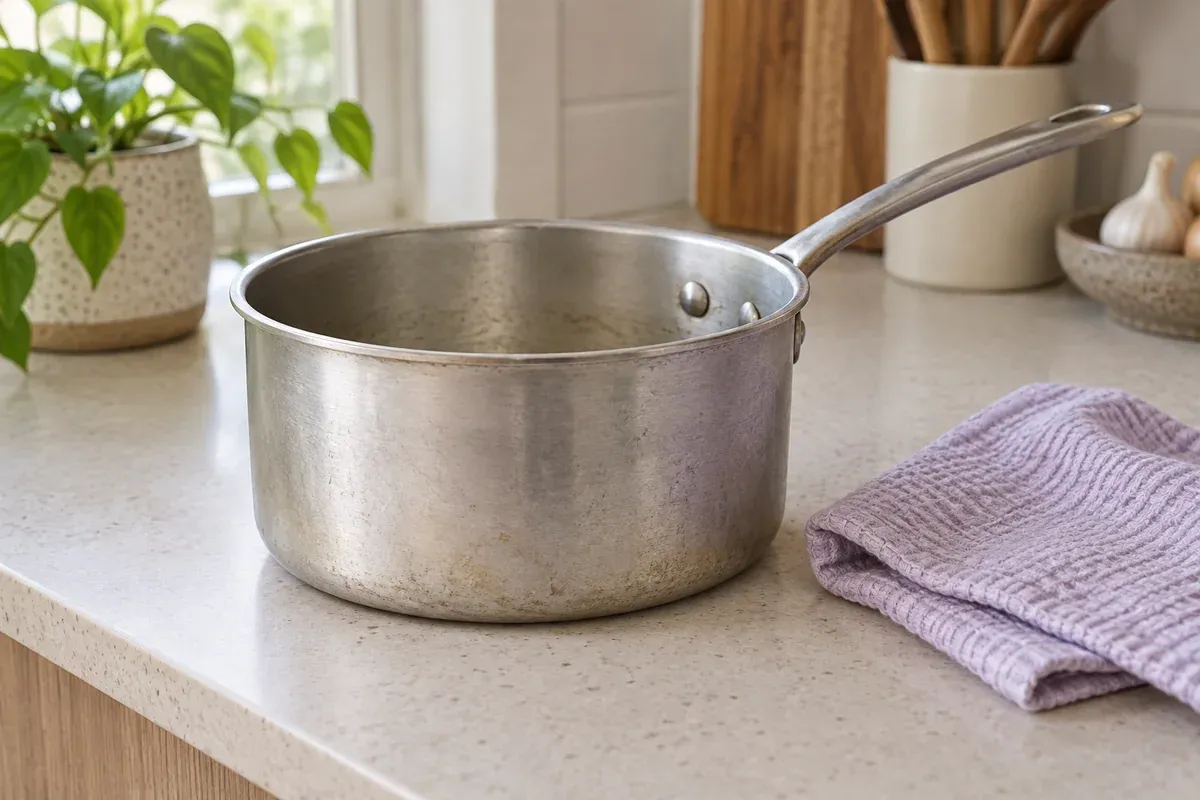
Aluminium naturally forms a thin protective oxide layer. Anodising deliberately builds a protective finish, so removing that layer is not a cleaning goal. Australian Aluminium Finishing’s care guidance explains why strong chemicals, abrasives, heat and extended contact can damage architectural anodised surfaces.
Dishwasher, bleach, vinegar or Bar Keepers Friend: what's safe on aluminium?
Product or method | Verdict | Why |
|---|---|---|
Warm water, dishwashing liquid, soft sponge | Only where the item’s care guide permits it | Follow the named product’s instructions. AAF excludes ordinary dish detergent on its anodised finishes, so this is not a universal wash. |
The dishwasher | Hand-wash bare aluminium | Fisher & Paykel's DishDrawer guide says aluminium "can be dulled by detergent", depending on the detergent and the aluminium. Follow your pan's care instructions; Circulon recommends hand-washing even for its dishwasher-safe ranges |
Chlorine bleach | Don't | Clorox's bleach directions say "Do not use on aluminum" |
Oven cleaner or drain cleaner | Don't | Most are strongly alkaline, far stronger than the dishwasher detergent that already dulls aluminium. Keep them off aluminium pans, trays and frames |
Vinegar or lemon | Only if the item's maker allows it | Some bare-bakeware makers allow them; makers of anodised and coated products may not. There's no safe strength or contact time that suits every finish |
Bar Keepers Friend Cookware Cleanser | Bare aluminium, after a hidden-spot test | Its Australian directions say to test first on anodised aluminium and brushed metal, and to rinse within one minute |
Steel wool, scourers, abrasive powders | Not on anodised, painted, powder-coated or non-stick surfaces | Alspec says abrasive cleaners "can damage aluminium surfaces"; Dulux warns against excessive rubbing on its coatings |
Safety Never mix cleaning products. Victoria’s Better Health Channel: “Do not mix bleach with ammonia, acids or other cleaners – this can release hazardous chlorine or chloramine fumes.” Ventilate the room during and after use. Wear gloves and eye protection. Follow the label's dilution and contact time. In an emergency call 000. For poisoning advice call the Poisons Information Centre on 13 11 26 — 24 hours, anywhere in Australia.
Wash aluminium pots, pans and baking trays
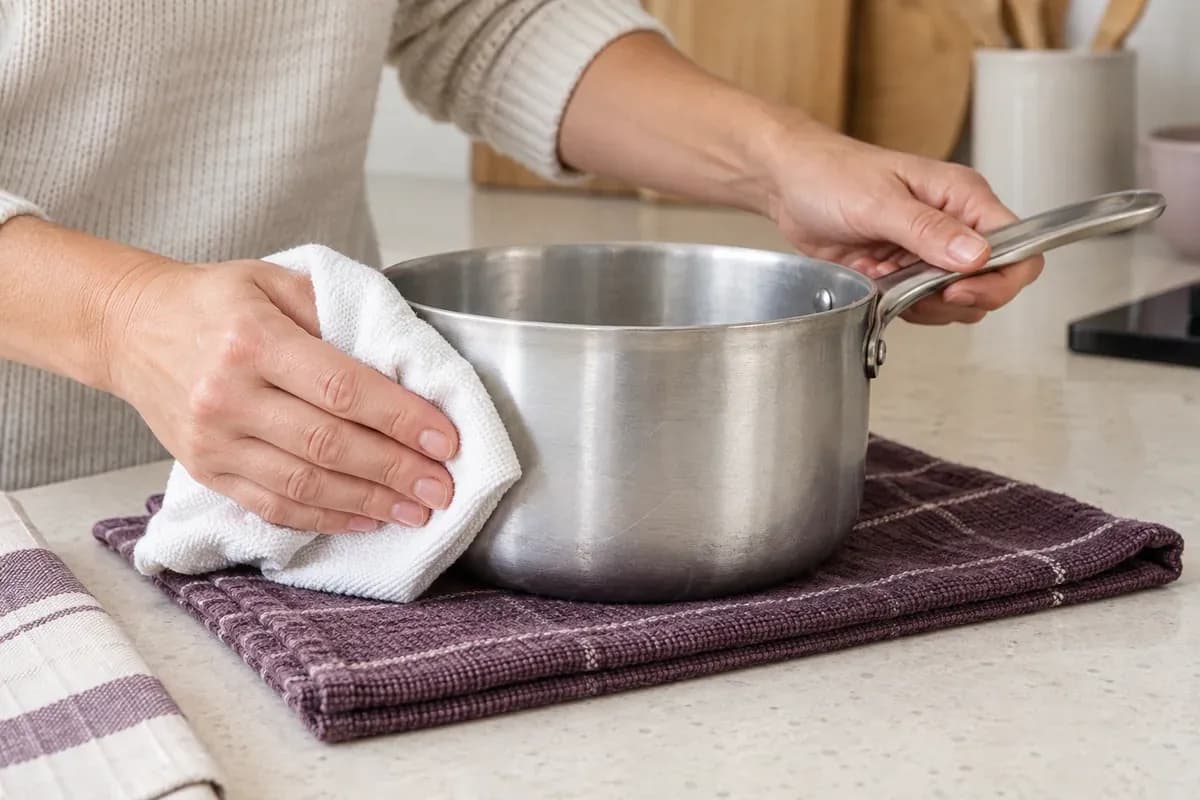
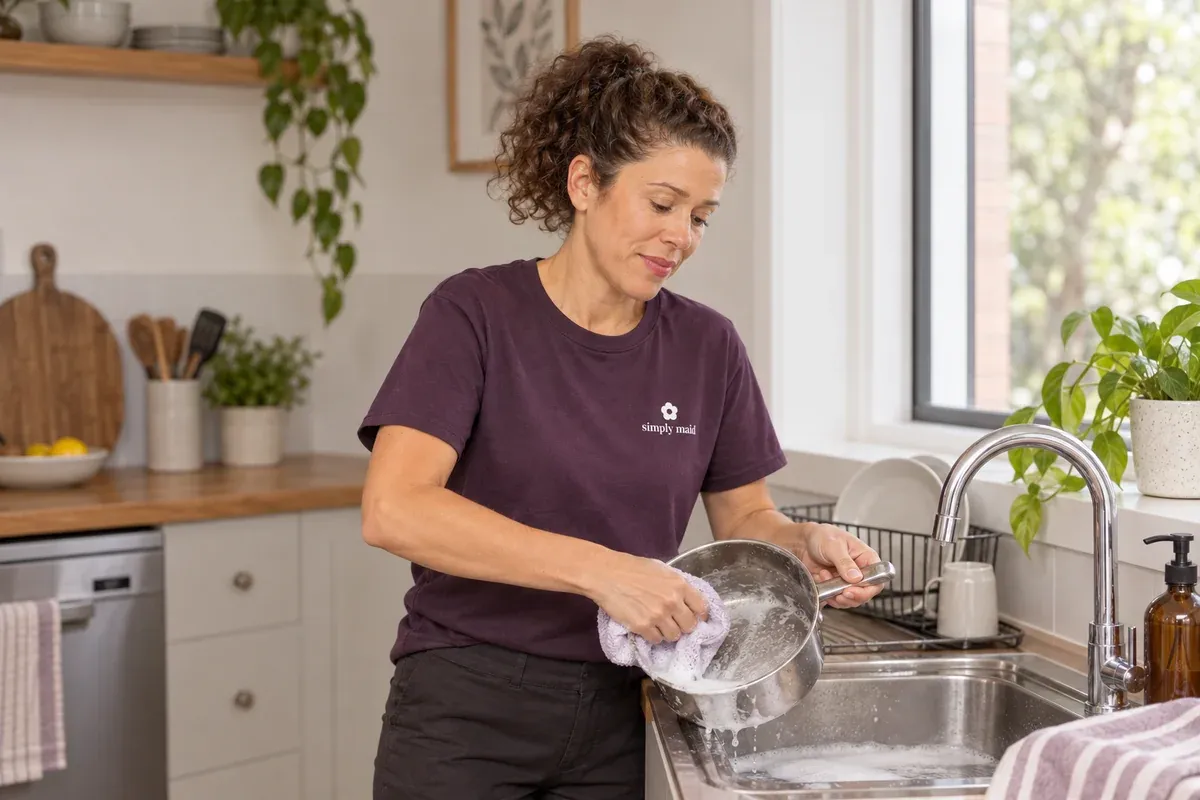
Gather mild washing-up liquid, warm water, a clean soft cloth or sponge approved for the cooking surface, and a drying towel. Check that the cloth is free of grit. Follow any special instructions for handles, lids and removable parts.
- Cool the pan on a heat-resistant surface before washing. Do not pour cold water into a hot pan.
- Remove loose food and excess grease. Wash the interior, rim and exterior gently with the mild detergent solution.
- If food remains stuck, use only the soaking or residue-removal method specified for that pan. Do not substitute oven cleaner, a metal scraper or a strong degreaser.
- Rinse away detergent and loosened food, then dry with a clean towel. Check the surface before returning it to use.
Circulon Australia specifies cooling before cleaning and washing its non-stick cookware thoroughly with mild detergent and hot, not boiling, water. It allows a suitable cleaning brush or mesh pad labelled for non-stick surfaces. Those tool instructions apply to its cookware; they are not permission to use a scourer on every aluminium finish.
Deal with stains without chasing a mirror finish
First distinguish remaining food from a change in colour or finish. More pressure is not automatically helpful. A clean pan does not have to look new, and cleaning cannot replace a missing coating.
For example, Nordic Ware’s uncoated Naturals 5 Piece Bake & Store Set develops a patina with use. Its care instructions recommend hand-washing and describe dishwasher discolouration as cosmetic, without changing that product’s baking properties or safety. This is useful reassurance for the specified bakeware, not an assessment of every blackened, pitted or damaged pan.
The same Nordic Ware guide permits several household brightening ingredients for those uncoated pans. It does not establish a universal vinegar concentration, boiling recipe or contact time. Use your own pan’s instructions; do not transfer a bare-bakeware treatment to anodised, non-stick or painted surfaces.
For a commercial cleaner, match the exact product to the exact surface. Bar Keepers Friend Cookware Cleanser & Polish 340 g directs users to wet the surface, rub gently with a wet cloth or sponge, rinse thoroughly within one minute and dry. Its Australian instructions warn that delicate surfaces, including anodised aluminium and brushed metal, may etch or dull. A hidden-area test does not override a cookware maker’s prohibition. This is a label example, not a tested recommendation for your pan.
Do not sand household cookware or apply car wax to a cooking surface. If there is deep pitting, peeling, persistent residue or uncertainty after a chemical accident, pause use and ask the maker to assess it. Do not assume another acid treatment will repair the damage.
Clean aluminium window and door frames
Work on accessible surfaces from a stable position. Protect nearby materials and keep drainage openings clear. For Alspec window and door frames, the care guide specifies clean water, a mild non-abrasive detergent and a soft clean sponge, followed by a fresh-water rinse. It excludes abrasive cleaners, solvents and etching chemicals, and asks you to check that sliding sills and drainage slots stay free of dust and grit.
For architectural anodised finishes, AAF specifies a pH-neutral detergent, non-abrasive brush or sponge, and thorough immediate rinsing. Work in the shade on a cool surface; its guidance excludes cleaning agents on surfaces warmer than 25 °C. AAF also excludes ordinary laundry and dish detergents, so choose its approved neutral cleaner rather than assuming the kitchen bottle is suitable.
Frame and coating instructions can differ. Follow the requirements for your installed system and ask the supplier if they conflict. Keep a note of the product and cleaning date when a care schedule forms part of the warranty.
Clean powder-coated outdoor furniture
Remove cushions where the design allows and check their separate care labels. Wash the metal frame only with a method approved by its maker. A treatment permitted for outdoor fabric is not automatically suitable for the aluminium underneath.
King Living’s outdoor furniture guidance warns against hard brushes, harsh chemicals and abrasive cleaning on its powder-coated metal frames. It also recommends allowing wet furniture to dry fully before covering it. Check your furniture’s own instructions for washing, rinsing and storage.
For surfaces finished with Dulux powder coatings, the Dulux care brochure, pages 2–3 gives this routine. Confirm it suits the complete item before using it:
- Work while the coated surface is below 25 °C. Gently remove loose deposits with a wet sponge.
- Use a dilute, mild pH-neutral detergent solution in warm water and a soft non-abrasive brush. Avoid excessive rubbing, particularly on metallic finishes.
- Rinse with fresh clean water to remove the residue. Do not add a metal-polishing or sanding step.
A white film is not a diagnosis. It may be deposited dirt or salt, or a weathered coating. Dulux’s explanation of paint chalking distinguishes loose dirt from powder released as paint degrades. If chalkiness, fading, blistering or peeling remains after gentle cleaning, ask the finish supplier about repair. Do not use a vinegar scrub to try to reach shiny metal underneath.
What about an aluminium sink?
Confirm the sink’s material and finish from its specification before treating stains. Do not identify it by its silver colour. Follow its own cleaning instructions and start with the approved mild wash, rinse and drying routine. Avoid the old lemon-and-salt scrub: there is no verified sink-specific basis here for promising that it will not scratch or affect the finish. For a confirmed stainless-steel sink, use the material checks in our stainless-steel cleaning guide.
Set a care schedule that suits the item
Wash cookware after use. For exterior aluminium, use the installed product’s schedule and clean sooner when deposits accumulate. A sheltered frame may collect salt even when rain washes the exposed parts.
As examples, Alspec specifies cleaning its window and door frames at least every three months, or monthly in coastal or industrial areas. Dulux’s powder-coating schedule ranges from 12 months in mild environments to three months in very high-corrosivity settings. These are different product requirements, not a single national twice-yearly rule.
Frequently asked questions
Can aluminium pans go in the dishwasher?
Only where the exact pan’s care instructions allow it. Dishwasher detergent is alkaline, and Fisher & Paykel's DishDrawer guide warns that aluminium "can be dulled by detergent", more or less depending on the detergent and the aluminium. Circulon recommends hand-washing even for its dishwasher-safe ranges. If you're unsure, hand-wash. For the machine itself, see How to Clean a Dishwasher: Filter, Seal and Smell.
Are vinegar, lemon and bicarb safe on aluminium?
There is no universal answer for all finishes. Some bare-bakeware manufacturers permit them; anodised or coated products may not. Neither a “natural” label nor a short contact time establishes compatibility. Use an expressly approved method, with its stated concentration and rinsing instructions. Do not mix cleaning products.
Can I restore the original shine?
Sometimes a manufacturer-approved cleaner can improve the appearance of bare metal. It cannot replace an anodised layer or repair paint. Stop if gentle cleaning leaves a rough, peeling or persistently powdery surface, and seek advice for that finish.
Does rinsing make a chemically damaged pan safe to use?
Rinsing removes cleaner residue; it does not establish whether a damaged pan remains suitable for cooking. FSANZ’s aluminium fact sheet concerns dietary exposure and does not validate a cleaning recipe or assess an individual pan. Follow the cleaner’s rinsing instructions and ask the cookware manufacturer about visible damage or accidental use of an incompatible product.
Related reading
Sources and editorial note
- Alspec, Care and maintenance (PDF, 2024): window and door frames, cleaning intervals, abrasives.
- Australian Aluminium Finishing, Care and maintenance: anodised finishes, neutral detergent, 25 °C limit.
- Circulon Australia, Cleaning your cookware: cooling, mild detergent, dishwasher advice.
- Bar Keepers Friend Australia, Cookware Cleanser & Polish: test first on anodised aluminium; rinse within one minute.
- Fisher & Paykel, DishDrawer DD60D2 user guide (PDF): aluminium dulled by dishwasher detergent.
- Clorox, How to dilute bleach for cleaning: not for use on aluminium.
- Dulux Powders, maintenance brochure (PDF, Nov 2025): powder-coat cleaning routine and schedule.
- King Living, Outdoor furniture care: powder-coated frames.
- Nordic Ware, Naturals Bake & Store Set: uncoated bakeware care and patina.
- Food Standards Australia New Zealand, Aluminium and food: dietary exposure only.
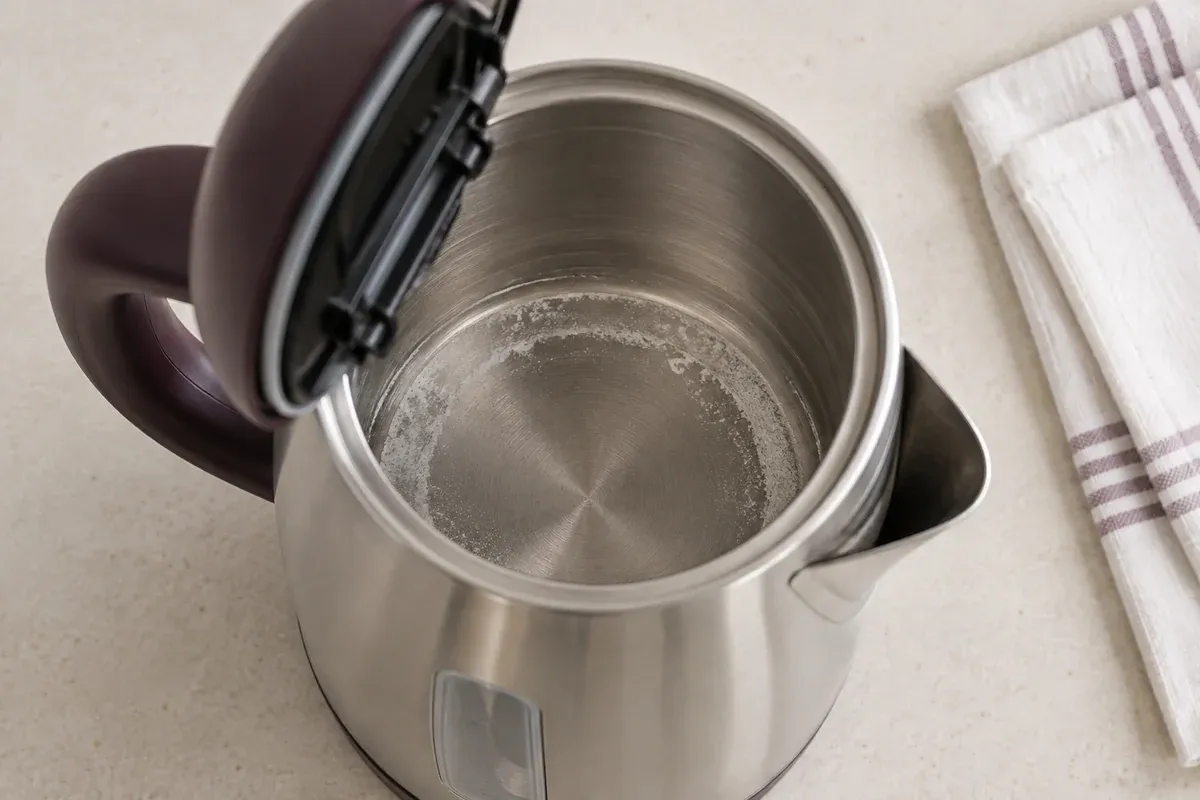
Manufacturer instructions linked above were checked for the named products and finishes. Product examples are illustrative; Simply Maid has not tested these treatments or verified the material of your item. The images illustrate gentle cleaning and ordinary wear, rather than measured before-and-after results.
Editorial correction, 20 September 2026: Replaced the universal acid-boiling and lemon-and-salt recipes with finish-specific care. Removed unsupported contact-time limits, scratch-free and restoration guarantees, the fixed outdoor schedule and the claim that dietary-exposure research proves cleaned cookware safe. Clarified dishwasher exceptions, coating damage and the limits of brightening.
Change log
Who wrote and edited this article, when its sources were checked, and what changed.
View all historyHide earlier history
Earlier entries record what was published at the time. Later corrections take precedence.
- Edited by
- Huy Hoang
Editorial correction, 20 September 2026: Replaced the universal acid-boiling and lemon-and-salt recipes with finish-specific care. Removed unsupported contact-time limits, scratch-free and restoration guarantees, the fixed outdoor schedule and the claim that dietary-exposure research proves cleaned cookware safe. Clarified dishwasher exceptions, coating damage and the limits of brightening.