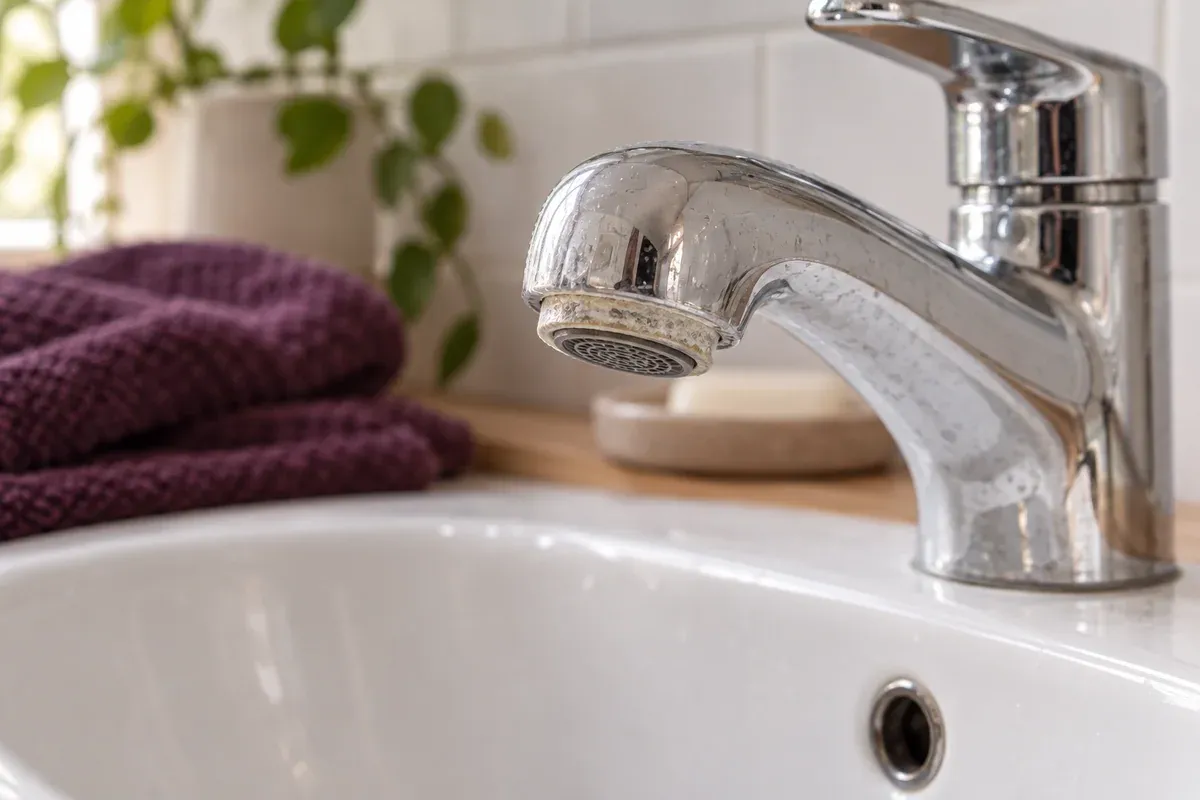
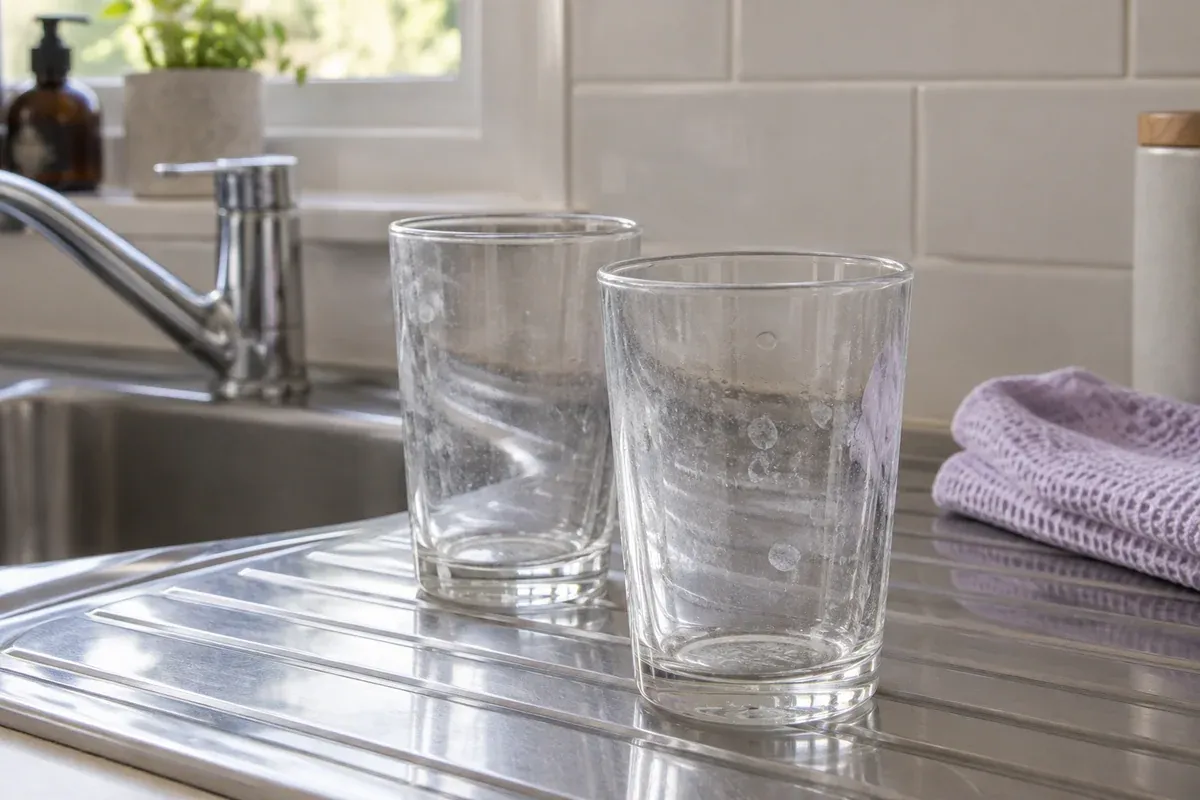
Hard water carries more dissolved calcium and magnesium, picked up as it moves through rock and soil, and it leaves chalky limescale on taps, screens and kettles as it dries.
Quick answer: Most Australian capitals don't have hard water: averages run from under 40 mg/L in Melbourne and Darwin to about 90–134 mg/L in Adelaide and 118 in Brisbane, below the 200 mg/L level where scaling gets worse, though a few Perth suburbs go higher. Limescale on taps isn't dangerous. A mild acid lifts it from glass and glazed tile; keep acid off grout, stone and chrome.
How hard is your water?
Hardness is measured in milligrams per litre as calcium carbonate. The Australian Drinking Water Guidelines call under 60 mg/L soft, 60–200 mg/L good quality and 200–500 mg/L increasingly prone to scaling; the 200 mg/L guideline protects hot water systems from scale and isn't a health limit. Figures vary by suburb; check your own supply zone.
Supply | Hardness (mg/L) | Period | Look up yours |
|---|---|---|---|
Greater Sydney | About 57 (soft) | Not stated | Enter your address on Sydney Water's water analysis page |
Melbourne | 9–38 across Melbourne Water's reservoirs | Updated October 2024 | Melbourne Water, or ask your retailer |
Brisbane | Average 118, range 60–160 | 12 months to August 2026 | Seqwater's monthly water quality report for your area |
Perth | 29–228 by locality; only Two Rocks averaged over 200 | 2024–25 | Water Corporation's tables, or call 13 13 75 |
Metropolitan Adelaide | 90–134 across SA Water's metropolitan systems (central suburbs 95) | September 2024 to August 2025 | |
Canberra | Average 43 | 2021–22 | |
Darwin | 35 (soft) | 2023–24 | |
Hobart | Ask TasWater | — | TasWater's water quality portal (search by suburb), or call 13 6992 |
Groundwater is the most likely to be hard: in WA, country towns supplied mainly by groundwater are more likely to have hard water than Perth, and in the Northern Territory, Alice Springs averaged 240 mg/L in 2023–24.
Signs of hard water
- Chalky white crust on taps, shower heads and around the plughole
- Scale inside the kettle, and white spots on glasses after the dishwasher (etched glass looks similar but won't wipe off)
- Soap and shampoo that take more to lather
- Soap scum that keeps coming back on shower screens and tiles
- Stiff, scratchy laundry
- Water spots on glass and dark tiles that dry white
Soft water can cause one or two of these; several together point to hard water.
Is limescale dangerous? Hard water and your health
No. Limescale is the same calcium and magnesium that's in your drinking water, and WHO sets no health limit for hardness because it is "not of health concern at levels found in drinking-water". Town tap water is fine to drink; have a private bore or rainwater tank tested. The real risk is to your fittings, and from using the wrong cleaner on them.
On skin, the evidence is an association, not proof. A UK Biobank study of about 306,000 adults found people in areas above 200 mg/L were slightly more likely to report eczema, and a 2021 review found higher odds of eczema in children in harder-water areas, rated very low certainty. In two trials, water softeners made no significant difference to existing eczema. If you or your children have ongoing dry skin or flare-ups, talk to your GP before paying for water treatment.
Does hard water damage your hair?
The evidence is thin. Two small lab studies soaked cut hair strands in hard water on alternate days: one (hair from 15 volunteers, water about 212 mg/L, 30 days) found no change in strength or elasticity, and the other (hair from 76 men in Pakistan, very hard water, 3 months) found the strands somewhat weaker. Neither tested hair on people's heads, and most Australian capitals' water is much softer than either test.
How to remove limescale, surface by surface

No universal acid recipe is recommended. Follow the material and manufacturer-specific methods in the full guide.
Read the illustration as text
- Identify the finish
- A tap, glass panel, tile and grout can need different care.
- Find its care instructions
- Check the fitting or appliance maker before choosing a descaler.
- Keep treatment controlled
- Use only a compatible method and protect adjacent materials.
A cleaner that removes scale can also harm a finish.
Limescale dissolves in a mild acid such as white vinegar, citric acid or a limescale remover, but the same acid damages chrome plating, cement grout and stone. Start with warm soapy water; use acid only where the table allows it.
Safety Never mix cleaning products. Victoria’s Better Health Channel: “Do not mix bleach with ammonia, acids or other cleaners – this can release hazardous chlorine or chloramine fumes.” Ventilate the room during and after use. Wear gloves and eye protection. Follow the label's dilution and contact time. In an emergency call 000. For poisoning advice call the Poisons Information Centre on 13 11 26 — 24 hours, anywhere in Australia.
Surface | What to use | Keep off / watch out |
|---|---|---|
Shower glass: How to Clean Shower Glass (and Keep Soap Scum Off It) | Equal parts white vinegar and warm water with a squirt of dishwashing liquid, wiped on with a cloth. Leave 10–15 minutes, wipe with a non-scratch pad, then squeegee dry | Keep it off chrome fittings, aluminium or coloured frames and the grout below. Coated glass: soapy water only, unless the coating's maker says otherwise |
Glazed ceramic or porcelain tile | Warm soapy water first. For scale that stays, dab the same vinegar mix onto the tile face with a cloth, then rinse with plain water | Keep it out of the grout lines |
Stainless steel sink | Lay a cloth soaked in 1 part white vinegar to 3 parts hot water over heavy scale until it loosens, then rinse and dry | Bare steel only, not coated appliance doors |
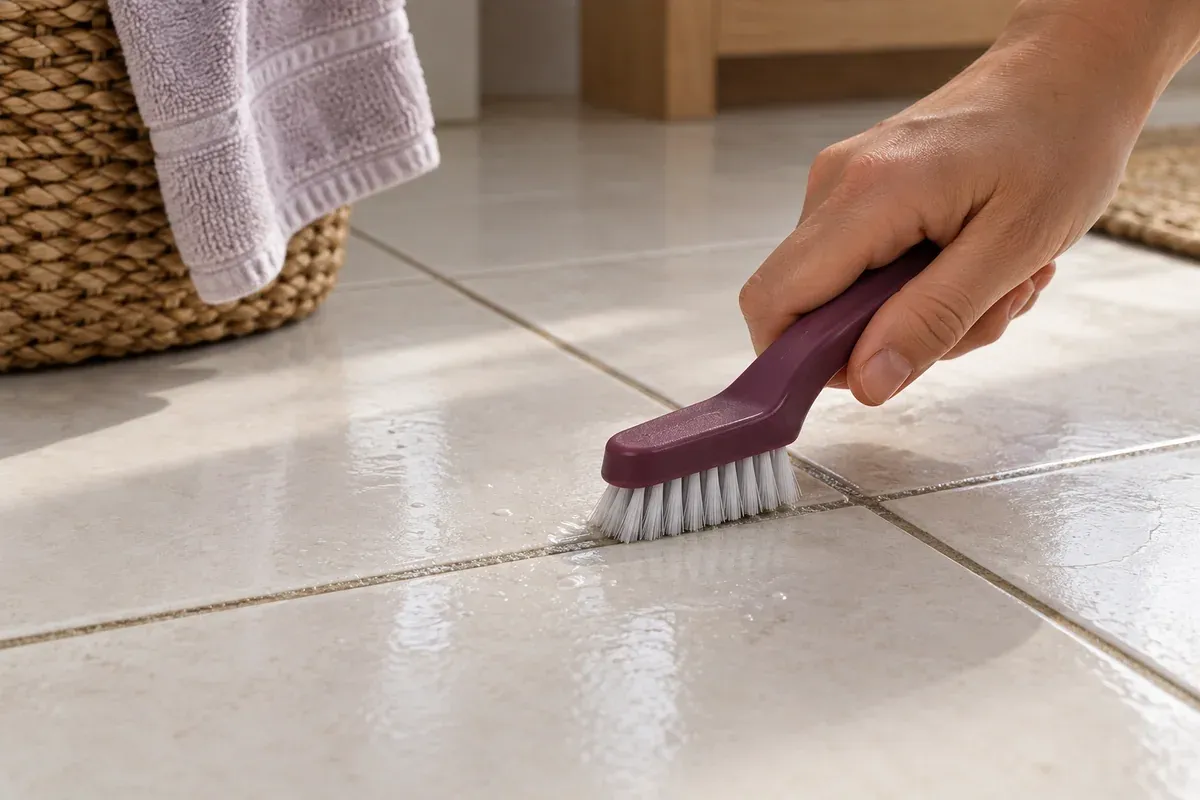
Cement grout: How to Clean Grout — and Keep It Looking Clean | Bicarb soda paste and a stiff, narrow brush; oxygen bleach for stains, tested on a hidden joint | No vinegar, lemon or acidic cleaners: acid corrodes cement grout |
Not sure what the surface is | Warm soapy water only, then dry | No acid until you know the material |
Natural stone (marble, limestone, travertine, granite) | A pH-neutral stone cleaner or mild dishwashing liquid, then rinse and dry | No vinegar, lemon or any acid |
Chrome and plated taps: How to Clean Chrome Taps (and Why Not Vinegar) | Warm soapy water on a soft cotton cloth, rinse, dry. For scale that stays: a citric-acid bathroom descaler on a cloth for 5–10 minutes at most, then rinse and dry (not on Phoenix or GROHE taps) | No vinegar, lemon juice, bicarb paste, cream cleansers or scourers |
Shower head: How to Clean a Shower Head: Is Vinegar Safe? | Rub the nozzles, then soak the face in a citric-acid descaler for 5–10 minutes | Vinegar only on brands that accept it (HANSA does, hansgrohe bans it); never pins or bleach |
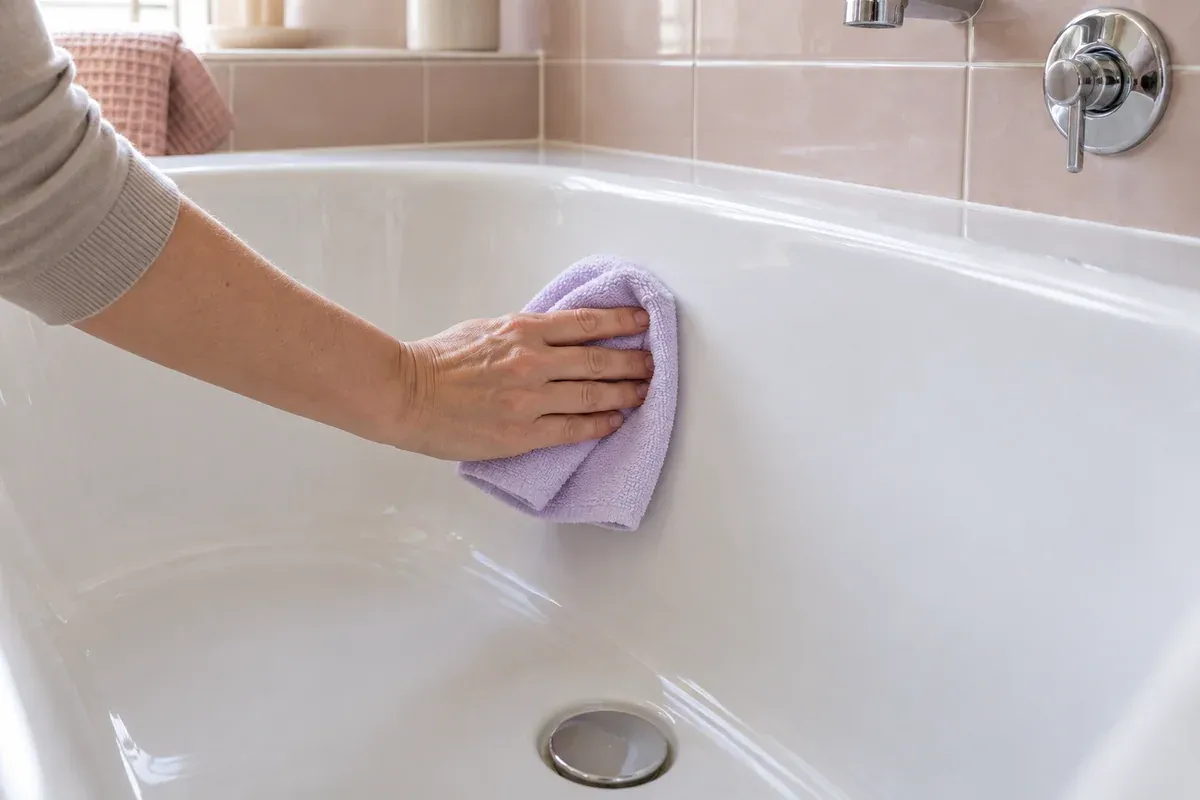
Enamel: lukewarm 1:1 water and white vinegar, wiped on for a few minutes, then rinse and dry. Acrylic: dry it after each use; detergent and a soak for marks | No powders, pastes or scourers on acrylic; no concentrated vinegar on enamel |
On shower glass, expect about five minutes of wiping plus the 10–15-minute wait. Done looks like glass that stays clear once it's dry. If it stays cloudy even when wet, the glass is etched and no cleaner will fix it. Use vinegar and bicarb separately, with a rinse between: mixed, they cancel each other out.
Kettles, dishwashers and washing machines
Appliance makers disagree about vinegar, so use the descale method in your manual (search the brand, model number and "descale").
- Kettle: follow the manual's method. How to Descale a Kettle (and Clean the Rest of It) shows how to tell when it's due.
- Dishwasher: if it has a built-in softener (a salt compartment), keep it topped up with dishwasher salt and set it to your water's hardness from the table above. Run the maintenance programme the manual names and skip the cup of vinegar: Miele says vinegar can lead to rust and leaks. More in How to Clean a Dishwasher: Filter, Seal and Smell.
- Washing machine: run its own drum-clean cycle with the product the manual names, and leave vinegar out (Bosch warns it damages rubber parts). For stiff laundry, use the hard-water dose on your detergent if it gives one. See How to Clean a Washing Machine (Front Loader and Top Loader).
Keep limescale from coming back
- Squeegee the shower screen after every shower. It takes about 30 seconds.
- Wipe taps dry after use, so minerals can't settle as the water evaporates.
- Switch from bar soap to liquid soap or body wash, one of Water Corporation's tips for hard-water areas.
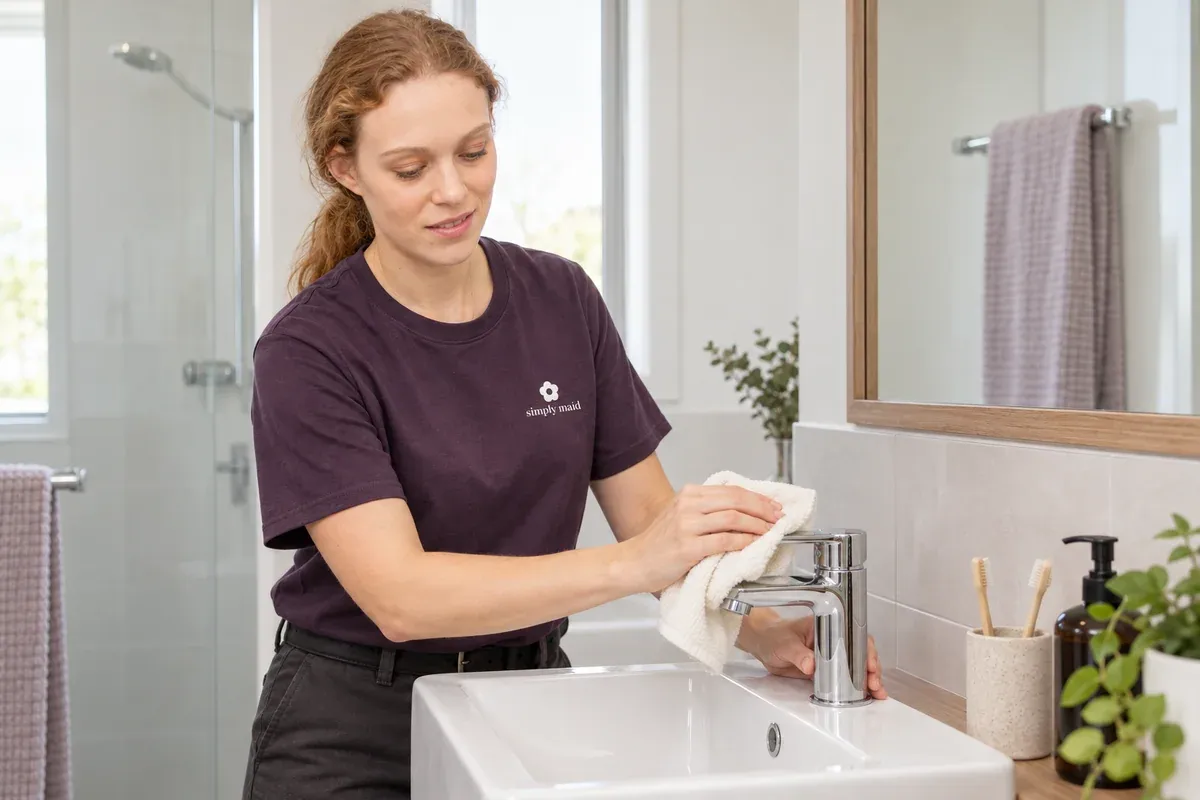
If you'd rather hand it over, a regular standard clean includes wiping down taps, screens and sinks, so scale has less time to build. We don't install softeners, descale appliances or test water.
When hard water needs a bigger fix
Scale insulates heating elements, and water above 200 mg/L can scale up hot water pipes and fittings and block a hot water system's safety relief valve (NHMRC). A water softener is worth pricing if your supply averages above about 200 mg/L, you're on bore water, or scale keeps building up in your hot water system. Softeners swap calcium and magnesium for sodium, which means less scale in pipes and water heaters, better washing results and probably a longer life for the heater (WHO). Because softening adds sodium, ask the installer about leaving the kitchen tap unsoftened.
Renters usually can't fit a softener, and a shower filter isn't one: the National Eczema Association notes that most water filters remove impurities such as chlorine but not minerals. If you buy one for scale, check the pack says it reduces calcium or hardness.
Frequently Asked Questions
Q: Is Sydney water hard?
No. Sydney Water puts Greater Sydney's drinking water at about 57 mg/L, which counts as soft. Scale still forms where water evaporates, so dry taps and screens.
Q: Is Perth water hard?
Mostly not. Water Corporation says the Perth metropolitan supply meets the national guidelines for hardness; its 2024–25 locality averages run from 29 to 228 mg/L, and only Two Rocks averaged over 200.
Q: Which Australian city has the hardest water?
There's no simple ranking, because hardness varies by suburb. The only capital-city locality in the table averaging over 200 mg/L is Two Rocks in Perth; Brisbane (average 118) and Adelaide (90–134) sit in the middle of the good-quality band. The hardest town water is in inland groundwater towns such as Alice Springs.
Q: Can I test my water hardness at home?
For town water, your utility's figures are more reliable than a home kit. On a bore, pool-and-spa test strips with a total-hardness pad give a rough reading, but have the water tested properly before you buy a softener.
Last reviewed 23 September 2026 · Update history
Sources & References
- WHO, Chemical fact sheet: Hardness: hardness is not a health concern in drinking water.
- WHO, Hardness in drinking-water, background document (PDF): softeners, sodium, soap residues and water heaters.
- NHMRC, Australian Drinking Water Guidelines: Hardness: hardness bands, lather and the 200 mg/L scale guideline.
- Seqwater, Brisbane water quality report: updated monthly; the figures above are from August 2026.
- Lopez et al. 2022, British Journal of Dermatology: hard water and eczema in UK Biobank adults.
- Jabbar-Lopez et al. 2021, Clinical & Experimental Allergy: review of eczema studies and softener trials.
- Srinivasan et al. 2013, International Journal of Trichology: hard water and hair strength; the second hair study is Luqman et al. 2016, Journal of the Pakistan Medical Association.
- National Eczema Association (US), Does hard water impact eczema?: filters versus softeners.
- Water Corporation, Hard water: groundwater supplies and the liquid-soap tip.
- ASSDA, Cleaning your indoor stainless steel: the vinegar soak for limescale.
- Power and Water, Water hardness and home appliances fact sheet: Darwin's water is soft.
- Miele Australia (dishwasher care), Bosch Home Australia (washing machines and vinegar), ARDEX Technical Bulletin TB186 (cement grout needs a neutral or alkaline cleaner) and Kaldewei (enamel baths): the appliance, grout and bath rows.
Related Reading
Perth's figures in the table run from 29 to 228 mg/L by suburb, and Adelaide's metropolitan water runs at 90–134 mg/L. If you are in Perth or in Adelaide, you can see what a regular visit covers on our house cleaning in Perth and house cleaning in Adelaide pages.
Change log
Who wrote and edited this article, when its sources were checked, and what changed.
Current version
What changed
23 September 2026: Hard Water in Australia: added Darwin and Hobart, updated Adelaide to SA Water's 2024–25 results, and added a signs checklist, what the research says about hair, and answers for Sydney and Perth. The bath and shower-head rows now match those guides.
Correction, 23 September 2026: the utilities' own figures don't support ranking Perth and Adelaide as among Australia's hardest water, so that ranking is replaced with those figures. A bicarb-and-lemon bath paste and one-size vinegar recipes (including vinegar in dishwashers and washing machines) are replaced with methods matched to each surface, and claims that softeners improve water pressure and shower filters help skin are removed.