Quick Answer: Wash glazed wall and floor tiles with warm water and a pH-neutral tile cleaner, scrub with a soft brush or microfibre cloth, then rinse with clean water and squeegee or dry. Keep vinegar, lemon and acidic bathroom sprays off the grout, which they corrode, and off natural stone, which they etch. Matt anti-slip floor tiles need a stiffer brush; grout lines and mould have their own guides.
Which tile do you have?
Tile | How to recognise it | What changes |
|---|---|---|
Glazed ceramic or porcelain (most bathroom walls) | Shiny or satin face; water sits on top | The method below |
Matt or textured anti-slip porcelain (many shower and bathroom floors) | Slightly rough underfoot; dirt sits in the texture | Scrub with a stiffer nylon brush or pad; rinse well |
Polished porcelain | Mirror-like shine, often large format | Soft cloth only; never anything gritty |
Natural stone (marble, limestone, travertine) | Veining or small pits, usually sealed | A neutral stone cleaner only: acids etch it |
Not sure? Treat the tile as stone and the grout as cement until you know otherwise: start with warm water and a pH-neutral cleaner, which suits every tile here.
What you'll need
- A bucket of warm water and a pH-neutral tile cleaner (the label says neutral, or pH 7), or a few drops of dishwashing liquid.
- A soft brush or microfibre cloth for walls; a nylon scrubbing brush for textured floor tiles.
- A squeegee, a second bucket of clean rinse water and dry cloths.
- Rubber gloves.
How to clean bathroom and shower tiles, step by step
Step 1: Clear and rinse
Take bottles, mats and caddies out of the shower. Run warm water over the walls, or wipe them with a damp cloth, to loosen soap film before you scrub.
Step 2: Wash with a neutral cleaner, top to bottom
Mix the cleaner as its label says and work from the top of the wall down, so dirty water never runs over tiles you have finished. Beaumont Tiles recommends “warm water and a ph neutral cleaner” for routine cleaning. Johnson Tiles' care guide suggests leaving a neutral cleaner on for 5 to 15 minutes on heavier soiling before scrubbing.
Step 3: Scrub textured floor tiles harder
Dirt settles into the texture of anti-slip porcelain, so a cloth glides over it. Use a nylon scrubbing brush, and for heavy build-up a nylon scrubbing pad, which Chemforce suggests for anti-slip porcelain. Never use a steel wool pad or gritty powder on glazed or polished tiles: Beaumont Tiles says “Never use polishes or gritty, abrasive cleaners on tiles.”
Step 4: Rinse with clean water
Rinse every tile with clean water to lift the cleaning solution, then change the water when it turns cloudy. Beaumont Tiles advises rinsing to remove cleaning solution residue, and Johnson Tiles' care guide ends every clean with a thorough rinse.
Step 5: Squeegee or dry
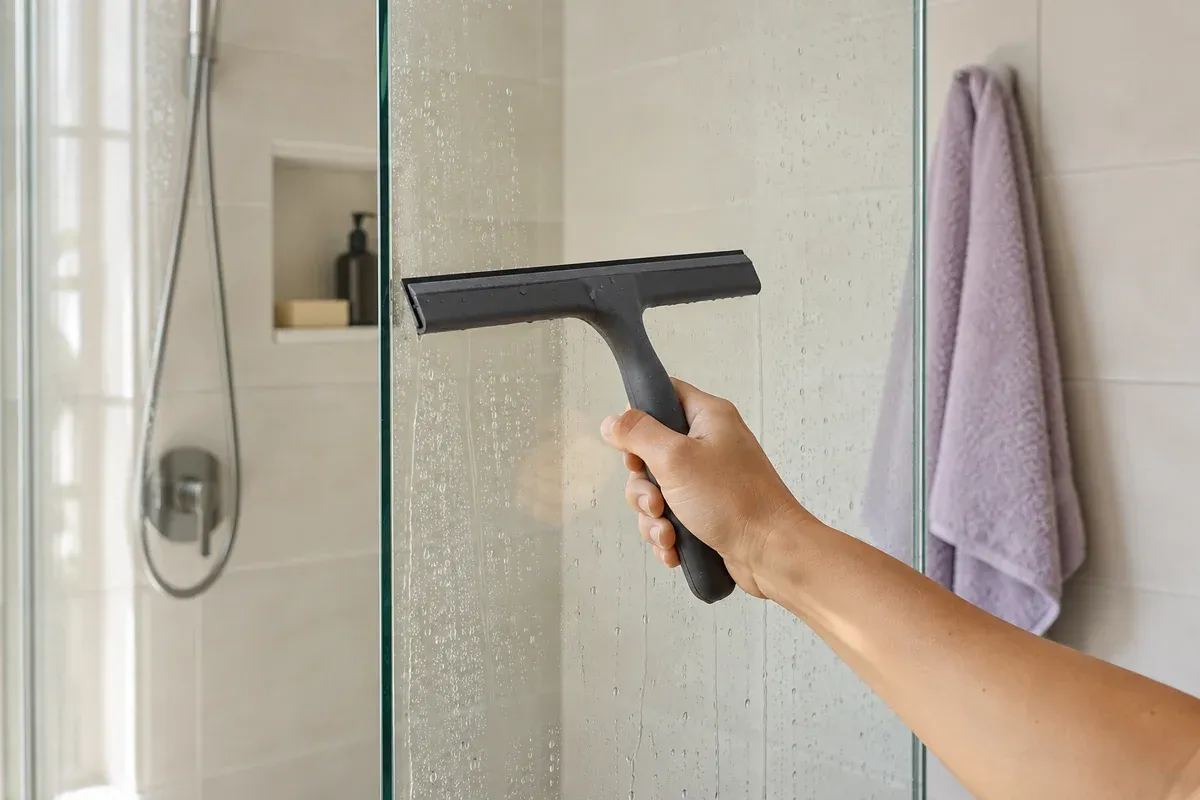
Squeegee the walls and dry the floor with a clean cloth or mop. Water left to dry leaves marks, and a dry floor is safer to walk on.
Soap scum and water marks on wall tiles
Soap scum is the dull film that builds up where water splashes. On glazed tiles, a bathroom spray made for glass and glazed tiles shifts it; many contain lactic or citric acid, so spray the tile face only, wipe it off within the label's stand time, and keep it off the grout lines and any stone. ARDEX, the Australian grout maker, says cleaners for its cement grouts “must be neutral or alkaline, as cementitious products such as these will corrode in contact with acid”, and names vinegar and citric acid among the causes of grout damage.
On natural stone, use a non-acidic soap scum remover, as the Natural Stone Institute advises, and squeegee after every shower.
Grout, silicone and mould
- Grey or stained grout lines: see How to Clean Grout — and Keep It Looking Clean, which covers the bicarb paste, oxygen bleach and sealing.
- Black spots on grout or silicone: see How to Get Rid of Shower Mould and Mildew. Mould inside silicone won't clean out; the bead needs replacing.
- White crust that comes back: see Hard Water in Australia: Signs and Limescale.
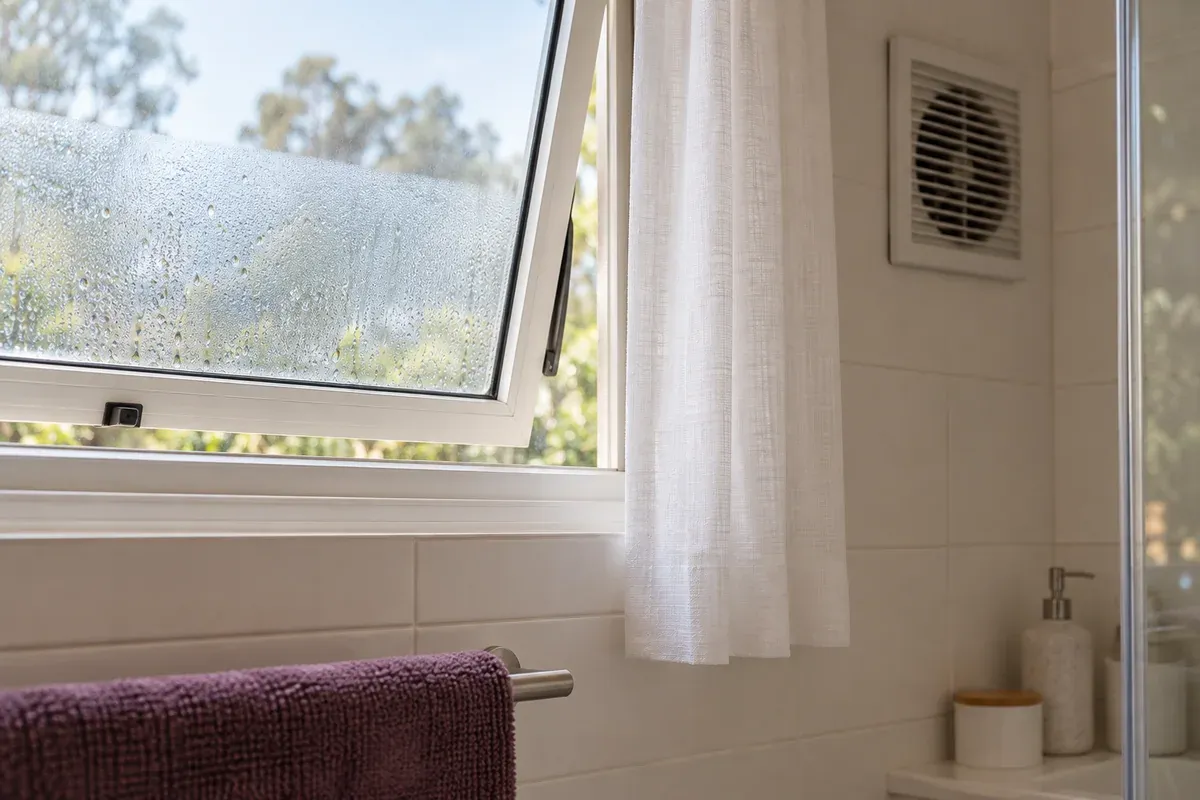
Safety Never mix cleaning products. Victoria’s Better Health Channel: “Do not mix bleach with ammonia, acids or other cleaners – this can release hazardous chlorine or chloramine fumes.” Ventilate the room during and after use. Wear gloves and eye protection. Follow the label's dilution and contact time. In an emergency call 000. For poisoning advice call the Poisons Information Centre on 13 11 26 — 24 hours, anywhere in Australia.
Should you use vinegar or a steam mop on tiles?
- Vinegar: not on bathroom tiles with cement grout, and never on stone. Some tile retailers recommend a vinegar mix, but ARDEX's bulletin on grout discolouration names vinegar as a cause of chemical attack on cement grout, and the Natural Stone Institute warns that vinegar and other acids “may dull or etch” calcareous stone such as marble, limestone and travertine.
- Steam: makers disagree. ARDEX lists steam as an acceptable method for its grouts and Beaumont Tiles says steam mops are a popular choice for polished porcelain, while Johnson Tiles (UK) says steam cleaners should not be used on its ceramic tiles. Check your tile and grout maker's care sheet first, and keep steam off silicone and sealed stone.
How often to clean bathroom tiles
There is no official interval. In our bathroom guides, wall tiles and the shower base are part of the weekly clean, the floor is mopped weekly, and the grout gets a deeper scrub each month. Squeegeeing the shower after use cuts the weekly work, and a bathroom that several people share, or that stays damp, needs it more often. See the bathroom cleaning checklist.
When it's not a cleaning job
- Grout that crumbles, cracks or washes out needs regrouting.
- Tiles that sound hollow when tapped, crack or move: talk to a tiler.
- Stone that stays dull where a cleaner touched it may be etched rather than dirty: ask a stone restoration specialist.
If you'd rather hand it over, our deep clean includes removing hard-water scale from the shower screen and tiles. Mould removal isn't part of our cleans.
Frequently Asked Questions
Q: What is the best thing to clean shower tiles with?
Warm water and a pH-neutral tile cleaner, a soft brush and a squeegee. It is safe on glazed tiles, cement grout and sealed stone, so you don't need to know your tile before you start.
Q: Can I use vinegar to clean bathroom floor tiles?
Not if the grout is cement or the tile is natural stone, which covers most Australian bathrooms. Acid corrodes cement grout and etches marble, limestone and travertine.
Q: How can I make my bathroom tiles look new again?
Clean them, rinse off every trace of cleaner, and deal with the grout separately, because dark grout makes clean tiles look dirty. If the glaze itself is dull or scratched, cleaning won't bring back the shine.
Sources & References
- ARDEX Australia, Technical Bulletin TB186.004, Cleaning and maintenance of ARDEX grouts (30 July 2024): neutral or alkaline cleaners only; steam acceptable for its grouts.
- ARDEX Australia, Technical Bulletin TB130.014, Sources of grout discolouration (23 July 2024): vinegar, citric and phosphoric acid attack cement grout.
- Beaumont Tiles, Cleaning and maintenance: warm water and a pH-neutral cleaner; no polishes or abrasives; rinse off residue; acids and grout.
- Johnson Tiles (UK), Cleaning and maintenance: neutral detergent left 5 to 15 minutes, then a thorough rinse; no abrasives on glazed or polished tiles; no steam on its ceramic tiles.
- Chemforce, How to maintain anti-slip porcelain tiles: a nylon scrubbing pad for anti-slip porcelain.
- Natural Stone Institute, Stone care: neutral cleaners, non-acidic soap scum remover, acids etch calcareous stone.
- Better Health Channel (Victoria), Mould removal at home: never mix bleach with acids or ammonia.