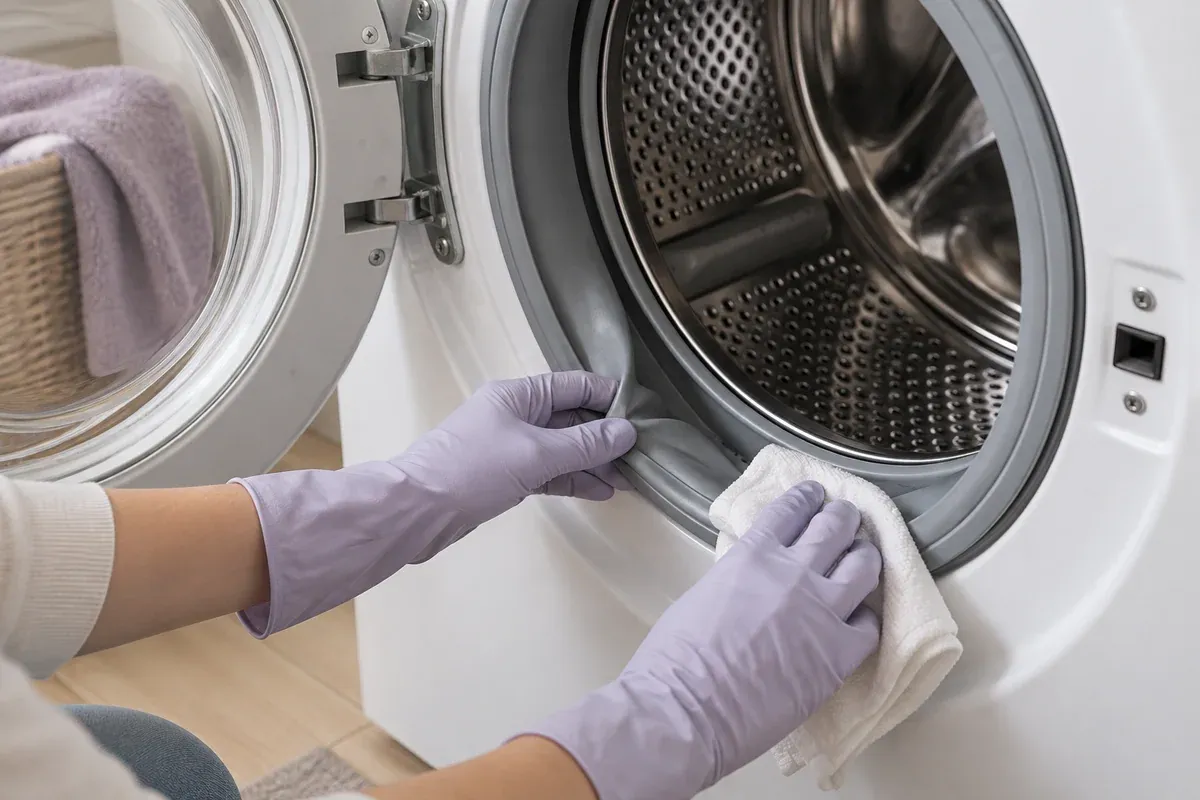
Most pillows can be washed; the filling decides how. Fibre and feather go in the machine, while memory foam and latex stay dry and only their covers get washed.
Quick answer: Polyester, feather and down pillows can go in the washing machine: two at a time on a gentle 40°C cycle, with about a third of your usual liquid detergent and an extra rinse. Dry them flat in the shade until the core is dry, usually at least a day. Memory foam and latex stay dry: wash the cover and spot-clean the insert. Hands-on time is about 15 minutes.
Can you wash pillows in the washing machine?
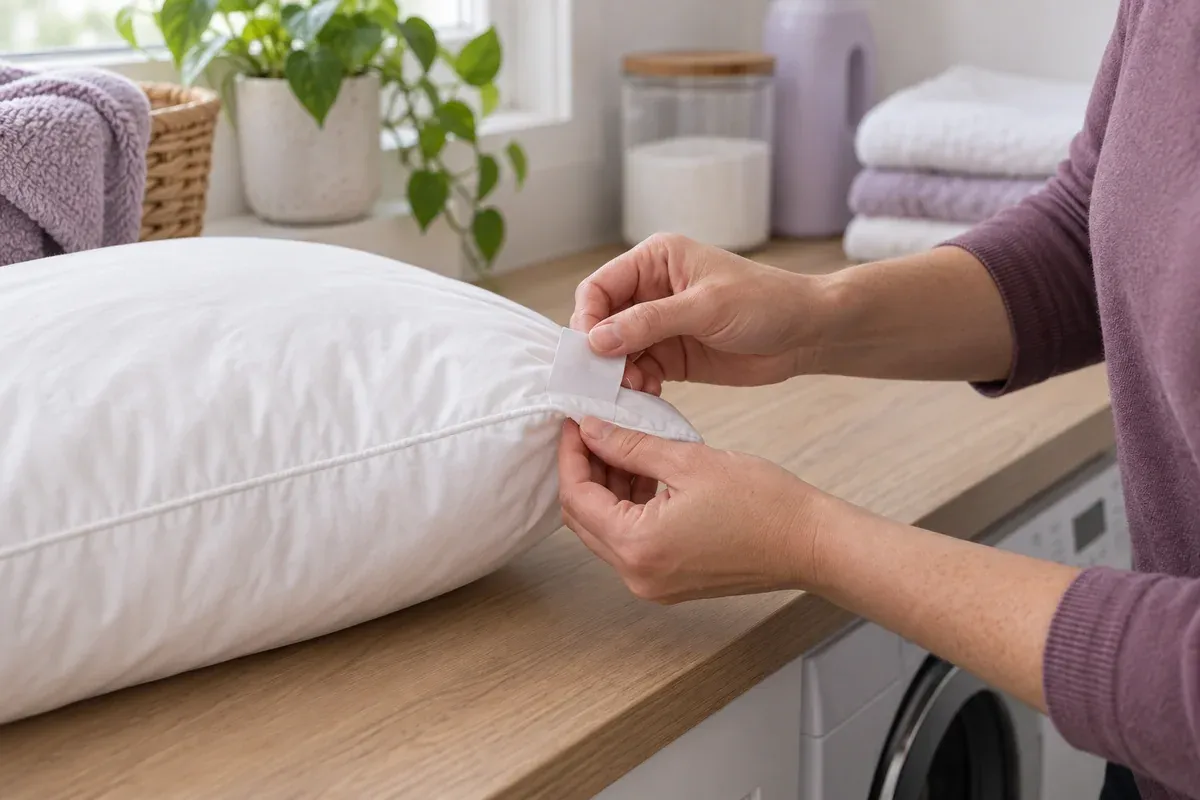
The tag sewn into the pillow's seam, not the pillowcase, names the filling and shows the wash and dry symbols. Australia's mandatory care-labelling standard means new textiles must carry these instructions, and the number in the wash-tub symbol is the hottest wash the pillow can take, not a target.
Filling | Machine wash? | How |
|---|---|---|
Polyester or microfibre | Yes | Gentle cycle at 40°C (Tontine's range is 30–40°C; IKEA rates its fibre pillows to 60°C), two at a time, extra rinse |
Feather or down | Usually | Gentle cycle with a third of the usual detergent. IKEA washes its down pillows at 60°C and tumble dries them straight away at up to 80°C. A few down pillows are dry-clean only |
Wool | Sometimes | Delicate cycle at 30°C (IKEA); many wool pillows are spot-clean only |
Memory foam | No | Wash the cover only. IKEA's KLUBBSPORRE foam pillow says "Do not wash"; TEMPUR says the same of its foam, except its EasyClean and PureClean pillows |
Latex | No | Wash the cover only. Dunlopillo: "Do not wash or dry clean latex. Do not tumble dry or expose it to sunlight for long periods." |
No tag, filling unknown | Check the maker first | Do not identify the filling or choose a wash cycle by squeezing it. Find the model’s care instructions or ask the manufacturer before washing the insert. Foam can also be supplied as loose pieces, and washability depends on the product. |
How to wash pillows in the machine, step by step
- Check the seams and balance the load. Stitch up any split first, or you'll be picking filling out of the drum. Wash two pillows together, or one with two bath towels, so the drum stays balanced. In a top loader, wash pillows only if its manual allows them, standing them upright either side of the agitator.
- Use a third of your usual detergent. Filling holds suds, so a small dose of mild liquid detergent is enough (IKEA's figure for down). Skip fabric softener, which coats the fibres.
- Pick a gentle cycle at 40°C. Go up to 60°C only if the tag allows it, for example to control dust mites. Hot or Cold Water: Which Actually Cleans Better? explains what the extra heat does.
- Add an extra rinse, then a normal spin. Squeeze a corner after the cycle: if it foams, rinse again.
How to dry a pillow all the way through

Foam, latex, fibre and feather products do not share one wash or dry cycle. Some inserts cannot be washed, including some loose-fill foam pillows.
Read the illustration as text
- Cover instructions
- Wash and dry the removable cover as its label permits.
- Insert instructions
- Check the filling’s own method before adding water.
- Dry through the core
- Do not remake or store a pillow while its inner filling is damp.
Unknown filling means checking with the manufacturer.
A pillow can feel dry on the outside and still be damp in the core, which is where mould starts. Tontine calls it "absolutely vital" that a pillow is "100% dry to its core" before it goes back on the bed.
- Air drying (the default): lay the pillow flat on a rack in the shade or a breezy spot, and turn and plump it every couple of hours. Allow at least a full day for a thick fibre pillow, longer in humid weather. Tontine recommends this for its pillows and advises against the dryer.
- Tumble drying: only when the tag shows the tumble-dry symbol. IKEA dries its fibre and down pillows at up to 80°C with a dryer ball or tennis ball to break up clumps.
- Done looks like: squeeze the middle once the pillow has cooled. If it feels cool or heavy, or smells musty, keep drying. Don't put it back on the bed or in a cupboard until it's dry right through.
How to clean a memory-foam or latex pillow
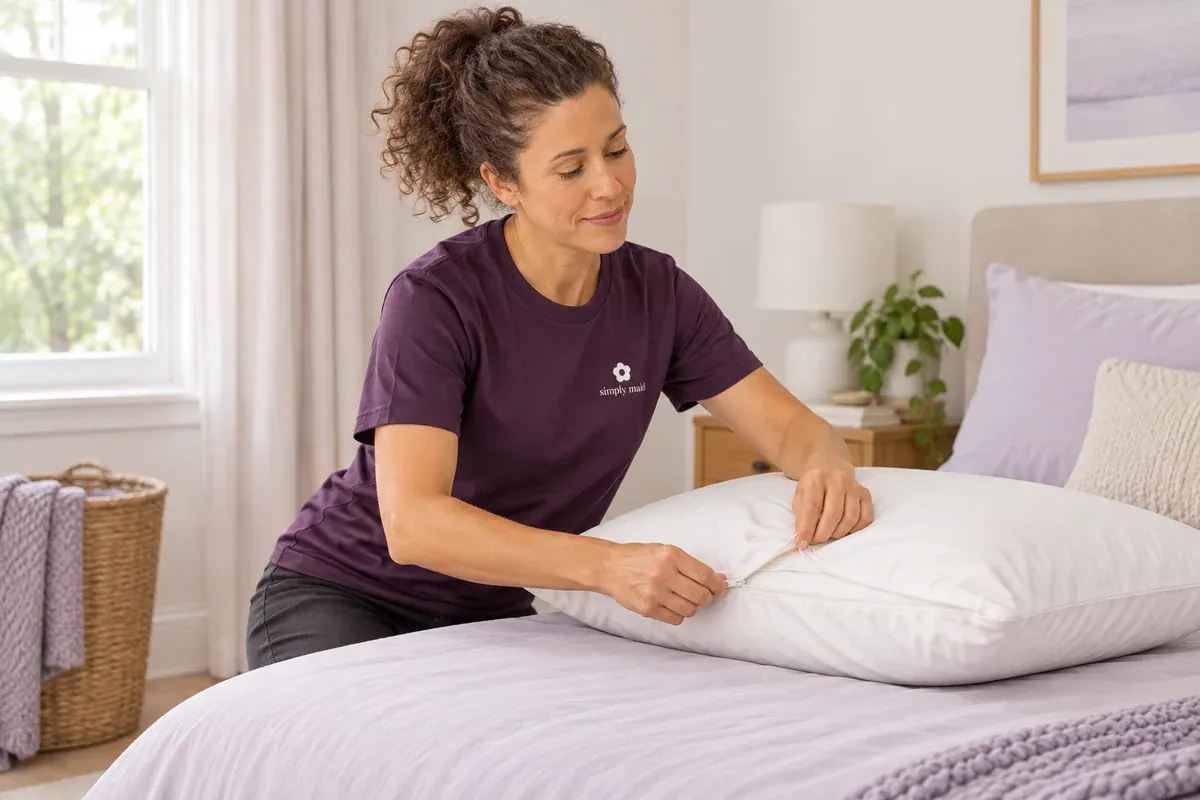
- Unzip the cover and wash it on its own at the temperature on its tag. Dunlopillo covers go inside out on a warm, gentle cycle.
- Stand the insert somewhere airy, out of direct sun, while the cover washes.
- For a spill or mark, blot the insert with a cloth wrung out in water with a drop of mild detergent, then blot with a clean damp cloth. Don't soak, wring, iron or steam foam.
- Let the patch dry completely before the cover goes back on.
How to clean yellow pillows
Yellowing comes from sweat, saliva and oils from skin and hair soaking into the filling (Tontine; CHOICE). On a washable pillow, rub a little liquid detergent into the marks, leave it for a few minutes, then wash as above. A pillow that comes out clean but still yellow is stained, not dirty, and a protector under the pillowcase stops it happening again. On foam, spot-clean only; the mark may not lift fully.
Bleach soaks, tennis balls and sunshine: which pillow hacks work
Safety Never mix cleaning products. Victoria’s Better Health Channel: “Do not mix bleach with ammonia, acids or other cleaners – this can release hazardous chlorine or chloramine fumes.” Ventilate the room during and after use. Wear gloves and eye protection. Follow the label's dilution and contact time. In an emergency call 000. For poisoning advice call the Poisons Information Centre on 13 11 26 — 24 hours, anywhere in Australia.
Hack | Verdict |
|---|---|
Whitening soak: bleach, dishwasher powder, borax and washing powder in a hot bath | Skip it. It combines chlorine bleach with three other products, which the safety note rules out. Pre-treat with liquid detergent and wash instead. |
Tennis balls or dryer balls | Works, for pillows that can be tumble dried: IKEA suggests one to stop down and fibre clumping. |
Drying in the sun | Works for drying and freshness; Sheridan recommends airing pillows in the sun. Don't count on it to kill germs, and keep latex out of long, direct sun. |
Washing a foam pillow in the bath | Don't. IKEA and TEMPUR say their foam isn't washed at all; clean the cover and spot-clean the insert. |
Freezing a pillow to kill dust mites | Half works. ASCIA's freezer tip, for soft toys that can't be washed, kills mites but leaves their allergen behind; a hot wash also washes the allergen away (National Asthma Council). |
Homemade eucalyptus-oil wash | Skip the recipe. ASCIA's cold-wash option is a commercial washing product made for the job (see below). |
Dust mites: what washing does and doesn't do
For a dust-mite allergy, ASCIA advises washing sheets, pillowcases and other bedding weekly in water hotter than 60°C, and covering pillows with dust-mite-resistant covers washed at least every two months. If a pillow's tag stops at 60°C or below, the options are a commercial washing product containing eucalyptus or tea tree oil, or tumbling the dry pillow on hot for at least 10 minutes where the tag allows the dryer. ASCIA is clear that house dust mites "cannot be completely removed"; the aim is fewer of them. For the rest of the bedroom, see How to Get Rid of Dust — and Stop It Coming Straight Back.
How often to wash pillows, and when to replace them
- Pillowcases: weekly with the sheets; Sheridan suggests every one to two weeks.
- A pillow protector: zipped on under the pillowcase, it keeps sweat and oil out of the filling. Wash it whenever you wash the pillow, and dust-mite covers at least every two months.
- The pillow: every 4–6 months (Sheridan; CHOICE). Tontine suggests monthly if you sleep hot, sleep face-down or go to bed with wet hair.
- Replace it: Tontine gives about two years for polyester, three to five for wool and feather, and around five for memory foam and latex. Replace sooner if it stays lumpy, smells after washing or no longer supports your neck.
The mattress under it needs the same care: see How to Clean a Mattress and Remove Stains.
Washing pillows isn't part of a Simply Maid clean, so plan it as a laundry-day job at home.
Frequently asked questions
Is it worth washing pillows?
Yes. A pillow soaks up sweat and oils even under a pillowcase, and for anyone with a dust-mite allergy, "The greatest exposure to dust mites is from your bed" (National Asthma Council).
Can I wash a pillow by hand?
Fibre and feather pillows, yes: press them in a bath of warm water with a little mild detergent, then rinse in clear water until no suds come out (CHOICE). Press rather than wring. A hand-washed pillow holds more water, so allow extra drying time. Foam and latex: cover only.
The cover is dry but the pillow feels damp inside. What now?
Keep drying it: another round in the dryer if the tag allows it, or another day flat in an airy spot. Never store a pillow that isn't fully dry.
Last reviewed 24 September 2026 · Update history
Sources and references
- Tontine, How to wash pillows properly: 30–40°C gentle cycle, two pillows, shaded flat drying, how often.
- Tontine, When to replace your pillow: lifespans by filling.
- IKEA, How to wash and care for duvets and pillows: temperatures, detergent dose and tumble drying by filling.
- IKEA Australia, KLUBBSPORRE ergonomic pillow: foam insert not washed.
- TEMPUR Australia, Quality guarantee and care: foam not washed, with two exceptions.
- Sheridan, Dunlopillo Luxurious Latex pillow: latex not washed or sunned.
- Sheridan, Pillow care guide: how often; airing in the sun.
- CHOICE, How to clean a pillow (5 January 2023): hand washing and yellowing.
- ASCIA, Allergen minimisation (April 2024): dust-mite washing and covers.
- National Asthma Council Australia, Dust mites trigger my asthma (6 May 2024): the bed as the main exposure.
- ACCC Product Safety, Care labelling for clothing and textiles: what the wash number means.
Related reading
Change log
Who wrote and edited this article, when its sources were checked, and what changed.
Current version
What changed
24 September 2026: How to Wash Pillows by Filling, Step by Step: corrected how often Tontine suggests washing pillows (at least every six months, monthly only in some cases), made clear that 60°C is only for pillows whose tag allows it, and added verdicts on bleach whitening soaks, tennis balls, sun drying and freezing.
Corrections
View all historyHide earlier history
Earlier entries record what was published at the time. Later corrections take precedence.
- Edited by
- Huy Hoang
20 September 2026: restored practical washing and drying instructions for fibre, down and feather pillows, sourced to Tontine and IKEA, and added a filling-by-filling table. Latex guidance now follows Sheridan's current Dunlopillo care label (do not wash) rather than an older hand-wash instruction. Kept the earlier removal of the foam-immersion method, the essential-oil recipe, the universal bleach dose and the fixed replacement timelines.