Quick answer: Cover food between servings, keep drinks covered and move scraps into a closed bin. Set up the table away from waste, keep cold dishes in the fridge or esky until needed, and close flyscreens when carrying food outside. If flies overwhelm the table, move the meal indoors. A homemade spray is not a substitute for protecting the food itself.
A barbecue is easier to manage when the food has somewhere to go before, during and after serving. This guide is a practical setup and cleanup plan for home meals, picnics and outdoor entertaining. It does not prescribe pesticides or promise a fly-free garden.
Before you put food out
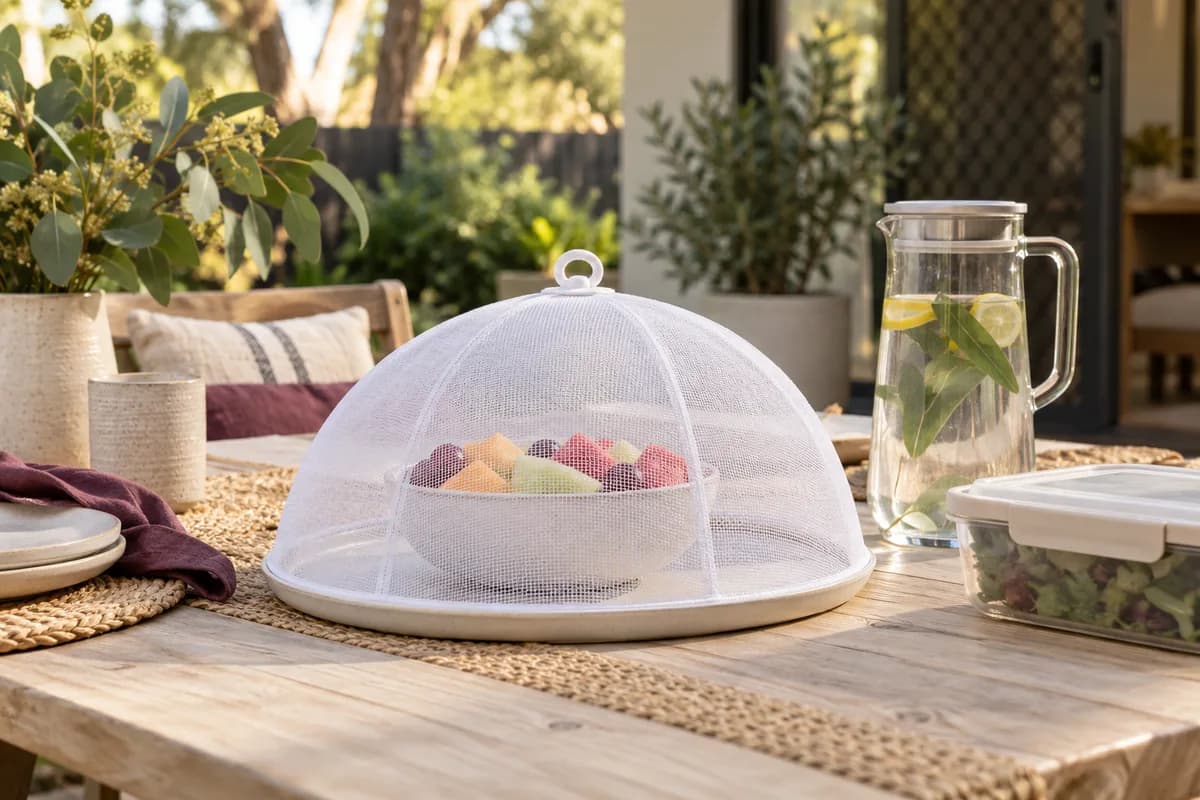
Start with the table and the route from the kitchen. Choose containers with lids or food covers that sit over the whole serving dish. Try the cover with the serving spoon in place: if the handle leaves a gap, keep the spoon on a separate clean rest. Keep another lidded container ready for leftovers, so clearing up does not depend on finding one later.
Look around the seating area for food scraps, fallen fruit and pet waste. Remove these before setting the table. Close rubbish-bin lids and place the bin away from the food and the doorway. The University of California's fly-management guidance identifies animal waste and decaying organic material as important breeding sites; removing these sources matters more than repeatedly killing visible flies.
For the indoor-to-outdoor route, check that flyscreens close properly. Food Standards Australia New Zealand recommends covers, screens, closed doors and sealed waste containers in its pest-control guidance for food businesses. These are useful practical principles at home too, although a household barbecue is not a commercial food premises.
While you are serving
Bring out a dish when it is needed, replace its cover after serving and keep backup portions inside. Put a clean lid back on an open drink when you step away. For a buffet, give covers a clear resting place so guests can replace them easily without putting them on the ground.
Keep raw barbecue ingredients separate from cooked food, salads and their utensils. The NSW Food Authority's barbecue advice calls for clean plates and utensils for cooked food and warns against transferring raw meat juices. A fly cover does not solve cross-contamination or temperature control.
For a picnic, use an insulated cooler with enough ice or frozen packs, and keep it closed between uses. Follow the NSW picnic guidance for packing and keeping food cold. Shade and a mesh cover do not replace refrigeration. If managing the food outdoors becomes impractical, serve inside and take individual covered portions out.
What about homemade fly sprays and old household tips?
If you arrived looking for a homemade fly spray, there is no spray recipe in this guide. We have not established a reliable, food-area-safe household formula using essential oils, vodka, vinegar or cloves. We have not tested those remedies, and we do not treat an attractive scent or the word “natural” as evidence of protection.
The older Your Crafty Family article included household remedies among its outdoor-dining suggestions. This is new Simply Maid guidance, not a reproduction of that recipe or its photographs. The practical replacement is to protect the meal and remove nearby attractants.
A bowl of cloves or a bag of water should not be your only barrier between flies and the food. Fans may make some hovering flies less troublesome: UC IPM describes this for little house flies, which is not proof that a small table fan prevents all flies landing on every dish. Keep covers as the primary protection.
Avoid swatting flies or using a bug zapper beside exposed food: UC IPM warns that insect fragments can contaminate food preparation areas. Its guidance also places foul-smelling bait traps away from occupied areas. Do not turn the serving table into a trapping station.
Clear up without leaving the next meal's problem
Give one person the food-container task and another the table task. Put suitable leftovers back into cold storage promptly, following the food authority's handling advice. Gather used plates, close food containers, clear spills and crumbs, and take scraps to the closed bin.
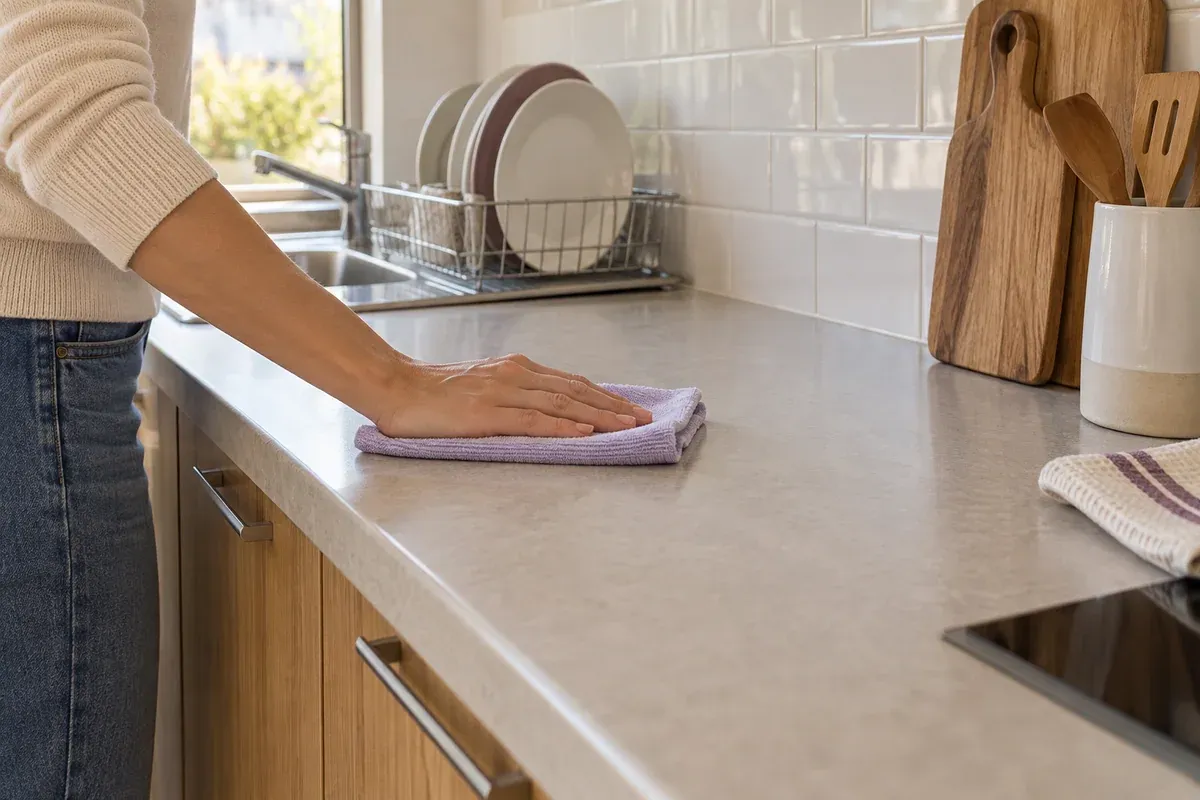
Check under the table and serving area before finishing. Clean residue from the bin and lid when needed, and keep the waste container closed. For the indoor reset, follow our kitchen cleaning guide.
When flies keep returning
Repeated numbers call for a source check, not another table remedy. Start with rubbish, pet waste and decaying material. Tiny flies around fruit or drains may need a different investigation from the larger flies around an outdoor meal. Our household pest guide helps you choose the next question to investigate.
If removing accessible sources and improving screens does not resolve the problem, ask a qualified pest professional to identify it. Cleaning can support household hygiene; it is not a guaranteed pest treatment. Simply Maid's standard cleaning service is household cleaning, not pest eradication.
Outdoor meal checklist
- Before serving: prepare covers and leftover containers; clear nearby scraps and waste.
- At the table: cover dishes between servings; keep raw and ready-to-eat food separate.
- During the meal: keep reserve cold food in the fridge or esky; replace covers and drink lids.
- If flies overwhelm the food: move serving indoors.
- Afterwards: deal with leftovers, clear dishes and spills, then close the waste bin.
About this guide
Prepared with AI assistance and reviewed by Huy Hoang before publication. Sources checked on 16 October 2026. No product testing, first-hand trial of remedies or independent practitioner review is claimed.
Change log
Who wrote and edited this article, when its sources were checked, and what changed.