Blood is a protein stain: cold water lifts it, and heat from hot water, an iron or the dryer sets it into the fibres.
Quick answer: To get blood out of sheets or clothes, flush the stain from the back with cold water, blotting. Rub in enzyme laundry liquid and rinse, then soak in cold water with an oxygen stain remover (60 g Vanish Napisan in 7 litres) for up to 2 hours. Wash cold and air-dry: about 10 minutes' work. Dried blood: soak cold 30 minutes, then dab 3% hydrogen peroxide on white cotton.
Which method suits your fabric?
What's stained | Default | Keep off it |
|---|---|---|
White or light cotton, polycotton or linen sheets and clothes | Cold rinse, enzyme laundry liquid, oxygen soak; 3% peroxide for dried marks | Hot water, the dryer, chlorine bleach |
Coloured cotton or polycotton | Cold rinse, enzyme laundry liquid, oxygen soak for no more than 2 hours; bicarb paste for dried marks | Peroxide, unless a hidden seam stays the same colour |
Wool, silk, lace, dry-clean-only | Cold water and a drop of wool wash or mild detergent, blotted; a dry cleaner for anything valuable | Oxygen bleach, peroxide, soaking, scrubbing |
Mattress | Cold water on a white cloth, then 3% peroxide tested on a hidden patch | Soaking, steam, mixing products |
Carpet | Cold water, blotted from the outside in, repeated | Hot water, scrubbing; bleach on wool |
Couch | Depends on the cleaning code on the cushion tag | Water on S or X codes |
Polyester, other synthetics, or no care tag | Cold rinse, enzyme laundry liquid, cold wash, air-dry | Peroxide and oxygen bleach until you know the fibre |
How to get blood out of sheets and clothes
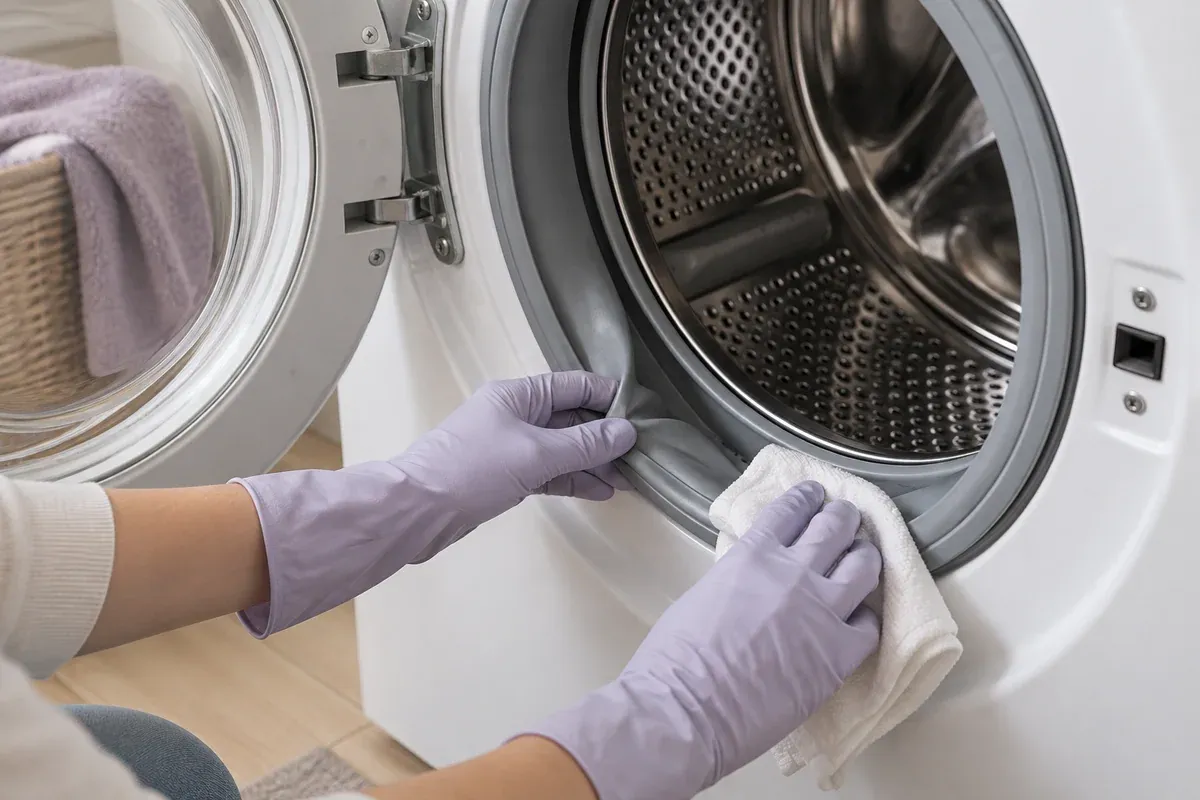
You'll need a basin or bucket, cold water, a white cloth, enzyme laundry liquid or a pre-wash stain spray (look for "enzymes" or "biological" on the bottle), and an oxygen stain-remover powder such as Vanish Napisan Oxi Action from the supermarket. If it's someone else's blood, cover any cuts on your hands and wear single-use gloves, as Victoria's Better Health Channel advises for cleaning up blood.
Safety Never mix cleaning products. Victoria’s Better Health Channel: “Do not mix bleach with ammonia, acids or other cleaners – this can release hazardous chlorine or chloramine fumes.” Ventilate the room during and after use. Wear gloves and eye protection. Follow the label's dilution and contact time. In an emergency call 000. For poisoning advice call the Poisons Information Centre on 13 11 26 — 24 hours, anywhere in Australia.
- Start now. The sooner blood meets cold water, the more of it rinses straight out.
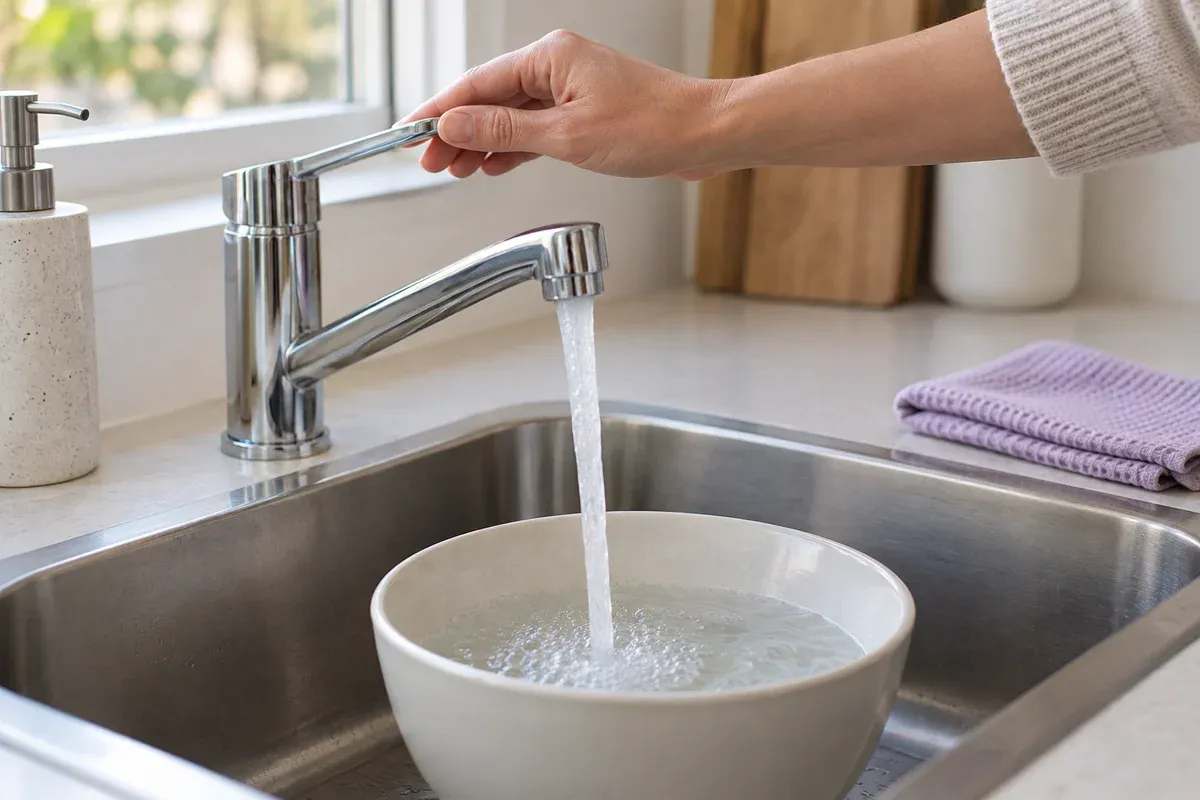
- Flush it from the back. Hold the stain face-down under cold running water for a few minutes, so the water pushes the blood out the way it came in. Blot with the white cloth; rubbing spreads it.
- Pre-treat. Work a little enzyme laundry liquid into the mark with your fingers, or use Vanish's paste: half a scoop (30 g) of powder mixed with one and a half scoops of water, left on for no more than 5 minutes. Rinse the enzyme liquid out under cold water before the soak: one product at a time.
- Soak if any colour is left. Dissolve one scoop (60 g) of oxygen powder in 7 litres of cold water. The pack allows water up to 40 °C, but keep it cold for blood. Soak coloureds for up to 2 hours; whites can stay in 2 hours or longer. Skip this step for wool and silk: Vanish says its powder isn't for either.
- Wash cold. Wash on a cold cycle with your usual detergent, adding the oxygen powder to the drum if the stain was heavy: 60 g in a front loader, 90 g in a top loader.
- Check before it goes near heat. Air-dry it, then look at the patch in daylight before you judge it, as Sealy advises. No dryer and no iron until the mark has gone, because heat sets whatever is left.
Done looks like: a line-dried sheet with no pink, brown or yellow ring where the stain was. A faint shadow that's still there after drying needs the dried-blood method below, not a hotter wash.
How to get dried or old blood out
Dried blood needs time more than force.
- Soak in cold water for at least 30 minutes, the time Sealy gives, then rub a little enzyme laundry liquid into the mark.
- On white or light cotton, use 3% hydrogen peroxide. It's sold as 10 volume at supermarkets and chemists. Rinse the enzyme liquid out first, then dab it on, let it fizz for 10–15 minutes, blot, and rinse with cold water. Peroxide is a bleach: on anything coloured, try it on a hidden seam first, and never use it on wool or silk.
- On coloured fabric, use bicarb paste instead. Mix two parts bicarb soda with one part cold water, spread it on and leave it 30 minutes to overnight, then rinse it out completely before trying anything else on the patch: one product at a time.
- Repeat, then do the oxygen soak and cold wash from step 4 above. Air-dry between rounds.
Blood that has already been through a hot wash or the dryer often still fades with several rounds of soaking (Sealy: older stains "often respond well to repeated soaking"), but it may not disappear completely. For sweat, wine, ink and other marks, see How to Remove Stains From Clothes — 10 Common Types.
Blood on a mattress, carpet or couch
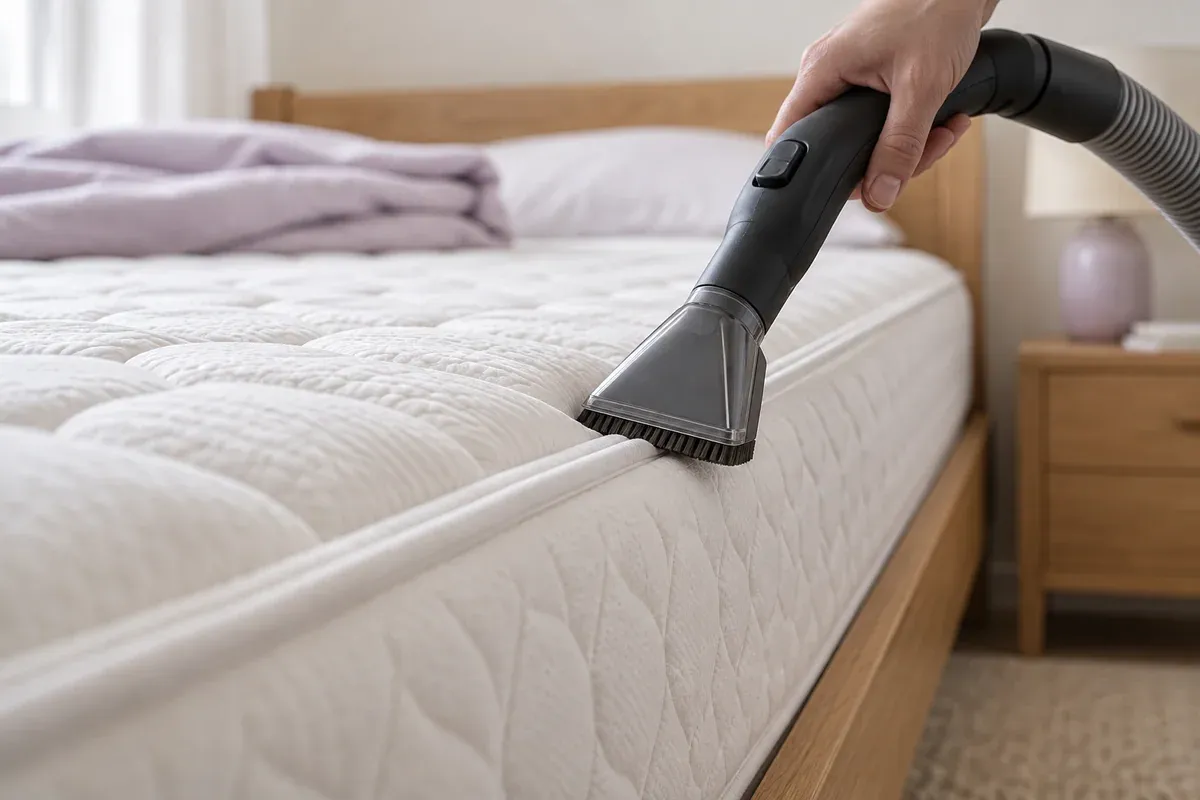
Mattress. Blot with a white cloth wrung out in cold water. If a mark stays, test 3% hydrogen peroxide on a hidden patch, then dab a little on the stain, let it fizz and blot. Use as little liquid as you can, so nothing soaks into the core. The full method, including period blood and drying, is in How to Clean a Mattress and Remove Stains.
Carpet. Godfrey Hirst's method for its Triexta carpets: sponge cold water onto the stain from the outside in and blot it up without over-wetting. Repeat until no colour comes up, then 4 or 5 more times for what's hidden in the pile. Dry it under white paper towel and a flat weight, and treat it again if the mark wicks back. On wool carpet, a little wool-safe, pH-neutral detergent in cool water is the next step; never bleach or hot water. For other fibres, follow the carpet maker's care guide. Other spills by fibre: How to Remove Carpet Stains — Every Type of Spill.
Couch. Find the cleaning code on the cushion tag before anything wet touches it: W or WS fabrics take cold water, S fabrics need a solvent upholstery cleaner, and X means vacuum only. How to Remove Couch Stains — Blood, Ink, Grease and More has the step-by-step for each code.
Vinegar, bicarb, salt or bleach: what works on blood?
Method | Verdict | Why |
|---|---|---|
Cold water | Works: start here | A fresh stain can rinse out completely (CHOICE) |
Enzyme laundry liquid or pre-wash spray | Works | Sealy's pick for darker fabrics, where peroxide could fade the dye; tested products are in the FAQ |
Dishwashing liquid | Works at a pinch | A mild detergent is Sealy's choice for silk and wool; on cotton, enzyme liquid is made for protein stains |
Oxygen bleach (Napisan-type powder) | Works on cotton and polycotton | Not for wool or silk |
3% hydrogen peroxide | Works on whites | Lightens many dyes; test colours first |
Bicarb soda paste | Works, slowly | Sealy lists a bicarb paste or mild detergent as the safer choice on coloureds |
Salt water | Works on fresh stains, but there's better | CHOICE lists one part salt to two parts cold water; cold water and enzyme liquid cover the same stains |
White vinegar | Works, but there's better | Sealy rates it less effective on blood than peroxide or bicarb |
Lemon juice | Works, but there's better | CHOICE lists it for 5–10 minutes; it's an acid, so never near chlorine bleach |
Peroxide, bicarb and dish soap mixed in one bottle | Skip | One method at a time, rinsing between (Sealy) |
Chlorine bleach | Skip | Oxygen powder does the job on whites and colours without the never-mix risk |
Hot water, the dryer or an iron | Don't | Heat binds the blood proteins to the fibres |
Stopping blood stains setting next time
- Rinse first, wash later. If you can't wash straight away, a cold-water soak overnight keeps the stain from drying in.
- Keep an enzyme pre-wash spray in the laundry, so step 3 takes seconds.
- Use a washable mattress protector. It's far easier to get blood out of a protector than out of a mattress.
- Check before the dryer, every time, for anything that had blood on it.
When it's not a DIY job
- Silk, wool, lace or dry-clean-only items, or anything valuable: take it to a dry cleaner and tell them it's blood.
- Blood that soaked deep into a mattress: a specialist mattress cleaner.
- Carpet that keeps wicking the stain back up after several rounds: Godfrey Hirst recommends a professional steam cleaner.
Simply Maid doesn't remove stains from mattresses or upholstery, and our regular and deep cleans don't include carpet stain treatment.
Frequently asked questions
What is the best stain remover for blood on sheets?
An enzyme pre-wash spray. In CHOICE's test of more than 30 stain removers (published October 2021), the best on blood were Aldi Di-San Oxy Action with Enzymes Pre Wash (80%), Earth Choice Pre-Wash (78%) and Woolworths Clean Pre-Wash (77%). Formulas change, so read those scores as a guide to the type of product.
Does period blood come out the same way?
Yes: it's the same protein stain, so use the same cold-water method. Period underwear is different: CHOICE says to wash it the way its maker says, because stain treatments can affect how well it absorbs.
Last reviewed 6 October 2026 · Update history
Sources & References
- Sealy Australia, How to get blood out of sheets & clothes: fresh and dried methods, 30-minute soak, peroxide on whites, delicates.
- Vanish Australia, How to remove blood stains (accessed 6 October 2026): pre-treat paste and wash.
- Vanish Australia, Napisan Oxi Action Crystal White product details (accessed 6 October 2026): soak and in-wash doses, soak times; cotton and polycotton; not for silk or wool.
- CHOICE, How to get period stains out of underwear and clothes (19 October 2021): cold water, home remedies, stain-remover test.
- CHOICE, How to clean your mattress (23 July 2026): 3% (10 volume) peroxide.
- Godfrey Hirst, How to remove carpet stains from Triexta carpets: the cold-water carpet method.
- Godfrey Hirst, Wool carpet care: pH-neutral detergent, no bleach or hot water.
- Better Health Channel, Hepatitis C and blood spills: gloves when cleaning up blood.
- Better Health Channel, Mould removal at home: never mix bleach with ammonia, acids or other cleaners.
- CHOICE, How to remove stains from school uniforms (31 January 2022): air-dry after treating, soak in cold water overnight if you can't wash straight away.