A splash of cooking oil, a smear of butter or a drip from the salad dressing leaves a dark, translucent patch that ordinary washing often doesn't shift. Oil doesn't dissolve in water, so the trick is to break it up before the garment goes in the machine, and to keep it away from heat until you know the mark has gone.
Quick answer: Scrape off any solid, blot the oil with paper towel, then work a drop of dishwashing liquid into the mark with your fingertip and leave it for five to ten minutes. Wash in the warmest water the care label allows, then air dry and check the mark in daylight before the garment goes anywhere near a dryer or iron. Repeat once if a shadow remains. Wool, silk and dry-clean-only garments need a different approach, and heavily oil-soaked cloths and workwear should not go in a tumble dryer.
Before you start: check the label and the stain
Read the whole care label, not just the fabric. The number in the wash tub is the maximum temperature; the bleach, drying and ironing symbols matter here too, because heat is what sets an oil stain. Australia's mandatory care-labelling standard means most garments carry these symbols.
- Everyday cottons, polyester and blends: follow the method below.
- Wool and wool blends: see the wool section. Don't rub, and don't put a treated woollen through a hot wash.
- Silk, viscose, structured jackets, anything labelled dry-clean only: blot, then take it to a dry cleaner and tell them what the stain is. Water and detergent can leave a worse mark than the oil.
- Petrol, motor oil, solvents or very greasy workwear: this is a fire and fabric question as much as a stain question. See the dryer section before you wash anything.
The method for cooking oil, butter and grease

This sequence concerns ordinary food-oil marks on suitable washable clothing. Fuel, solvents and heavily oil-contaminated items need separate fire-safety handling; washing does not necessarily remove that hazard.
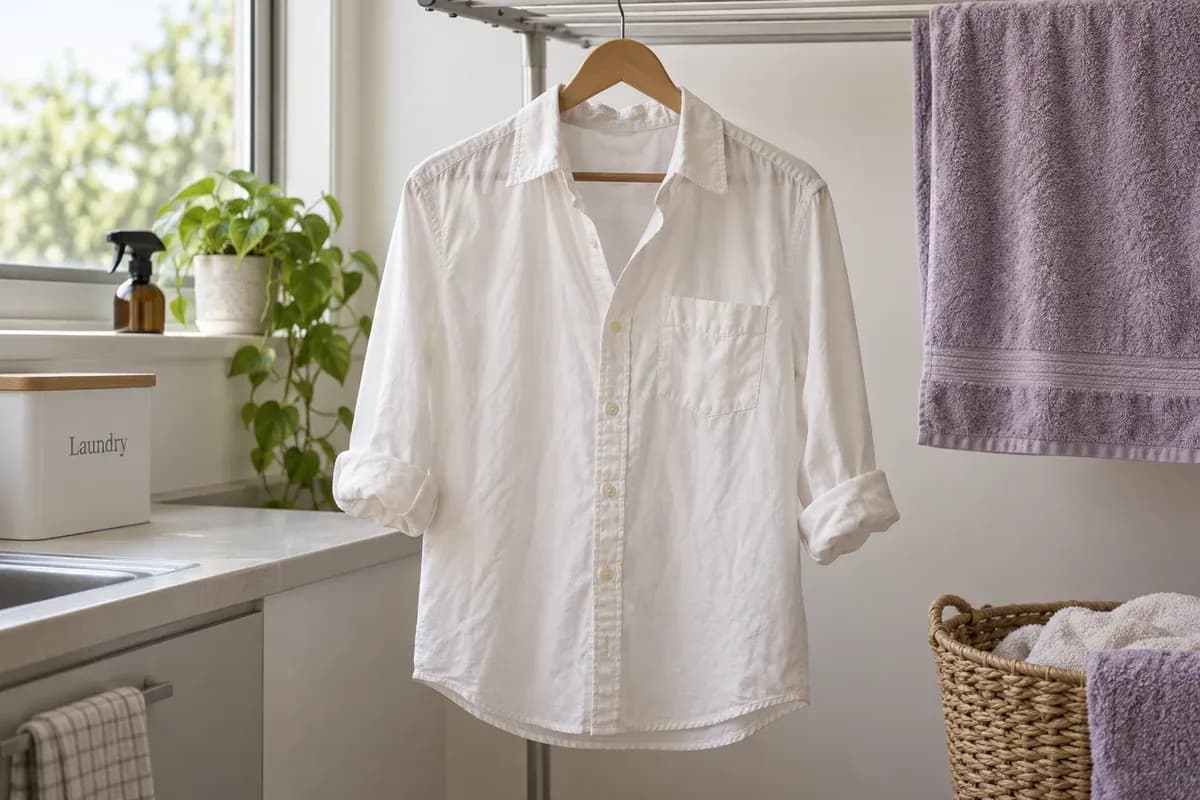
Read the illustration as text
- Lift and blot
- Remove excess cooking oil without spreading it.
- Treat and wash
- Use a fabric-compatible treatment and the care label’s wash conditions.
- Air dry and inspect
- Check the dry fabric for remaining marks before another treatment.
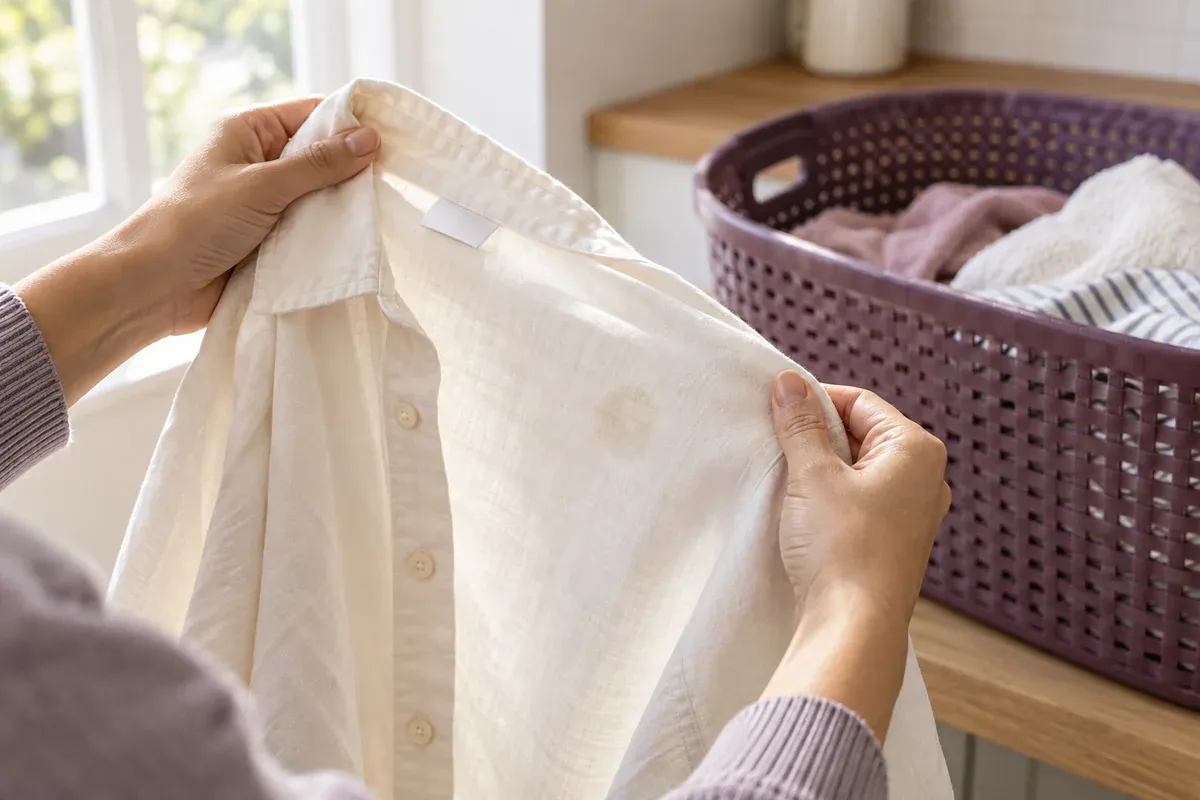
A wet garment can hide an oil mark.
You'll need paper towel or a clean white cloth, a spoon, dishwashing liquid and your normal laundry detergent.
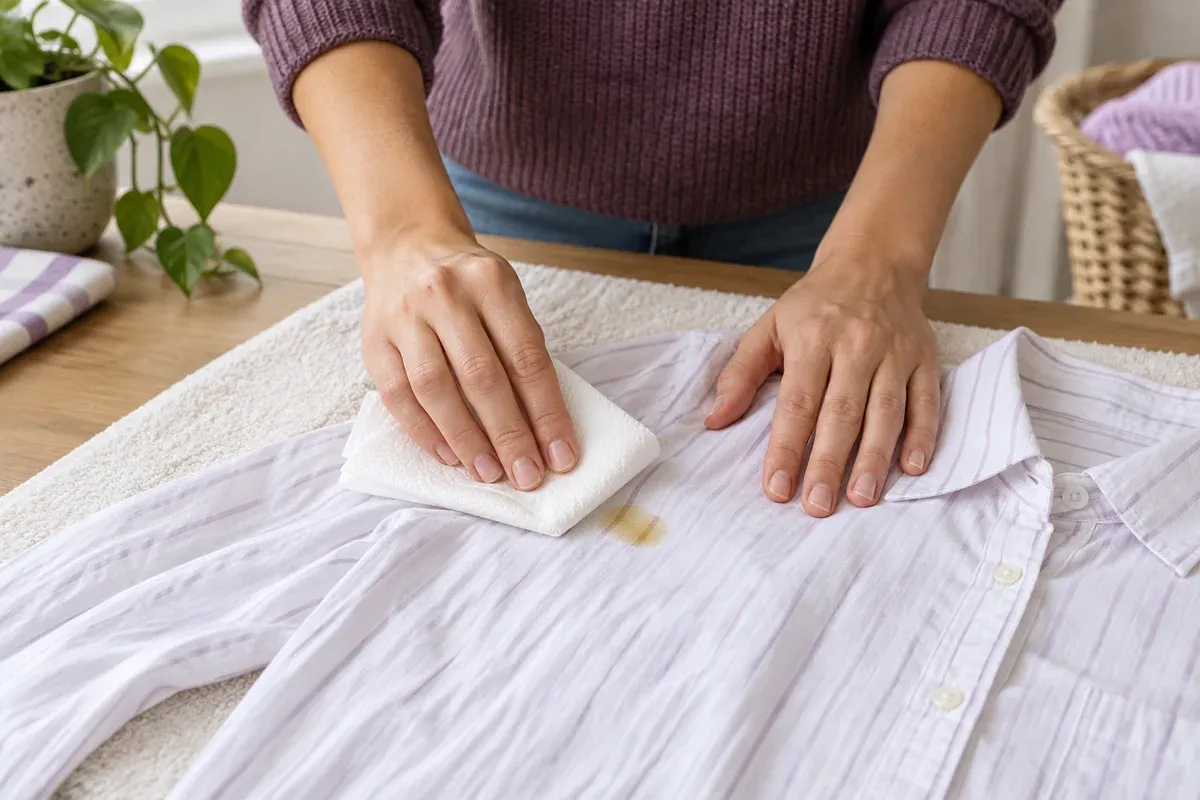
1. Lift and blot
Lift any solid food or butter off with the edge of a spoon, then press paper towel onto the mark to soak up as much oil as you can. Press, don't rub: rubbing spreads the oil and pushes it into the weave. If the stain is fresh and you have nothing else, a dusting of cornflour left on the mark for a few minutes will absorb some of the oil before you brush it off; New Mexico State University's laundry guide lists cornstarch among the absorbents that work.
2. Work in a little dishwashing liquid
Put a drop of dishwashing liquid straight onto the mark and work it in gently with a fingertip. Dishwashing liquid is designed to break up grease, which is why laundry brands recommend it as a pre-treatment: Tide's oil-stain guide says to "pretreat the stain with a spot of dish soap", and both Tide and Dawn suggest leaving it for five to ten minutes. Dawn's guidance also warns against squirting dish soap into the washing machine itself: it foams far more than laundry detergent, so use it only on the spot.
A laundry pre-treatment spray or degreaser works too. Vanish's Oxi Action Degreaser spray, for example, is labelled for cotton and polyester, is left on for one to five minutes and no longer, and asks for a test on a hidden area first. Whichever product you use, follow its time limit rather than leaving it overnight: manufacturers set those limits for a reason, and longer contact can lift dye.
3. Wash warm, within the label's limit
Wash the garment with your usual detergent in the warmest water the care label allows. Warm water helps detergent lift oil; hot water on a garment labelled for cold can shrink it or set the dye. Don't add extra dish soap to the drum.
4. Air dry, then check
Hang or lay the garment to dry as the label directs and look at the mark in daylight once it is fully dry. Oil marks are often invisible when the fabric is wet. If a faint shadow remains, repeat steps two and three. Only when the mark has gone should the garment go in a dryer or under an iron; as NMSU's guide puts it, "heat sets stains".
Stains you've already washed and dried
A dried-in oil mark is harder, not impossible. Work dishwashing liquid or a pre-treatment into the dry fabric, give it the full contact time, and wash warm again. NMSU's advice for a grease stain that survives washing is to let the article dry and then sponge it with a grease solvent, meaning a laundry product made for the job, not a fuel or a cleaning spray from the garage. Expect to need two or three rounds, and stop if the fabric starts to look worn or the colour is lifting. There is no fixed number of attempts after which a stain becomes permanent; the fabric's condition tells you when to stop.
An oxygen-based soaker can help with an old, discoloured mark, but only if both the product and the garment allow it, and only at the soak time on the pack.
Wool, silk and delicate fabrics
Wool needs gentler handling. Woolmark's stain guide for grease and butter says to scrape off the excess with a spoon or blunt knife, dab the area with a lint-free cloth soaked in a proprietary grease remover or white spirit, blotting the solvent as you go, and then wash with a Woolmark-approved detergent. It also warns that if the solvent is not fully removed before drying, a coloured ring can develop, and that you should pre-test any treatment in an unseen area. For a good knit or a tailored wool garment, a dry cleaner is the safer choice.
Silk, viscose and printed or bonded fabrics can water-mark or lose colour with almost any home treatment. Blot and take them to a professional.
Oil and tumble dryers: a separate risk
This part is about safety, not appearance. Electrolux's Australian dryer manual warns that "oil-affected items can ignite spontaneously, especially when exposed to heat sources such as in a tumble dryer", because the oil oxidises and generates heat that can't escape from a pile of warm fabric. Its instruction for items soiled with cooking oil is to wash them in hot water with extra detergent before drying, and it adds that washing "will reduce, but does not eliminate, the hazard".
In practice: a shirt with a small oil spot that has been washed clean is fine. Greasy tea towels, aprons, chip-shop-level splatters and anything soaked in petrol, solvent or motor oil should be washed hot and then line dried. Never use the dryer or the iron to "finish" a stain you are still treating.
Why we no longer suggest WD-40 or eucalyptus oil
Earlier versions of this guide recommended spraying a stubborn mark with WD-40 or pure eucalyptus oil and letting it evaporate before washing. We removed that. A petroleum-based spray adds another oil to the fabric and a flammability question to the dryer, and neither product comes with instructions for use on clothing. A dishwashing liquid or a labelled laundry degreaser does the same job with directions you can follow.
Do shop-bought stain removers work?
Some do well. CHOICE's January 2026 test of 42 stain removers treated a range of stains, including olive oil, for five minutes before washing them all with the same detergent. The top-scoring spray was Aldi's Di-San Pro Ultra Degreaser with Enzymes and the top powder was Sard Super Power. CHOICE also noted that products across the test were "somewhat less effective on blood, oil and sweat", so a high overall score is not a promise about your particular oil mark. Look for oily-stain use, fabric compatibility and the contact time on the label.
Safety Never mix cleaning products. Victoria’s Better Health Channel: “Do not mix bleach with ammonia, acids or other cleaners – this can release hazardous chlorine or chloramine fumes.” Ventilate the room during and after use. Wear gloves and eye protection. Follow the label's dilution and contact time. In an emergency call 000. For poisoning advice call the Poisons Information Centre on 13 11 26 — 24 hours, anywhere in Australia.
Frequently asked questions
Can I get an oil stain out after it's been through the dryer?
Often, yes, with a couple of rounds of pre-treatment and warm washing. Air dry between rounds and check in daylight. If the fabric starts to look worn, or the mark hasn't changed after two or three goes, a dry cleaner may still be able to help.
Should I use hotter water?
Only up to the care label's maximum. Warm helps; hotter than the label allows risks shrinkage and colour loss and can set other components of the stain.
What about sunscreen, make-up or motor oil?
Sunscreen and make-up leave pigment as well as oil, so treat with the dish-liquid method first and then a stain remover suited to the colour. Motor oil and fuel are a contamination and fire question: wash hot with extra detergent, line dry, and consider whether the garment is worth saving.
What if a child swallows a cleaning product?
Call the Poisons Information Centre on 13 11 26, 24 hours a day anywhere in Australia, and don't induce vomiting. Call 000 if the child collapses, has a seizure or has trouble breathing. Keep laundry products locked away.
Related reading
- How to remove stains from clothes: 10 common types
- How to deep clean your laundry
- How to remove couch stains
- How to remove carpet stains
Sources and references
- Tide, How to get oil stains out of clothes: pre-treat with dish soap for five to ten minutes, wash in the warmest water the label allows, check before drying.
- Dawn, How to use dish soap for laundry stains: apply to the stain, rub in, and do not use dish soap in the washing machine.
- New Mexico State University, Removing stains from clothing (Guide C-502, revised 2019): "heat sets stains", dishwashing liquid as a pre-treatment, cornstarch as an absorbent, grease solvent for a stain that survives washing, and never mixing stain removers.
- Vanish Australia, Oxi Action Degreaser fabric stain remover spray: cotton and polyester, one to five minutes maximum, hidden-area test.
- Woolmark, Removing stains from wool: the grease and butter method, blotting, pre-testing and the coloured-ring warning.
- Electrolux Australia, tumble dryer user manual: oil-affected items can ignite spontaneously; wash in hot water with extra detergent first; washing reduces but does not eliminate the hazard.
- CHOICE, The best and worst stain removers (21 January 2026): test method, top products and the note on oil stains.
- ACCC Product Safety, Care labelling for clothing and textiles: the mandatory standard and the meaning of the symbols.
- healthdirect, Poisoning: 13 11 26, when to call 000, do not induce vomiting.
- Better Health Channel (Victorian Department of Health), Mould removal at home: the never-mix warning quoted in the Safety box; Poisons Information Centre 13 11 26.
Change log
Who wrote and edited this article, when its sources were checked, and what changed.
View all historyHide earlier history
Earlier entries record what was published at the time. Later corrections take precedence.
- Edited by
- Huy Hoang
20 September 2026: restored the dishwashing-liquid pre-treatment method with manufacturer sources, and added the cornflour absorbent step, the wool method from Woolmark and a clearer explanation of the dryer fire risk. Kept the earlier removal of the WD-40 and eucalyptus-oil recipes, the overnight treatment, the "permanent after three attempts" claim and the blanket fabric-temperature table.
Corrections