You bought a new set of glasses, peeled off the price tag, and now there's a sticky grey smudge that just won't budge. You've scratched at it with your fingernail, tried a damp cloth, and somehow made it worse. Sound familiar?
Quick Answer: The most effective way to remove sticker residue depends on the surface. For plastic, use cooking oil or peanut butter. For glass and ceramics, try hot soapy water or acetone. For a gentler all-purpose method, soak the residue in white vinegar for five minutes, then wipe clean. Always test your chosen method on a small area first.
How to Remove Sticker Residue from Plastic
Plastic is tricky. The wrong product can cloud it, dull the finish, or leave a permanent mark. You also can't scrub too hard — plastic dents and scratches easily. Stick with gentle, oil-based methods that dissolve the adhesive without damaging the surface.
Cooking Oil
Any cooking oil you have on hand — vegetable, olive, or canola — works beautifully. The oil seeps into the adhesive and loosens its grip on the plastic.
Pour a small amount onto a paper towel and press it over the residue. Leave it for five to ten minutes so the oil can penetrate the glue. Wipe with a fresh paper towel, then wash the area with grease-cutting dish soap to remove any oily film.
Tip: Don't use oil on unfinished wood or fabric — you'll trade a sticky mess for an oil stain.
WD-40
WD-40 is a popular choice for breaking down adhesives, but use it carefully on plastic. WD-40 Australia's product guide confirms it's effective on sticky residue, however the spray contains petroleum distillates that can cloud or soften certain types of plastic.
⚠️ Safety note: Always test WD-40 on a small, hidden area of the plastic first. If the surface clouds or feels tacky after a minute, switch to cooking oil instead.
Dampen a corner of a microfibre cloth with WD-40 — don't spray directly onto the plastic — and scrub the residue away. Wash afterwards with soap and water to remove the smell.
Peanut Butter
It sounds odd, but creamy peanut butter is a surprisingly effective adhesive remover. The natural oils break down the bonds in the adhesive, making it easy to wipe away.
Apply a small amount over the sticky area and leave it for five minutes. Wipe clean with a damp cloth, then wash with soap and water before the peanut butter dries and leaves its own sticky residue behind.
How to Remove Sticker Residue from Glass and Ceramics
Price stickers on new glassware, labels on ceramic jars, registration stickers on windows — these surfaces attract adhesives. The good news is that glass and ceramics are non-porous, so most methods work well here. The main risk is scratching, so avoid metal scrapers.
Hot Soapy Water
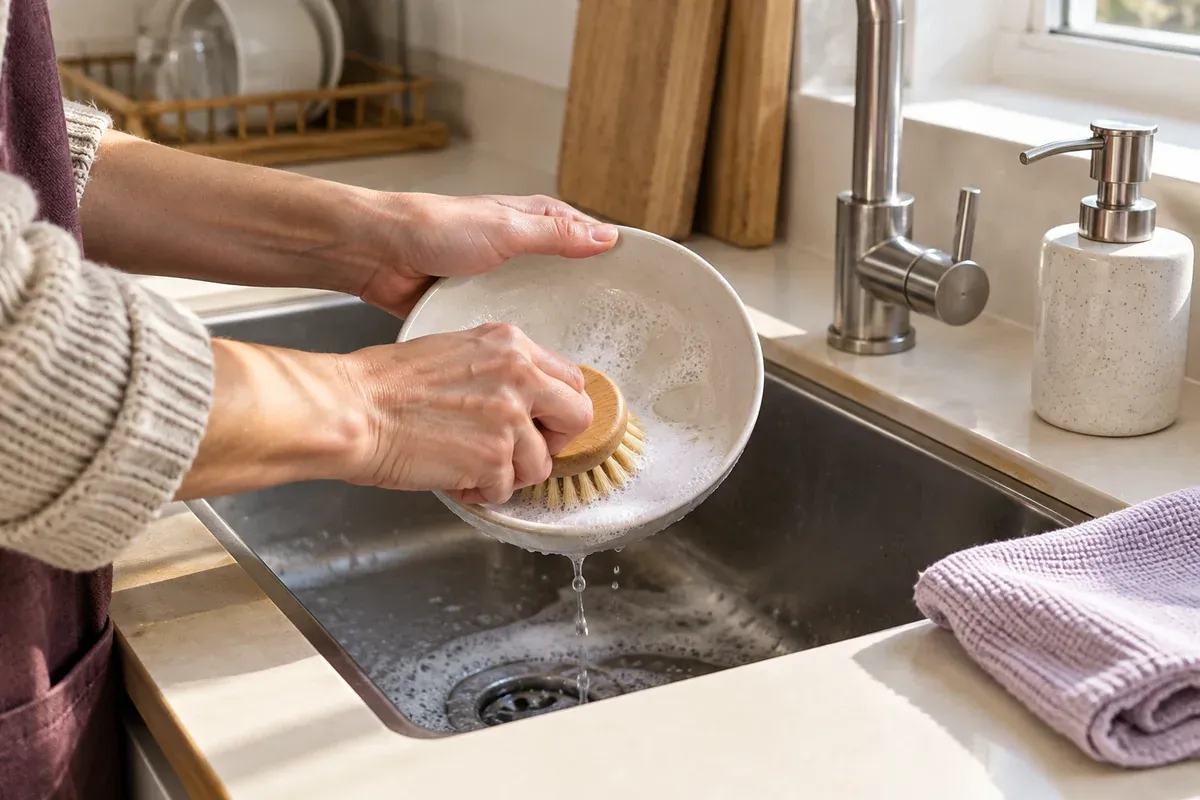
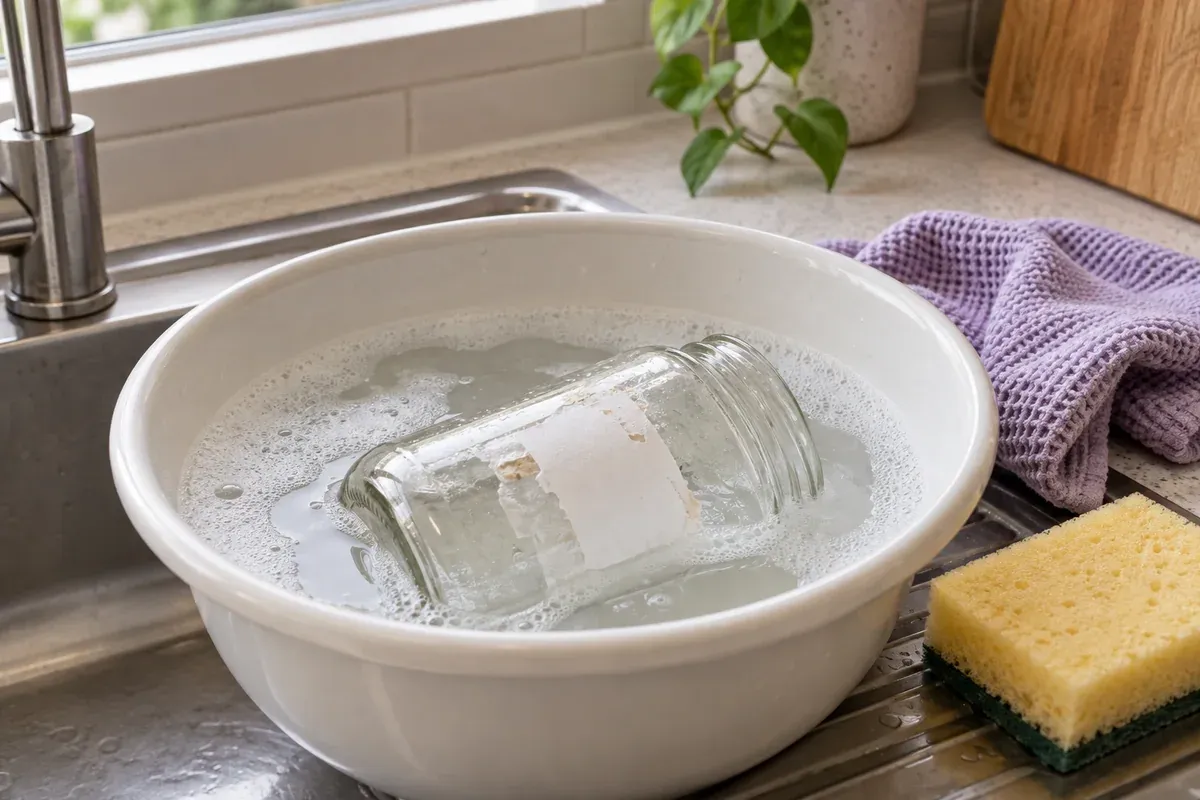
Sometimes the simplest approach works best. Fill a basin or your kitchen sink with hot water and a generous squirt of dish soap. Submerge the item and let it soak for 30 minutes.
The heat and soap soften the adhesive, making it easy to scrub off with a non-abrasive kitchen cloth. This is the safest method for delicate or coloured glassware.
Acetone
Acetone (found in most nail polish removers) cuts through adhesives almost instantly. Dip a cotton ball in acetone and wipe the residue — it should dissolve on contact.
However, acetone is a powerful solvent. Alliance Chemical's safety guide warns that acetone will damage acrylic, painted surfaces, lacquered wood, and many plastics. It also dissolves tinted films on windows.
⚠️ Safety note: Only use acetone on plain, uncoated glass or ceramic. Never use it on painted, tinted, or plastic surfaces. Work in a well-ventilated area — acetone fumes are flammable. — Envirofluid
Citrus-Based Cleaners
Citrus cleaners — store-bought or homemade with lemon juice — are excellent grease-fighters that break down adhesives naturally. Spray the solution onto the residue, leave it for 10 minutes, then scrub with a non-abrasive cloth and a little dish soap.
You can find citrus-based surface cleaners at Bunnings, Coles, or Woolworths. Look for products labelled "citrus degreaser" — they're effective and leave a pleasant scent. They're also a great option for cleaning stainless steel appliances around your kitchen.
Methods That Work on Most Surfaces
These household staples tackle sticker residue on a wide range of materials — glass, plastic, metal, wood, and more. Each has a few surface-specific cautions worth knowing.
White Vinegar
White vinegar is a pantry staple with genuine adhesive-dissolving power. The acetic acid breaks down the glue, making it easy to wipe away.
Soak a cloth or paper towel in undiluted white vinegar and press it over the residue. Leave it for five minutes, then wipe clean. For stubborn spots, repeat the process or gently scrub with a soft cloth. Vinegar is one of the most versatile natural cleaning solutions you can keep at home.
⚠️ Safety note: Never use vinegar on marble, granite, or other natural stone surfaces. The Natural Stone Institute warns that acidic cleaners like vinegar cause etching and permanent dull marks on calcareous stone. Use a pH-neutral stone cleaner instead.
Isopropyl Alcohol
Rubbing alcohol (70% isopropyl) is one of the most effective adhesive removers available. It works on glass, metal, ceramic, and most hard surfaces. Dampen a cloth, press it against the residue for a minute or two, then rub it away.
According to adhesive specialists at Loctite (Henkel), isopropyl alcohol is particularly effective because it dissolves the adhesive without leaving an oily residue behind — making it ideal when you need a clean, streak-free finish.
⚠️ Safety note: Be cautious with isopropyl alcohol on natural fabrics like silk, wool, or leather. It can cause discolouration or weaken fibres. Always test on a hidden area first, and use a diluted solution on delicate materials.
Heat from a Blow Dryer
Heat softens adhesive, making it much easier to peel or scrape away. Hold a blow dryer about 12 centimetres from the surface and warm the residue for three to five minutes on a low setting.
Once the adhesive feels soft and pliable, scrape it off with a plastic knife or an old gift card. This method is especially useful for large stickers or labels on metal, glass, and wood.
Tip: Keep the blow dryer on a low heat setting for plastic and mirrored surfaces to avoid warping or cracking.
Bicarb Soda Paste
A paste of bicarb soda (also sold as baking soda) and a small amount of cooking oil creates a gentle yet effective adhesive remover. The bicarb soda provides mild abrasion while the oil dissolves the glue.
Mix two parts bicarb soda with one part oil (coconut or vegetable) until you get a thick paste. Apply it to the residue, leave it for 10 to 15 minutes, then scrub gently with a soft cloth.
Research published in the Journal of the American Dental Association confirms that bicarb soda has a relatively low hardness compared to many materials, making it gentler than most abrasive cleaners. However, it can still cause micro-scratches on polished glass, marble, and gold-plated finishes — so use this method on plastics, metals, and unfinished ceramics rather than fine glassware.
Before You Start — The Scrape-First Rule

Solvents, oils, acids, heat and abrasion have different material limits. Keep flammable products away from heat and follow their handling instructions.
Read the illustration as text
- Lift what is loose
- Peel gently; do not gouge the underlying surface.
- Identify the finish
- Check coatings, plastics and any manufacturer restrictions.
- Use a suitable method
- Test as directed and remove residue without harsh scrubbing.
Adhesive removal should not remove the surface too.
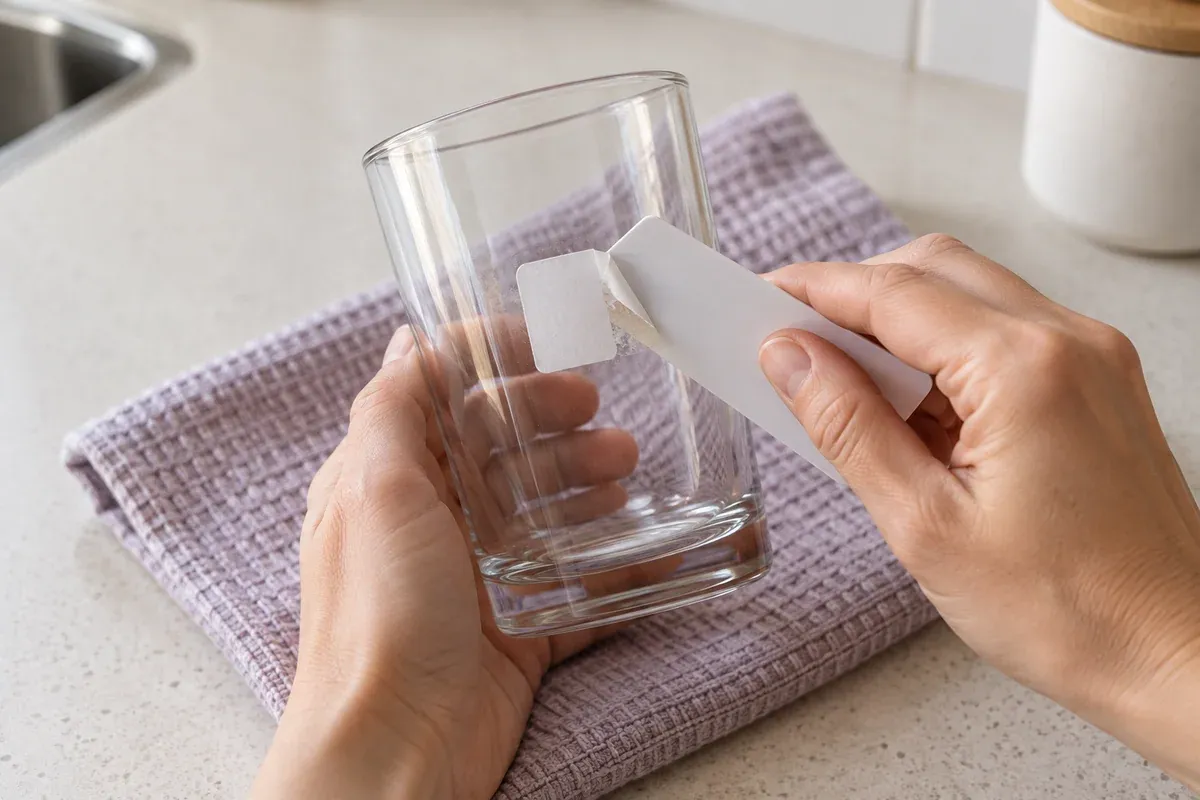
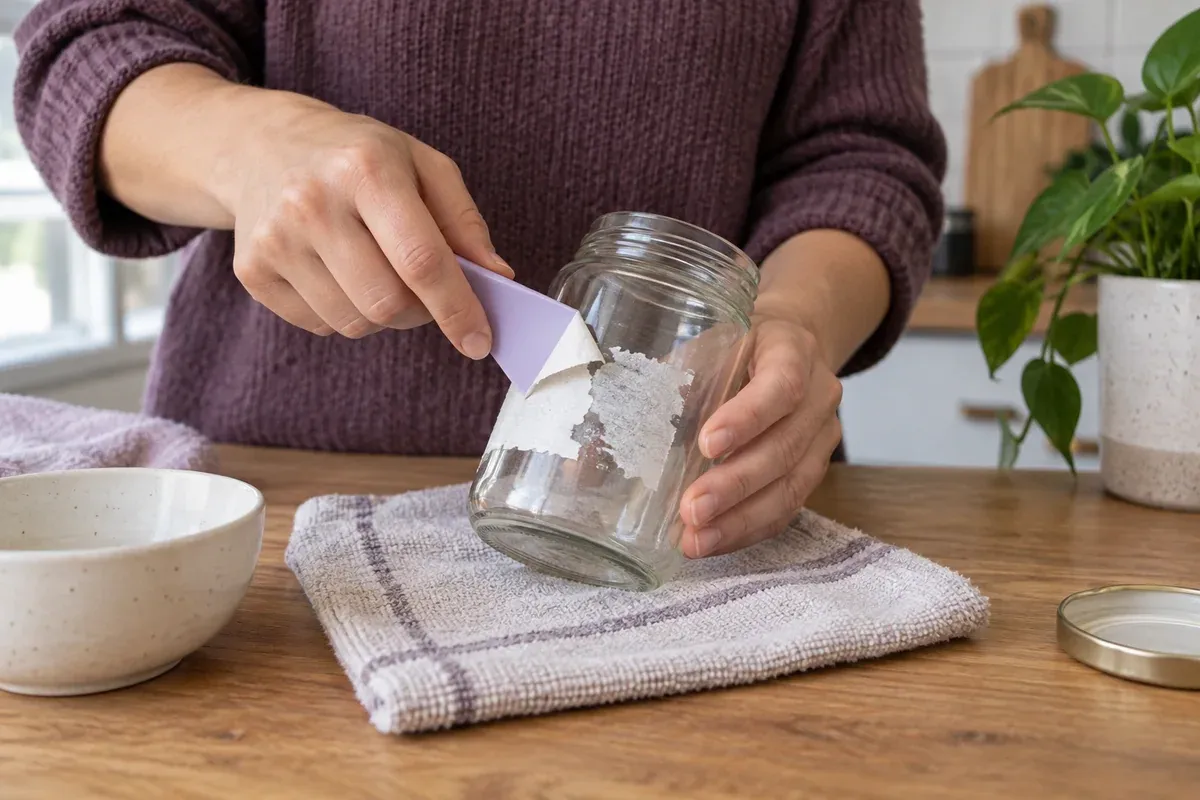
Before reaching for any cleaning product, peel off as much of the sticker as you can with your fingers. Then use a non-serrated plastic knife or an old gift card to gently scrape away any loose bits.
This removes the top layer and lets your chosen cleaning method work directly on the adhesive underneath — cutting the job in half. Avoid metal blades or sharp objects, as they'll scratch most surfaces.
You might have tried scrubbing with a dry cloth or running the item under water and hoping for the best. These approaches rarely work because the adhesive is designed to resist moisture and friction. The methods above work because they target the adhesive's chemical bonds — dissolving them rather than just pushing them around.
Frequently Asked Questions
Q: What is the easiest way to remove sticker residue?
For most surfaces, soaking a cloth in white vinegar and pressing it over the residue for five minutes is the quickest method. The acetic acid dissolves the adhesive, and you can wipe it clean without heavy scrubbing. For plastics specifically, cooking oil works just as well and won't risk damaging the finish.
Q: Does vinegar remove sticky residue from all surfaces?
White vinegar works on glass, plastic, metal, and ceramic — but never on natural stone. Marble, granite, and limestone are sensitive to acid, and vinegar will etch the surface permanently. For stone surfaces, use a pH-neutral cleaner or isopropyl alcohol instead.
Q: Can I use WD-40 to remove sticker residue from plastic?
Yes, but with caution. WD-40 contains petroleum distillates that can cloud or soften some plastics. Always test on a small, hidden area first. If the plastic reacts, switch to cooking oil or peanut butter — both are gentle and effective alternatives.
Q: How do you remove sticker residue from clothes?
Isopropyl alcohol works well on synthetic fabrics like polyester. Apply a small amount to the residue, let it sit for a few minutes, then gently rub it away before washing. For natural fabrics and delicate clothing, use a diluted alcohol solution or try dabbing the area with cooking oil first.
Q: Is it safe to use acetone on any surface?
No. Acetone is extremely effective on plain glass and uncoated ceramics, but it will damage acrylic, painted surfaces, lacquered wood, tinted glass, and most plastics. It's also flammable, so always use it in a well-ventilated area and keep it away from heat sources.
Related Reading
- If You've Got a Carpet Stain, We've Got a Cleaning Solution
- Step-by-Step Guides: How to Remove Common Couch Stains
- 10 Types of Stains You Can Get Out from Clothes
- Green Cleaning 101: How to Make and Use Natural Cleaning Solutions
- No Scratches, No Damage: How to Clean and Polish Aluminium
Sources & References
- Natural Stone Institute — Care & Cleaning for Natural Stone. Referenced for warnings about acidic cleaners (including vinegar) causing etching on marble, granite, and other calcareous stone surfaces.
- Alliance Chemical — Acetone Essentials: Navigating Its Use in Industry, Nail Care, and Home Cleaning. Referenced for acetone's surface compatibility warnings including damage to acrylic, painted surfaces, and plastics.
- Loctite (Henkel) — How to Remove Adhesives from Metal, Plastic, Wood, Glass, and Fabric. Referenced for isopropyl alcohol's effectiveness in dissolving adhesives without leaving oily residue.