Pulling gum off fabric only stretches it further into the weave. Harden it first, lift off the bulk, then treat what's left, and keep the garment out of the dryer until every trace is gone.
Quick answer: Freeze the garment for one to two hours until the gum turns brittle, then lift it off with a butter knife. Treat any residue with warm white vinegar or a little eucalyptus oil, rinse, then wash. Don’t put the garment in the dryer until every trace of gum is gone: heat sets it. Take silk, wool and anything labelled dry-clean-only to a dry cleaner instead.
Why Chewing Gum Sticks So Stubbornly to Fabric
Before reaching for your weapon of choice, it helps to understand why gum clings so tightly.
Modern chewing gum is made from synthetic polymers — mainly polyvinyl acetate (PVA), polyisobutylene, and butyl rubber. According to Professor Terry Cosgrove from Bristol University, gum sticks because its soft polymer molecules achieve "very close contact" with fabric fibres. When you try to pull it off, "you just stretch and slide the polymer molecules" rather than breaking the bond.
That's why the methods below focus on changing the gum's physical state — freezing it brittle, dissolving the adhesive bond, or stiffening the polymers — rather than just pulling harder.
What NOT to Do First
Before trying anything, avoid these common mistakes:
- Don't pull or peel gum off by hand. This stretches it deeper into the fabric weave, making the mess worse.
- Don't put the garment in the dryer. Heat sets any remaining gum, making it much harder to remove, and can spread it to the drum and other clothes.
- Don't reach for WD-40, peanut butter, or olive oil. Oil-based methods may shift the gum, but they often leave a grease stain that's harder to remove than the original gum.
Safety Never mix cleaning products. Victoria’s Better Health Channel: “Do not mix bleach with ammonia, acids or other cleaners – this can release hazardous chlorine or chloramine fumes.” Ventilate the room during and after use. Wear gloves and eye protection. Follow the label's dilution and contact time. In an emergency call 000. For poisoning advice call the Poisons Information Centre on 13 11 26 — 24 hours, anywhere in Australia.
Before the dryer: check that every trace of gum and residue is gone. Whirlpool: “Heat can set any remaining gum, making it much harder to remove.”
Method 1: Freeze the Gum (Best for Most Fabrics)

Delicate or dry-clean-only items need specialist advice. Do not scrape forcefully or put solvent-treated or gum-marked fabric into a dryer.
Read the illustration as text
- Check the garment
- Use a method suitable for the care label and construction.
- Harden and lift gently
- For suitable washable fabric, cool the gum and lift with a dull edge.
- Treat the remaining mark
- Use a compatible treatment, wash and check before applying heat.
Pulling soft gum can spread it through the weave.
Time: 5 minutes active + 1–2 hours in the freezer Works on: Cotton, polyester, denim, linen, school uniforms
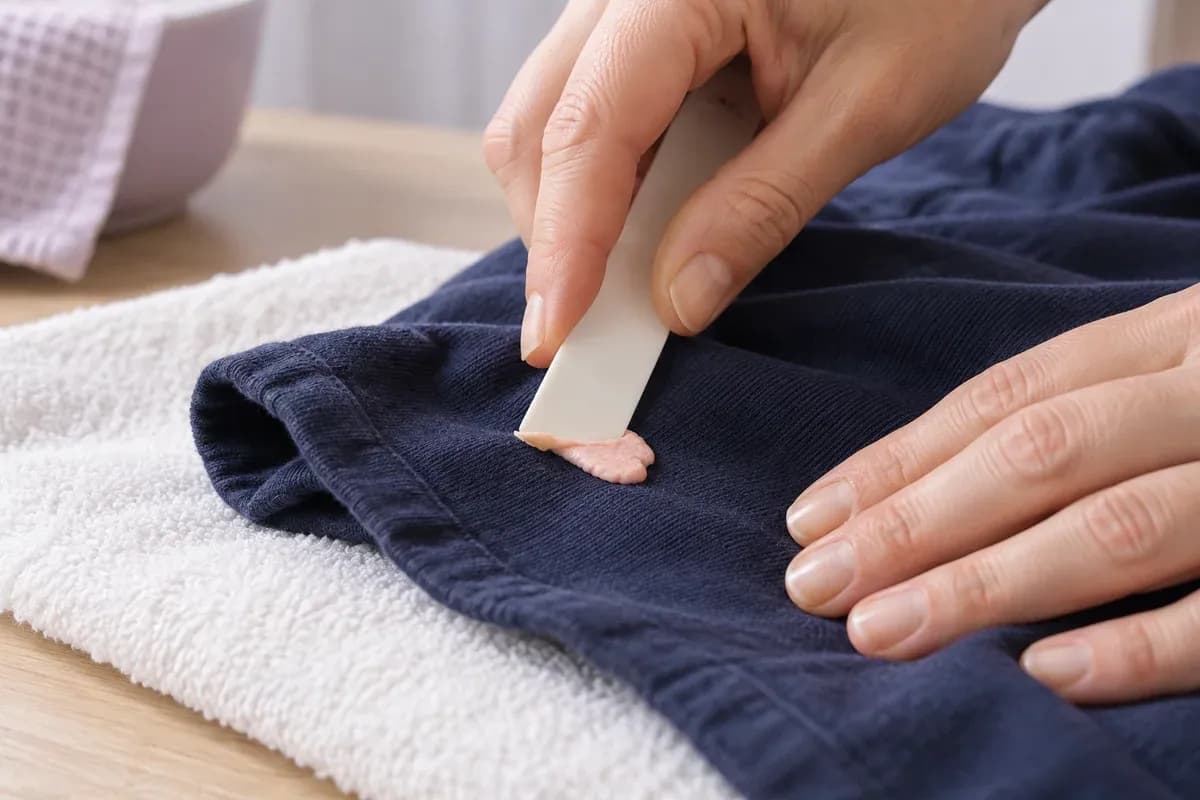
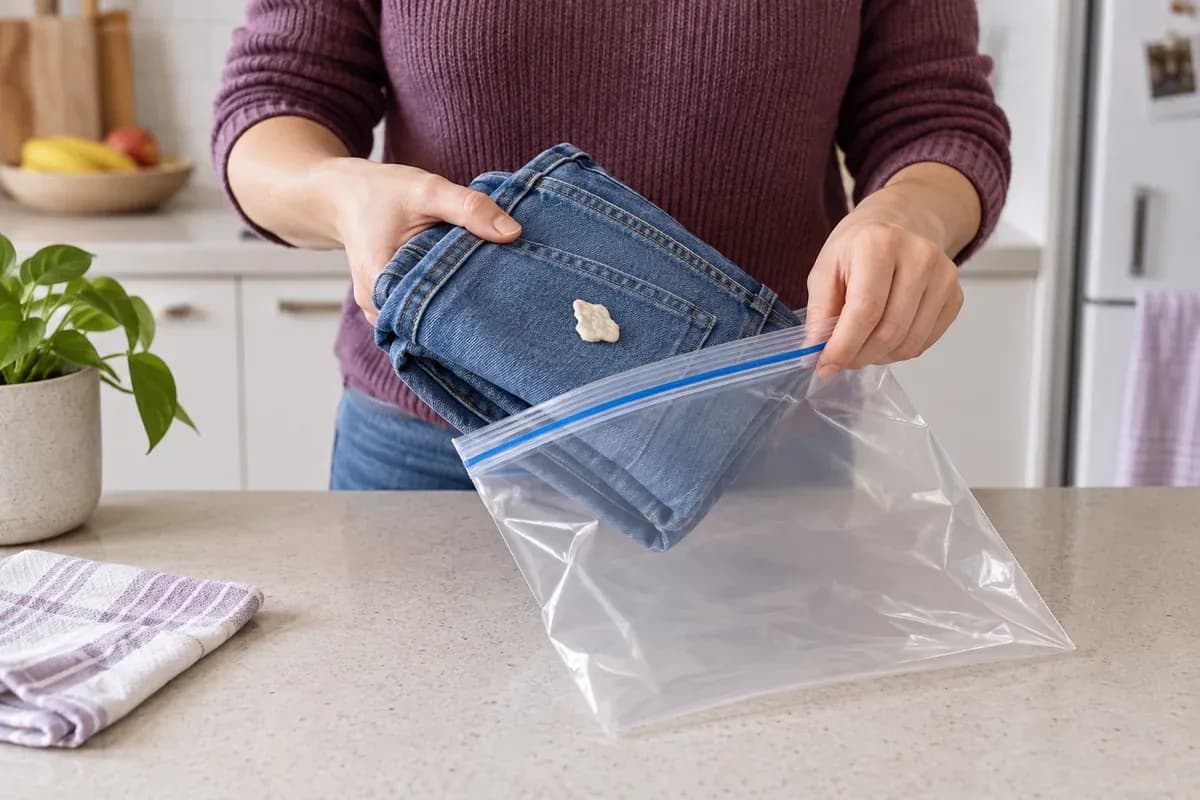
It's where both appliance makers start. Whirlpool holds ice on the gum for about 10–15 minutes, or puts the garment in a plastic bag in the freezer, until the gum feels hard and brittle, then lifts it with a dull edge.
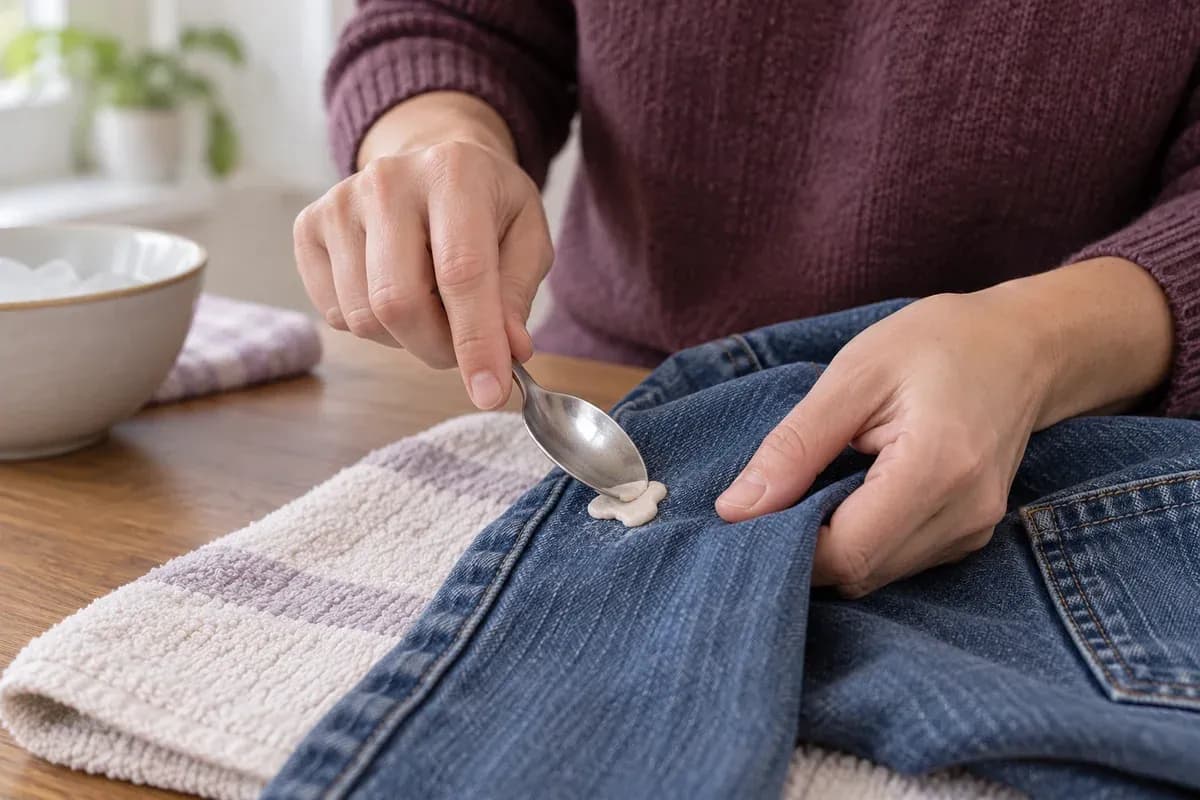
Why it works
Gum is soft and stretchy at room and body temperature, which is why pulling it smears it into the weave. Cold stiffens it until it is hard and brittle, so it breaks away from the fibres instead of stretching.
Steps
- Fold the garment with the gum facing upward. Place it in a resealable freezer bag. Rest a small container over the gum to stop it sticking to the bag.
- Leave it in the freezer for one to two hours, or until the gum is rock-hard.
- Work quickly once you take it out. Use a butter knife to gently lift the gum off the fabric — avoid scraping, which can damage the weave.
- If the gum starts softening before you've finished, pop it back in the freezer for another 30 minutes.
- Once the gum is off, apply a fabric stain remover (like Sard Wonder Soap, available at Coles and Woolworths) to any remaining mark and wash in the warmest water safe for the fabric.
Tip: In a rush? Hold a few ice cubes against the gum in a plastic bag for 15–20 minutes instead of using the freezer. It's faster but works best on small patches.
Method 2: Warm White Vinegar (For Stubborn Residue)
Time: 10–15 minutes active Works on: Cotton, polyester, linen, denim
Warm vinegar helps break down gum's stickiness. Whirlpool and Maytag both warm it for a few seconds in the microwave, scrub it in, scrape the gum off with a spoon, and rinse the garment before it goes in the washer.
Steps
- Warm a little white vinegar for a few seconds in the microwave, in a microwave-safe container, until it is warm, not hot.
- Pour a small amount over the gum and let it soak into the fabric for one to two minutes.
- Dip an old toothbrush in the warm vinegar and scrub at the base of the gum where it meets the fabric. The goal is to break the adhesive bond, not to pull the gum off from the top.
- Keep dipping and scrubbing. Add more warm vinegar as needed.
- If the vinegar cools down, reheat and continue.
- Once the gum lifts away, rinse the vinegar out under the tap, then machine-wash with your usual detergent.
Check the fabric first: vinegar is slightly acidic, and Whirlpool says to avoid it on delicate fabrics and anything containing elastic. Patch-test on a hidden seam.
Method 3: Eucalyptus Oil or Adhesive Remover
Time: 5–10 minutes active Works on: Cotton, polyester, denim, most synthetics
Eucalyptus oil dissolves the sticky residue gum leaves behind. Bosisto’s, the long-running Australian brand, says to scrape off as much gum as you can, then clean up the residue with a cloth soaked in eucalyptus oil (Bosisto’s).
Steps
- Scrape off as much gum as you can with a butter knife.
- Dab eucalyptus oil (or a fabric-safe adhesive remover) onto the residue with a cloth, and work it off with the knife or cloth.
- Treat any remaining mark with stain remover or liquid detergent, scrub gently with a toothbrush, and rinse before machine-washing.
Tip: When using commercial adhesive removers, always choose one labelled safe for fabrics. Products designed for hard surfaces can stain clothing.
Tip: Eucalyptus oil can leave its own mark on some fabrics, so patch test on a hidden seam and wash the garment straight afterwards.
Keep it away from children: eucalyptus oil is highly toxic if swallowed. The Royal Children's Hospital says 2–3 mL is significant in a child. Put the bottle away as soon as you've finished. For poisoning advice call the Poisons Information Centre on 13 11 26.
Method 4: Rubbing Alcohol (Durable Fabrics Only)
Time: 10–15 minutes active Works on: canvas, denim and other durable fabrics; not delicates
Isopropyl alcohol (often sold as “isopropyl” or “rubbing alcohol”) loosens the gum’s grip. It is not the same as methylated spirits, which is denatured ethanol; these steps were written for isopropyl.
Safety note: Maytag keeps rubbing alcohol to very durable fabrics like canvas or some denim and rules it out on delicates like silk; Whirlpool says durable fabrics only. Patch-test on a hidden seam. Alcohol is flammable: rinse the garment thoroughly before it goes in the washer or dryer, and keep it away from flames.
Steps
- Dampen a sponge or cotton pad with rubbing alcohol — don't soak it. Hold it over the gum for 30 seconds.
- Use a gentle peeling motion to lift the gum while the sponge stays in contact with it.
- For stubborn bits, use a dropper to apply a small amount of alcohol directly to the base of the gum.
- Give the fabric a minute between attempts so the alcohol has time to dissolve the adhesive.
- Once the gum is off, remove any leftover residue with a butter knife.
- Soak the area with stain remover for 10 minutes, then wash with regular detergent.
Method 5: Hair Spray (The Emergency Quick Fix)
Time: 5 minutes active Works on: Cotton, denim, polyester
When you need a quick fix and don’t have time to freeze, hair spray can stiffen the surface of the gum enough to lift it off. It leaves its own residue, so treat and wash the area afterwards.
Steps
- Place a piece of cardboard over the fabric with a small hole cut out to expose the gum. This protects the surrounding fabric from hair spray residue.
- Hold the can about 30 cm away and spray directly onto the gum. Wait 30–60 seconds for it to stiffen.
- Use a butter knife to gently lift the hardened gum upward. It will likely come off in pieces — respray as you encounter sticky bits.
- Once the gum is off, apply stain remover to the area and rub gently before washing.
Tip: Test on a hidden area first. Some hair sprays contain chemicals that can leave marks on certain fabrics.
Jeans, Smeared Gum and School Bags
Jeans and other heavy cotton: freeze first (Method 1). Smeared gum settles into denim’s tight weave, so follow with warm vinegar and a toothbrush (Method 2), working from the edges inward, then wash the jeans inside out.
Smeared or ground-in gum: lift the bulk while it is frozen, then dissolve what’s left with warm vinegar or eucalyptus oil (Methods 2 and 3). Scraping smeared gum while it is soft only spreads it.
School bags and backpacks: a bag is usually too bulky for the freezer. Hold a bag of ice on the gum for 15–20 minutes, lift it off, then treat the residue with eucalyptus oil and wipe the area with warm soapy water. Check the bag’s care label before putting it in the washing machine.
Gum That Went Through the Washing Machine
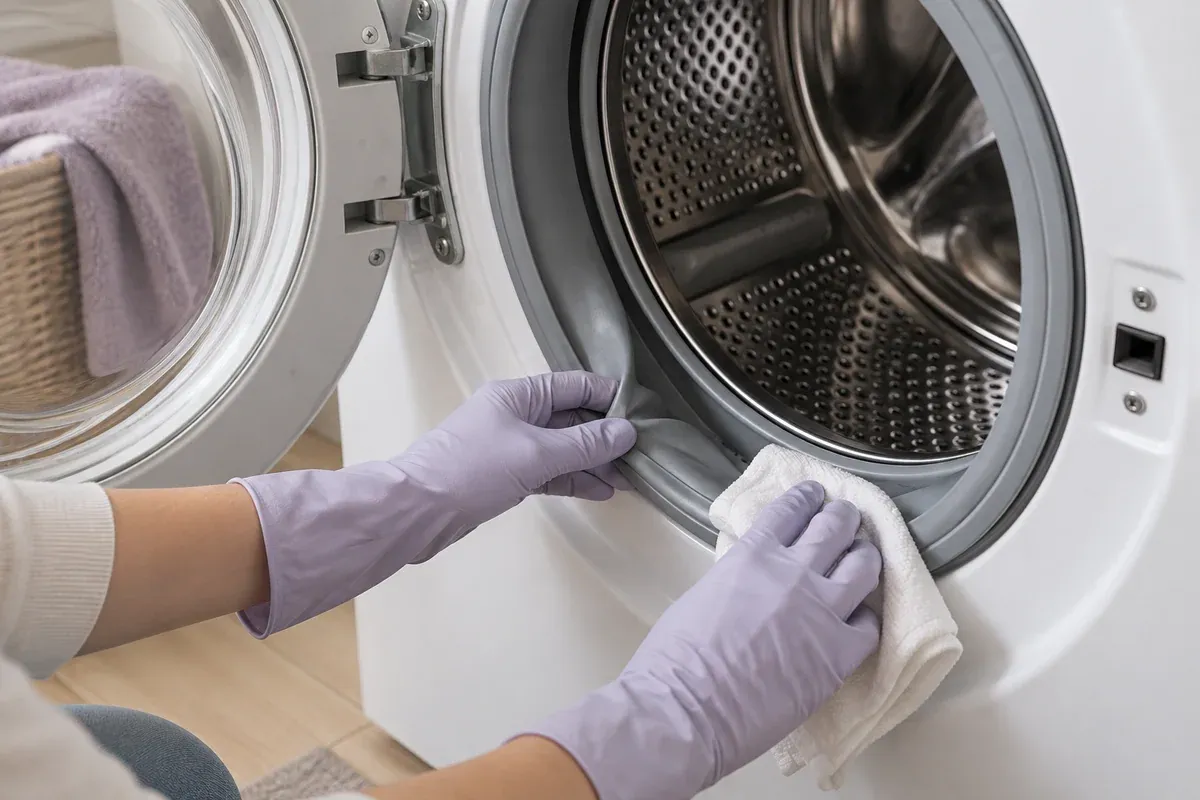
Maytag says not to put clothing with gum in the washing machine, but a forgotten pocket happens. Check every item in that load, not just one: gum often spreads. Treat each spot with ice and a dull edge, then the residue methods above, and keep all of them out of the dryer. We'd also check the drum and the door seal for gum before the next load; harden it with ice and lift it with a plastic scraper.
Which Method Should You Use?
Not sure where to start? Here's a quick guide:
Situation | Best Method | Time Needed |
|---|---|---|
Fresh gum, any washable fabric | Freezer (Method 1) | 5 min + 1–2 hr wait |
Dried or stubborn gum | Warm vinegar (Method 2) | 10–15 min |
Have eucalyptus oil handy | Eucalyptus oil (Method 3) | 5–10 min |
Durable fabrics (canvas, denim) | Rubbing alcohol (Method 4) | 10–15 min |
No time, need a quick fix | Hair spray (Method 5) | 5 min |
Silk, wool or dry-clean-only | Check the care label; take dry-clean-only items to a dry cleaner | — |
Gum went through the dryer | Freezer first, then vinegar or eucalyptus oil | 30+ min |
You can combine methods too. Start with freezing to remove the bulk, then follow up with vinegar or eucalyptus oil to tackle any residue. Just remember: no dryer until every trace is gone.
Frequently Asked Questions
Q: Does freezing actually remove chewing gum from clothes?
Yes. Cold makes gum hard and brittle, so it lifts off instead of stretching. Whirlpool and Maytag both start with ice.
Q: What if the gum already went through the dryer?
Start with the freezer method to harden whatever gum remains, then scrape off the bulk. Follow up with warm vinegar or eucalyptus oil to dissolve the residue that heat has bonded into the fibres. It takes more effort, but it's usually still salvageable.
Q: Can I use vinegar or rubbing alcohol on delicate fabrics?
Not on delicates. Whirlpool says to avoid vinegar on delicate fabrics and anything with elastic, and Maytag keeps rubbing alcohol to very durable fabrics like canvas or some denim. For washable delicates, freezing is the gentlest home method, but lift the frozen gum carefully because scraping can damage a fine weave. Take anything labelled dry-clean-only to a dry cleaner and tell them it’s gum.
Q: How long does each method actually take?
The freezer method takes about five minutes of active time plus one to two hours of waiting. Vinegar and rubbing alcohol each take 10–15 minutes of active scrubbing. Eucalyptus oil and hair spray are the fastest at 5–10 minutes, but may need a follow-up wash.
Q: Will removing gum leave a stain on the fabric?
It can, which is why the final step in every method is to treat the area with a stain remover before washing, such as Sard Wonder Soap (sold at Coles and Woolworths). Wash in the warmest water safe for the fabric, and air-dry to check before using the dryer.
Related Reading
- How to Remove Stains From Clothes — 10 Common Types
- How to Get Oil Stains Out of Clothes — Fresh, Set-In and Already Dried
- How to Remove Carpet Stains — Every Type of Spill
- How to Clean a Washing Machine (Front Loader and Top Loader)
- How to Remove Sticker Residue from Any Surface
Sources & References
- Professor Terry Cosgrove, Professor of Chemistry at Bristol University — Easily Removable Chewing Gum. Why gum sticks and stretches.
- Whirlpool — How to Remove Gum From Fabric. Ice method, warm vinegar, rubbing alcohol on durable fabrics only, rinsing before the washer, heat setting gum.
- Maytag — How to Get Gum Out of Clothes. Warm vinegar, alcohol on very durable fabrics only and its flammability, not washing gum-covered clothes.
- Bosisto’s — 5 Sticky Situations You Can Solve with Eucalyptus. The eucalyptus oil method on gum residue.
- Royal Children's Hospital Melbourne — Eucalyptus Oil Poisoning. Toxicity in children.
- Ideal Home — WD-40 Fabric Stain Remover Warning. Oil-based methods and grease staining.
Reviewed on 2 October 2026: isopropyl alcohol is no longer described as methylated spirits, delicate and dry-clean-only fabrics are sent to a dry cleaner rather than the freezer, the eucalyptus oil method follows Bosisto’s directions, and jeans, smeared gum and school bags have their own section.
If keeping on top of laundry feels like one thing too many, our friendly team is always here to help.
Care for your home. Respect for the people behind every clean.
A hand with everyday housework
Treating a clothing stain can take time. If you would like help with everyday housework alongside the tasks you handle yourself, explore our standard cleaning inclusions.
Explore standard house cleaning.
If you are in Sydney, our house cleaning Sydney page shows what a regular visit covers.