Much of the brass in an Australian home has a coating on it: lacquer on handles, plating or a PVD colour finish on taps. Polish those and you strip the finish, so work out what you have before you reach for lemon, vinegar or Brasso.
Quick answer: Wash any brass with warm water and a few drops of dishwashing liquid on a soft cloth, then dry it. That's all lacquered, plated or coated brass should get. Solid, unlacquered brass can also be polished: rub on a paste of salt, white vinegar and flour, or half a lemon dipped in salt, then rinse well and dry. Brasso works on bare brass too.
Is your brass solid, plated or lacquered?
Finish | How to tell | Clean with | Keep off it |
|---|---|---|---|
Solid, unlacquered ("living finish") | Darkens over time and shows fingerprints; a magnet won't stick | Soapy water; polish only when it looks dull | Steel wool, scourers |
Lacquered (clear-coated) | Stays bright for years without polishing; dark patches beside bright areas usually mean the coat has worn through | Soapy water, then dry | Polish, lemon, vinegar, scourers |
Brass-plated steel, iron or zinc | A magnet sticks to plated steel or iron; worn edges show grey or silver metal | Warm soapy water and a microfibre cloth | Polish and abrasives, which wear the plating off |
PVD or "brushed brass" tapware and handles | Sold as a named colour, such as Brushed Brass PVD, on the box or invoice; an even, usually brushed look | Warm soapy water and microfibre, wiping along the grain, then dry | Bleach, ammonia, acidic cleaners, solvents, scourers |
Antiques, heirlooms and instruments | Age, value or a patina you want to keep | Soapy water only, then see the sections below | Any polish until you've read those sections |
Not sure | Nothing to go on | Treat it as lacquered: soapy water only | Polish of any kind |
The magnet test works one way only. Spark & Burnish, an Australian door-hardware brand, uses it to rule out solid brass: if a magnet sticks, the piece is plated steel or iron. If it doesn't stick, the piece could still be plated zinc, so check worn corners and edges for a different metal underneath.
Not brass at all? Silver-toned taps are usually chrome-plated: see How to Clean Chrome Taps (and Why Not Vinegar). Appliances and sinks are usually stainless steel: see How to Clean Stainless Steel Without Streaks.
How to clean brass: the everyday wash
This is the default for every finish, and all that lacquered, plated or coated brass ever needs.
- Dust it with a soft, dry brush or cloth, working into any detail.
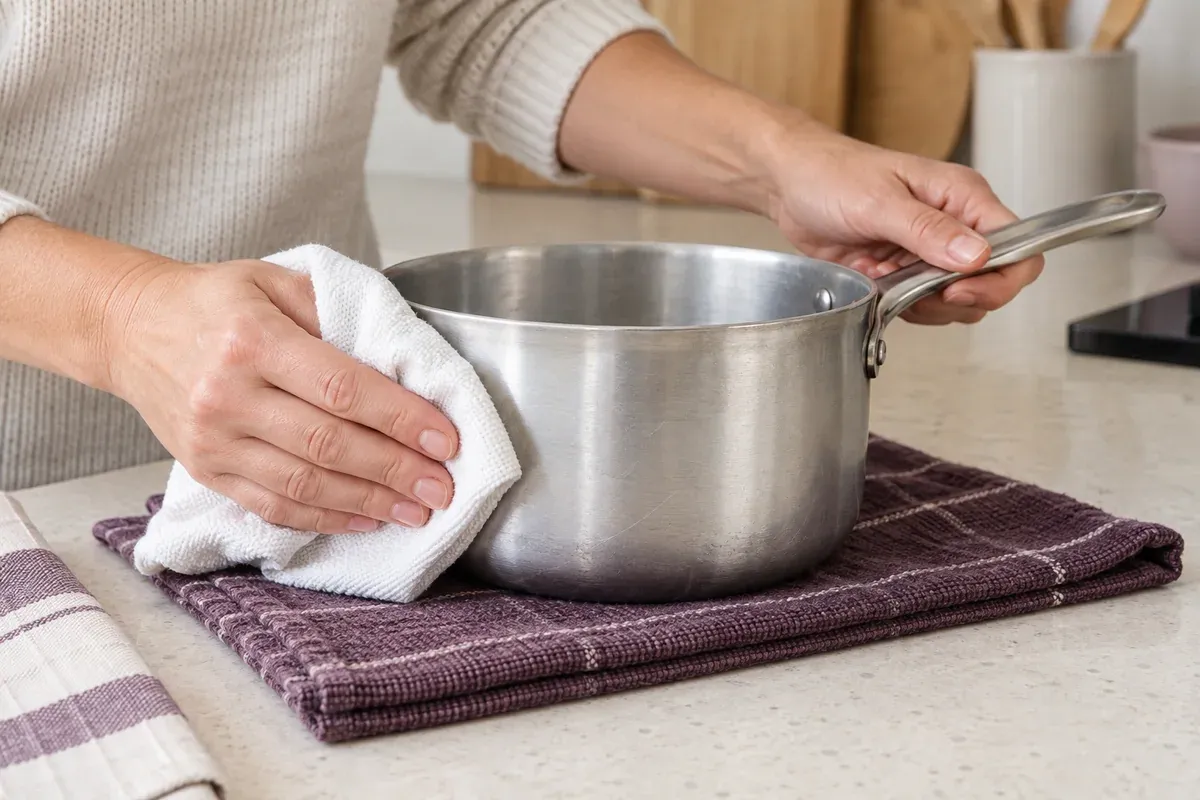
- Wash it with a soft cloth dipped in warm water and a few drops of mild dishwashing liquid. Astra Walker, an Australian tapware maker, gives the same method for its fittings: warm water or a mild pH-neutral liquid soap.
- Wipe off the soap with a cloth wrung out in clean water.
- Dry it straight away with a soft cloth. Astra Walker says drying after use prevents mineral deposits forming.
Done looks like: an even colour, no water spots and no soap left in the crevices. Bare brass that still looks dull or dark once it's dry is tarnished, and only solid, unlacquered brass should go on to the next step.
How to remove tarnish from solid brass
Tarnish is the dark film that builds up on bare brass. The Canadian Conservation Institute explains that sulfur-containing gases in the air cause it. Every polish removes a little metal along with the tarnish, so polish only when the brass looks dull, and stop as soon as it's bright.
Safety Never mix cleaning products. Victoria’s Better Health Channel: “Do not mix bleach with ammonia, acids or other cleaners – this can release hazardous chlorine or chloramine fumes.” Ventilate the room during and after use. Wear gloves and eye protection. Follow the label's dilution and contact time. In an emergency call 000. For poisoning advice call the Poisons Information Centre on 13 11 26 — 24 hours, anywhere in Australia.
Method 1: Salt, vinegar and flour paste
Best for larger pieces and heavier tarnish. The recipe is from Kansas State University's extension service.
- Dissolve 1 teaspoon of salt in 1 cup (250 mL) of white vinegar, then stir in plain flour until it forms a spreadable paste. Halve it for a few small pieces.
- Try it on a hidden spot first and rinse it off, to check the brass brightens evenly and the finish isn't marked.
- Spread a thin layer with a soft cloth and leave it a few minutes.
- Rub gently with the cloth, using a soft toothbrush in engraving and detail.
- Rinse thoroughly in warm water, making sure none is left in the crevices. Acid left on copper alloys forms green corrosion, the Canadian Conservation Institute notes.
- Dry it completely and buff with a clean, soft cloth.
Method 2: Lemon and salt
The classic tip, best for small pieces and light tarnish.
- Cut a lemon in half and dip the cut face in salt.
- Rub it over the brass, adding salt as it wears off.
- Rinse well in warm water, then dry and buff.
Method 3: Brasso or another brass polish
Brasso is sold at Coles, Woolworths and Bunnings, about $14 for 250 mL (checked October 2026). The Australian label says to shake it, test it somewhere hidden, apply it with a soft cloth and polish it off with a dry soft cloth before it dries completely. Wash the piece in soapy water afterwards.
Its safety data sheet lists it as flammable and a skin and airway irritant, and it contains ammonia, so keep it well away from bleach. Use it with a window open and gloves on. The Canadian Conservation Institute warns that some polishes contain hard particles that scratch soft copper alloys: another reason to keep it off antiques.
Green spots and crust (verdigris)
Black is tarnish. Green or blue-green deposits are corrosion, which the Canadian Conservation Institute treats as more serious.
- Grey, white or green paste in the crevices is often old polish that was never rinsed out. Ease it out with a wooden toothpick and soapy water.
- A few light green spots on solid brass can be treated with the vinegar paste, worked onto the spot only. Rinse and dry as above.
- Thick, crusty or pitted green, or any green on an antique, is a job for a conservator or metal restorer, not a scourer.
How to clean brass taps, handles, ornaments and instruments
Taps and shower fittings
Most tapware, brass-coloured or not, is a brass body under a chrome, electroplated or PVD finish. ABI Interiors' care guide is typical: warm soapy water and a microfibre cloth, wiped along the grain and dried, with no bleach, ammonium agents, highly acidic cleaners, solvents or scourers. That rules out lemon, vinegar and Brasso.
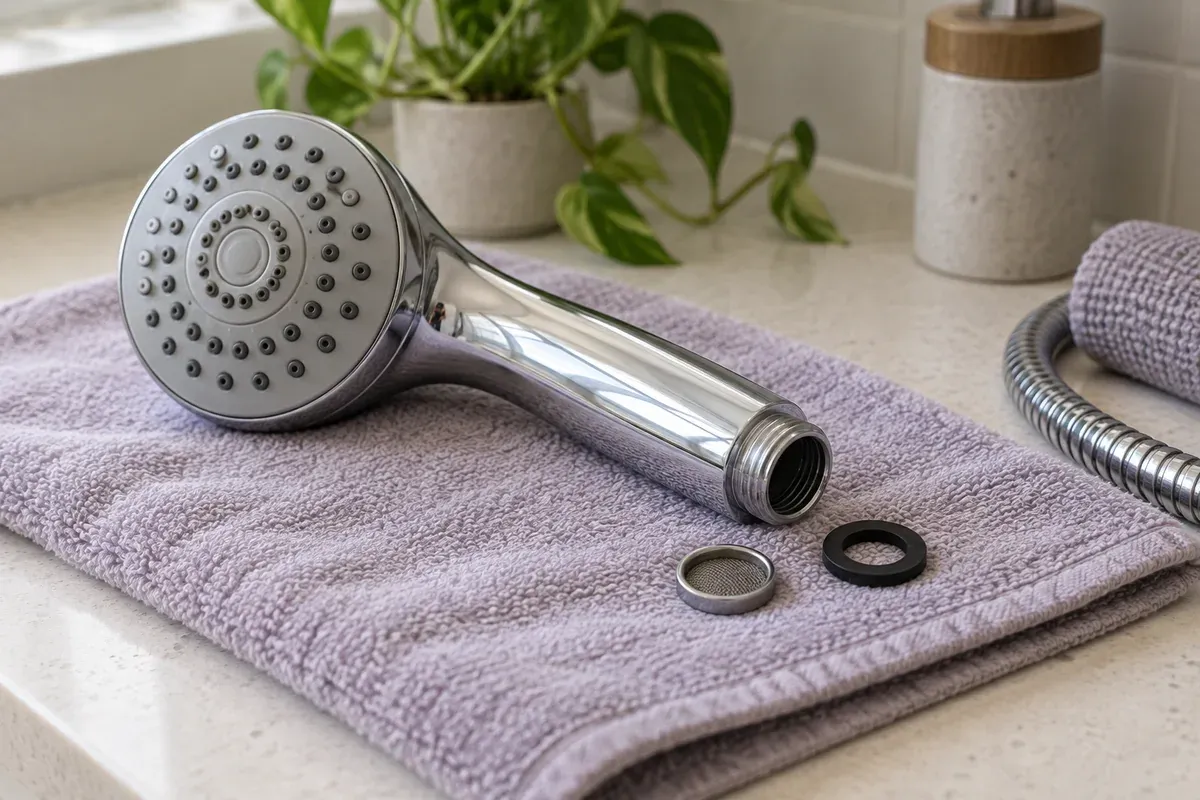
Uncoated "living" brass tapware is the exception: Astra Walker allows Brasso on its Natural Brass, but rules out acidic and citrus cleaners on every fitting it makes. Brass-coloured shower heads follow the same rules; see How to Clean a Shower Head: Is Vinegar Safe? for limescale.
Door handles, knobs and hinges
Lacquered handles get soapy water, a dry cloth and, Spark & Burnish suggests, a light coat of natural wax each month. It says never to use commercial or harsh cleaners on lacquer.
Solid, unlacquered handles can be polished with any of the three methods. Mask the door around them with painter's tape so the paste stays off the paint or timber, and rinse with a cloth rather than water. Salt is corrosive to brass, so front-door brass in sea air needs washing more often; ABI asks owners to limit its fittings' exposure to high levels of salt.
Ornaments, candlesticks and heirlooms
Ease off candle wax with a wooden or plastic tool before washing. For anything old or valuable, the Canadian Conservation Institute's rule is that, if in doubt, clean without polishing: a patina can be part of a piece's history and value, and polishing can't put it back.
Brass musical instruments
Each instrument finish needs its own product. Yamaha's metal polish is for nickel-plated or unlacquered brass only, never lacquered, silver or silver-plated finishes, and polish stays off valves, pistons and pads. Leave dents, stuck slides and cleaning inside the tubing to a brass instrument repairer.
Popular brass hacks: what works
Method | Verdict | Why |
|---|---|---|
Salt, vinegar and flour paste | Works on solid, unlacquered brass | Method 1 above |
Lemon and salt | Works on small, solid pieces | Method 2 above |
Lemon or vinegar with bicarb soda | Skip | Bicarb (baking soda) and acid neutralise each other |
Tomato sauce (ketchup) | Works, but it's messy | It's acidic, like the paste, so the same rinse-and-dry rules apply |
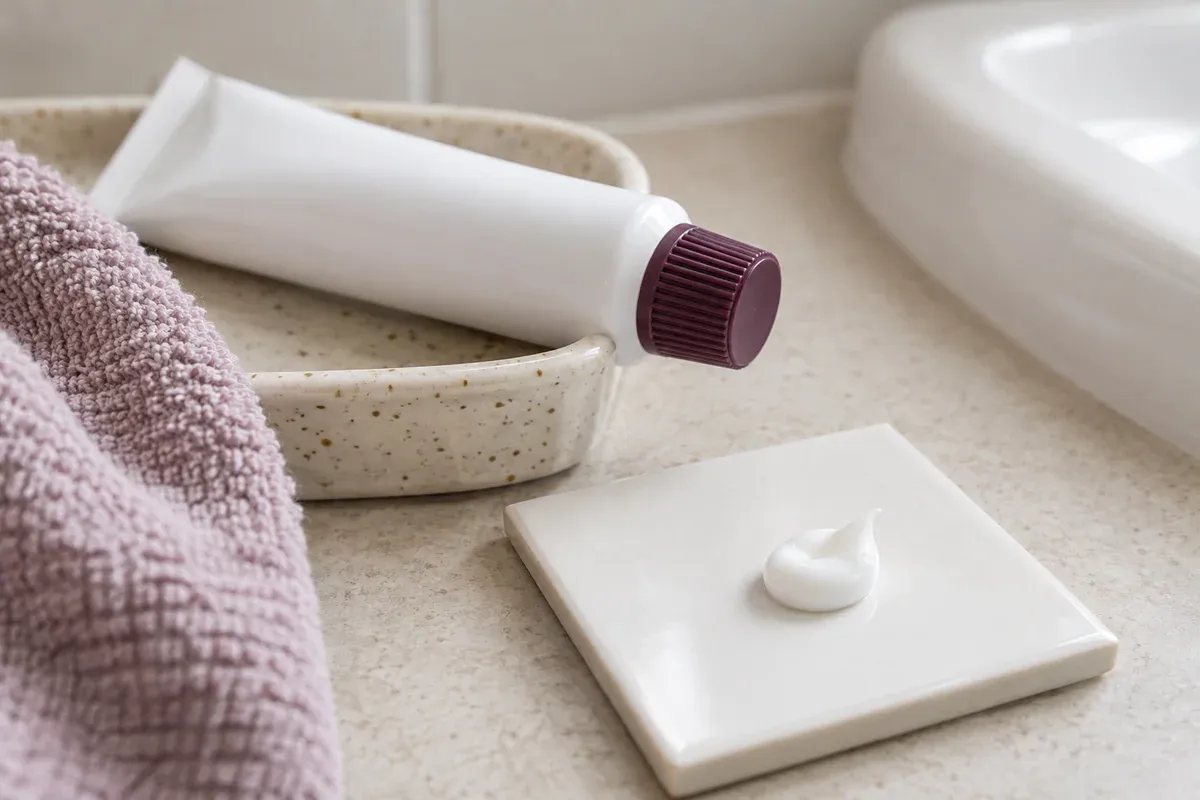
Toothpaste | Skip | Mildly abrasive and wears plating and lacquer; more in Toothpaste Cleaning Hacks: Which Work and Which Damage |
Brasso | Works on solid, unlacquered brass | Method 3 above |
Bar Keepers Friend | Solid, unlacquered brass only | An abrasive cleanser; its maker says to avoid lacquered surfaces and plated items |
Steel wool or a scourer | Don't | Scratches bare brass and strips plating |
Bleach | Don't | Astra Walker and ABI rule it out, and it must never meet Brasso's ammonia |
Keeping brass bright for longer
- Dry it after it gets wet, especially taps and anything outdoors.
- Handle polished pieces with clean cotton gloves. The Canadian Conservation Institute points out that fingers leave moisture, salts and oils on the metal.
- Wax it. A thin coat of microcrystalline paste wax, buffed off, means less cleaning and polishing (Canadian Conservation Institute). Astra Walker names Renaissance Wax for some of its brass finishes.
- Have it lacquered if you'd rather not polish it. A thin, even coat is hard to apply, the Canadian Conservation Institute says, so take it to a company that specialises in lacquering.
When it's not a DIY job
Take antiques, heirlooms and anything with a patina you want to keep to a conservator: the AICCM directory lists qualified conservators by region. Peeling or blotchy lacquer on handles and taps needs stripping and recoating, which uses toxic, flammable chemicals, so ask the supplier or a metal finisher. Instruments go to a repairer.
A Simply Maid standard clean wipes door handles and cleans the taps on every visit. Polishing brass ornaments, stripping or relacquering brass and restoring antiques aren't services we offer.
Frequently asked questions
Do bronze and copper clean the same way?
Mostly. Bronze is a copper alloy like brass, and the Canadian Conservation Institute's guidance covers all three. Two exceptions: copper pans build up a stable tarnish in use that's fine to leave, and some "bronze" statues are a soft white metal under a tinted varnish, which polishing would strip. Wash those; don't polish them.
Last reviewed 6 October 2026 · Update history
Sources & References
- Canadian Conservation Institute, CCI Notes 9/3: Cleaning, Polishing and Protective Waxing of Brass and Copper (PDF, 2007): polishing removes metal, polish cautions, wax, lacquering, when not to polish.
- Canadian Conservation Institute, Recognising metals and their corrosion products: what tarnish and green corrosion are.
- Kansas State University Research and Extension, Homemade Cleaners (PDF): salt, vinegar and flour paste; lemon and salt.
- Spark & Burnish, Cleaning your door and cabinet hardware: magnet test; lacquered, unlacquered and plated hardware.
- Astra Walker, Care & Maintenance: tapware care by brass finish.
- ABI Interiors, Care Guide (PDF): PVD and plated brass tapware.
- Coles, Brasso Metal Polish 250 mL: label directions and price.
- Brasso Metal Polish safety data sheet (PDF, 2023): hazards and ingredients.
- Bar Keepers Friend, Don't ruin your BKF experience: surfaces to avoid.
- Yamaha Australia, Metal Polish: instrument finishes it suits.
- AICCM, Find a Conservator: directory of conservators.
Related Reading
Change log
Who wrote and edited this article, when its sources were checked, and what changed.