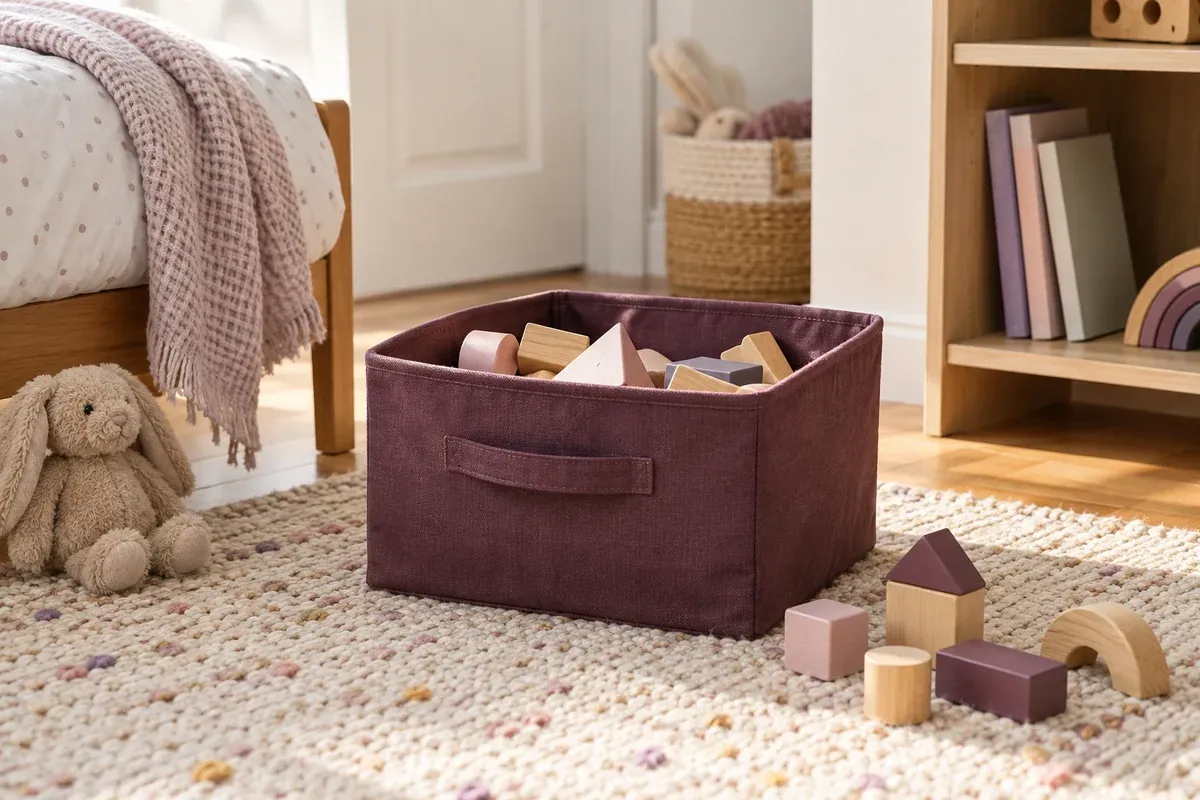
A child's room works best when the things they love have a place, and there is still space to move. Start with the bed, the route through the room and the storage you already have. Colour and decorative details can then bring the room together without filling every surface.
This guide brings together room planning, furniture projects, book displays and everyday storage. Choose one awkward corner or one piece of furniture to improve first; you don't need to replace a whole room at once.
Start with a measured plan
Draw the room from above and mark the door swing, wardrobe doors, windows, power points and any fixed heating. Measure the furniture you intend to keep, including the space needed to open drawers. A rectangle on paper is useful only if you can still walk past it when the drawer is open.
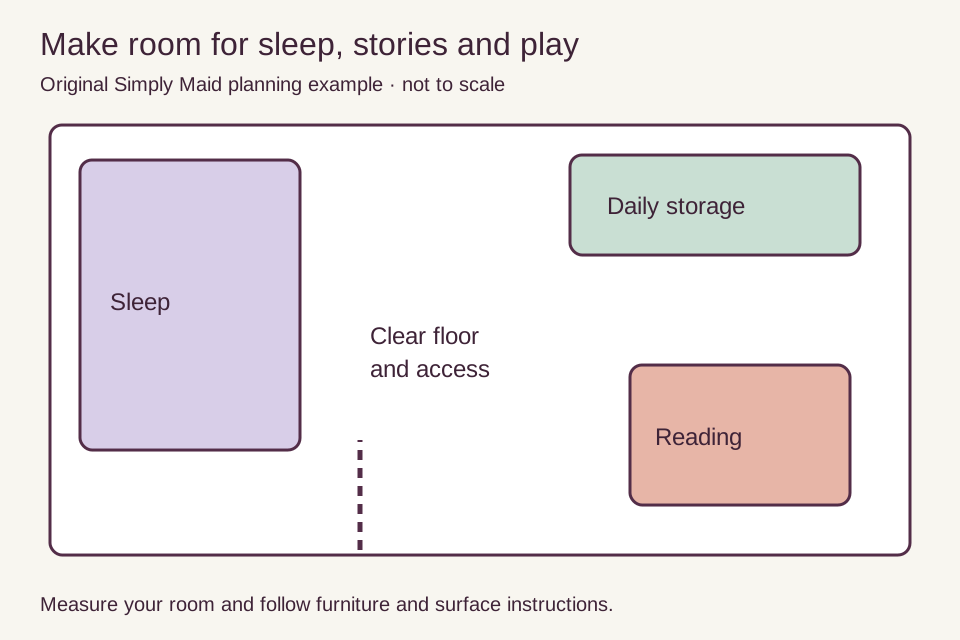
Give the room three jobs: a settled place for sleep, an accessible place for daily belongings, and an open area for play or reading. These can overlap. A low book display beside a comfortable chair can serve as both a reading corner and the place where bedtime books return.
Try a proposed furniture position with removable floor markers before moving heavy pieces. Choose tape suitable for the floor and test it discreetly first. Check the route from the bed to the door in ordinary use, with a basket or toy on the floor, rather than judging only an empty room.
Keep climbable furniture away from windows and blind cords. Follow the furniture manufacturer's assembly and anchoring instructions. The ACCC's toppling-furniture guide explains why securing furniture matters even when a piece appears stable.
Choose a palette that works with what stays
Pick a quiet background colour, a main accent and a smaller contrasting detail. A warm neutral wall, soft mint textile and muted coral drawer front can feel coordinated without matching every item. Existing timber, flooring and curtains count as colours too.
Test paint samples in the actual room at different times of day. A small sample photographed online cannot show how the colour will look beside your flooring or in your afternoon light. Start with removable elements such as bedding, a framed print or a washable cushion cover if repainting is unnecessary.
For a fuller example, our pastel-bedroom guide combines a geometric dresser project with a reading corner and storage. The shared-bedroom guide shows how two children can have distinct places within one room.
Make the dresser the project
A sound chest of drawers can supply both useful storage and a focal point. First check the joints, drawer runners, handles and wall anchoring. A decorative finish cannot fix a loose frame or a missing component. Look up the model's instructions before changing it.
The familiar IKEA RAST idea pairs visible timber with coloured geometric shapes. You can explore that look on another suitable chest without assuming its dimensions match the old RAST. Make a full-size paper plan for each drawer, choose a finish or furniture-rated adhesive compatible with the surface, and keep paint and adhesive away from runners and moving clearances.
See the geometric dresser steps for planning, preparation, finishing and care. This is a new project guide, not a source for the discontinued Petite Vintage Interiors decal kit.
Give books a visible home
Face-out books make it easier to choose a bedtime story. A purpose-made book ledge or low bookcase is the simplest starting point. Display a few books and keep the rest in a nearby basket or shelf; change the selection when it stops being interesting.
Many older room-design articles used an IKEA BEKVÄM spice rack as a small book display. It is sold as a spice rack, so treat using it for books as a modification rather than a certified children's shelving system. Check its dimensions and instructions, use fixings appropriate to the wall and intended load, and ask the manufacturer if that use is suitable. Do not assume a kitchen product is a climbing aid or that adhesive strips replace specified wall fixings. IKEA's BEKVÄM product information is a starting reference; check the instructions for your own version.
Position shelves away from the space above a bed and where they won't invite climbing. Put everyday reading within comfortable reach; decorative collections can live somewhere else.
Sort storage by the action it supports
What needs a home | A practical starting point | Make it easier to maintain |
|---|---|---|
Everyday clothes | A few accessible drawers | Give each drawer one clear job |
Soft toys | Open basket or suitable storage unit | Keep a manageable everyday selection |
Building toys | Shallow trays or separate tubs | Leave room to return pieces without precise packing |
Books | Low shelves or a book basket | Rotate the display instead of squeezing in every book |
Current artwork | A simple display area | Photograph or file older pieces when space fills |
Keepsakes | Labelled adult-managed storage | Separate them from things used in play |
An attractive basket is only useful if its contents can be put away easily. Watch what lands on the floor for a few days: the solution may be moving an existing container closer to the activity.
A bench can provide a place to sit and read, but choose a unit designed and rated for seating. Putting a cushion on a storage cabinet does not make it a seat. Open cubbies with separate baskets avoid relying on a heavy hinged lid; check the product's instructions and age suitability.
Add wall interest without crowding the room
Try one wall treatment before adding more furniture: a small grouping of prints, a restrained decal pattern or a single colour area. Keep fragile or heavy objects away from beds and places where they could be pulled down.
For a regular decal pattern, plan the centres and margins on paper before peeling anything. Our wall-decal layout and care guide includes an example grid, a template method and checks for painted walls. Removable does not mean suitable for every surface or guaranteed to leave every paint finish untouched.
Make the daily reset small
Choose three actions that match the room: clothes into their place, books back to the basket, and a clear route across the floor. Keep the routine suitable for the child's age and abilities. The design should support a short reset rather than require an adult to rebuild a display each evening.
Use our kids' room routine guide to share the work and our toy-cleaning guide when items need care. Follow the individual toy or textile label when it gives a different method.
Once toys and clothes are put away, our standard house cleaning checklist explains the routine dusting and floor-cleaning tasks you can book. Keep sorting belongings and room-design decisions separate from the cleaning visit.
Looking for Petite Vintage Interiors?
Petite Vintage Interiors previously published children's room designs, DIY ideas and studio information at petitevintageinteriors.com.au. The former studio and its client projects are separate from Simply Maid. The original portfolio and product shop are not reproduced here.
These are new Simply Maid editorial guides. They do not offer the former studio's design services or imply that its designers, clients or suppliers endorse Simply Maid. If you followed an old photograph credit, that historical photograph may not be available in this new collection.
About this guide
Original Simply Maid guidance prepared with AI assistance. Published 15 October 2026; linked supplier and service information checked on that date. No independent practitioner review or hands-on product testing is claimed.
Change log
Who wrote and edited this article, when its sources were checked, and what changed.
Current version
- Published by
- Simply Maid