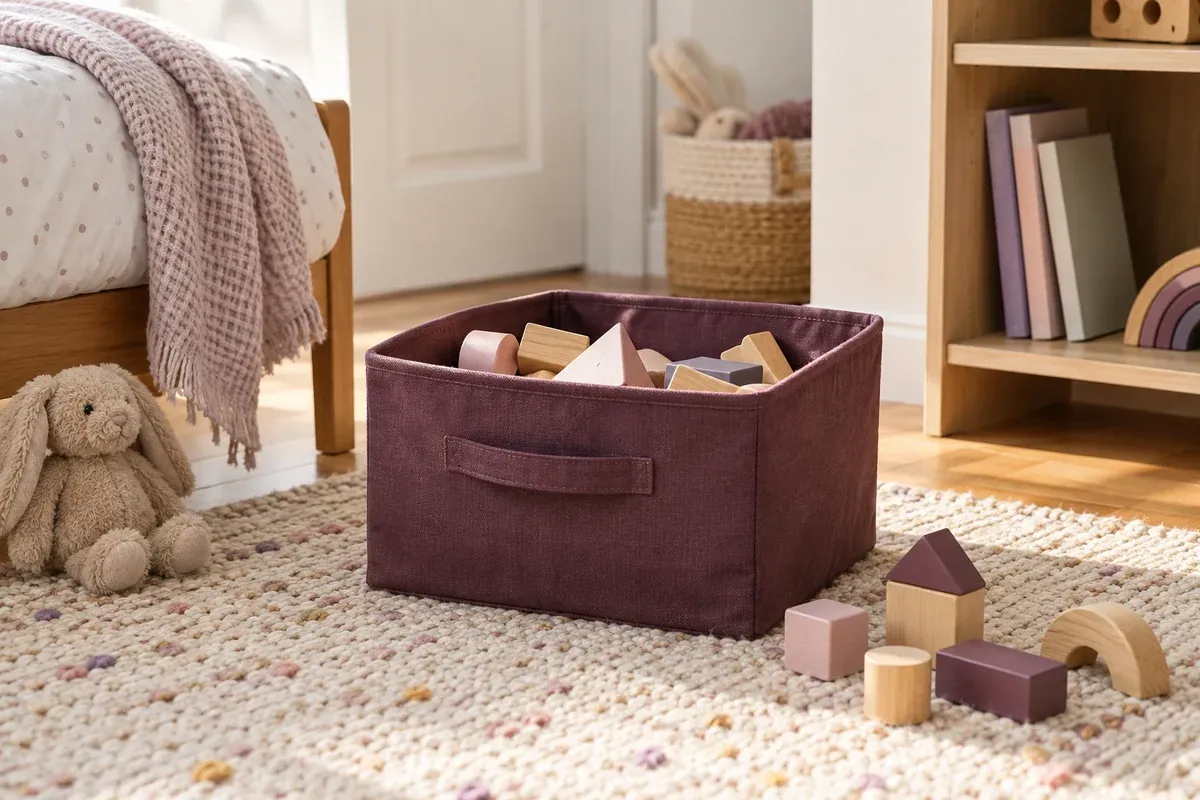
A shared bedroom needs room for two people's belongings and habits, as well as two places to sleep. Start with access and storage, then give each child a few choices that make their part of the room feel like theirs.
You don't need two of everything. A reading corner or art area can be shared, while everyday clothes, special belongings and bedtime books have distinct homes. This guide focuses on two ordinary single beds; bunk beds and cot layouts need their own product-specific planning.
Looking for Freya and Sybilla's room tour?
The former Petite Vintage Interiors tour described a small shared room designed by Belinda, with individual display shelves, vintage details and a reading nook. That named client project and its photographs are not Simply Maid's work and are not reproduced here.
Our new planning example explores the same practical questions without presenting a new room as the original project. It is a general guide, not a design service or a replacement source for the historical photographs.
Measure the awkward parts first
Draw the door swing, windows, wardrobe openings, power points and fixed fittings. Add the actual bed-frame dimensions, not only mattress sizes. Include the area needed to pull out drawers or use under-bed storage.
Keep an unobstructed route to the door. Check that a child can reach their own storage without stepping over the other bed. Avoid using the only clear floor area for a large shared bedside cabinet simply because it creates a symmetrical photograph.
If the room is narrow, try paper furniture cut-outs on a measured plan. Test the arrangement in the room before buying. Allow for an adult helping at bedtime and for changing bedding, rather than considering only whether two bed frames fit.
Compare three bed arrangements
Arrangement | When it may work | What to check |
|---|---|---|
Beds on opposite long walls | A room wide enough for a useful central route | Drawer openings, access to both beds and the space between them |
Beds parallel on one side | A room where the door and wardrobe leave a suitable wall | Whether the far bed remains accessible and each child has usable storage |
Beds at right angles | A room with two suitable adjacent walls | The inside corner, window access and whether bedding can be changed easily |
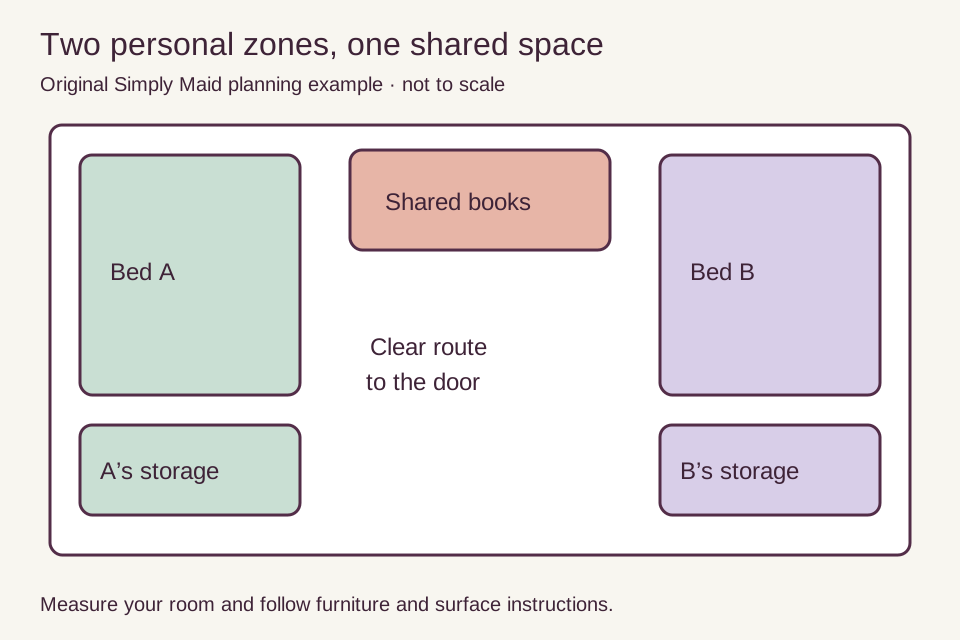
There is no universal layout for every small room. Choose the arrangement that works with its doors and windows, then make a measured check. Our diagram shows a possible organisation of zones, not a scaled room or building specification.
Keep beds and climbable furniture away from blind cords and windows. Do not place heavy shelving or decorative objects above a sleeping area. Secure furniture as its manufacturer directs, using fixings suitable for the wall. See the ACCC's furniture-safety guidance.
Give each child a clear place
Use two identifiable baskets, drawer sections or wardrobe zones for everyday belongings. Names, a small colour marker or a simple picture label can help. Let each child choose a modest personal detail, such as a pillowcase, print or basket colour, within the room's shared palette.
Keep special belongings separate from shared toys. A small box managed by an adult may work better for fragile keepsakes than a reachable display shelf. Don't rely on high shelves as extra play storage if they could encourage climbing.
If the children are different ages, choose storage according to what each can use safely. Small pieces for an older child need an appropriate place that a younger child cannot access. A decorative basket on the floor is not suitable storage for every kind of toy.
Make two colour choices feel like one room
Keep a common background and repeat one material, such as timber, across the room. Each child can then choose an accent: soft green on one side and muted pink or blue on the other, for example. Using the same type of basket or bedlinen pattern in different colours can provide continuity.
If one child prefers bold colour, use it in a smaller area rather than requiring both sides to be equally bright. Try paper swatches together before painting. Our pastel-bedroom guide includes a furniture project that can use two accents within one shared piece.
Plan for different routines
Agree on a place for tomorrow's clothes and a place for books after reading. Keep frequently used items accessible so one child doesn't need to rummage through the other's belongings. Put shared items where both can return them.
If bedtimes differ, consider how the earlier sleeper will be affected by room lighting and movement. Use existing suitable lighting thoughtfully and keep electrical leads secured and out of reach. Don't add a loose bedside extension lead to make a layout work.
Try a short shared reset: return books, sort clothes into their own places and clear the route across the room. Review the arrangement after a week of ordinary use. If the same things keep landing in the wrong place, adjust the storage before expecting a more complicated routine. Our kids' room routine guide offers practical ways to share those tasks.
About this guide
Original Simply Maid guidance prepared with AI assistance. Published 15 October 2026; linked supplier and service information checked on that date. No independent practitioner review or hands-on product testing is claimed.
Change log
Who wrote and edited this article, when its sources were checked, and what changed.
Current version
- Published by
- Simply Maid