An office chair collects dust, crumbs and a daily layer of skin oil on its seat, arms and wheels. What you can safely clean it with depends on the cover, and for fabric the cleaning code tells you.
Quick answer: Vacuum the seat, back and seams with an upholstery tool, then check the fabric's cleaning code. W and WS fabric, and mesh, take warm water and a little dishwashing liquid, foamed on a wrung-out cloth, then a clean damp wipe; S takes a water-free solvent; X is vacuum only. Leather gets mild non-detergent soap on a barely damp cloth; PU and the frame, a damp soapy cloth.
First, find the cleaning code
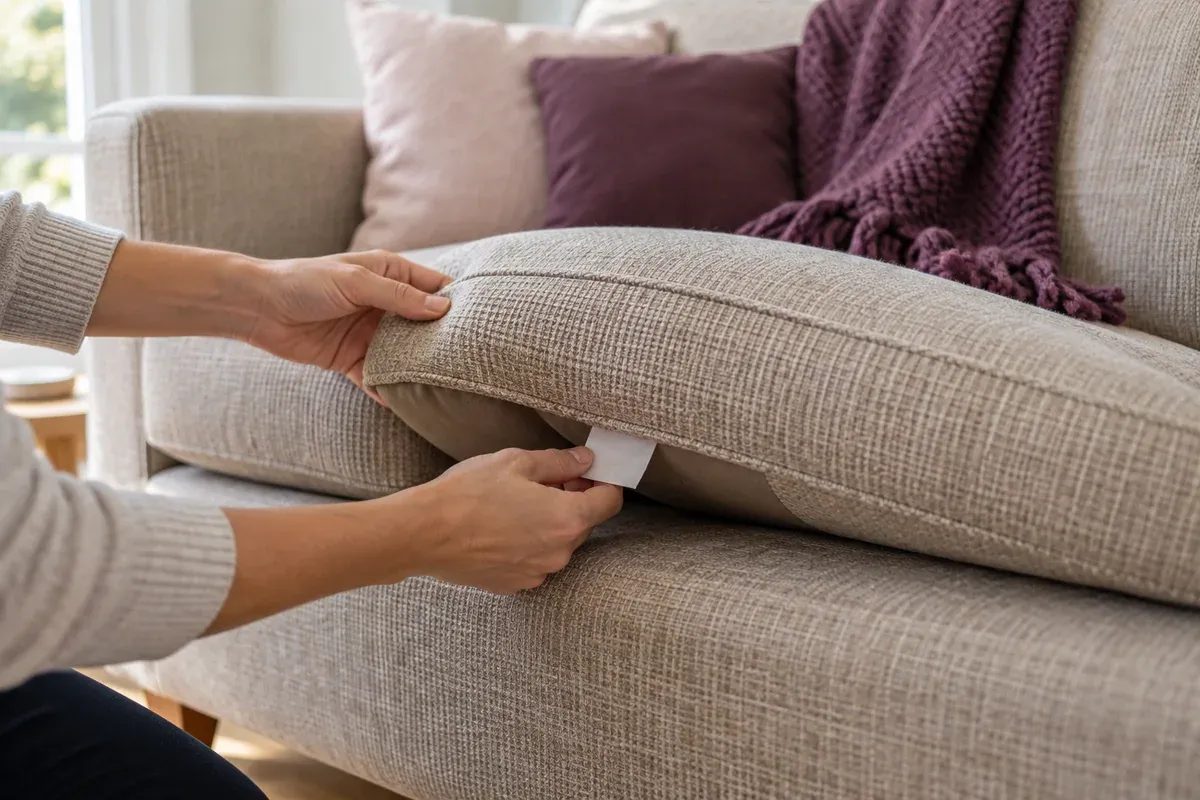
Upholstery fabric is rated W, S, WS or X for what it can be cleaned with. Look for the code on a tag under the seat or in the chair's care information; Steelcase suggests asking the dealer if you aren't sure what your chair is covered in. The definitions below come from the Association for Contract Textiles, which cites the IICRC's professional upholstery cleaning standard.
Code | What it means | What to use on a mark |
|---|---|---|
W | Water-based cleaners only; no solvents | Upholstery shampoo or foam, or mild soapy water worked into a foam |
S | A water-free solvent only: "DO NOT USE WATER" | A dry-cleaning solvent spot cleaner, tested first; anything bigger than a spot goes to a professional |
WS | Either | Foam for food and drink; solvent for grease, make-up and ballpoint |
X | Vacuum or light brushing only; no water or solvent | Vacuum; take marks to an upholstery cleaner |
No tag, or not sure | Unknown | Vacuum, then try a little foam on a hidden spot (under the seat edge) and let it dry before judging |
Whatever the code, Steelcase says it applies only to the outer fabric, and that over-wetting can damage the filling underneath.
Which kind of chair do you have?
Cover | Everyday | Marks | Keep off it |
|---|---|---|---|
Fabric | Vacuum with an upholstery tool | By cleaning code (above) | Soaking, steam, heat |
Mesh | Vacuum with an upholstery tool, no rotary brush | Mild warm soapy water, lathered, no scrubbing | Hot water, stretching, sharp tools |
Real leather | Dust with a dry cloth | A lather of mild non-detergent soap and a little lukewarm water, over the whole panel | Saddle soap, solvents, oils, polish, detergents, heat |
PU or vinyl ("leatherette" or faux leather) | A slightly damp microfibre cloth | A thin lather of mild soap and lukewarm water, wiped off, then dried | Solvents, abrasive cleaners, polish, oils |
Plastic and metal frame, base and arm pads | A soft cloth with mild detergent and warm water, rinsed, then dried | The same | Solvents, abrasive kitchen cleaners |
Not sure what it's made of | Vacuum, or a dry cloth | Treat it as fabric with no tag: test on a hidden spot first | Solvents, soaking, heat |
How to clean a fabric office chair, step by step
You'll need a vacuum with an upholstery tool, white cloths, warm water with a few drops of dishwashing liquid (or an upholstery foam), cool clean water and a towel.
Step 1: Vacuum everything
- Vacuum the seat, back, seams, the gap between seat and back, and under the seat. ACT recommends frequent vacuuming to prevent overall soiling.
- Loosen crumbs in the seams with a soft, non-metallic brush, then vacuum again.
Step 2: Spot clean by code
- Blot a fresh spill straight away with a white cloth. Don't rub.
- Whisk the soapy water until it foams, and load the cloth with foam rather than liquid: Steelcase's method works the cleaner into a lather "to minimize soaking the fabric". Keep the water warm, never hot: Herman Miller says hot water "will set the stain".
- Work from the outside of the mark towards the middle with light strokes, so it doesn't leave a ring. Herman Miller says to avoid scrubbing, and that "several light applications are better than one heavy application".
- For grease, make-up or ballpoint on S or WS fabric, use a dry-cleaning solvent on the cloth instead, tested on a hidden spot first, in quick, light strokes from the outside in. Keep a window open.
Step 3: Rinse, blot and dry
- Wipe the area with a cloth dipped in cool water and wrung out, to lift the soap (Herman Miller's step). ACT notes that cleaner left behind attracts dirt.
- Turn the cloth to a clean section often, so you don't wipe the dirt back on.
- Blot with a dry towel, let the fabric dry completely (a fan speeds it up; skip the hair dryer), then vacuum it.
Done looks like: dry fabric with an even colour and no ring or stiff patch.
If a ring shows once it's dry, go over the whole area again with a little foam, from the outer edge inwards, blot well and dry it faster with a fan. If the stain still resists, Herman Miller says to call a professional cleaner.
How to clean a mesh office chair
- Vacuum with an upholstery tool. Herman Miller's care instructions for the Aeron's mesh say not to brush it or use a rotary brush, which "may permanently damage the nap".
- For marks, use the same mild, warm soapy lather on a damp cloth, with no scrubbing, then a cloth dipped in cool water to remove residue. Let it dry, then vacuum.
- Don't pull or stretch the mesh, and don't push sharp tools between the mesh and the frame to dig out debris: Ergohuman suggests a soft brush or vacuum there instead. It also says to avoid saturating the mesh: the aim is to clean the surface, not soak liquid through the chair.
How to clean a leather, PU or gaming chair
Real leather. Herman Miller's instructions: dust with a dry cloth; for soiling, a lather of mild soap (Steelcase specifies a non-detergent soap) with a minimum of lukewarm water, wiped clean with a damp cloth and dried. Clean the whole seat or back rather than one spot, and let it air dry. It rules out saddle soap, solvents, oils, furniture polish and detergents, which leave leather sticky and cracked. To tell which leather you have, the water-drop test in How to Clean a Leather Couch and Condition It works on chairs too.
PU, vinyl and faux leather (Secretlab's PRIME 2.0 Leatherette is one example). Secretlab says to vacuum up crumbs, then wipe with a slightly damp microfibre cloth, and that a leather conditioner isn't necessary. Its warning is about sweat: perspiration and body oil, plus friction, weaken the coating until it peels, and "restoration is not possible after this happens". So wipe the seat and arms regularly, wipe off water drops promptly, and keep the chair out of direct sun. For a heavier clean, Steelcase's vinyl method is a thin lather of mild soap and lukewarm water, wiped off with a fresh cloth, then dried.
Armrests, base, castors and the gas lift
- Arm pads, frame and base. Herman Miller: a soft cloth soaked in mild detergent and warm water, then rinse and dry; no solvents or abrasive kitchen cleaners. Arm pads take the most skin oil, so they're worth a wipe weekly.
- Castors. Tip the chair onto its side and pull away the hair and thread wound around each wheel and axle; small scissors and tweezers help. Ergohuman notes that a castor that stops rolling smoothly may just have hair around its axle, and that one which still drags after cleaning may be worn and better replaced.
- Squeaks. Find and tighten the loose fixing, without over-tightening. Ergohuman advises against spraying lubricant broadly into the mechanism, which can attract more dust.
- The gas lift. Wipe the outside of the cylinder and leave it at that. Ergohuman says never to puncture, drill into or forcibly take apart a gas lift, because it's pressurised and can injure you. A seat that slowly sinks has worn seals and needs a new cylinder, fitted by a professional or the chair's maker if you're unsure.
Office chair cleaning methods compared
Safety Never mix cleaning products. Victoria’s Better Health Channel: “Do not mix bleach with ammonia, acids or other cleaners – this can release hazardous chlorine or chloramine fumes.” Ventilate the room during and after use. Wear gloves and eye protection. Follow the label's dilution and contact time. In an emergency call 000. For poisoning advice call the Poisons Information Centre on 13 11 26 — 24 hours, anywhere in Australia.
Method | Verdict | Why |
|---|---|---|
Warm water and a little dishwashing liquid, foamed | Yes, on W or WS fabric, mesh, PU and the frame | Herman Miller and Steelcase both use mild soap and water |
Upholstery shampoo or foam | Yes, on W or WS fabric | ACT's W definition |
Dry-cleaning solvent spot cleaner | S or WS fabric only, for grease and ink, after a test | ACT's S definition; Steelcase's S method |
Rubbing alcohol on ballpoint | WS fabric only, after a test | ACT: no solvents on W fabric, and S fabric needs a water-free solvent. How to Remove Couch Stains — Blood, Ink, Grease and More has the ink method |
Steam cleaner or carpet-style extractor | Skip | ACT doesn't recommend steam or hot water extraction; Steelcase says not to soak or heat the fabric |
Hair dryer or heater to dry it | Skip | Steelcase: no methods that heat the fabric; Herman Miller: never heat-dry leather |
Disinfectant wipes | Hard plastic and metal parts only | Fabric codes limit you to the cleaners above, and the leather and vinyl instructions list only mild soap and water |
Bicarb soda for smells | Not in Herman Miller's, Steelcase's or Ergohuman's care advice; never on X-code fabric | X fabric is vacuum and brush only (ACT) |
Conditioner on PU | Not needed | Secretlab |
White vinegar on stains | Skip | None of the chair makers' instructions above use it; Herman Miller's fabric method is a mild soap solution |
How to get a smell out of an office chair
Vacuum, clean the whole seat and back by the cleaning code, rinse, and dry it with a fan and an open window. Don't flood it: Steelcase warns that moisture left in seat foam "may cause future mildew or breakdown in the foam". On PU, sweat and body oil sit on the surface, and regular wiping removes them. If a fabric chair still smells once fully dry, call a professional: for large areas, Steelcase recommends a cleaning firm using a dry-foam shampoo with an immediate wet pick-up vacuum.
How often to clean an office chair
For a chair used every day, this is the rhythm we'd suggest:
How often | What to do |
|---|---|
As it happens | Blot spills straight away |
Weekly | Vacuum the seat and seams; wipe the arm pads |
Monthly | Clear the castors, wipe the base, check the arm and back fixings |
Every few months, or when it looks dull | Clean the seat and back by the cleaning code |
Speed matters: Steelcase cites an International Fabricare study in which 20% of stains could no longer be removed after a week, and 50% after three weeks. Germs are less of a worry than they sound: a 2012 study of 90 US offices found chairs and phones carried the most bacteria of five surfaces tested, but judged most of it harmless bacteria from people's skin, noses and mouths. The chair is one part of a weekly desk clean: How to Clean Your Desk and Keep It Organised covers the rest.
When to call a professional
- A mark on X-code fabric, or an S-code chair that needs more than a spot clean (ACT recommends a professional for overall cleaning of S fabric).
- Large soiled areas, or a stain or smell that survives two careful attempts.
- Peeling PU: it can't be restored, so the answer is a new cover or replacement parts.
- A sinking seat or a castor that drags after cleaning: a parts job, not a cleaning one.
Simply Maid doesn't offer upholstery cleaning or chair repairs.
Frequently asked questions
How do I clean a white office chair?
The same way as any chair of its material, but sooner. Blue marks can be dye transfer from jeans: ACT says it shows most where dark fabric such as denim touches light textiles, leather or coated materials, and "may be irreversible", so clean marks as soon as you see them. On white PU, a slightly damp microfibre cloth and a thin soapy lather are as far as you should go.
Can I put my office chair cover in the washing machine?
Usually not. ACT's definitions for W, S and WS fabric say covers shouldn't be removed and laundered or dry-cleaned, though some makers, Steelcase among them, say to remove cushion covers to launder. Wash a cover only if it's sold as removable and its own tag gives washing instructions.
How do I clean a second-hand office chair?
Do the whole guide in one go: vacuum everywhere including underneath, clear the castors, clean the seat and back by the cleaning code, and wipe the frame, base and arms with warm water and detergent, which Australia's Department of Health says physically removes germs along with dirt. Let it dry completely before use.
Last reviewed 6 October 2026 · Update history
Related Reading
- How to Remove Pet Hair From Couches, Carpet and Clothes
- How to Vacuum Properly (and Get More From Your Machine)
Sources & References
- Association for Contract Textiles, Cleaning resources and considerations (PDF, August 2013): W, S, WS and X definitions, blotting, rinsing, redeposition, dye transfer.
- Herman Miller, Aeron chair care and maintenance (PDF, October 2016, dealer copy): mesh, frame, arm pads and leather.
- Steelcase, Surface Materials Reference Manual care pages and Cleaning your Steelcase products (PDF, dealer copy): codes, W and S methods, over-wetting, foam, vinyl and leather, stain age, large areas.
- Ergohuman Australia, How to clean a mesh office chair (July 2026): mesh, castors, fixings, lubricant.
- Ergohuman Australia, Sinking office chair? How to safely replace your gas lift cylinder (July 2026): gas lift safety.
- Secretlab, 3 essential tips to care for PU leather gaming chairs: cleaning, conditioner, sweat and body oil.
- Secretlab, Extending the lifespan of PU leather: water, sun, bare skin.
- Hewitt and others, Office space bacterial abundance and diversity in three metropolitan areas (PLoS ONE, 2012): chairs and phones, mostly harmless bacteria.
- Department of Health and Aged Care, Cleaning and disinfection in the community (PDF, 27 October 2022): detergent and water remove germs.
- Better Health Channel (Victoria), Mould removal at home: never mix cleaning products.