Quick Answer: Wash makeup brushes every 7–10 days in your palm: wet just the tips in lukewarm water, massage in a drop of gentle or baby shampoo, rinse until the water runs clear, then squeeze, reshape and dry flat with the head over the bench edge. Wash sponges the same way, squeezing, never wringing. Allow about 1–2 minutes a brush, then overnight to dry.
What to clean makeup brushes and sponges with
Tool | Wash with |
|---|---|
Synthetic brush (the packaging says synthetic, nylon or taklon) | A drop of gentle or baby shampoo, or a brush cleanser |
Natural-hair brush (goat, squirrel, pony) | Fragrance-free soap or gentle shampoo |
Not sure which | Treat it as natural hair: fragrance-free soap or gentle shampoo |
Beauty blender or makeup sponge | A makeup-sponge cleanser, or a drop of baby shampoo |
If a brush or sponge came with its own washing instructions, those win: search the brand, the product name and "care".
The best way to clean makeup brushes at home, step by step

Use the brush’s own care instructions and let it dry completely before storage. Brushes and foam makeup sponges need different handling.
Read the illustration as text
- Tips pointing down
- Wet and clean the bristles as the brush maker permits.
- Rinse the bristles
- Remove cleanser without soaking the handle or metal collar.
- Dry flat
- Shape the bristles and let the head overhang a clean drying surface.
Do not stand a wet brush upright in a cup.
1. Wet the tips, keeping the handle dry
Point the brush head down and rinse just the tips under lukewarm water. Keep the handle and the ferrule (the metal collar) dry: soaking the whole head eventually dissolves the glue that holds it to the handle.
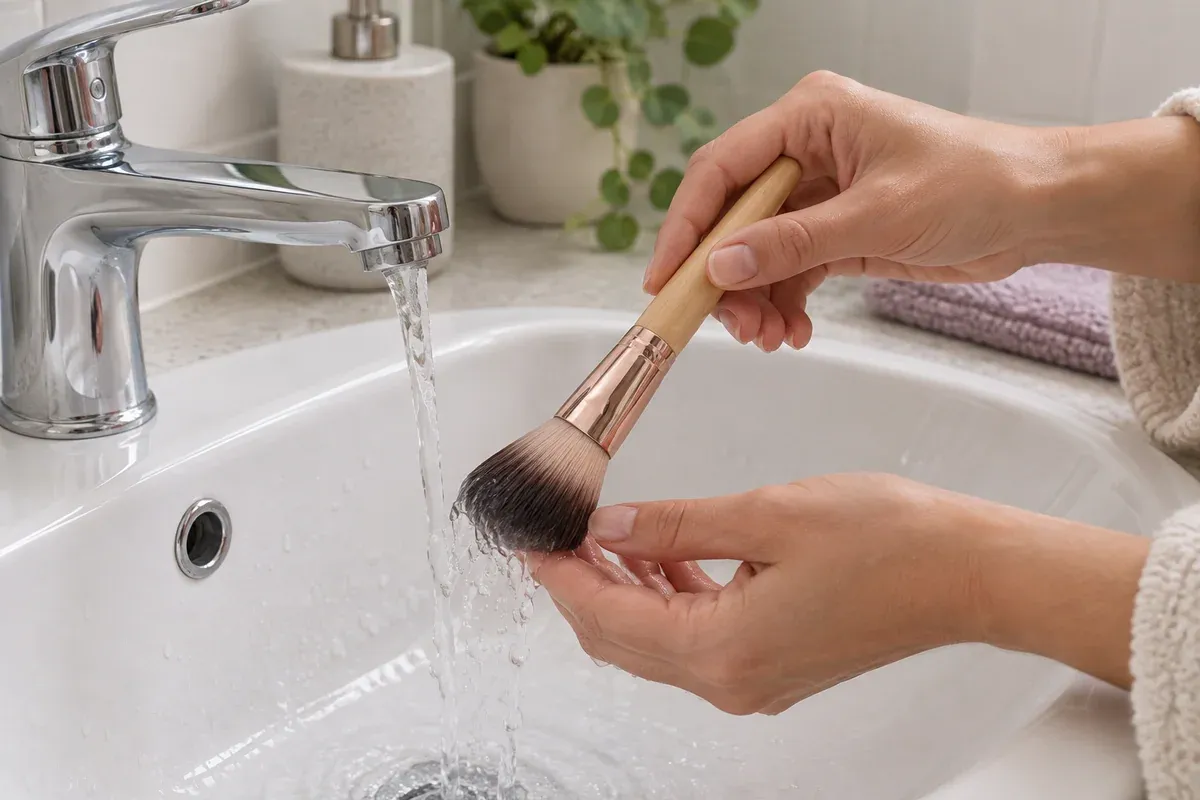
2. Lather a drop of shampoo in your palm
Put a drop of gentle or baby shampoo in your palm and massage the wet bristles through it, working toward the tip. You don't need a dedicated brush cleanser. Use your fingertips and don't pull at the hairs. Skip hair conditioner, which can stop bristles holding powder.
3. Rinse until the water runs clear
Rinse under lukewarm water, turning the brush so the water reaches the whole head. If makeup is still coming away, lather and rinse again rather than reaching for something stronger. You're done when the rinse water runs clear.
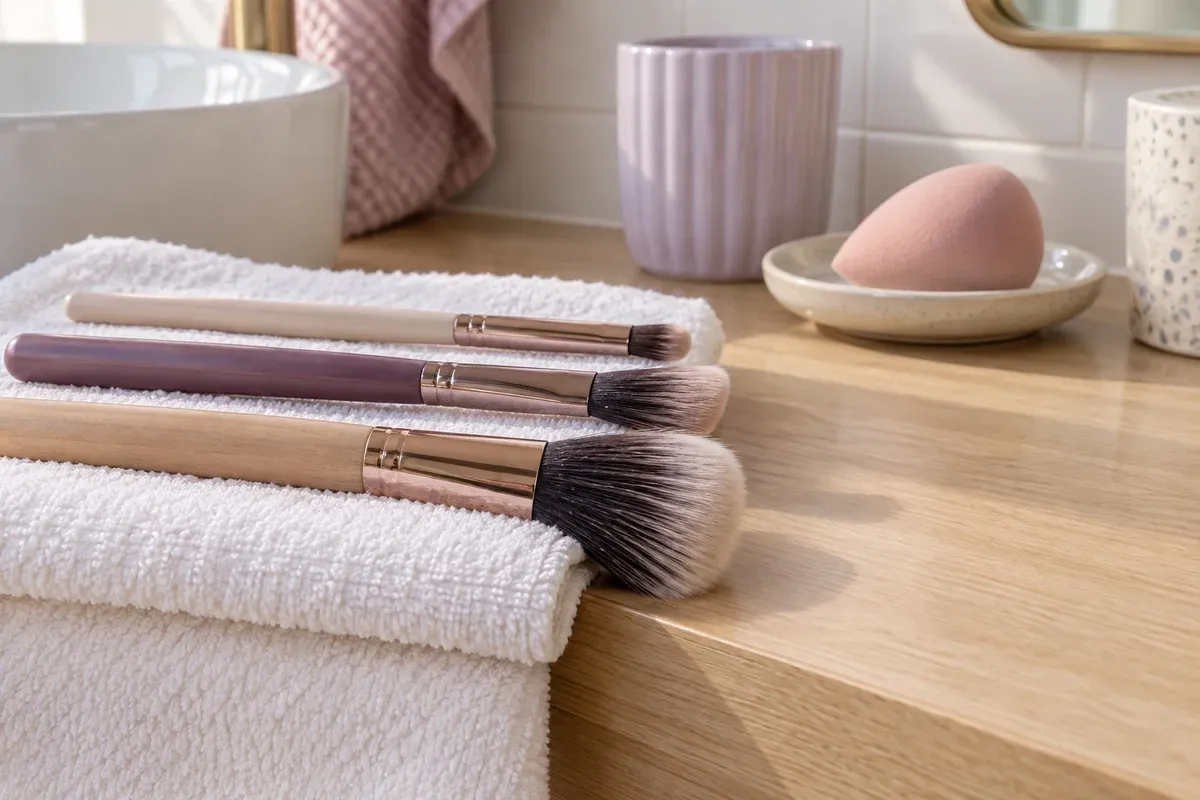
4. Dry flat overnight, head over the bench edge
Gently squeeze out the water, blot on a clean towel and shape the bristles. Lay the brush on the towel with its head hanging over the edge of the bench so air reaches all sides. Don't stand a wet brush upright in a cup: water runs into the base and loosens the glue. Most brushes are dry by morning; if the base of the bristles still feels cool or damp, give it longer. Skip the hairdryer and the sunny windowsill, because heat damages brush hair.
How to clean a beauty blender or makeup sponge
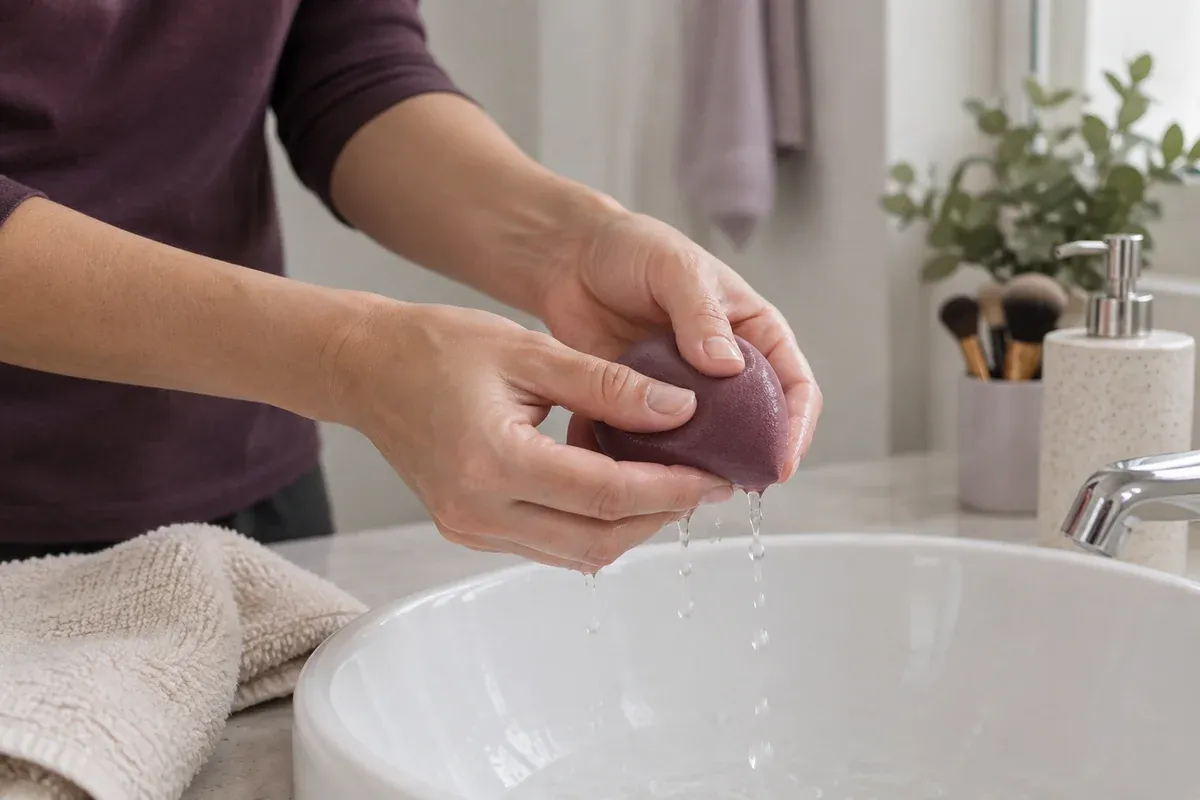
Sponges are soft foam, so they need squeezing, never scrubbing. Rinse yours in lukewarm water after each use and give it a full lather at least once a week.
- Wet the sponge under lukewarm water until it swells.
- Dab on a dot of makeup-sponge cleanser or baby shampoo.
- Squeeze gently to work up a lather. Twisting, wringing or scrubbing can tear the foam.
- Rinse, squeezing as you go, until pressing the sponge brings out no tinted water or residue. Clear rinse water on its own isn't proof, and a new pink Beautyblender can bleed its own dye for the first one or two washes.
- Squeeze out the excess and leave it on a clean towel overnight in an open, airy spot. A damp sponge zipped into a makeup bag can grow mould.
Dish soap, alcohol spray or the microwave: what works
Method | Verdict |
|---|---|
Gentle or baby shampoo | Works: the everyday choice for brushes and sponges |
Dish soap on a brush | Works at a pinch, but shampoo is better, because plain soap can dry bristles out |
Dish soap on a sponge | Skip it: Beautyblender says dish detergent dries out and breaks down its foam (RMS Beauty does allow mild dish soap on its own sponge) |
Fragrance-free bar soap | Works on natural hair; it's what Hakuhodo recommends for its brushes |
Alcohol brush spray | A quick fix when a brush must dry fast; used often, alcohol can make natural and synthetic hairs shed |
Microwaving or boiling a sponge | Don't: heat breaks down and deforms the foam, and a microwaved sponge can even catch fire |
Silicone cleaning mat or glove | Optional: it does what your palm does, with extra grip for dense brushes |
How often to clean makeup brushes
For one simple rule, wash every brush every 7–10 days. To match it to the makeup instead, go by what the brush is used for:
Tool | How often |
|---|---|
Foundation, concealer and other liquid or cream brushes | Weekly |
Eyeshadow and eyeliner brushes | Every 2 weeks |
Powder and blush brushes | Once a month |
Beauty blender or makeup sponge | Rinse after each use; full wash at least weekly |
Between washes: tap, wipe and spot-clean
After each use, tap loose powder into your palm and wipe the brush on a tissue or soft cloth. For cream or liquid products, wipe it on a cloth dampened with brush cleanser. It takes seconds, so it fits at the end of A 10-Minute Nightly Cleaning Routine. Wash sooner than the table says whenever the bristles smell or hold beads of makeup.
Pick one evening for the weekly wash so everything dries overnight, and add it to Build Your Cleaning Routine. Washing brushes in two batches leaves you a dry set to use.
When to replace brushes and sponges
Replace a brush once it's frayed, worn or has lost its shape. Replace a sponge when it tears, changes texture or keeps smelling, and throw it out if it shows dark spots, a likely sign of mould. Makers' intervals differ: Real Techniques says every 30 uses for its Miracle Complexion Sponge, Beautyblender about every three months.
Does a house cleaner wash makeup brushes?
Not as part of a Simply Maid clean: brushes and sponges are personal items you'll wash yourself. A standard clean covers the bathroom around them, including the mirrors, taps, shower and floors, in the order set out in How to Clean a Bathroom Properly — The Full Order of Operations. If a brush or sponge ever irritates your skin, stop using it.
Frequently Asked Questions
Q: How do I get long-wear foundation out of a sponge?
Work a little oil-based cleanser into the stained side first, as RMS Beauty suggests for oil-based makeup, then lather with baby shampoo so no oil stays in the foam. Rinse until the press test comes out clear.
Q: Why is my brush still tinted after washing?
Some pigments, reds especially, can leave a stubborn tint. Wash in lukewarm, not hot, water, as ZOEVA advises for these. A faint tint on soft, clean bristles is fine. If the bristles still feel coated, lather and rinse again.
Last reviewed 23 September 2026 · Update history
Sources & References
- American Academy of Dermatology, How to clean your makeup brushes: tips-only rinse, gentle shampoo, every 7–10 days, dry flat.
- Cleveland Clinic, How to clean your makeup brushes (29 October 2025): palm wash, washing by product type, overnight drying, when to replace.
- ZOEVA, Brushes care guidance: mild shampoo for synthetic brushes; lukewarm water for red pigments.
- M·A·C, 129 Synthetic Powder/Blush Brush: head pointed down; daily wipe on a dampened cloth.
- Hakuhodo, How to care for makeup brushes: fragrance-free soap; no conditioner, alcohol cleansers or heat.
- Beautyblender, Makeup sponge cleaning myths: no dish detergent, the press test, dye bleed, no microwave.
- Beautyblender, When to replace your Beautyblender: about three months; mould signs; damp storage.
- Real Techniques, Miracle Complexion Sponge: rinse after use, weekly deep clean, replace every 30 uses.
- RMS Beauty, How to clean a makeup sponge: baby shampoo or mild soap; oil-based cleanser for oil-based makeup; air-dry.
Related Reading
Change log
Who wrote and edited this article, when its sources were checked, and what changed.
Current version
What changed
23 September 2026: How to Clean Makeup Brushes and Beauty Sponges: added verdicts on dish soap (fine at a pinch on brushes, not on sponges), alcohol sprays and microwaving sponges, a baby-shampoo method for sponges without a sponge cleanser, and how to tell when a brush is dry.