
A few sound clothes pegs can help you group small things and label where they belong. Start with one drawer or basket, use what you already own, and keep the arrangement easy to undo. A useful system makes an item easier to find and put away.
Arriving from an Oh So Organised link? Jen MacCulloch's former website shared home-organising ideas, including an article about pegs. This is original Simply Maid guidance, with new examples. Simply Maid does not represent Jen or continue her organising business. The archived peg article provides historical context; its photographs and text have not been republished here.
Cords and earbuds
For spare, unplugged leads, use a peg as a label and light retainer. Avoid winding a cable tightly around the narrow end of a peg or pinching the wire in its jaws. Leave room around the connectors and follow the cable maker's storage instructions. A soft reusable cable tie is usually better for thin or delicate leads.
- Unplug the lead and lay it out without pulling on the connectors.
- Make relaxed loops that follow the cable's natural curve. Keep the connector ends loose.
- Use a soft tie around the loops. Clip a labelled peg to the tie or the edge of the storage basket, rather than crushing the cable.
- Put the lead in its own small compartment. Keep everyday chargers separate from spare leads.
- For wired earbuds, use their pouch or a small case if the wire is too fine for this arrangement. Return wireless earbuds to their charging case.
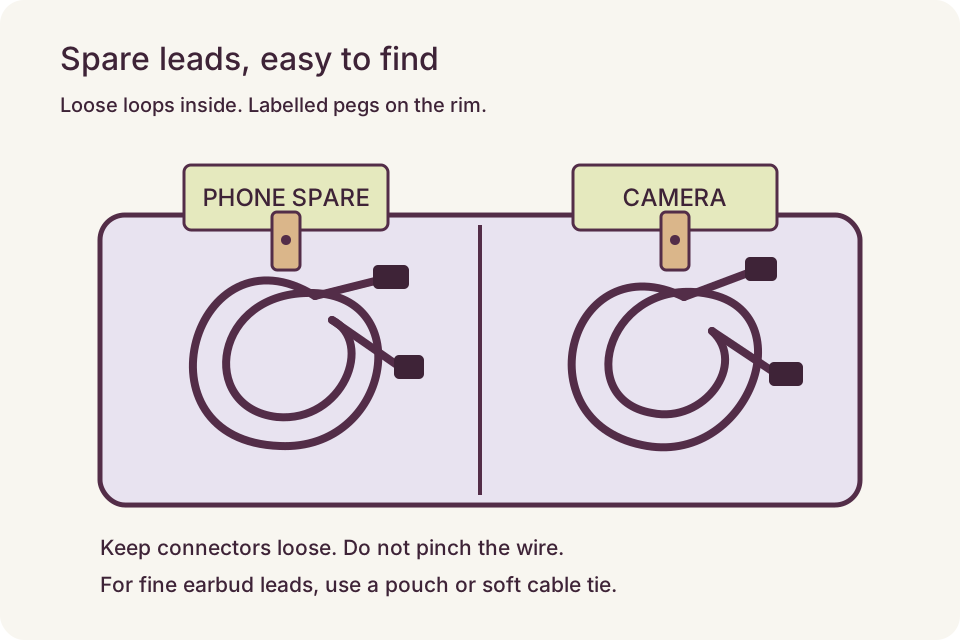
Try this small example: a basket divided into “phone spare”, “camera” and “unknown”. Label the first two with pegs. Identify the unknown lead before storing it long term; if it belongs to equipment you no longer have, consider an appropriate electronics recycling service. Keep any damaged lead out of use.
The illustration below shows the storage layout, not a product test. Nothing needs to be glued to the cable. Keep spare leads away from water, heat and places where young children or pets can reach them.
One basket, two labelled compartments
Keep spare leads in relaxed loops and attach the pegs to the basket rim. Use a soft tie or pouch for delicate cables. Original diagram; not a product test.
Paperwork and school notes
Give incoming papers one tray and three labelled pegs: “action”, “take along” and “file”. Clip small groups together without covering dates or instructions. Put a reminder in your calendar for anything time sensitive; a peg cannot remind you on its own.
Empty the tray once a week. Move records to their permanent home, recycle unwanted paper and take completed forms out of the action pile. If the spring struggles to hold the stack, reduce it or switch to a folder. Avoid pegs on fragile photographs or documents that must remain unmarked.
Pantry packets
Fold the top of a dry packet and clip it to keep the opening tidy. A peg is not an airtight seal, a pest barrier or a substitute for the food's storage directions. Keep the original label and use-by or best-before information readable.
For food that needs a sealed container, use a suitable food-storage container instead. Keep pantry pegs clean and separate from pegs used for dirty laundry or cleaning tasks. Do not use splintered wood, rusty springs or pieces with flaking paint near food.
Laundry and missing socks
Clip a single dry sock to a small basket rim while you wait for its partner. Review the basket regularly so it does not become a permanent collection. When the pair turns up, put both away together.
Pegs can also label sorting baskets: “repair”, “put away” or a household member's name. Keep the labels on the basket, not on delicate fabric. Remove ordinary pegs before using the washing machine or dryer; use only accessories intended for those appliances.
Cards, artwork and removable labels
Clip lightweight cards or paper artwork to a purpose-made display in a suitable location. Check the display's load limit and surface instructions. Do not suspend heavy objects from ordinary clothes pegs or hang cords within a child's reach.
A peg on a storage-box rim makes a label easy to change. Try it for spare stationery or craft supplies. If the peg catches clothing, scratches the box or falls off during use, replace it with a flat removable label. The label should help the task rather than get in its way.
Your five-minute setup
- Choose one recurring small problem, such as loose spare leads.
- Remove things that belong elsewhere before adding storage.
- Select a few clean, intact pegs and a container you already have.
- Label the categories in words everyone at home understands.
- Use the system for a week, then simplify anything that feels fiddly.
Pegs suit small, light groups. Use dividers for many loose items, a closed case for delicate electronics and a proper folder for paperwork. For a wider reset, start with our home-organising guide and home organisation routines. If you need help deciding what support to book, read professional organiser or cleaner.
About this guide
Original Simply Maid guidance prepared with AI assistance. Published 15 October 2026; linked supplier and service information checked on that date. No independent practitioner review or hands-on product testing is claimed.
Change log
Who wrote and edited this article, when its sources were checked, and what changed.
Current version
- Published by
- Simply Maid
