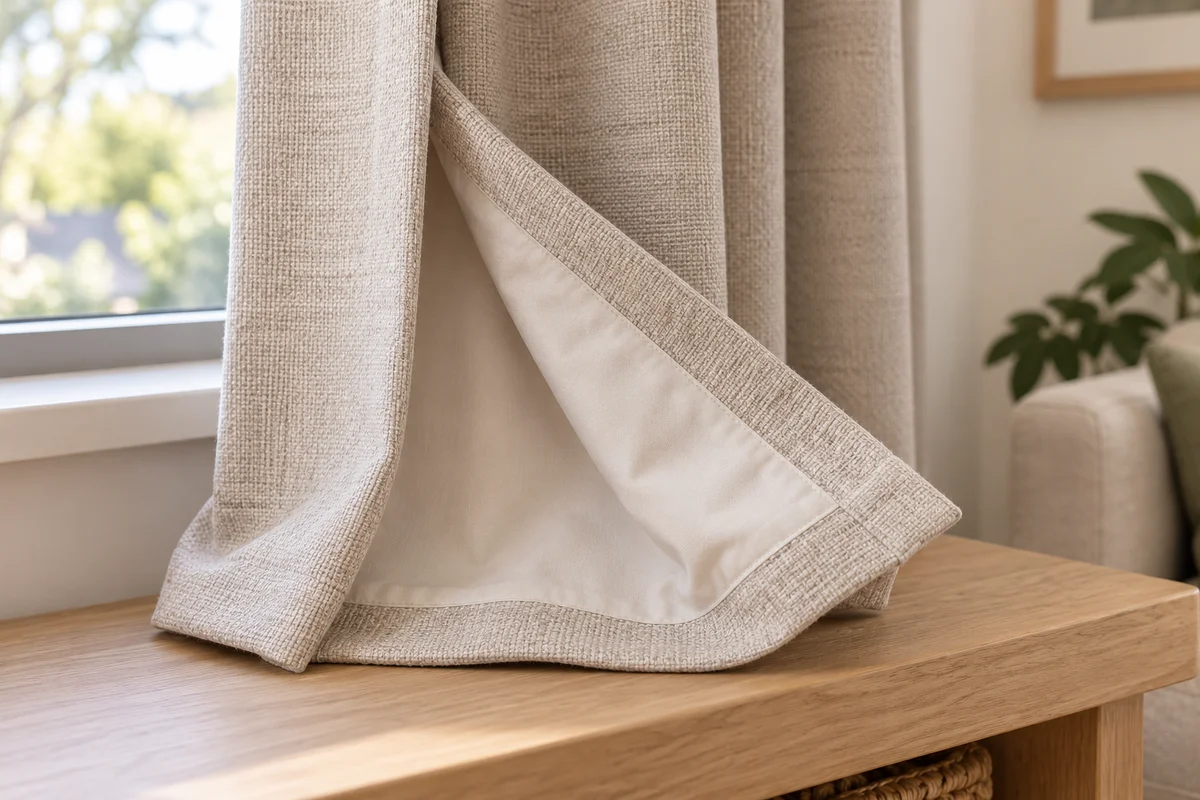
A furnishing is easy to care for when its needs fit your home and routine. A removable sofa cover may be useful, but only if you can clean and dry it as instructed. A beautiful rug may suit a quiet bedroom better than an entry where shoes, bags and wet umbrellas collect.
Before comparing colours, compare the work each item will need. Use this checklist for a new purchase, a second-hand find or something you already own.
1. Write down the job and location
Start with how the item will be used. Is the sofa where everyone eats snacks and watches television, or a quieter reading spot? Will the curtain sit near a cooking area? Does the dining table need to accommodate craft activities as well as meals?
Record the ordinary use you expect, the space available and the care tasks you are prepared to do. This is more useful than choosing an item because a description calls it practical.
Measure the item in use as well as at rest. Include open doors, pulled-out chairs and any space needed to remove covers. If cleaning beneath it matters to you, check the clearance against your actual vacuum head or other equipment.
2. Find the exact care instructions
Ask for the care sheet for the product, fabric and finish you are considering. Save it before purchasing. A broad material description such as timber, linen or wool does not explain every component or coating.
For a second-hand item, look for labels and model details. Ask the seller about alterations and replacement covers. If its care requirements remain unknown, include that uncertainty in your decision instead of planning to experiment with a strong cleaner later.
3. Check what a removable cover allows
A zip is not a washing instruction. Check whether the cover permits washing, needs professional cleaning or has another care process. Also check whether the instructions apply to the seat cover, cushion insert or complete item.
The difference can exist within one retailer's range. IKEA's HYLTARP Tallmyra cover allows machine washing under specified conditions. The UPPÅKRA instructions describe removable covers with different restrictions, including no washing. These are examples of why the exact instructions matter, not recommendations to buy either product.
If washing is allowed, check the practical details: load size, drying method, space and how the cover is refitted. A large washable cover is less convenient if you have nowhere suitable to dry it.
4. Compare upkeep by item
Item | Questions to answer before deciding |
|---|---|
Sofa or armchair | What does the fabric-care label permit? How do you reach seams and crevices? Can replacement covers or cushions be ordered? |
Rug | What are the fibre and backing? What vacuum setting or attachment does the maker specify? Is the underlay suitable for your floor? Who can clean it when routine care is insufficient? |
Curtain | What are the face fabric, lining and trim? How will it be removed and rehung? Does the whole curtain share one care method? |
Timber table or cabinet | What finish is applied? What routine cleaning is specified? What does the maker say about heat, moisture and protective pads? |
Storage furniture | Can doors and drawers open fully? Can you reach the floor and surfaces around it? Does the storage suit the objects you actually keep? |
Include specialist care in the comparison where the instructions call for it. For example, Warwick's care label for viscose/rayon pile fabrics has fabric-specific cleaning directions. A method suitable for another upholstery fabric is not automatically interchangeable.
5. Make a simple care record
Keep one record for each major furnishing. A note on your phone or a printed sheet is enough.
Field | What to record |
|---|---|
Item and location | The room and a clear description |
Identification | Brand, model, fabric name and finish, where known |
Instructions | A photo of the label and a saved care-sheet link |
Routine task | What the maker recommends and who will do it |
Specialist help | Supplier or appropriate cleaning contact if required |
Replacement information | Part or cover details, if available |
Avoid putting every furnishing on the same cleaning schedule. Let its use, condition and instructions guide the task. Keep maintenance and repairs separate from ordinary cleaning so they are less likely to be overlooked.
6. Choose the trade-off that works for your home
You may decide that a delicate piece is worth the care it needs. You may prefer fewer cushions, a simpler curtain or a table finish with instructions you can comfortably follow. The useful choice is one you understand.
Before replacing something, see whether changing its location or clearing access would solve the problem. An existing chair may work better away from the busiest route through the room. A crowded console may need fewer objects rather than a new surface.
For the wider room plan, return to home styling and care. For an item already needing attention, use curtain care or couch-stain guidance, checked against the item's own instructions.
About this guide
Published by Simply Maid with AI assistance. Manufacturer sources checked on 15 October 2026. No independent practitioner review or product testing is claimed. This is original Simply Maid guidance.
Change log
Who wrote and edited this article, when its sources were checked, and what changed.
Current version
- Published by
- Simply Maid