You rush through the door after a long day, and instead of relaxing, you're met with dishes in the sink, toys scattered across the floor, and that pile of laundry you've been ignoring since Tuesday. If keeping your home clean with a busy schedule feels impossible, take a breath — you're not alone, and it's not a personal failing.
Quick Answer: Keep your home clean on a busy schedule by breaking tasks into small daily habits (5–10 minutes) and spreading deeper cleans across the week. Focus on high-impact areas, clean as you go, and accept "clean enough" instead of perfect. Consistency beats intensity every time.
Why Keeping Your Home Clean Feels So Hard
It's not just you. Research from UCLA's Center on Everyday Lives of Families found that household clutter directly elevates cortisol — the body's stress hormone — particularly in mothers. The mess isn't just an eyesore. It's quietly draining your energy.
ABS time-use data puts unpaid housework and domestic work at more than an hour a day for most Australian adults. That's on top of full-time work, school runs, and everything else life throws at you.
You might have tried cleaning schedules that fell apart after a fortnight, or weekend marathon sessions that ate into family time and left you exhausted by Sunday night. The good news? There's a better way — and it doesn't require more hours in your day.
Start With What Matters Most
Not every cleaning task deserves equal attention. When time is short, focus on the areas that make the biggest difference to how your home feels:
- Kitchen bench and sink — a clear kitchen calms the whole house
- Living room floor — visible floor space instantly feels tidier
- Bathroom surfaces — a quick wipe keeps things hygienic
Everything else can wait. Prioritising means you'll always hit the essentials, even on the hardest days. And on the days you have a bit more time, you can tackle the rest.
Build Small Daily Habits That Stick
The secret isn't cleaning more — it's cleaning in smaller, more consistent bursts. Research published in the British Journal of General Practice by Gardner, Lally and Wardle found that simpler actions become habitual more quickly, with automaticity kicking in around 66 days on average.
Here's a daily reset that takes under ten minutes:
- Make your bed (2 minutes)
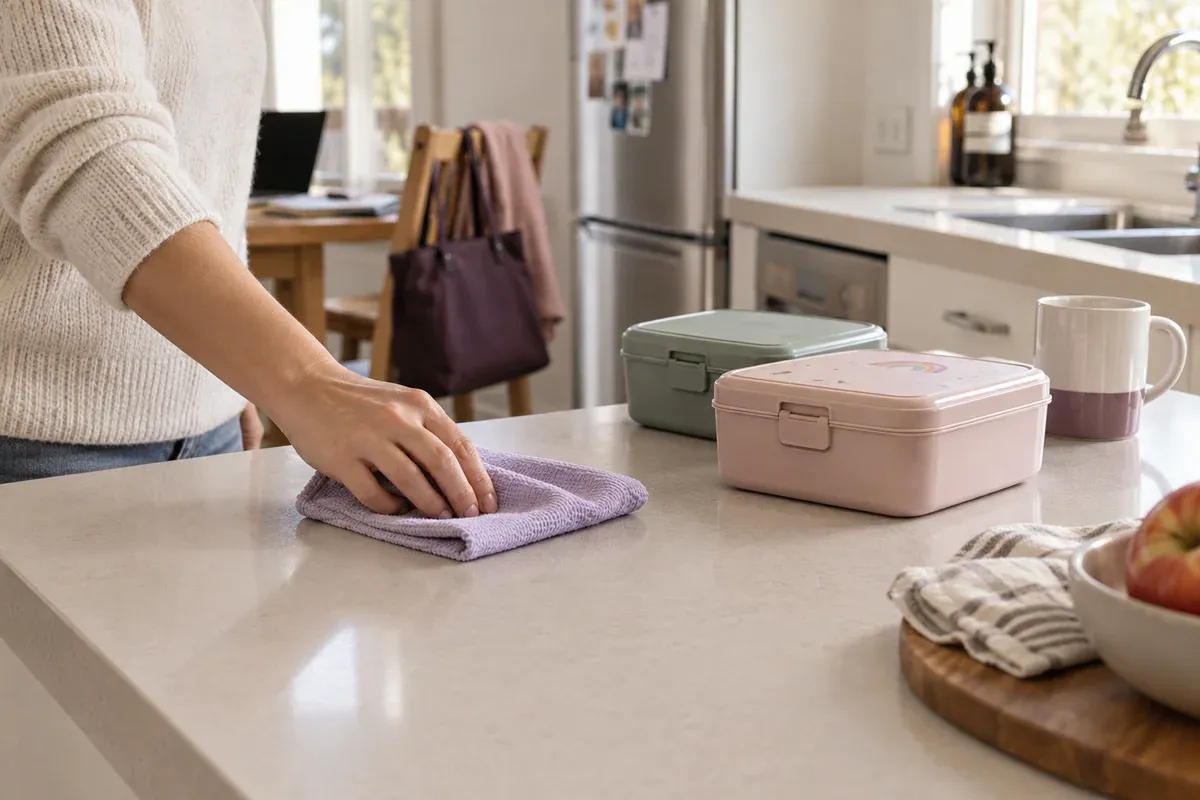
- Wipe the kitchen bench (1 minute)
- Load or unload the dishwasher (3 minutes)
- Pick up stray items into a basket (2 minutes)
- Quick wipe of the bathroom sink (1 minute)
Do this at the same time each day — right after dinner works well — and within a couple of months it'll feel automatic. These aren't chores anymore. They're just what you do.
Spread Weekly Tasks So Nothing Piles Up
Rather than a gruelling weekend cleaning marathon, assign one larger task to each weekday:
- Monday: Vacuum living areas
- Tuesday: Clean the bathroom
- Wednesday: Mop hard floors
- Thursday: Change bed sheets and towels
- Friday: Dust and wipe surfaces
Each task takes 15–20 minutes. Spread across the week, it never feels overwhelming. Your weekends stay free for the things that actually matter — like a trip to the park or a lazy brunch.
For more ideas on building sustainable family routines, see our guide to easy, effective and everlasting cleaning habits for the whole family.
Clean as You Go — the One-Minute Rule
This one sounds simple because it is: if a task takes less than one minute, do it now. Hang up your coat when you walk in. Put the cereal box away after breakfast. Wipe the bench while the kettle boils.
These micro-moments of tidying prevent the snowball effect where small messes build into daunting ones. It's less about discipline and more about removing the decision — you just do it, because it's quicker than thinking about it.
Micro Cleaning in Stolen Moments
You'd be surprised what you can accomplish in five minutes:
- Waiting for the kids to get dressed? Sweep the kitchen.
- Dinner in the oven? Unload the dishwasher.
- Ads on TV? Fold a load of laundry.
- On hold on the phone? Wipe down the bathroom mirror.
These small wins add up. A few five-minute sessions across the day can replace an hour-long cleaning block — and they're far less exhausting.
Stop Dirt at the Front Door
Prevention is the most underrated cleaning strategy. And it starts at your doorstep.
A study led by Dr. Charles Gerba at the University of Arizona found an average of 421,000 units of bacteria on the outside of shoes, with a transfer rate of up to 99% onto clean floor tiles. That includes coliform bacteria, which indicates contact with faecal matter.
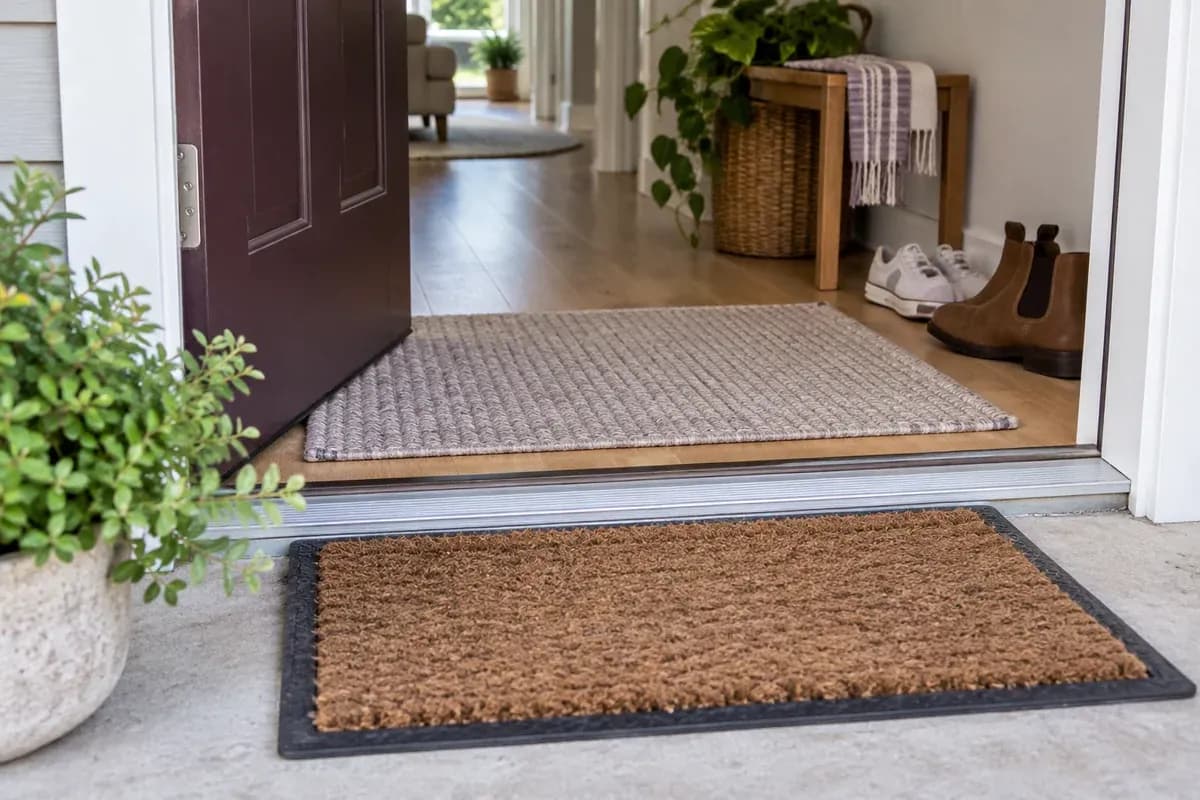
A simple shoes-off policy at the front door cuts the amount of dirt, bacteria, and allergens tracked through your home dramatically. Add a doormat on either side of the entry, and you've just made vacuuming half as urgent.
⚠️ Safety note: Shoes can carry bacteria linked to respiratory and gastrointestinal illness. A no-shoes policy is especially important in homes with crawling babies or young children who play on the floor. — University of Arizona / CIRI
Keep Cleaning Supplies Where You Need Them
If you have to walk to another room to grab a cloth and spray, chances are you won't bother. Keep a small cleaning caddy in each high-use area:
- Kitchen: Multipurpose spray, microfibre cloth, dishwashing liquid
- Bathroom: Bathroom cleaner, toilet brush, glass cleaner
- Living areas: Dusting spray and cloth, a handheld vacuum or lint roller
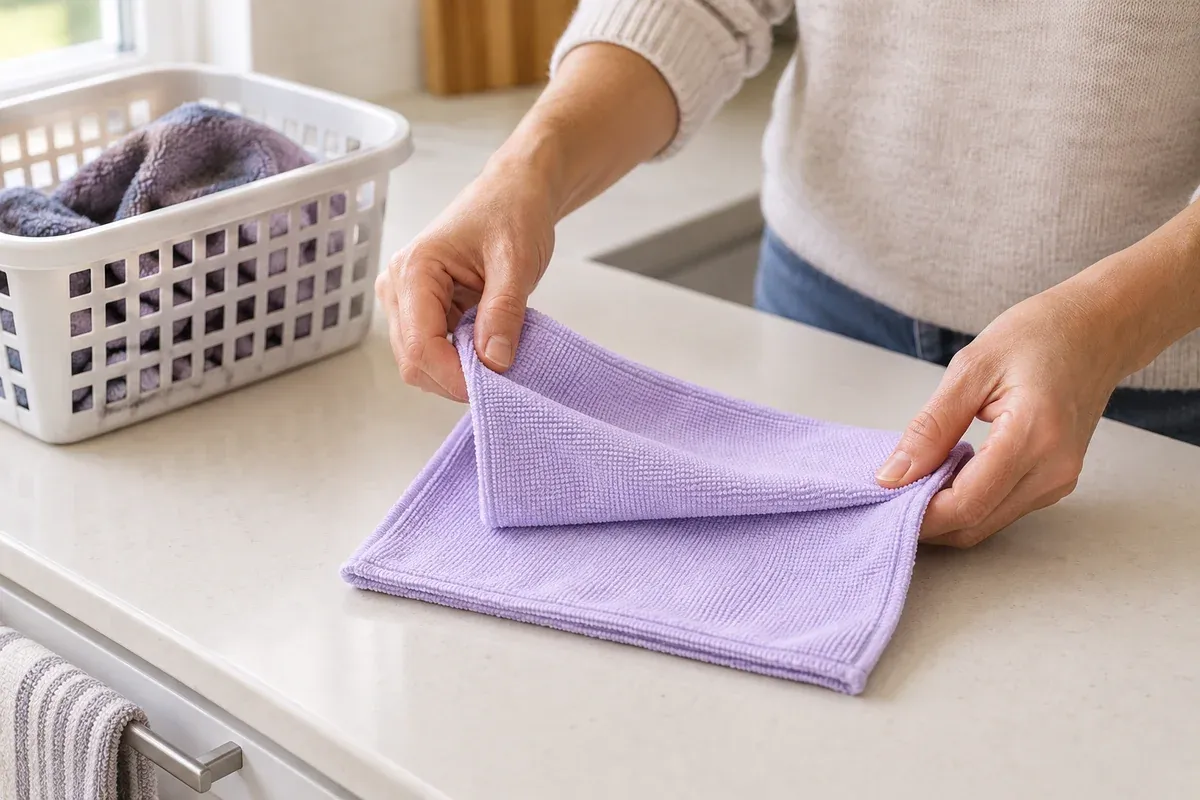
When supplies are within arm's reach, a quick wipe becomes effortless. A UC Davis Medical Center study published in the American Journal of Infection Control found that microfibre mopping removed vastly more bacteria than conventional mops — the same fibre technology in a microfibre cloth means you don't need heavy chemicals to keep things hygienic.
Better Tools Mean Less Time Cleaning
If you're scrubbing the same spot three times with a worn-out mop, that's not cleaning — it's cardio. Investing in better equipment pays for itself in time saved.
CHOICE Australia's independent testing confirms what busy families already know: a robot vacuum running daily keeps floors acceptable between proper cleans. They won't replace a thorough vacuum, but they dramatically reduce how often you need one.
Other time-saving upgrades worth considering:
- Cordless stick vacuum — grab and go, no wrestling with cords
- Spray mop — faster than a bucket-and-mop setup
- Squeegee for the shower — 30 seconds after each shower prevents soap scum buildup
You'll find most of these at Bunnings or your local Kmart.
Give Yourself Permission to Be "Clean Enough"
Here's the truth most cleaning advice won't tell you: perfection isn't the goal. A home that's lived-in, loved, and reasonably tidy is more than enough.
Research from the Princeton Neuroscience Institute shows that visual clutter competes for your brain's attention, increasing stress and reducing focus. But the answer isn't a magazine-perfect home — it's a home that feels calm to you.
"Clean enough" means the kitchen is hygienic, the floors are walkable, the bathroom is fresh, and there's a clear surface to sit down and breathe. It doesn't mean no toys on the floor. It doesn't mean perfectly folded towels. It means your home supports your life instead of adding to the pressure.
If you've been holding yourself to impossible standards — or comparing your home to curated social media feeds — give yourself permission to let that go. You're doing more than enough.
For more on why cleaning often falls behind, read our piece on 5 reasons why homeowners neglect house cleaning.
When You Need a Hand — And That's OK
Sometimes the smartest approach isn't a new routine. It's recognising that you don't have to do it all yourself.
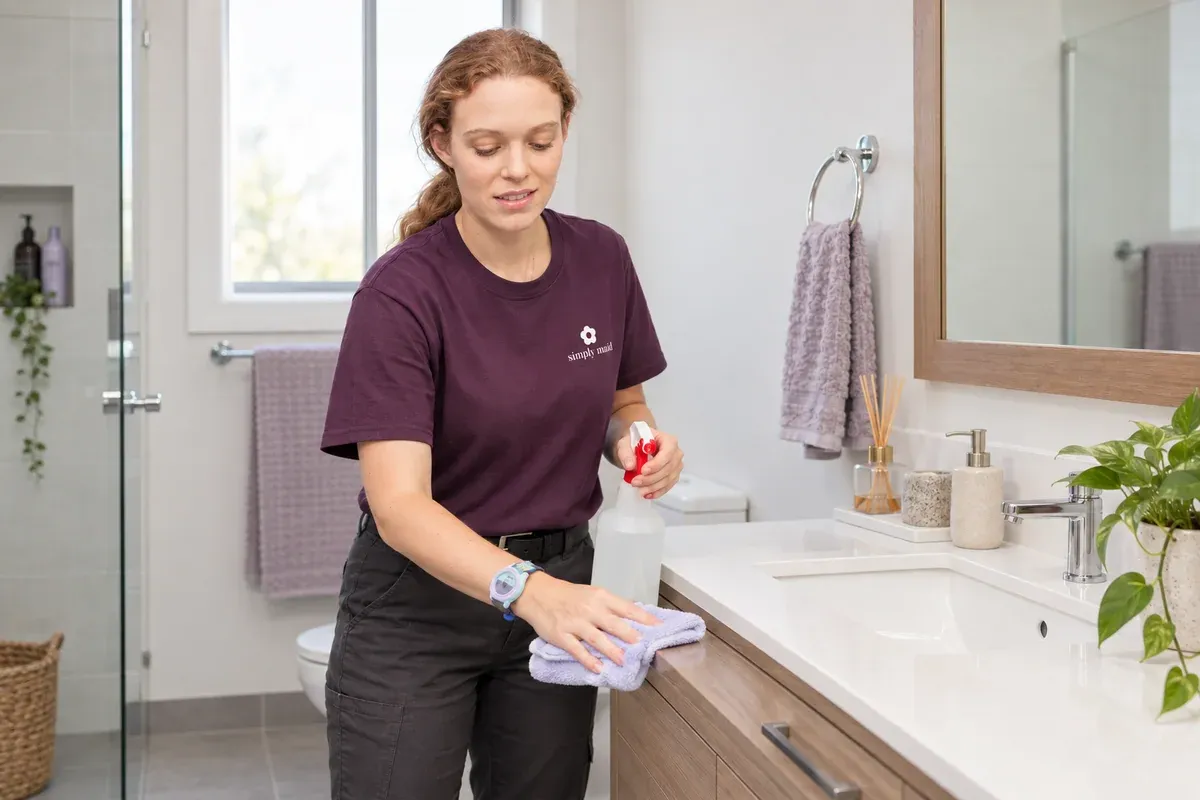
A fortnightly professional clean handles the deep tasks — bathrooms, mopping, dusting — so your daily routine only needs to cover the basics. Many families find this combination gives them the best of both worlds: a consistently clean home and their weekends back.
If you've been thinking about it but feel guilty, know this: outsourcing your cleaning isn't giving up. It's choosing to spend your time and energy on what matters most to you. Whether that's playing with your kids, working on a project, or simply sitting down for ten minutes with a cup of tea.
For an honest look at the trade-offs, have a read of house cleaning yourself vs hiring a professional cleaner.
Frequently Asked Questions
Q: How do working parents keep their house clean?
Most working parents rely on a combination of small daily habits (a 5–10 minute reset each evening), weekly task rotation, and strategic shortcuts like a shoes-off policy and supplies in every room. Many also hire a professional cleaner fortnightly to handle deeper tasks, freeing up weekends for family time.
Q: How often should I clean my house if I work full time?
A quick daily tidy (making beds, wiping benches, loading the dishwasher) plus one 15–20 minute task per weekday is enough to keep most homes comfortable. Monthly, tackle things like oven cleaning, window washing, and behind-furniture dusting. Don't aim for perfection — aim for "clean enough."
Q: Is it worth hiring a cleaner if I still have to tidy between visits?
Yes. Professional cleaners handle the time-consuming deep cleaning (bathrooms, mopping, dusting, vacuuming) so your daily effort is minimal. Most clients find they only need to maintain light tidying between visits. It's less about replacing your effort and more about reducing it dramatically.
Q: What is the fastest way to tidy a messy house?
Start with the room that stresses you most — usually the kitchen or living room. Set a timer for 15 minutes. Pick up everything that doesn't belong, wipe surfaces, and vacuum the floor. You'll be surprised how much better the whole house feels when one key room is sorted.
Q: How do I stop feeling guilty about a messy house?
Remember that research shows clutter affects everyone's focus — it's a universal human response, not a personal failure. Lower your benchmark to "clean enough," focus on the spaces that matter most to your wellbeing, and remember that asking for help is a strength, not a weakness.
Related Reading
- Easy, Effective and Everlasting Cleaning Habits for the Whole Family
- A Quick Nightly Cleaning Routine for a Better Tomorrow
- Five Surefire Ways to Get Your Kids to Clean Their Rooms
- Top 10 Cleaning Mistakes That Are Wasting Your Time
- House Cleaning Yourself vs Hiring a Professional Cleaner
Sources & References
- Australian Bureau of Statistics — How Australians Use Their Time. Referenced for unpaid housework and domestic work statistics among Australian adults.
- Saxbe & Repetti, UCLA researchers, Personality and Social Psychology Bulletin (2010) — No Place Like Home: Home Tours Correlate with Daily Patterns of Mood and Cortisol. Cited for the link between household clutter and elevated cortisol levels.
- Gardner, Lally & Wardle, British Journal of General Practice (2012) — Making Health Habitual. Referenced for habit formation research (66-day automaticity finding).
- Dr. Charles Gerba, microbiologist, University of Arizona — Study on Bacteria Levels on Footwear. Cited for shoe bacteria transfer data (421,000 units, 99% transfer rate).
- Princeton Neuroscience Institute — Interactions of Top-Down and Bottom-Up Mechanisms in Human Visual Cortex. Referenced for visual clutter's effect on attention and cognitive stress.
- UC Davis Medical Center — study published in the American Journal of Infection Control. Cited for microfibre mopping removing vastly more bacteria than conventional mops.
- CHOICE Australia — Robot Vacuum Reviews. Referenced for independent equipment testing and recommendations for Australian consumers.
A hand with everyday housework
A cleaning routine should fit the time you have. Explore our standard cleaning inclusions if you'd like help with kitchens, bathrooms, floors and everyday surfaces.