Pet urine needs a treatment that suits both the affected material and the product you are using. A fresh spill on glazed tile is different from an old patch that has reached carpet backing, underlay or a subfloor. Start by absorbing what you can, identify the surface, then follow one compatible product's directions. Persistent odour may need professional assessment rather than another home remedy.
Quick answer: Blot fresh urine straight away without rubbing. On glazed tile, treat the spot and the grout lines with a pet-urine cleaner suited to tile, leave it for the time on its label, then wipe off any residue with clean water and let the floor dry. Grout and carpet absorb urine, so a smell that comes back usually means it reached below the surface: follow that product’s own process again or have the area assessed, rather than adding vinegar or bicarb. Keep people and pets off the area until the label allows it and the surface is dry.
First, Identify What Needs Treating

Use a compatible treatment only as labelled. Persistent contamination may require specialist assessment or replacement; a UV torch cannot prove the full affected area.
Read the illustration as text
- Visible surface
- The mark shows where to begin an assessment.
- Backing and underlay
- Liquid can reach layers that surface wiping cannot access.
- Persistent odour
- Have the affected layers assessed instead of repeatedly soaking them.
A clean-looking surface does not show what is underneath.
Check whether you have synthetic or wool carpet, glazed ceramic or porcelain tile, natural stone, or another finish. Grout, sealants, carpet backing and the material underneath can require different care from the visible surface.
Note whether the spill is fresh, has dried, or has happened repeatedly. Also note any products already applied. Give that information to a flooring manufacturer or professional cleaner if you need advice; it can change the next appropriate step.
Odour returning does not prove that you need a stronger chemical. Liquid may have travelled beyond the visible mark, residue may remain, or the pet may have used the area again. A surface that looks clean does not establish that its underlayers are unaffected.
Before You Start
- Keep children and pets away from the work area. Ventilate and wear any protection specified on the cleaner's label.
- Check the flooring maker's restrictions and the cleaner's suitability for the exact material. A product labelled for carpet is not automatically appropriate for every wool carpet, backing or rug.
- Test in an inconspicuous place as directed, including checking for colour or finish changes after drying.
- Use one treatment according to its instructions. Never mix cleaning products or improvise a bleach treatment on a urine patch.
- Read the required waiting, drying and rinsing steps before applying anything. There is no universal 15- or 20-minute treatment time.
Fresh Urine on Carpet: A Careful Starting Method
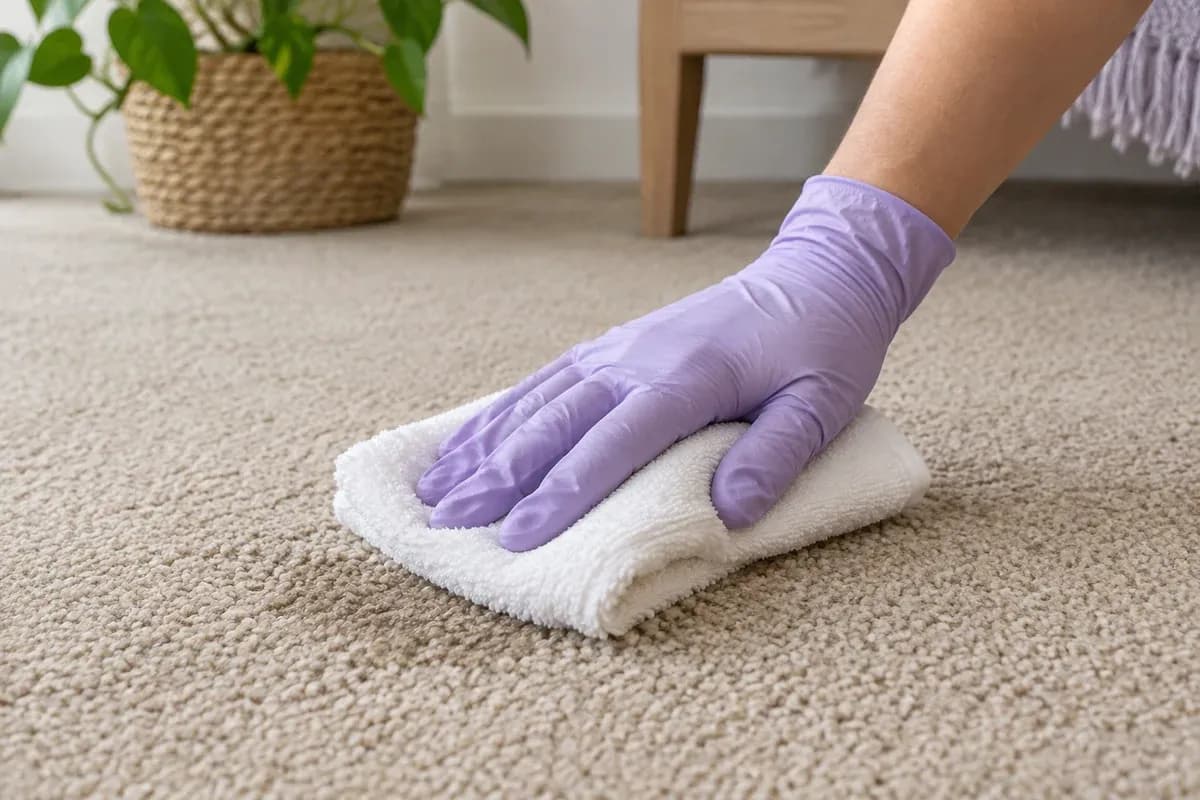
1. Absorb the spill
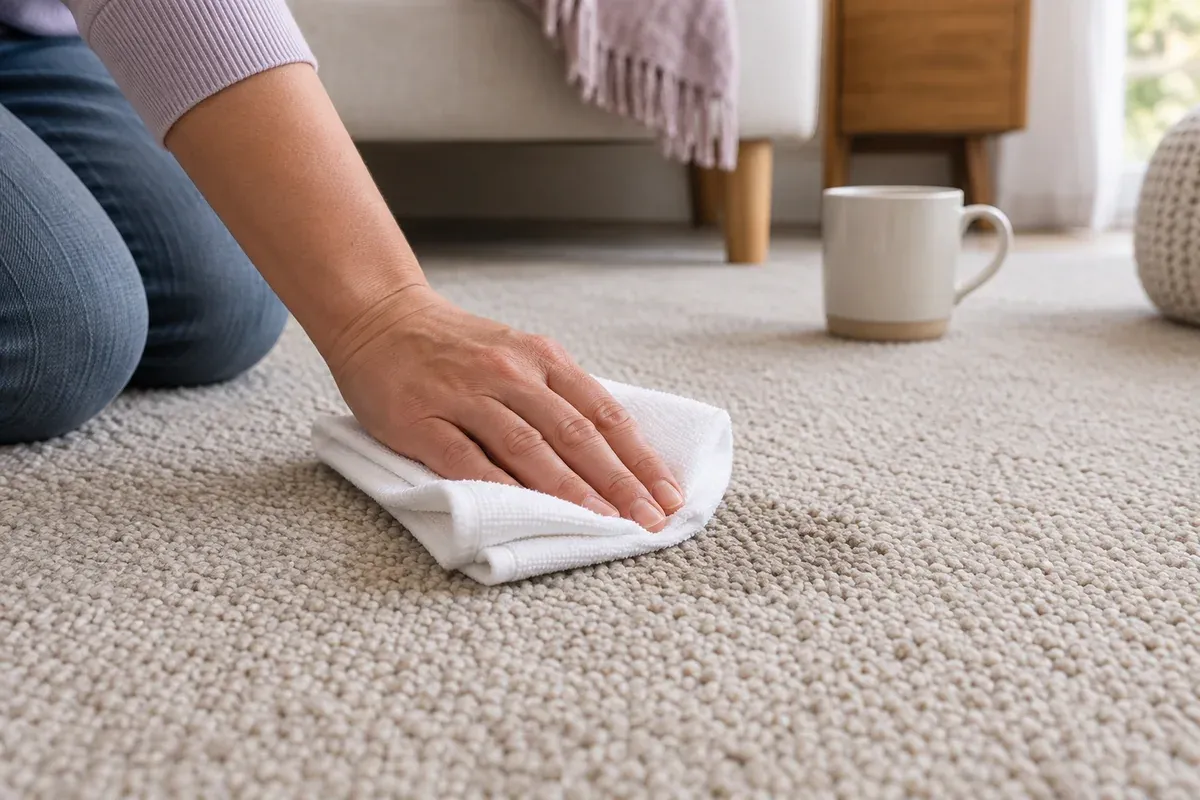
Press a clean absorbent cloth or paper towel onto the wet area. Replace it as it becomes wet and continue blotting. Do not rub aggressively or scrub the fibres.
Humane World for Animals recommends removing as much fresh urine as possible before further treatment. It also cautions against steam cleaning as an initial treatment for urine stains and odours.
2. Check carpet care before adding liquid
Follow the carpet or rug manufacturer's advice about water, products and extraction. Do not flood an unidentified carpet or assume its underlay and subfloor can tolerate saturation. Delicate rugs, uncertain fibres and repeated contamination are good reasons to obtain advice early.
For example, Godfrey Hirst publishes separate wool and synthetic carpet-care guidance. These guides emphasise gentle blotting, testing and avoiding residues; general stain advice is not an endorsement of every pet-urine product. Identify your own carpet before choosing a treatment.
3. Apply a compatible urine-treatment product as labelled
Choose a product that specifically addresses pet urine and is suitable for your carpet. Follow its dilution or ready-to-use directions, coverage, waiting time and drying process. Some products need a longer process for old contamination than for a fresh spill.
An Australian-made example is urineFREE Household & Pet. Its manufacturer's instructions specify use without dilution, spot testing and surface-specific methods. Its carpet guide distinguishes fresh and older contamination and describes removing residue with a small amount of water and blotting after treatment has dried. Check the current bottle and those directions alongside your carpet's care requirements. This example is not permission to soak every carpet or use the product on an excluded material.
Do not substitute another brand while retaining the same dose or timing. If the current label and a website differ, ask the manufacturer which instructions apply to your pack before proceeding.
4. Allow the stated time and reassess when dry
Keep the area protected while treatment is in progress and while it dries. Follow any residue-removal step, then assess the result. Drying time varies with the material, amount of liquid and conditions; a blanket one- or two-day promise is unreliable.
If the odour remains, or a stain returns, avoid repeated saturation. Godfrey Hirst's synthetic-carpet guidance explains that marks can reappear through wicking and that stubborn problems may need professional help. Urine that reached backing, underlay or a subfloor needs assessment beyond the top fibres. A professional can explain whether targeted treatment, underlay work or replacement is appropriate.
Fresh Urine on Glazed Floor Tiles
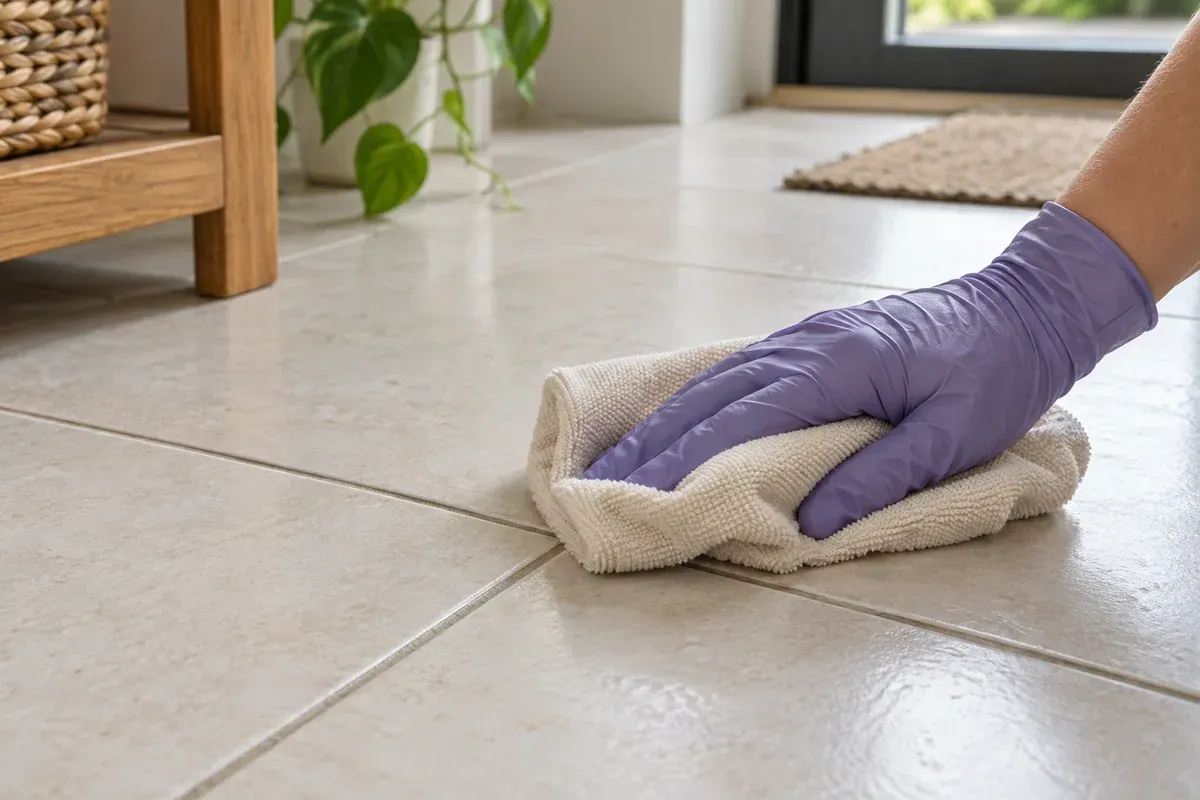
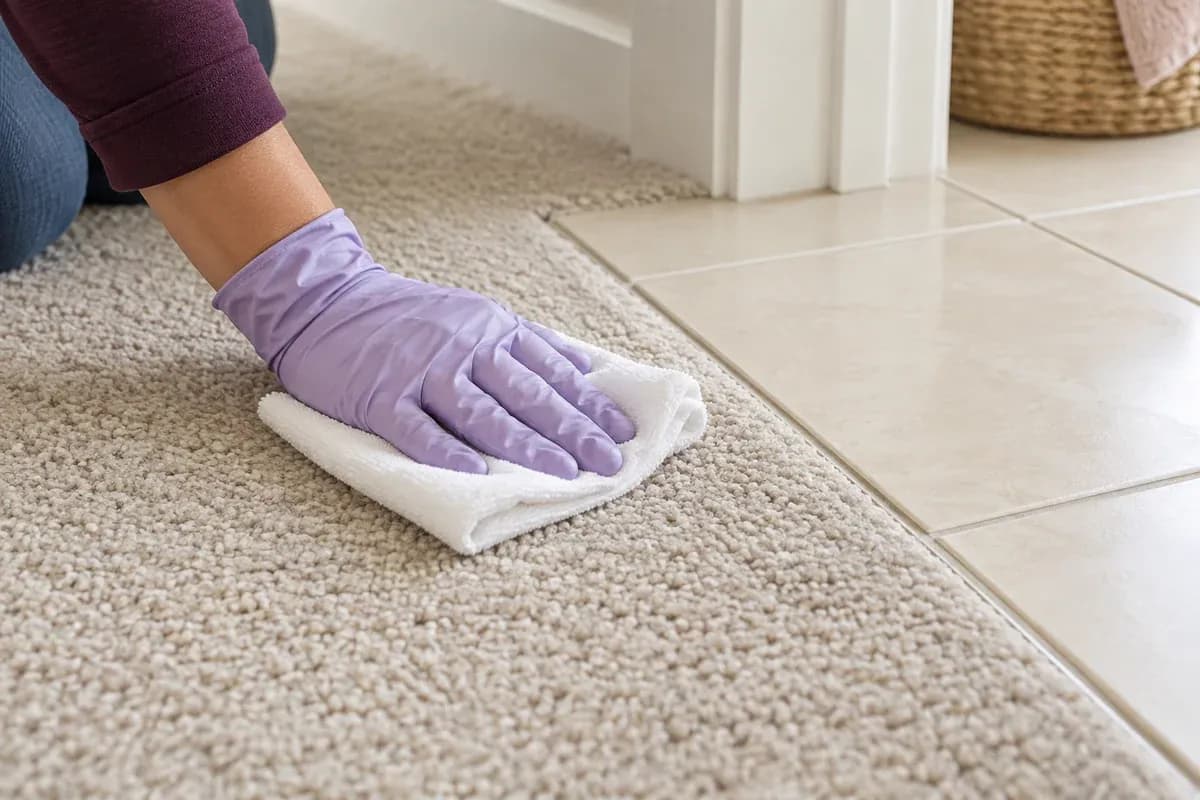
Confirm that the tile is a compatible glazed surface. Inspect adjoining grout and sealant; do not assume the entire floor is non-absorbent because the tile face is glazed.
- Absorb the fresh spill with a clean cloth or paper towel.
- Check and test the selected cleaner for the tile, grout and any sealant it will contact.
- Apply it at the labelled concentration and allow the specified treatment time. Keep the area out of use while wet.
- Remove residue, rinse or wipe as the product and flooring directions require. Let the floor dry before normal access resumes.
For a specific example, urineFREE's bathroom guidance describes blotting a fresh spill, applying its product, allowing it to dry, then wiping away residue with water. That is a product-specific sequence, not a universal method for every floor cleaner or tile finish.
Do not follow this with a concentrated dish-soap mop or a vinegar treatment unless the relevant manufacturer expressly directs it. Extra products can leave residue and complicate further treatment.
Grout, Natural Stone and Older Contamination
Porous grout, unglazed tile and stone require their own approach. A treatment for a glazed tile face must not be transferred automatically to marble, limestone, a sensitive sealer or deeply affected grout.
The Natural Stone Institute advises identifying the stone and choosing suitable cleaners. Acids such as vinegar can etch susceptible stone; abrasive powders or tools can also damage surfaces. Follow the stone and sealer supplier's care advice and test a compatible treatment before wider application.
Persistent odour around joints, a wall edge or a damaged seal may indicate that the affected area extends beyond the surface. Have it assessed before scrubbing harder, soaking the floor or removing grout. Do not conceal an unresolved problem with fragrance and assume it has been treated.
Products and Methods to Avoid Combining
Vinegar and bicarb are not automatic follow-up steps. This guide no longer recommends an enzyme-cleaner, vinegar and bicarb sequence. The selected product's complete process should determine what happens next. Strong-smelling cleaners are also a poor substitute for addressing the contamination itself.
Avoid an improvised ammonia or bleach treatment. Humane World advises against strong ammonia or vinegar odours when addressing urine marking. Follow product safety directions and never mix cleaners.
Do not start with a steam cleaner. Check the carpet maker and treatment-product instructions. A professional's planned extraction process is different from applying steam or repeatedly shampooing an unidentified urine patch yourself.
Repeated Accidents Need More Than Cleaning
Cleaning is only one part of preventing recurrence. Check access to an appropriate toileting area, keep litter trays clean and use a supportive approach. Do not punish a pet for an accident or assume that a cleaner guarantees it will not happen again.
The urineFREE manufacturer explicitly says its product is not a repellent. The previous claim that it contained pheromone blockers to stop re-marking was unsupported and has been removed.
For new or repeated changes in toileting, speak with a veterinarian. RSPCA Australia's guidance on inappropriate urination in cats explains that medical and behavioural factors need assessment. A cat straining to urinate or passing little or no urine needs urgent veterinary attention; do not wait for a cleaning solution to resolve that problem.
Our guide to keeping a pet-friendly home clean covers everyday routines. For bedding, use the separate dog-bed cleaning guide and the bed's own care label.
Frequently Asked Questions
Do all enzyme cleaners work the same way?
No. Formulations, intended surfaces and directions vary. Do not assume every enzyme cleaner contains live bacteria, uses the same chemistry or needs the same treatment time. Choose a product for the task and follow its own instructions rather than a generic explanation of enzymes.
Why does the carpet smell again after cleaning?
Possible reasons include remaining contamination, affected underlayers, residues or another accident. Wicking can also make a mark reappear. Reassess after the instructed treatment and drying process; persistent problems warrant professional advice rather than repeated applications of unrelated products.
Will a UV torch prove where the urine is?
A UV torch can help locate suspicious areas, but fluorescence is not conclusive proof of urine, its age or successful removal. Other residues may show up, and an absence of fluorescence does not establish that every affected layer is clean. Use it as an aid alongside the known spill history and professional assessment when needed.
Must I replace the carpet?
Not necessarily. The condition of the fibres, backing, underlay and subfloor matters. Seek an assessment when odour persists or contamination is widespread; replacement should follow an informed inspection rather than a fixed number of failed home treatments.
Sources and Review
Reviewed on 20 September 2026 against the linked flooring-care, product, stone-care and animal-welfare sources. The Australian-manufacture description is the producer's statement. Product suitability still depends on the current label and the actual flooring. This revision removes unsupported chemistry, repellent claims, universal timings and the previous mixed-product sequence. Updated on 2 October 2026 with a direct answer for tile and grout, and one closing link instead of two.
Related Reading
- Got a Carpet Stain? We've Got a Cleaning Solution
- Simple, Effective Tips for a Pet-Friendly Clean Home
- How to Deep Clean a Dog Bed and Keep It Fresh
- Removing Pet Hair at Home — Go From Furry to Fur-Free
- Green Cleaning 101: Natural Cleaning Solutions
A hand with everyday housework
For help with the everyday cleaning around your home, review our standard cleaning inclusions. Pet urine treatment, carpet restoration and specialist odour removal need a separate assessment.
Explore standard house cleaning.
If you are in Sydney, our house cleaning Sydney page shows what a regular visit covers.