A dog bed collects hair, muddy paw marks and everyday spills. The right cleaning method depends on what is inside it: a washable cover, fibre-filled cushion and shaped foam base can need different treatment. Start with the bed's care label so that a routine wash does not damage the filling or leave it damp inside.
Quick answer: Remove loose hair, separate the parts the manufacturer says are removable, and follow each part's own washing and drying directions. Treat stains only with a compatible product used as labelled. Dry everything fully before reassembling. Do not assume every dog bed can be soaked, hot-washed or tumble-dried.
Check the Bed Before Adding Water

Foam, liners and filled cushions can need different treatment. Avoid soaking a non-washable core; seek veterinary advice for illness or parasites.
Read the illustration as text
- Outer cover
- Remove and wash only as its label permits.
- Inner cushion or foam
- Check its own instructions; a washable cover does not make the core washable.
- Before reassembly
- Dry every permitted washed part completely, including the centre.
Keep the care instructions with each part.
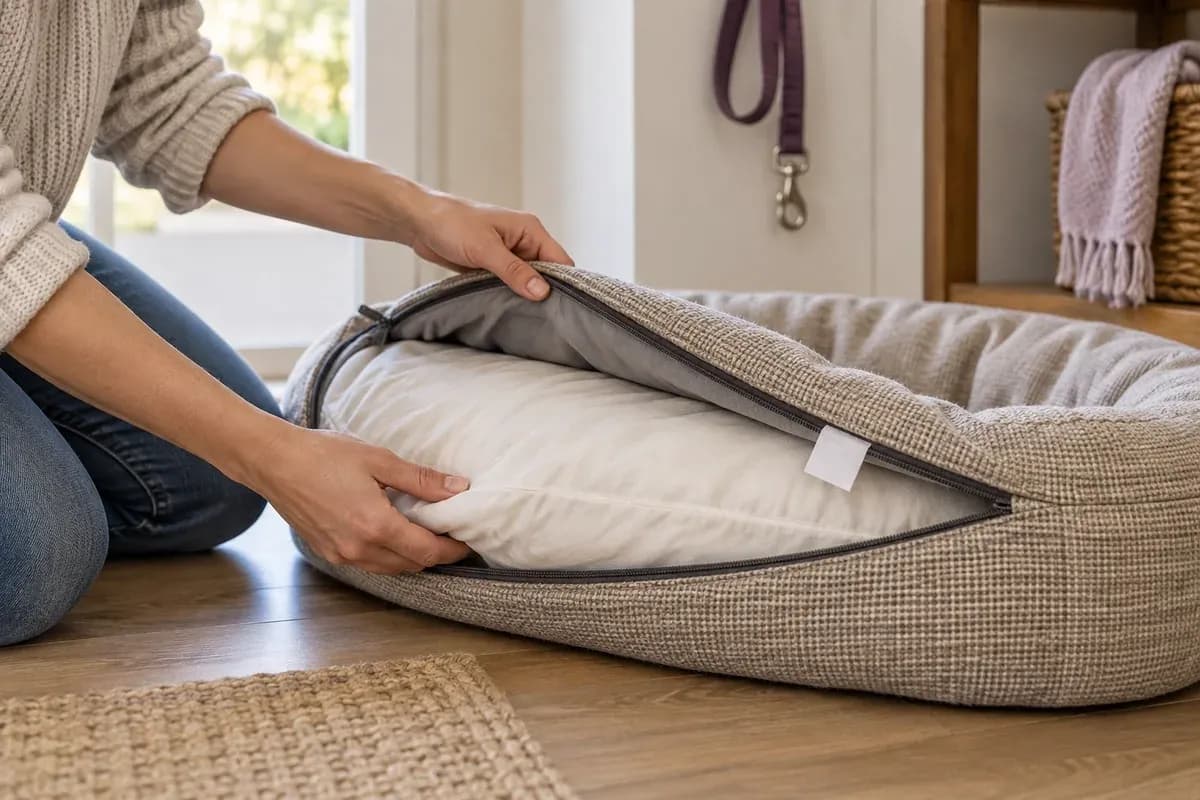
Find the brand and model, then check the sewn-in labels and the manufacturer's current instructions. Photograph the labels before removing covers so the directions stay with the right parts. Look for separate instructions for the outer cover, cushion, liner and foam body.
If the label is missing, ask the maker before immersing an unfamiliar filling. A removable cover does not prove the inner bed is washable, and a stitched-in cover does not automatically rule washing out.
These manufacturer examples show why the distinction matters:
- Snooza foam-body instructions: The maker lists spot cleaning for the foam body, while the specified covers and cushions have separate 40°C machine-washing directions. Check that those instructions belong to your model. Snooza washing instructions.
- Snooza EcoFresh fill: This crumbed-foam and fibre blend has its own directions, including washing while contained in a suitable inner, bed or laundry bag. It must not be treated as interchangeable with a shaped foam block. EcoFresh care.
- Kazoo Manhattan, grey and white: The removable cover is machine-washed gently with mild soap; the inner cushion is hand-washed separately in cool water. Both are hung to air dry. Manhattan cleaning guide.
- Kazoo Storm pillow bed: Its cover is sewn in, but the maker permits washing the whole bed under the product's care instructions. Storm cleaning guide.
These are examples of different constructions, not a universal care chart. Even products from the same brand can have different limits.
Prepare a Manageable Cleaning Session
Give your dog another comfortable resting place while the bed is being cleaned and dried. Allow enough time for the thickest permitted-to-wash component, rather than planning only for the machine cycle.
Gather the bed's instructions, a suitable hair-removal tool, clean cloths and the laundry or stain product you intend to use. Check its directions before starting. You may need a basin for a hand-washable cushion or space to support the bed while it dries; you do not automatically need a scrub brush or soaking tub.
Inspect zips, seams and the underside. Repair an opening before loose filling can escape, if the maker offers an appropriate repair. Set aside loose toys, chews and blankets. Remove any solid mess without spreading it across the fabric.
Remove Hair and Loose Debris
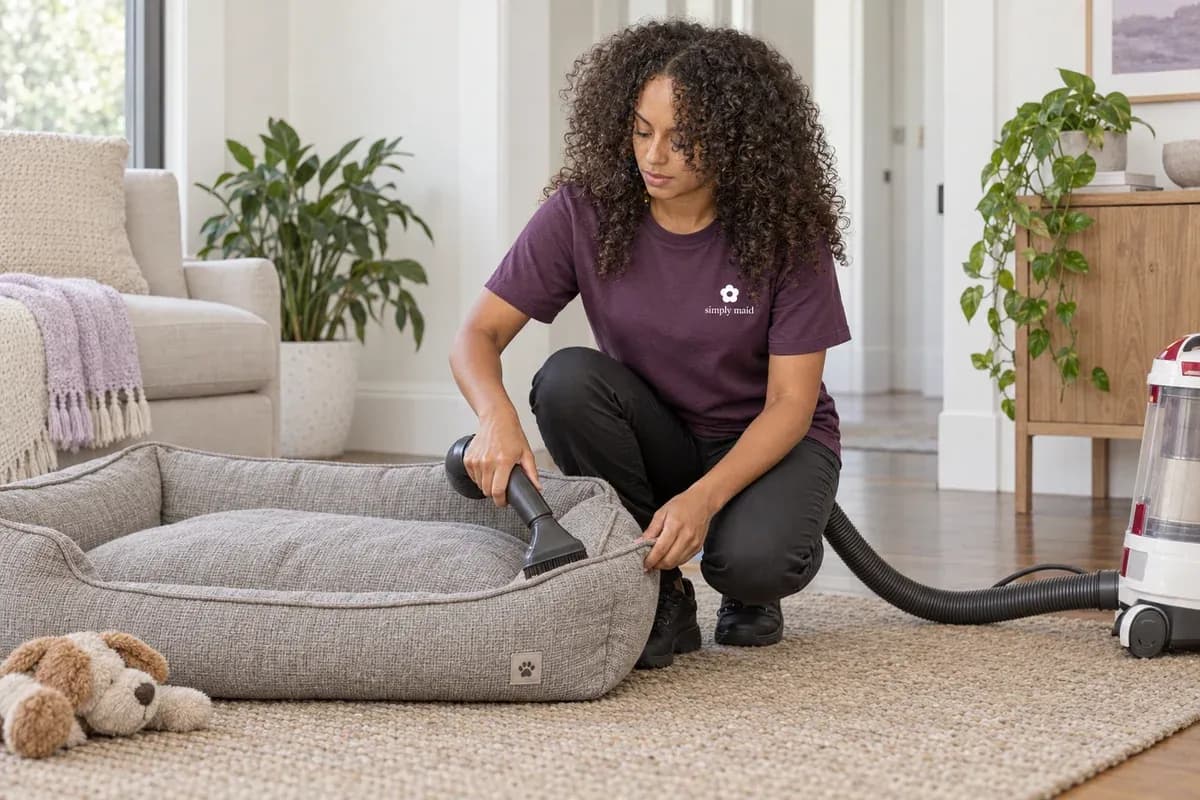
Use a suitable vacuum attachment or fabric-safe hair-removal tool on the cover, edges and seams. Be gentle with delicate pile and damaged stitching. Removing hair before wet cleaning makes the remaining work easier; it also helps avoid carrying clumps into the washer. The American Kennel Club's dog-bed guide recommends this preparation.
Check underneath the bed and clean the floor according to its own material. Our guide to removing pet hair at home covers the wider room.
Wash a Removable Cover
Separate it carefully
Undo the intended fastening and remove the insert without forcing it through a tight opening. Keep each component beside its own care instructions. Follow any directions about closing zips, removing attachments or using a laundry bag.
Choose a compatible method
Use the wash method and temperature permitted for that cover. A warm or hot cycle is not a default for all beds. Do not exceed a cold-only label to obtain a stronger clean, and do not choose tumble drying just because the cover was machine-washable.
Check your washing machine's instructions for bulky items and load limits. The cover needs room to move; fitting through the door does not by itself establish that a bulky wet bed is a suitable load. Use an appropriate alternative if your machine cannot accommodate it.
Use the recommended quantity of a compatible laundry detergent. More detergent is not a substitute for the correct cycle. The CDC's pet-supply guidance notes that products without dyes or fragrance may suit pets with sensitive skin. Ask your vet about an individual skin problem instead of assuming that a product described as baby-friendly or natural is suitable.
For a hand-wash-only cover, follow the maker's water temperature, handling and rinsing instructions. Avoid adding a separate soak or abrasive scrub unless the instructions permit it. Remove detergent residue as directed before drying.
Clean the Inner Bed According to Its Construction
Shaped foam or memory foam
Check whether the maker permits only spot cleaning. If so, keep water and cleaner local to the affected area, following the specified method. Do not convert a spot-clean instruction into a full soak or a machine cycle. A thick foam insert needs its own assessment even when the outer fabric looks clean.
Washable fibre-filled cushions
Follow that cushion's instructions, including whether it is hand- or machine-washable. Keep loose fill in its intended containment. Avoid heavy wringing or improvised agitation if the maker does not allow it. Check the permitted drying method separately.
Beds without removable covers
Look up the complete-bed directions. Some can be washed; others cannot. Size, fabric and filling all matter. If the whole bed is not washable, follow the approved local-cleaning method or ask the maker about a replacement cover or insert. A bath is not automatically a safe solution for an oversized bed.
Deal With Urine, Stains and Persistent Odours
Blot a fresh liquid spill promptly with an absorbent cloth, avoiding vigorous rubbing. Identify how far it has reached: cleaning the cover alone may leave contamination in the cushion, liner or floor beneath it.
Before using an enzyme or other stain treatment, check that both the bed maker and product directions permit it on that material. Test a hidden area when instructed. Follow the actual amount, contact time, rinsing and drying directions; there is no single 10- or 15-minute rule for all products. Do not mix or layer cleaners unless their directions explicitly provide that method.
Vinegar and baking soda are not required steps in this guide. Adding a household remedy can conflict with fabric, appliance or cleaner instructions. A lingering smell is a reason to inspect the affected layers and review the method, rather than repeatedly masking it with fragrance.
For contamination on the floor, see pet urine on tiles, grout and carpet. Repeated accidents, discomfort or a change in your dog's toileting behaviour also warrant veterinary advice.
Dry Fully Before Reassembling
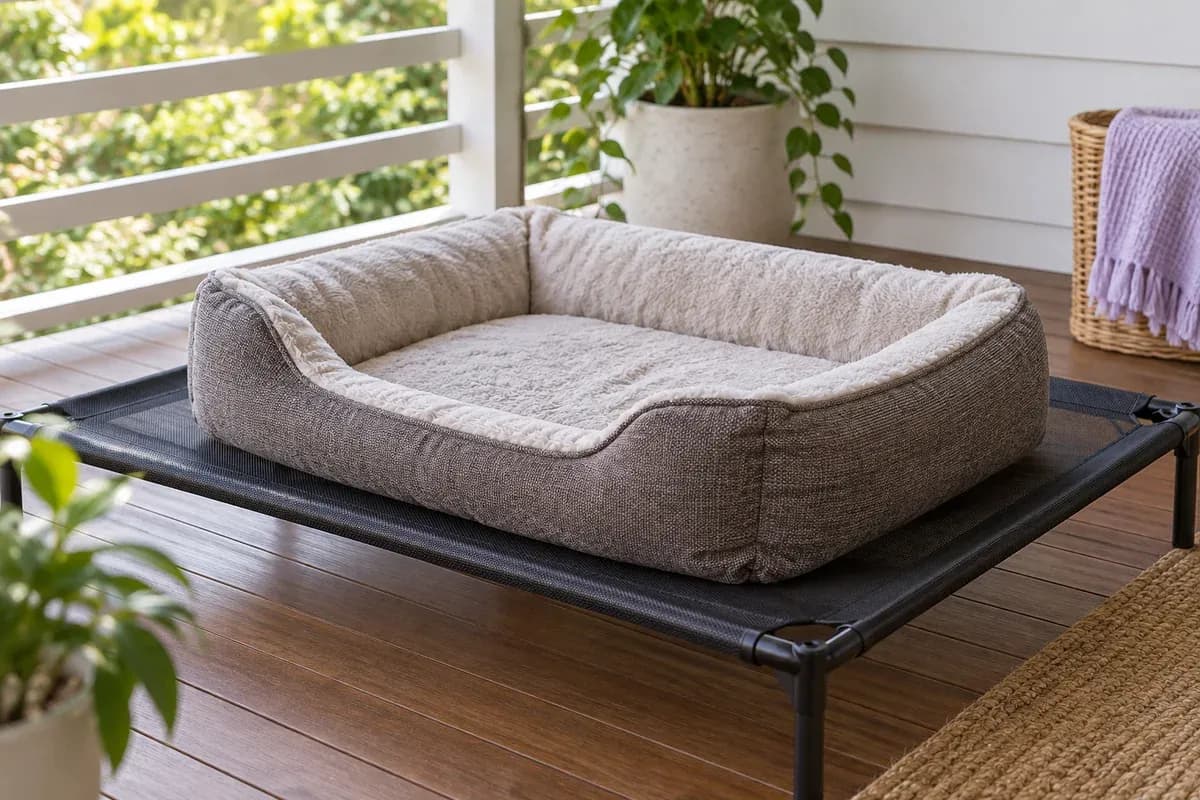
Use the drying method permitted for each part. Air-dry-only directions rule out the tumble dryer, including a low setting. A cover that feels dry does not tell you whether a thick inner cushion is ready.
Check seams, folds and the centre of washable filling before returning the bed. Keep the components separated until they are dry, then refit the cover without straining the zip. Follow the maker's guidance if filling needs to be redistributed.
Direct sun is not a universal requirement. Some makers permit airing in sunlight; others specify shade or another method. The cited Hobday and Dancer review concerns infection control in buildings and does not establish that leaving a dog bed outside for an hour or two disinfects it. Do not describe ordinary drying as sterilisation.
Set a Routine and Know When More Is Needed
The CDC gives weekly pet-bed cleaning as an example routine, with more frequent cleaning when items are dirty or smell. Use the method appropriate to your bed and deal with accidents promptly. A spare washable cover can help you keep a usable sleeping place available.
Regular cleaning and disinfection are different tasks. Illness, urine or faecal contamination, or a vulnerable household member may require additional precautions. Ask your vet about a suitable approach for the particular concern and material. Do not improvise stronger chemicals or exceed a care-label heat limit.
For fleas, treat the animal and its environment as advised by your vet. The RSPCA's flea guidance explains that bedding can hold immature flea stages and that all pets need species-appropriate treatment. Washing one bed does not replace that plan. If the recommended treatment conflicts with the bed's care limits, discuss an alternative or replacement.
Between washes, remove loose hair, address muddy paw marks and check beneath the bed. A compatible protective liner may help, but it also needs inspection and care. Keep laundry products securely away from animals; concentrated detergent can harm a pet that chews or swallows it. Contact your vet promptly after suspected exposure. ASPCA product-safety guidance.
Frequently Asked Questions
Can every dog bed go in the washing machine?
No. Read the directions for each component. Some covers are machine-washable while the foam underneath is spot-clean only. Other beds with stitched-in covers permit a whole-bed wash. Construction and care instructions decide the method.
Is a 60°C wash always better?
No. It can exceed the permitted temperature for the cover or filling. Follow the bed's directions and seek specific advice when an illness or infestation requires treatment beyond routine cleaning.
Why does the bed still smell after washing?
Check whether the smell comes from an uncleaned layer, retained moisture or surrounding flooring. Reassess the permitted cleaning method and dry the bed fully. Persistent contamination may require replacement of the affected component; repeated soaking is not suitable for every filling.
When should I replace it?
Consider repair or replacement when the bed has exposed filling, damaged fastenings, failed support or contamination that cannot be removed with an appropriate method. Ask about replacement covers and inserts before discarding an otherwise serviceable bed. A wash cannot guarantee a near-new result.
Sources and Review
Reviewed on 20 September 2026 using the linked manufacturer instructions, CDC guidance and animal-care sources. This revision removes universal soaking and temperature rules, unsupported stain-removal chemistry and sunlight-disinfection promises. The broader RSPCA dog-care guide also recommends clean, comfortable bedding and regular cleaning.
Related Reading
- Removing Pet Hair at Home — Go From Furry to Fur-Free
- Simple Effective Tips for a Pet-Friendly Clean Home
- Easy, Effective and Everlasting Cleaning Habits for the Whole Family
- How to Remove Pet Pee Odour From Floor Tiles and Carpet
- How to Clean a Mattress and Remove Stains
A hand with everyday housework
Once your dog’s bedding is clean and dry, keeping the surrounding floors and everyday surfaces clean helps maintain your routine. Explore our standard house cleaning inclusions and let us know about your pets when planning a visit.
If you are in Sydney, house cleaning across Sydney sets out what a regular visit includes around the rest of the home.