You wash your sheets. You flip your pillows. But when was the last time you actually cleaned your mattress? If the answer is "never" — or "I didn't know you were supposed to" — you're far from alone.
Quick Answer: Your mattress collects dead skin, sweat, dust mites, and bacteria every single night. Over time, this buildup can trigger allergies, disrupt your sleep, and affect the air you breathe. Cleaning your mattress at least twice a year — or quarterly if you have young children or allergies — helps protect your family's health and extends the life of your mattress.
What's Really Living in Your Mattress
Here's something most people don't think about: you shed roughly 1.5 grams of dead skin every night. Over a year, your body releases around 98 litres of sweat — and a good portion of that soaks right into your mattress.
According to Dr Manal Mohammed, a medical microbiologist at the University of Westminster, "the combination of sweat, saliva, dandruff, dead skin cells and even food particles make your bed the optimal environment for germs such as bacteria, fungi, viruses and tiny bugs to grow."
That's not just unpleasant — it's a genuine health concern. Swab studies have found older mattresses teeming with bacteria — including gram-negative rods, a group linked to pneumonia and urinary tract infections.
Dust mites: the invisible housemates
Dust mites are microscopic creatures that feed on dead skin cells. A single mattress can host anywhere from 100,000 to 10 million of them — and you won't see a single one.
In Australia, dust mites are a particularly serious concern. Research by Peat et al., published in the American Journal of Respiratory and Critical Care Medicine, found that 80% of Sydney homes exceed safe dust mite allergen thresholds. Even more concerning, the risk of asthma in sensitised children doubles with every increase in allergen level.
How a Dirty Mattress Affects Your Health
If you or your children wake up with a stuffy nose, itchy eyes, or unexplained sneezing, your mattress could be the reason. Dust mite allergens are one of the most common indoor allergy triggers in Australia.
The Australasian Society of Clinical Immunology and Allergy (ASCIA) confirms that dust mites can trigger symptoms in people with asthma, allergic rhinitis (hay fever), and eczema. With Australia's asthma prevalence sitting at around 11% — nearly three times the global average — this matters more here than almost anywhere else.
Warning: Mattress cleaning can help reduce allergy and asthma triggers, but it's not a substitute for medical treatment. If you or your child has persistent symptoms, see your GP or an allergist. — ASCIA
It's not just allergies
Beyond allergens, an uncleaned mattress can harbour fungi like Aspergillus (linked to respiratory infections) and Candida (linked to yeast infections). If you've noticed a musty smell coming from your bed, mould or fungal growth could be the cause — especially in humid coastal cities like Sydney, Brisbane, or the Gold Coast.
Your Mattress and the Air You Breathe
You might not think of your mattress as an air quality issue. But research published in the journal Indoor Air by Boor et al. found that every time you toss and turn during sleep, you resuspend settled particles from your mattress into the air around your face.
That means dust mite droppings, dead skin, fungal spores, and bacteria become airborne — right in your breathing zone — throughout the night. For families with young children whose immune and respiratory systems are still developing, this is worth paying attention to.
Why Regular Mattress Cleaning Matters (Especially for Families)
You might have tried stripping the bed and giving it a quick vacuum. Maybe you've sprinkled bicarb soda and hoped for the best. Those approaches are genuinely worth doing — our step-by-step guide to cleaning a mattress walks through the full DIY method — but they help mostly with surface odours and stains. They don't reach the dust mites, bacteria, and allergens living deep inside the mattress layers.
Regular, thorough mattress cleaning offers three key benefits:
1. Healthier sleep for the whole family
Removing allergens and bacteria means fewer nighttime disruptions — less itching, less congestion, and better breathing. For children with allergies or asthma, this can make a genuine difference to their sleep quality and overall wellbeing.
2. Better air quality in the bedroom
A clean mattress means fewer airborne particles in your sleep environment. You'll notice the difference: the room smells fresher, and you may find you wake up feeling more rested.
3. A longer-lasting mattress
Accumulated moisture, body oils, and debris break down mattress materials over time. The Sleep Foundation notes that regular cleaning helps preserve the structure and support of your mattress — protecting an investment that typically costs $1,000 to $3,000.
What Professional Mattress Cleaning Involves
A professional deep clean goes well beyond what you can achieve at home. Here's what the process typically looks like:
Thorough vacuuming. A high-powered HEPA vacuum removes surface debris, dead skin cells, and loose dust mite matter from every surface of the mattress.
Deodorising. Accumulated sweat and body oils create odours that build up so gradually you may not notice them — until they're gone. Professional deodorising leaves your mattress smelling genuinely fresh.
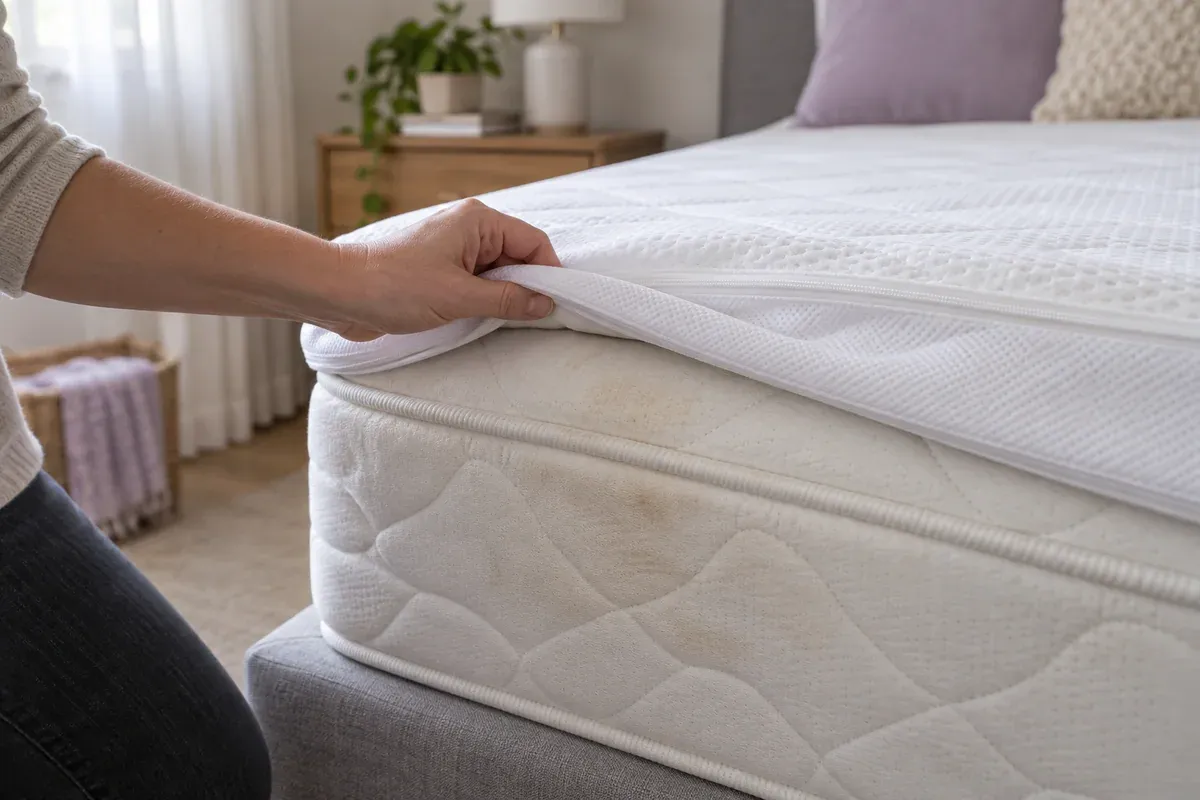
Stain treatment. Sweat, body oils, and — for parents of young children — bedwetting stains are treated with appropriate cleaning methods.
Warning: Always use cold water on protein-based stains like blood or urine. Hot water sets these stains and makes them far harder to remove. — CHOICE Australia
Deep extraction or steam cleaning. Professional-grade equipment reaches deep into mattress layers to extract embedded allergens, bacteria, and mould that surface cleaning simply cannot touch.
For a step-by-step guide to tackling stains yourself between professional cleans, see our guide on how to clean a mattress and get rid of stains.
How often is it worth booking one in?
Consumer Reports recommends cleaning your mattress at least twice a year. If you don't use a mattress protector, have allergies, or share your bed with children or pets, quarterly cleaning is a better target.
Between deep cleans, ASCIA recommends washing sheets and pillowcases weekly in water hotter than 55°C — a standard 60°C machine cycle does the job — to kill dust mites, and washing your mattress protector at least every two months. Don't forget your pillows either — they collect the same allergens.
Warning: Avoid over-saturating your mattress during cleaning, especially memory foam. Excess moisture trapped inside can promote mould growth — the opposite of what you're aiming for. — CHOICE Australia
Frequently Asked Questions
Q: Do I still need a professional clean if I use a mattress protector?
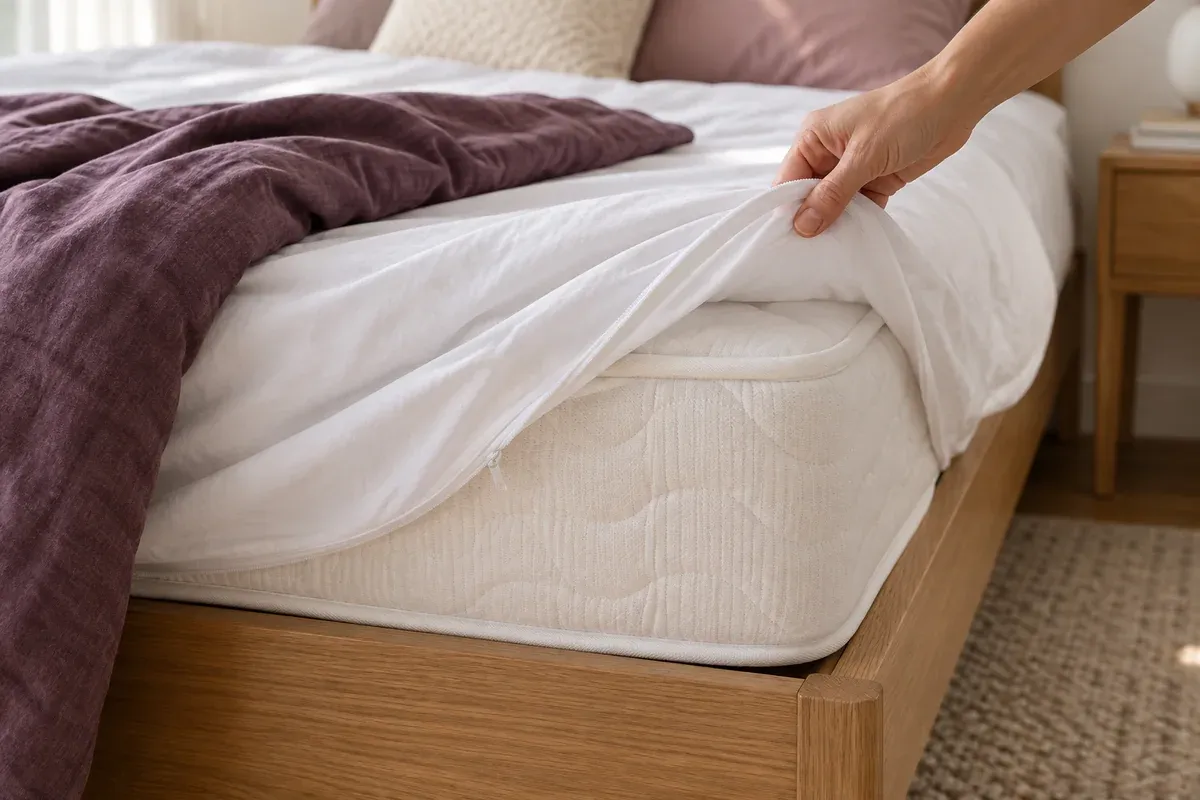
A good protector does most of the heavy lifting — it stops sweat, spills, and skin cells reaching the mattress itself, which is why twice a year is usually enough for protected mattresses while quarterly is the target for unprotected ones. You'll still want the protector washed at least every two months and your bedding weekly. Where a protector doesn't help is buildup that predates it, so if the mattress went years uncovered, one deep clean is worth doing before the protector takes over.
Q: What does a professional mattress clean include that I can't do at home?
Four things a household setup can't match: a high-powered HEPA vacuum that lifts embedded dust mite matter rather than blowing it back into the room, proper deodorising of built-up sweat and body oils, targeted stain treatment, and deep extraction or steam cleaning that reaches into the mattress layers where allergens, bacteria, and mould sit. A home vacuum and a spray bottle only ever work on the top few millimetres.
Q: Can a dirty mattress make my child's allergies or asthma worse?
Yes. Dust mites are one of the most common indoor allergy triggers, and ASCIA confirms they can worsen asthma, hay fever, and eczema symptoms. Australian research found that 80% of Sydney homes exceed safe dust mite allergen levels — and children are particularly vulnerable because their respiratory systems are still developing.
Q: Does bicarb soda actually get rid of dust mites?
No. Bicarb soda is excellent for absorbing odours and surface moisture, but it doesn't kill dust mites or remove the allergens they produce. For effective mite removal, you need hot-water washing for bedding (hotter than 55°C — a standard 60°C cycle does the job), or professional steam cleaning for the mattress itself.
Q: Is professional mattress cleaning worth the cost?
If anyone in your household has allergies, asthma, or eczema, professional cleaning can make a meaningful difference. DIY methods handle surface maintenance well, but only professional equipment reaches the deep-seated allergens, bacteria, and mould that home vacuums miss.
Related Reading
- How to Clean a Mattress and Get Rid of Stains
- How to Wash Pillows by Hand or in a Washing Machine
- A Comprehensive Guide to Mould Removal
- Easy, Effective and Everlasting Cleaning Habits for the Whole Family
Sources & References
- Peat et al., researchers, American Journal of Respiratory and Critical Care Medicine — House Dust Mite Allergens: A Major Risk Factor for Childhood Asthma in Australia. Cited for Australian dust mite prevalence data and childhood asthma risk (foundational study).
- Dr Manal Mohammed, Lecturer in Medical Microbiology, University of Westminster — Your Bed Probably Isn't as Clean as You Think. Cited for mattress microbiome composition and bacterial colonisation.
- Boor et al., researchers, Indoor Air journal — Particle Resuspension from Mattresses During Sleep. Referenced for sleep microenvironment air quality and particle resuspension research.
- Sleep Foundation — How to Clean a Mattress. Referenced for cleaning frequency recommendations and mattress lifespan preservation.
- CHOICE Australia — How to Clean and Care for Your Mattress. Referenced for Australian consumer cleaning guidance and stain treatment advice.
- Consumer Reports — How to Clean a Mattress (and Why). Referenced for cleaning frequency recommendations.